• Material Transfer Unit, 2025, PAINTING

    Material Transfer Unit, 2025, PAINTING


    Material Transfer Unit, 2025
    Painting-collage
    Dried plants, leaves, seeds, vegetal adhesive compounds, putty, metallic insulating foil, plastic foil, neon
    100 × 80 cm

    This 2025 painting-collage belongs to a line of work in which the surface ceases to function as a support and instead becomes an operative field of material inscription. Dried plants, leaves, seeds and organic residues coexist with putty, metallic insulating sheets, plastic foil, vegetal adhesive compounds and a continuous neon line that traverses the composition as a minimal infrastructure of conduction and signaling.

    The work does not organize its materials through a binary opposition between the natural and the technological. Instead, it articulates them as strata within a single system. The vegetal elements do not operate as botanical references or symbols; they appear as residual matter, fragments subjected to processes of drying, fixation, encapsulation and displacement. Likewise, industrial materials—insulators, plastics, reflective surfaces—function not as markers of modernity but as devices of containment, protection and circulation.

    Neon introduces a specific temporality into the plane. It does not illuminate the work from the outside nor frame it; it cuts through it. Its sinuous trajectory acts as an unstable reading line, a vector that connects heterogeneous zones without hierarchizing them, producing a constant tension between accumulation and conduction, opacity and transmission. Light does not reveal; it signals. It does not explain; it activates.

    In continuity with Mercado’s previous work, the piece proposes an understanding of the image as an active material archive. The surface behaves as a territory composed of residues, layers and fixations, where organic and technical elements remain in a state of co-dependence. There is no representation of landscape, body or nature, but rather an operation of transfer: materials carry with them their own histories of use, wear, conservation and obsolescence.

    At a scale of one meter by eighty centimeters, the work establishes a direct relationship with the viewer’s body while avoiding narrative frontality. It presents itself as a partially sealed, partially exposed system in which each element retains its material autonomy while participating in a larger structure. Painting is no longer defined by the application of color, but by the management of flows, residues, reflective surfaces and minimal energies.

    This work confirms a sustained shift in Mercado’s practice: from image as representation to image as infrastructure; from painting as expressive field to painting as a technical device in which matter, time and energy remain in active tension.

    Material Transfer Unit, 2025
    Painting-collage
    Dried plants, leaves, seeds, vegetal adhesive compounds, putty, metallic insulating foil, plastic foil, neon
    100 × 80 cm

    Material Transfer Unit, 2025
    Painting-collage
    Dried plants, leaves, seeds, vegetal adhesive compounds, putty, metallic insulating foil, plastic foil, neon
    100 × 80 cm


    Diese Malerei-Collage aus dem Jahr 2025 steht in einer Werkreihe, in der die Oberfläche nicht länger als Träger fungiert, sondern sich als operatives Feld materieller Einschreibung konstituiert. Getrocknete Pflanzen, Blätter, Samen und organische Rückstände treten in Beziehung zu Spachtelmasse, metallischen Isolierfolien, Kunststofffolien, pflanzlichen Bindemitteln und einer kontinuierlichen Neonlinie, die die Komposition als minimale Infrastruktur von Leitung und Signalführung durchzieht.

    Die Arbeit organisiert ihre Materialien nicht entlang einer Gegenüberstellung von Natur und Technologie, sondern artikuliert sie als Schichten eines gemeinsamen Systems. Die vegetabilen Elemente erscheinen weder als botanische Referenzen noch als Symbole, sondern als Restmaterie – Fragmente, die Prozessen der Trocknung, Fixierung, Einkapselung und Verschiebung unterworfen sind. Ebenso fungieren die industriellen Materialien – Isolatoren, Kunststoffe, reflektierende Oberflächen – nicht als Zeichen von Modernität, sondern als Vorrichtungen der Abschirmung, des Schutzes und der Zirkulation.

    Das Neon führt eine spezifische Zeitlichkeit in die Bildfläche ein. Es beleuchtet die Arbeit nicht von außen und rahmt sie nicht, sondern durchschneidet sie. Seine geschwungene Bewegung wirkt als instabile Leselinie, als Vektor, der heterogene Zonen miteinander verbindet, ohne sie zu hierarchisieren, und dabei eine permanente Spannung zwischen Akkumulation und Leitung, Opazität und Transmission erzeugt. Das Licht enthüllt nicht; es markiert. Es erklärt nicht; es aktiviert.

    In Kontinuität mit Mercados früheren Arbeiten versteht sich diese Arbeit als ein aktives materielles Archiv. Die Oberfläche verhält sich wie ein Territorium aus Rückständen, Schichten und Fixierungen, in dem organische und technische Elemente in einem Zustand wechselseitiger Abhängigkeit verbleiben. Es geht hier nicht um die Darstellung von Landschaft, Körper oder Natur, sondern um eine Operation der Übertragung: Die Materialien bringen ihre eigenen Geschichten von Gebrauch, Abnutzung, Konservierung und Obsoleszenz mit sich.

    Im Format von ein Meter mal achtzig Zentimeter etabliert die Arbeit eine direkte Beziehung zum Körper der Betrachtenden, ohne narrative Frontalität zu entwickeln. Sie erscheint als ein teilweise versiegeltes, teilweise offenes System, in dem jedes Element seine materielle Autonomie bewahrt und zugleich Teil einer größeren Struktur ist. Malerei definiert sich hier nicht mehr über Farbauftrag, sondern über die Steuerung von Flüssen, Rückständen, reflektierenden Flächen und minimalen Energien.

    Diese Arbeit bestätigt eine nachhaltige Verschiebung in Mercados Praxis: von der Bildlichkeit als Repräsentation hin zur Bildlichkeit als Infrastruktur; von der Malerei als Ausdrucksfeld hin zur Malerei als technisches Dispositiv, in dem Material, Zeit und Energie in aktiver Spannung verbleiben.


    Esta pintura-collage de 2025 se inscribe en una línea de trabajo donde la superficie deja de ser soporte para convertirse en un campo operativo de inscripción material. Plantas secas, hojas, semillas y residuos orgánicos conviven con masilla, láminas metálicas aislantes, folios plásticos, adhesivos vegetales y un trazo continuo de neón que atraviesa la composición como una infraestructura mínima de conducción y señalización.

    La obra no organiza sus materiales según una lógica de contraste entre lo natural y lo tecnológico, sino que los articula como estratos de un mismo sistema. Los restos vegetales no funcionan como referencias botánicas ni simbólicas: aparecen como materia residual, como fragmentos sometidos a procesos de secado, fijación, encapsulamiento y desplazamiento. Del mismo modo, los materiales industriales —aislantes, plásticos, superficies reflectantes— no operan como signos de modernidad, sino como dispositivos de contención, protección y circulación.

    El neón introduce una temporalidad específica dentro del plano. No ilumina la obra desde afuera ni la enmarca: la atraviesa. Su recorrido serpenteante actúa como una línea de lectura inestable, un vector que conecta zonas heterogéneas sin jerarquizarlas, produciendo una tensión constante entre acumulación y conducción, entre opacidad y transmisión. La luz no revela; señala. No explica; activa.

    En continuidad con trabajos anteriores de Mercado, la obra propone una concepción de la imagen como archivo material activo. La superficie se comporta como un territorio compuesto por restos, capas y fijaciones, donde lo orgánico y lo técnico permanecen en estado de co-dependencia. No hay aquí representación del paisaje, del cuerpo o de la naturaleza, sino una operación de transferencia: los materiales traen consigo sus propias historias de uso, desgaste, conservación y obsolescencia.

    A escala de un metro por ochenta centímetros, la obra mantiene una relación directa con el cuerpo del espectador, pero evita toda frontalidad narrativa. Se presenta como un sistema parcialmente sellado, parcialmente expuesto, en el que cada elemento conserva su autonomía material mientras participa de una estructura mayor. La pintura ya no se define por la aplicación del color, sino por la gestión de flujos, residuos, superficies reflectantes y energías mínimas.

    Esta obra confirma un desplazamiento sostenido en la práctica de Mercado: de la imagen como representación hacia la imagen como infraestructura; de la pintura como campo expresivo hacia la pintura como dispositivo técnico donde materia, tiempo y energía permanecen en tensión activa.

  • Field of heaven – Flatten, 2017

    Field of heaven – Flatten, 2017


    Marcello Mercado
    Himmelfeld – Flatten (Field of heaven – Flatten)
    Track.01 , 3min (excerpt)
    13 Tracks,
    2017


    Complete version on  BANDCAMP


  • Wir alle vermissen die D-Mark oder Clara Schumann´s DNA Konzert, 2008

    Wir alle vermissen die D-Mark oder Clara Schumann´s DNA Konzert, 2008


    Wir alle vermissen die D-Mark oder Clara Schumann´s DNA Konzert, 2008


    Part 01

    https://archive.org/details/WirAlleVermissenDieD-markOderClaraSchumannsDnaKonzert


    Part 02

    https://archive.org/details/WirAlleVermissenDieD-markOderClaraSchumannsDnaKonzertPart02


    Part  03

    https://archive.org/details/WirAlleVermissenDieD-markOderClaraSchumannsDnaKonzertPart03


    Part 04

    https://archive.org/details/WirAlleVermissenDieD-markOderClaraSchumannsDnaKonzertPart04

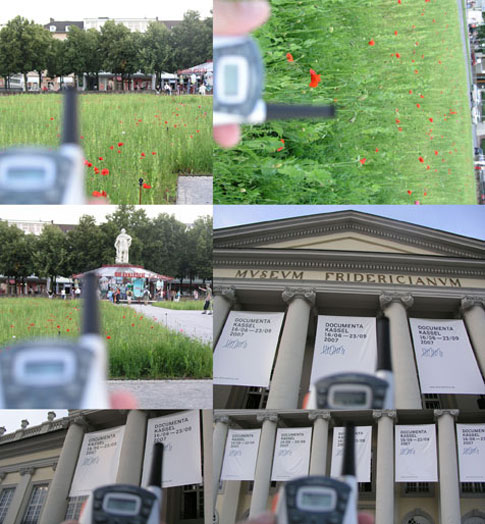
    Wir alle vermissen die D-Mark oder Clara Schumann’s DNA Konzert (2008) is a work that unfolds across bio-material, sound, and performative circulation. The piece originates from a gesture of extraction: DNA obtained from flowers collected at the grave of Clara Schumann is translated into musical material and reinserted into the exhibition space through an unstable, mobile apparatus.

    Rather than functioning as a biographical homage, the work approaches DNA as an informational residue—an archive detached from identity and authorship. The genetic material does not stand for Clara Schumann as a subject, but as a carrier of latent data subjected to processes of abstraction, sonification, and displacement. Music here is not composed in the traditional sense; it is derived, transduced, and rendered operational.

    The sonic output is physically coupled to a toy helicopter to which the DNA sample is attached. As the device moves through the gallery space, sound is spatialized, fragmented, and destabilized. Composition becomes contingent on motion, air currents, mechanical noise, and gravity. The concert is not staged frontally but dispersed, its structure continuously reconfigured by circulation and chance.

    By binding genetic matter to a low-tech flying object, the work deliberately collapses hierarchies between high culture and improvised machinery, historical canon and contemporary media debris. The title—invoking both economic nostalgia and musical lineage—signals a broader inquiry into systems of value: cultural, biological, and technological. What is preserved, what circulates, and what is allowed to decompose.

    Wir alle vermissen die D-Mark oder Clara Schumann’s DNA Konzert operates within a field where bioart, sound art, and media archaeology intersect. It does not seek to visualize life at a molecular level, but to expose how life, history, and culture are continuously translated into data, noise, and movement. The work insists on instability as a condition of transmission, proposing a concert without fixed score, a body without stable archive, and a history that survives only through mutation and drift.

    Wir alle vermissen die D-Mark oder Clara Schumann’s DNA Konzert, 2008
    Installation view. Sound, bio-material, toy helicopter, variable dimensions.

    Wir alle vermissen die D-Mark oder Clara Schumann’s DNA Konzert, 2008
    Installation view. Sound, bio-material, toy helicopter, variable dimensions.

    Wir alle vermissen die D-Mark oder Clara Schumann’s DNA Konzert, 2008
    Installation view. Graphic notations.

    Wir alle vermissen die D-Mark oder Clara Schumann’s DNA Konzert, 2008
    Installation view. Graphic notations.


    Wir alle vermissen die D-Mark oder Clara Schumann’s DNA Konzert, 2008
    Installation view. Graphic notations.

    Wir alle vermissen die D-Mark oder Clara Schumann’s DNA Konzert, 2008
    Installation view. Graphic notations.


  • VIDEO SELECTION

    VIDEO SELECTION


    VIDEOART


    Video works — Selection


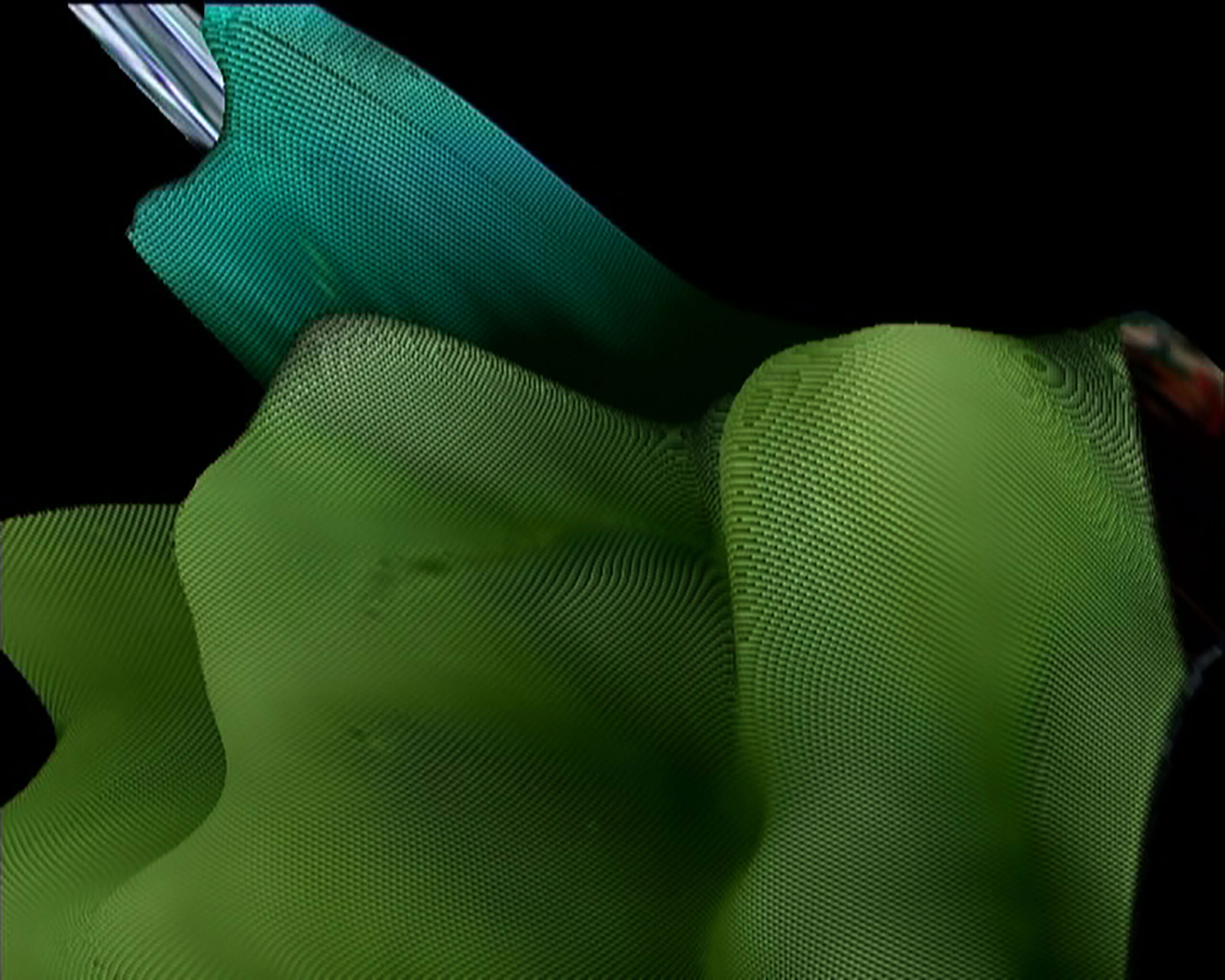
    The body of video works developed from the 1990s to the present is articulated not as a sequence of discrete pieces, but as an operational field in which moving images function as a system of inscription. Video does not appear here as a representational medium or a narrative device, but as a mechanism capable of recording, eroding, and reconfiguring the very conditions of the technical image.

    Within this corpus, video operates as an active archive: a space in which memory, obsolescence, and repetition never stabilize, but remain in a state of drift. The image does not preserve; it processes. It does not document a prior event, but generates it through the act of inscription itself. Time is not organized linearly, but through accumulation, latency, and residue.

    The body—human, technical, algorithmic—emerges as a surface of registration rather than as identity. Fragmented, scanned, simulated, or translated into data, the body appears as a system exposed to protocols of observation, measurement, and extraction. In this sense, video shifts toward a post-cinematic territory in which the image no longer obeys the logic of framing, but that of operation.

    The practice engages directly with media archaeology, treating each technology not as innovation, but as a stratum. Cameras, algorithms, interfaces, and automated systems overlap without hierarchy, activating tensions between analog and digital regimes, between optical recording and synthetic generation. The incorporation of algorithmic processes and artificial intelligence does not introduce a futuristic aesthetic, but rather a critical expansion of the archive and its agencies.

    Video thus functions as a transversal laboratory, contaminating and being contaminated by drawing, performance, installation, and sound. Rather than an autonomous medium, it becomes a testing zone where images fail, repeat, degrade, or turn opaque. In this space, the technical image abandons any promise of transparency and asserts itself as a site of friction, inscription, and loss.

    (Deutsch)

    Die seit den 1990er-Jahren bis heute entstandenen Videoarbeiten lassen sich nicht als Abfolge einzelner Werke lesen, sondern als ein operatives Feld, in dem das Bewegtbild als System der Einschreibung fungiert. Video erscheint hier weder als repräsentationales Medium noch als narratives Instrument, sondern als ein Mechanismus, der die Bedingungen des technischen Bildes selbst registriert, unterwandert und neu konfiguriert.

    Innerhalb dieses Korpus agiert Video als aktives Archiv: ein Raum, in dem Erinnerung, Obsoleszenz und Wiederholung nicht fixiert werden, sondern in einem Zustand permanenter Drift verbleiben. Das Bild bewahrt nicht; es verarbeitet. Es dokumentiert kein vorgängiges Ereignis, sondern erzeugt dieses im Akt seiner Einschreibung. Zeit entfaltet sich nicht linear, sondern als Akkumulation, Latenz und Residuum.

    Der Körper — menschlich, technisch, algorithmisch — erscheint als Einschreibungsfläche und nicht als Identität. Fragmentiert, gescannt, simuliert oder in Daten übersetzt, zeigt er sich als System, das Protokollen der Beobachtung, Messung und Extraktion ausgesetzt ist. In diesem Sinne verschiebt sich das Video in ein post-kinematografisches Terrain, in dem das Bild nicht mehr der Logik des Bildausschnitts, sondern der Operation folgt.

    Die Praxis steht in explizitem Dialog mit der Medienarchäologie und begreift jede Technologie nicht als Innovation, sondern als Schicht. Kameras, Algorithmen, Interfaces und automatisierte Systeme überlagern sich ohne Hierarchie und erzeugen Spannungen zwischen analogen und digitalen Regimen, zwischen optischer Aufzeichnung und synthetischer Generierung. Der Einsatz algorithmischer Prozesse und künstlicher Intelligenz führt nicht zu einer futuristischen Ästhetik, sondern zu einer kritischen Erweiterung des Archivs und seiner Handlungsmacht.

    Video fungiert hier als transversales Labor, das Zeichnung, Performance, Installation und Klang kontaminiert und von ihnen kontaminiert wird. Nicht als autonomes Medium, sondern als Experimentierraum, in dem Bilder scheitern, sich wiederholen, degradieren oder opak werden. In diesem Raum verzichtet das technische Bild auf jedes Transparenzversprechen und behauptet sich als Ort der Reibung, Einschreibung und des Verlusts.

    (Español)

    El conjunto de trabajos en video desarrollados desde la década de 1990 hasta la actualidad no se articula aquí como una sucesión de obras, sino como un campo operativo donde la imagen en movimiento funciona como sistema de inscripción. El video no aparece como medio representacional ni como soporte narrativo, sino como un dispositivo capaz de registrar, erosionar y reconfigurar las condiciones mismas de la imagen técnica.

    En este corpus, el video opera como archivo activo: un espacio donde memoria, obsolescencia y repetición no se estabilizan, sino que permanecen en estado de deriva. La imagen no conserva; procesa. No documenta un acontecimiento previo, sino que lo produce en el mismo acto de su inscripción. El tiempo no se organiza de forma lineal, sino como acumulación, latencia y residuo.

    El cuerpo —humano, técnico, algorítmico— se presenta como una superficie de registro antes que como identidad. Fragmentado, escaneado, simulado o traducido en datos, el cuerpo aparece como un sistema expuesto a protocolos de observación, medición y extracción. En este sentido, el video se desplaza hacia un territorio post-cinematográfico donde la imagen ya no responde a la lógica del encuadre, sino a la de la operación.

    La práctica dialoga de manera explícita con la arqueología de los medios, entendiendo cada tecnología no como innovación, sino como estrato. Cámaras, algoritmos, interfaces y sistemas de automatización se superponen sin jerarquías, activando fricciones entre lo analógico y lo digital, entre el registro óptico y la generación sintética. La incorporación de procesos algorítmicos e inteligencia artificial no introduce una estética futurista, sino una ampliación crítica del archivo y de sus formas de agencia.

    El video se comporta así como un laboratorio transversal que contamina y es contaminado por el dibujo, la performance, la instalación y el sonido. Más que un medio autónomo, se configura como una zona de prueba donde las imágenes fallan, se repiten, se degradan o se vuelven opacas. En este espacio, la imagen técnica deja de prometer transparencia y se afirma como territorio de fricción, inscripción y pérdida.


  • Vilém Flusser and Marshall McLuhan /Aviation Alphabet, 2010

    Vilém Flusser and Marshall McLuhan /Aviation Alphabet, 2010


    Victor, India, Lima, Echo, Mike, Foxtrot, Lima, Uniform, Sierra, Sierra, Echo, Romeo, Mike, Alpha,

    Romeo, Sierra, Hotel, Alpha, Lima, Lima, Mike, Charlie, Lima, Uniform, Hotel, Alpha, November.

    (Vilém Flusser and Marshall McLuhan, Aviation Alphabet).

    2010

    Two unique pieces,

    2 black-and-white QR code puzzle books,

    Each 40 cm x 28.5 cm.

    Each puzzle has 120 pieces.

    The QR codes contain quotes from Vilém Flusser and Marshall McLuhan in Spanish.

    Assembling a QR code puzzle book takes approx. 4-5 hours.

    Interactive installation:

    This book-object does not begin with reading, but with resistance. It withholds fluency. It refuses immediate access to meaning by forcing language to pass through successive regimes of translation, decomposition, and re-materialization. Text becomes image, image becomes object, object becomes residue, residue becomes sound. Meaning is never stabilized; it circulates under constraint.

    The work stages a fictional encounter between Vilém Flusser and Marshall McLuhan, not as dialogue but as interference. Their texts are not quoted, explained, or illustrated. They are operationalized. Language is processed as raw material, subjected to procedures that expose the frictions between medium, message, and matter.

    At the core of the book-object lies a paradox: texts that critically interrogate technical images are themselves translated into one of the most opaque technical image formats—the QR code. What appears as a tool of instant access becomes, here, a structure of delay. Fragmented into puzzles, the QR codes cannot be scanned unless reassembled, and reassembly demands time, labor, and bodily engagement. Reading becomes a durational act of construction. Information is no longer immaterial; it acquires weight, resistance, and fatigue.

    The puzzle format is not incidental. It introduces a regime of partiality and error. Each fragment carries information but cannot function alone. The code only emerges through coordination, patience, and collective or solitary persistence. In this sense, the book-object behaves less like a container of knowledge than like a test of attention. The viewer is not addressed as a reader but as an operator navigating a system that constantly threatens to collapse back into noise.

    Material decisions are crucial. The stark black-and-white of the QR codes, the standardized geometry of the puzzle pieces, and the severe neutrality of the boxes all echo the aesthetics of technical rationality. Yet this rationality is undermined from within. The very precision of the system produces fragility: a single missing piece renders the code unreadable. Totality becomes contingent.

    This logic reaches a different threshold in the composted portraits. Here, representation is not fragmented but biologically erased. The faces of Flusser and McLuhan are not archived or preserved; they are decomposed. Theoretical authority is reduced to organic matter, processed by worms, converted into fertile residue. The portrait—a historically stabilizing device—is replaced by an irreversible metabolic process. What remains is not an image, but a transformed material state.

    Sound introduces yet another translation layer. Texts become audio files, portraits become voices without faces, presence without visibility. The auditory loop does not clarify the system; it further dislocates it. Language circulates as vibration, detached from both page and image, suspended in repetition. Meaning here is not cumulative but recursive, trapped in feedback.

    Across these versions—QR code, puzzle, compost, audio—the book-object operates as a field of media conflict. Each medium exposes the limits of the others. No version is definitive; none resolves the work. Instead, the project constructs a closed circuit of transformations in which information is continuously displaced, degraded, and reconfigured.

    This is not an homage to media theory, nor an illustration of its concepts. It is a structural enactment of their consequences. The work does not argue that “the medium is the message” or that “our future depends on design.” It demonstrates what happens when such statements are pushed through systems that resist transparency and mastery.

    Installed at ZKM, the book-object does not sit comfortably within the category of the artist’s book, nor within installation, nor within sound art. It occupies an unstable zone between archive and process, between preservation and decay. It is a book that cannot be read without being damaged, a system that only functions by exposing its own failure modes.

    In this sense, the work aligns less with critique than with exhaustion. It stages the point at which explanation gives way to operation, and interpretation is replaced by handling. What remains is not clarity, but a dense field of relations between bodies, codes, materials, and time—a book-object that insists that understanding is no longer a matter of decoding, but of enduring the system it constructs.

    Installation view, Victor India Lima Echo Mike Foxtrot Lima Uniform Sierra Sierra Echo Romeo Mike Alpha Romeo Sierra Hotel Alpha

    Lima Lima Mike Charlie Charlie Lima  Uniform Hotel Alpha November, (Vilém Flusser and Marshall McLuhan, Aviation Alphabet)
    Interactive installation, ZKM | Center for Art and Media Karlsruhe, 2010.

    Installation view, Victor India Lima Echo Mike Foxtrot Lima Uniform Sierra Sierra Echo Romeo Mike Alpha Romeo Sierra Hotel Alpha

    Lima Lima Mike Charlie Charlie Lima  Uniform Hotel Alpha November, (Vilém Flusser and Marshall McLuhan, Aviation Alphabet)
    Interactive installation, ZKM | Center for Art and Media Karlsruhe, 2010.

    QR-code puzzle books, Victor India Lima Echo Mike Foxtrot Lima Uniform Sierra Sierra Echo Romeo Mike Alpha Romeo Sierra Hotel Alpha

    Lima Lima Mike Charlie Charlie Lima  Uniform Hotel Alpha November, (Vilém Flusser and Marshall McLuhan, Aviation Alphabet)
    Interactive installation, ZKM | Center for Art and Media Karlsruhe, 2010.

    Detail view, QR-code puzzle fragments, Laser-cut puzzle elements forming fragmented QR codes, black and white, 2010,

    Victor India Lima Echo Mike Foxtrot Lima Uniform Sierra Sierra Echo Romeo Mike Alpha Romeo Sierra Hotel Alpha

    Lima Lima Mike Charlie Charlie Lima Uniform Hotel Alpha November, (Vilém Flusser and Marshall McLuhan, Aviation Alphabet)
    Interactive installation, ZKM | Center for Art and Media Karlsruhe, 2010.

    Detail view, QR-code puzzle fragments, Laser-cut puzzle elements forming fragmented QR codes, black and white, 2010,

    Victor India Lima Echo Mike Foxtrot Lima Uniform Sierra Sierra Echo Romeo Mike Alpha Romeo Sierra Hotel Alpha

    Lima Lima Mike Charlie Charlie Lima  Uniform Hotel Alpha November, (Vilém Flusser and Marshall McLuhan, Aviation Alphabet)
    Interactive installation, ZKM | Center for Art and Media Karlsruhe, 2010.


    Worm-composted portraits of Vilém Flusser and Marshall McLuhan, organic residue sealed in plastic bags, 2015,

    Victor India Lima Echo Mike Foxtrot Lima Uniform Sierra Sierra Echo Romeo Mike Alpha Romeo Sierra Hotel Alpha

    Lima Lima Mike Charlie Charlie Lima  Uniform Hotel Alpha November, (Vilém Flusser and Marshall McLuhan, Aviation Alphabet)
    Interactive installation, ZKM | Center for Art and Media Karlsruhe, 2010.


    Victor, India, Lima, Echo, Mike, Foxtrot, Lima, Uniform, Sierra, Sierra, Echo, Romeo, Mike, Alpha, Romeo, Sierra, Hotel, Alpha, Lima, Lima, Mike, Charlie, Lima, Uniform, Hotel, Alpha, November.

    (Vilém Flusser und Marshall McLuhan, Aviation Alphabet).

    2010


    Dieses Buch-Objekt beginnt nicht mit Lesen, sondern mit Widerstand. Es verweigert Flüssigkeit. Es entzieht sich dem unmittelbaren Zugang zu Bedeutung, indem es Sprache zwingt, sukzessive Regime von Übersetzung, Zerlegung und Re-Materialisierung zu durchlaufen. Text wird Bild, Bild wird Objekt, Objekt wird Residuum, Residuum wird Klang. Bedeutung stabilisiert sich nie; sie zirkuliert unter Vorbehalt.

    Die Arbeit inszeniert eine fiktive Begegnung zwischen Vilém Flusser und Marshall McLuhan, nicht als Dialog, sondern als Interferenz. Ihre Texte werden weder zitiert noch erklärt oder illustriert. Sie werden operationalisiert. Sprache wird als Rohmaterial behandelt, unterworfen Verfahren, die die Reibungen zwischen Medium, Botschaft und Materialität freilegen.

    Im Zentrum des Buch-Objekts liegt ein Paradox: Texte, die technische Bilder kritisch befragen, werden in eines der opaksten Formate technischer Bilder übersetzt — den QR-Code. Was gemeinhin als Werkzeug unmittelbaren Zugriffs fungiert, wird hier zu einer Struktur der Verzögerung. In Puzzleteile fragmentiert, können die QR-Codes nur gelesen werden, wenn sie zuvor zusammengesetzt werden — ein Vorgang, der Zeit, Arbeit und körperliche Beteiligung erfordert. Lesen wird zu einem durationalen Akt der Konstruktion. Information verliert ihre Immaterialität und gewinnt Gewicht, Widerstand und Ermüdung.

    Das Puzzleformat ist kein beiläufiges Mittel. Es etabliert ein Regime der Partialität und des Fehlers. Jedes Fragment trägt Information, doch keines ist für sich funktional. Der Code entsteht nur durch Koordination, Geduld und Ausdauer, individuell oder kollektiv. In diesem Sinne fungiert das Buch-Objekt weniger als Wissensspeicher denn als Aufmerksamkeitsprüfung. Der Betrachter wird nicht als Leser adressiert, sondern als Operator innerhalb eines Systems, das jederzeit in Rauschen zurückfallen kann.

    Die materiellen Entscheidungen sind zentral. Der harte Schwarz-Weiß-Kontrast der QR-Codes, die standardisierte Geometrie der Puzzleteile und die strenge Neutralität der Boxen verweisen auf die Ästhetik technischer Rationalität. Doch diese Rationalität wird von innen her unterminiert. Die Präzision des Systems erzeugt Fragilität: Ein einziges fehlendes Teil macht den Code unlesbar. Totalität wird kontingent.

    Eine weitere Schwelle erreicht diese Logik in den kompostierten Porträts. Hier wird Repräsentation nicht fragmentiert, sondern biologisch ausgelöscht. Die Gesichter von Flusser und McLuhan werden nicht archiviert oder bewahrt; sie werden zersetzt. Theoretische Autorität reduziert sich auf organisches Material, verarbeitet durch Würmer, transformiert in fruchtbaren Rest. Das Porträt — historisch ein stabilisierendes Dispositiv — wird durch einen irreversiblen metabolischen Prozess ersetzt. Was bleibt, ist kein Bild, sondern ein veränderter materieller Zustand.

    Der Klang fügt eine weitere Übersetzungsebene hinzu. Texte werden zu Audiodateien, Porträts zu Stimmen ohne Gesicht, Präsenz ohne Sichtbarkeit. Die auditive Schleife klärt das System nicht; sie destabilisiert es weiter. Sprache zirkuliert als Vibration, gelöst von Seite und Bild, suspendiert in Wiederholung. Bedeutung akkumuliert sich nicht, sondern wird rekursiv, gefangen in Rückkopplung.

    Über diese Versionen hinweg — QR-Code, Puzzle, Kompost, Audio — operiert das Buch-Objekt als Feld medialer Konflikte. Jedes Medium legt die Grenzen der anderen offen. Keine Version ist endgültig; keine löst die Arbeit auf. Stattdessen entsteht ein geschlossener Transformationskreislauf, in dem Information fortwährend verschoben, degradiert und neu konfiguriert wird.

    Dies ist weder eine Hommage an Medientheorie noch eine Illustration ihrer Begriffe. Es ist eine strukturelle Vollzugsform ihrer Konsequenzen. Die Arbeit behauptet nicht, dass „das Medium die Botschaft ist“ oder dass „unsere Zukunft vom Design abhängt“. Sie zeigt, was geschieht, wenn solche Aussagen durch Systeme geleitet werden, die sich Transparenz und Beherrschung entziehen.

    Im Kontext des ZKM entzieht sich das Buch-Objekt eindeutigen Kategorisierungen: Es ist weder klassisches Künstlerbuch noch Installation noch Klangkunst. Es besetzt eine instabile Zone zwischen Archiv und Prozess, zwischen Bewahrung und Zersetzung. Es ist ein Buch, das nicht gelesen werden kann, ohne beschädigt zu werden; ein System, das nur funktioniert, indem es seine eigenen Fehlermodi offenlegt.

    In diesem Sinne positioniert sich die Arbeit weniger im Feld der Kritik als im Feld der Erschöpfung. Sie markiert den Punkt, an dem Erklärung in Operation übergeht und Interpretation durch Handhabung ersetzt wird. Was bleibt, ist keine Klarheit, sondern ein dichtes Beziehungsgeflecht aus Körpern, Codes, Materialien und Zeit — ein Buch-Objekt, das darauf insistiert, dass Verstehen nicht länger eine Frage des Dekodierens ist, sondern des Aushaltens des Systems, das es hervorbringt.


    Victor, India, Lima, Echo, Mike, Foxtrot, Lima, Uniform, Sierra, Sierra, Echo, Romeo, Mike, Alpha, Romeo, Sierra, Hotel, Alpha, Lima, Lima, Mike, Charlie, Lima, Uniform, Hotel, Alpha, November.

    (Vilém Flusser y Marshall McLuhan, Alfabeto de la aviación).

    2010


    Éste libro-objeto no comienza con la lectura, sino con la resistencia. Retiene la fluidez. Rechaza el acceso inmediato al sentido al forzar al lenguaje a atravesar regímenes sucesivos de traducción, descomposición y re-materialización. El texto deviene imagen, la imagen deviene objeto, el objeto deviene residuo, el residuo deviene sonido. El significado nunca se estabiliza: circula bajo condición.

    La obra escenifica un encuentro ficticio entre Vilém Flusser y Marshall McLuhan, no como diálogo sino como interferencia. Sus textos no son citados, explicados ni ilustrados. Son operativizados. El lenguaje es procesado como materia prima, sometido a procedimientos que exponen las fricciones entre medio, mensaje y materialidad.

    En el núcleo del libro-objeto se instala una paradoja: textos que interrogan críticamente las imágenes técnicas son traducidos a uno de los formatos más opacos de la imagen técnica —el código QR—. Lo que suele funcionar como herramienta de acceso instantáneo se transforma aquí en una estructura de demora. Fragmentados en rompecabezas, los códigos QR no pueden ser escaneados sin ser previamente recompuestos, y esa recomposición exige tiempo, trabajo y compromiso corporal. Leer se convierte en un acto duracional de construcción. La información deja de ser inmaterial: adquiere peso, resistencia y fatiga.

    El formato de rompecabezas no es incidental. Introduce un régimen de parcialidad y error. Cada fragmento porta información, pero ninguno puede funcionar por sí solo. El código solo emerge mediante coordinación, paciencia y persistencia, individual o colectiva. En este sentido, el libro-objeto se comporta menos como un contenedor de conocimiento que como una prueba de atención. El espectador no es interpelado como lector, sino como operador dentro de un sistema que amenaza constantemente con replegarse en ruido.

    Las decisiones materiales son determinantes. El contraste extremo del blanco y negro de los códigos QR, la geometría estandarizada de las piezas del rompecabezas y la neutralidad severa de las cajas remiten a la estética de la racionalidad técnica. Sin embargo, esa racionalidad es socavada desde dentro. La precisión misma del sistema produce fragilidad: una sola pieza ausente vuelve ilegible el código. La totalidad se vuelve contingente.

    Esta lógica alcanza otro umbral en los retratos compostados. Aquí la representación no se fragmenta: se borra biológicamente. Los rostros de Flusser y McLuhan no son archivados ni preservados; son descompuestos. La autoridad teórica se reduce a materia orgánica, procesada por lombrices, convertida en residuo fértil. El retrato —dispositivo históricamente estabilizador— es reemplazado por un proceso metabólico irreversible. Lo que permanece no es una imagen, sino un estado material transformado.

    El sonido introduce una nueva capa de traducción. Los textos devienen archivos sonoros; los retratos, voces sin rostro; presencia sin visibilidad. El bucle auditivo no clarifica el sistema: lo deslocaliza aún más. El lenguaje circula como vibración, desligado tanto de la página como de la imagen, suspendido en la repetición. El significado no se acumula: se vuelve recursivo, atrapado en retroalimentación.

    A través de estas versiones —código QR, rompecabezas, compost, audio— el libro-objeto opera como un campo de conflicto mediático. Cada medio expone los límites de los otros. Ninguna versión es definitiva; ninguna resuelve la obra. El proyecto construye, en cambio, un circuito cerrado de transformaciones en el que la información es continuamente desplazada, degradada y reconfigurada.

    No se trata de un homenaje a la teoría de los medios ni de una ilustración de sus conceptos. Es una puesta en acto estructural de sus consecuencias. La obra no afirma que “el medio es el mensaje” ni que “nuestro futuro depende del diseño”. Demuestra qué ocurre cuando tales enunciados son empujados a través de sistemas que resisten la transparencia y el dominio.

    Instalado en el ZKM, el libro-objeto no se acomoda cómodamente ni en la categoría de libro de artista, ni en la instalación, ni en el arte sonoro. Ocupa una zona inestable entre archivo y proceso, entre preservación y degradación. Es un libro que no puede ser leído sin ser dañado, un sistema que solo funciona exponiendo sus propios modos de falla.

    En este sentido, la obra se alinea menos con la crítica que con el agotamiento. Señala el punto en el que la explicación cede ante la operación y la interpretación es reemplazada por la manipulación. Lo que permanece no es claridad, sino un campo denso de relaciones entre cuerpos, códigos, materiales y tiempo: un libro-objeto que insiste en que comprender ya no es una cuestión de decodificar, sino de soportar el sistema que construye.


    QR-codes quotes:

    «Our future depends on design», Vilém Flusser, «Shape of Things: A Philosophy of Design», 1993

    «Nuestro futuro depende del diseño», Vilém Flusser, «La forma de las cosas: Una Filosofía del diseño», 1993

    «The medium is the message», Marshall McLuhan, «Understanding Media: The Extensions of Man», 1964

    «El medio es el mensaje», Marshall McLuhan, «Understanding Media: The Extensions of Man», 1964

    «The word design has managed to retain its key position in everyday discourse because we are starting [perhaps tightly) to lose faith in art and technology as sources of value.», Vilém Flusser, «Shape of Things: A Philosophy of Design», 1993

    «La palabra diseño ha conseguido mantener su posición estratégica en el discurso diario porque estamos comenzando (quizás con razón) a perder la fe en el arte y en la tecnología.», Vilém Flusser, «Shape of Things: A Philosophy of Design», 1993

    «Television is primarily an extension of the sense of touch rather than sight», Marshall McLuhan, Playboy interview, 1969

    «La televisión es una prolongación del sentido del tacto más que de la visión.», Marshall McLuhan, Playboy interview, 1969

    «The advent of the expelled in exile leads to “external” dialogues.This spontaneously causes an industrious creativity in the vicinity of the expelled. He is a catalyst for the synthesis of new information. If, however, he becomes aware of his uprootedness as his dignity, then an “internal” dialogue begins within himself; which is to say, an exchange between the information he has brought with him, and an entire ocean with waves of information that toss around him in exile.The objective is the creation of meaning between the imported information and the chaos that surrounds him.», Vilém Flusser, «Exile and Creativity», 1984

    «El advenimiento de los expulsados en el exilio conduce al diálogo «externo». El expulsado es un catalizador para la síntesis de nueva información. Si toma conciencia de su propia situación de desarraigo, entonces comienza un diálogo interno consigo mismo, es decir, un intercambio entre la información que ha traído consigo y todo un océano con olas de información que lo agitan en el exilio. El objetivo consiste en la creación de significado entre la información importada y el caos que lo rodea.», Vilém Flusser, «Exile and Creativity», 1984

    «We begin again to structure the primordial feelings and emotions from which 3000 years of literacy divorced us.», Marshall McLuhan, Playboy interview, 1969

    «Empezamos a reestructurar los sentimientos y emociones primordiales, de los que nos separan tres mil años de alfabetización», Marshall McLuhan, Playboy interview, 1969

    «The question to be asked of any photograph by the critic, then, is: How far has the photographer succeeded in submitting the camera program to his own intentions, and by what methods? And: How far has the camera succeeded in deflecting the photographer’s intentions, and by what methods? According to such criteria, the «best» photographs are those in which the photographer has overcome the camera program to suit his intentions, i.e., those photographs in which the apparatus has been subjected to human intention. There are, naturally, «good» photographs, that is, photographs where human spirit has been acclaimed victor over apparatus program. However, if we consider the totality of the photographic universe, we can see how the various apparatus programs are in the act of deflecting human Intentions for the sake of apparatus functions. This is the reason the task of all photography criticism should be to show when and where and how man is trying to dominate the apparatus, as well as how apparatus pre-vails against human efforts at domination. In fact, we have not yet arrived, generally, at elaborating such a photo-critical standpoint; reasons for this will be discussed later.», Vilém Flusser,»Towards a Philosophy of Photography»,1983

    «La cuestión que la crítica de la fotografía ha de plantear a la fotografía es, por tanto, la siguiente: ¿hasta qué punto el fotógrafo ha conseguido someter el programa de la cámara a su intención y gracias a qué método? Y, a la inversa: ¡en qué medida la cámara ha conseguido desviar la intención del fotógrafo a favor del programa de la cámara y gracias a qué método? A la luz de este criterio, la «mejor» fotografía es aquella en la que el fotógrafo vence al programa de la cámara en beneficio de su intención humana, es decir, en la que consigue someter el aparato a la intención humana. Naturalmente, existe esta suerte de fotografías «buenas», en las que el hombre vence el programa. Sin embargo, en el universo fotográfico, en general, se observa que los programas tienen cada vez más éxito en desviar las intenciones humanas hacia las funciones de la cámara. Por tanto, el objetivo de la crítica de la fotografía debería ser la demostración de cómo se esfuerza el hombre por dominar la cámara y de qué manera los aparatos persiguen absorber las intenciones de los seres humanos. Por motivos que quedan por analizar, aún no se ha visto ninguna crítica de la fotografía con este enfoque.», Vilém Flusser,»Towards a Philosophy of Photography»,1983

    «In a prealphabetic world, words are not signs.», Marshall McLuhan

    «En un mundo prealfabético las palabras no son signos», Marshall McLuhan

    «The expelled has been torn out of his customary surroundings (or else he has done it himself). Habit is a blanket that covers up the facts of the case. In familiar surroundings, change is recongnized, but not permanence. Whoever lives
    in a home finds change informative but considers permanence redundant. In it, the lack of redundancy does not allow the flood of information to be received as meaningful messages. Because it is unusual, exile is unliveable. One must transform the information whizzing around into meaningful messages, to make it liveable. One must “process” the data. It is a question of survival: if one fails to transform the data, one is engulfed by the waves of exile.
    Data transformation is a synonym for creation. The expelled must be creative if he does not want to go to the dogs.»,
    Vilém Flusser, «Exile and Creativity» in The freedom of the migrant: Objections to nationalism, 1983

    «El expulsado ha sido arrancado de su entorno habitual (o lo ha hecho por su cuenta [se ha autoexiliado]). El hábito es una manta que oculta los hechos del caso. En un entorno familiar, se reconoce el cambio pero no la permanencia. Aquel que vive en un hogar, encuentra el cambio informativo, pero considera redundante la permanencia.
    En el exilio, todo es extraño. El exilio es un océano de información caótica. En él, la falta de redundancia no permite que el flujo de información se reciba como mensajes significativos. Por el hecho de ser extraño, el exilio es invivible. Debemos transformar la información que zumba a nuestro alrededor en mensajes significativos para hacerlo soportable; debemos «procesar» los datos. Es una cuestión de supervivencia: si no logramos transformar los datos, nos vemos devorados por las olas del exilio. La transformación de datos es sinónimo de creación. El expulsado debe ser creativo si no desea derrumbarse por completo.»,
    Vilém Flusser, «Exile and Creativity» in The freedom of the migrant: Objections to nationalism, 1983

    «Writing was the visualization of acoustic space. It lit up the dark.», Marshall McLuhan, «Counterblast»,1969

    «La escritura es la visualización del espacio acústico. Iluminó la oscuridad», Marshall McLuhan, «Counterblast», 1969

    «The omnipresent technical images have begun magically to restructure «reality» into an image-like scenario. What is involved here is a kind of oblivion. Man forgets that he produces images in order to find his way in the world; he now tries to find his way in images.
    He no longer deciphers his own images, but lives in their function. Imagination has become hallucination.», Vilém Flusser,»Towards a Philosophy of Photography»,1983

    «Las omnipresentes imágenes técnicas están en vía de reestructurar de forma mágica nuestra realidad e invertirla en un escenario global de imágenes. Se trata, fundamentalmente, de un acto de olvido. El hombre olvida que él era quien generaba esas imágenes para orientarse en el mundo. Ya no es capaz de descifrarlas y, a partir de ahora, vive en función de sus propias imágenes: la imaginación se ha convertido en alucinación.», Vilém Flusser,»Towards a Philosophy of Photography»,1983

    «By surpassing writing, we have regained our wholeness», Marshall McLuhan, «Counterblast»,1969

    «Al superar la escritura hemos recuperado nuestra totalidad», Marshall McLuhan, «Counterblast», 1969

    «Indeed, the fact that it is indescribable what is new again and again to say that what is new is precisely the absurdity of wanting to explain. The Enlightenment is over, and it has nothing new that can not be explained. There is nothing dark in it, is clear as a network. There’s nothing behind.» Vilém Flusser, «Writings»,1987

    «Precisamente, el hecho de que sea indescriptible es lo nuevo de lo nuevo y quiere decir que lo nuevo de lo nuevo es precisamente lo absurdo de querer explicarlo. La Ilustración se ha terminado, y lo nuevo ya no tiene nada que no se pueda explicar. No hay nada oscuro en él, es transparente como una red. No hay nada detrás.» Vilém Flusser, La escritura,1987

    «The hot form excludes, and the cool one includes», Marshall McLuhan, «Understanding Media: The Extensions of Man», 1964

    «Lo caliente excluye. Lo frío incluye», Marshall McLuhan, «Understanding Media: The Extensions of Man», 1964

    «We have reached a point where we can break everything in bits and begin to see how we can make creative and technically, based on these bits, alternative worlds. (…) We are, however, at the end of the modern age. Everything is in the process of becoming something hard and mathematician. Herein is the transformation in which we are and where we go from historical, linear, procedural, logical thinking, zero dimensional thinking, calculating, systematic analysis, systematic, structural synthesis.», Vilém Flusser, «Into the Universe of Technical Images», 1985

    «Hemos llegado a un punto en el que somos capaces de descomponer todo en bits y empezamos a ver cómo podemos fabricar creativa y técnicamente, a base de estos bits, mundos alternativos. (…) Nos encontramos, sin embargo, al final de la Edad Moderna. Todo está en la fase de convertirse en algo duro y matemático. En esto consiste la transformación en la cual nos encontramos y en la que pasamos del pensamiento histórico, lineal, procesal, lógico, al pensamiento cero dimensional, calculatorio, de análisis sistemático, de síntesis sistemática, estructural.»,
    Vilém Flusser, «Into the Universe of Technical Images»,1985

    «The laws of media or ‘Four Effects: 1. What does the medium enhance? 2. What does the medium make obsolete? 3. What does the medium retrieve that had been obsolesced earlier? 4. What does the medium flip into when pushed to extremes?, Marshall McLuhan, «The laws of Media», 1988

    «Las cuatro leyes de los medios o «los cuatro efectos»: 1.¿Qué extiende? 2.¿Qué vuelve obsoleto? 3.¿Qué recupera? 4. ¿En que revierte?», Marshall McLuhan, «The laws of Media», 1988

    «The technical images, according to their nature, demand to be switched in a dialogic form. This new understanding is called telematics«, Vilém Flusser, «Text und Bild», Fotokritik 11/, 1984

    «Ahora empieza a perfilarse que las imágenes técnicas, de acuerdo con su carácter, exigen ser conmutadas de forma dialogal. Esta nueva comprensión se llama telemática.», Vilém Flusser, «Text und Bild», Fotokritik 11/, 1984

    «I am saying that radio, television, newspapers are something typically fascist. The information is disseminated in a concentrated form to be received passively. But there is a second connection scheme: Connections in the networks of telephone, mail or videotext. In such a situation they sent ambivalently information from one center to other centers and the development of the information is accomplished by networking, for example, during a telephone call, in dialogue form.«, Vilém Flusser, «El universo de las imágenes técnicas», Vilém Flusser, Technik und Kultur, 1989

    «Digo que la radio, la televisión, los periódicos son algo típicamente fascista. Pues se difunden informaciones de forma concentrada para ser recibidas de forma pasiva. Pero hay un segundo esquema de conexión: las conexiones en las redes de teléfono, correos o videotexto. En una situación así se envían de forma ambivalente informaciones de unos centros a otros centros y la elaboración de la información se lleva a cabo mediante la conexión en red, por ejemplo, durante una llamada telefónica, de forma dialogal.», Vilém Flusser, «El universo de las imágenes técnicas», Vilém Flusser, Technik und Kultur, 1989

  • Das Kapital (Restrictions), 2005 – Artist’s book

    Das Kapital (Restrictions), 2005 – Artist’s book


    Das Kapital (Restrictions), 2005


    Artist’s book

    This artist’s book belongs to the series Das Kapital and operates as a material archive of minor gestures, residues, and peripheral economies. Composed of twenty plastic pocket-pages, the book holds broken golf tees collected from golf courses, used golf gloves, and domestic photographs of German houses from the 1950s and 1960s. Its structure does not offer a linear narrative but a system of containment: each bag functions as a unit of storage, separation, and control.

    Golf appears here not as sport but as a regime. A game built on repetition, precision, and regulated expenditure of energy, historically embedded in economies of privilege, disciplined leisure, and the territorialization of landscape. The tees—objects designed to be destroyed—condense a logic of programmed consumption: their breaking is not an accident but a condition of use. In this sense, the collected fragments operate as remains of an economy that naturalizes waste under the form of play.

    The used gloves introduce a bodily and disciplinary dimension. They are contact surfaces between body and instrument, marked by wear, sweat, and the repetition of a technical gesture. Unlike the tees, which fracture, gloves erode slowly. Both materials register the time of use, but through different temporalities: instant breakage and progressive degradation.

    The photographs of German dwellings from the 1950s and 1960s—images originally produced in domestic contexts—add another temporal and political layer. These houses, associated with postwar reconstruction, the normalization of private space, and the stabilization of a welfare economy, are removed from context and reinserted into the book as architecture without inhabitants. They do not function as illustrative historical documents but as silent forms: containers of a promise of order, property, and permanence.

    The book thus articulates three systems: play, domesticity, and residue. None is presented spectacularly. The decision to use transparent bags reinforces an aesthetic of provisional archiving, close to museological, forensic, or administrative practices. The object does not seek monumentality but precision: to classify, isolate, and display without hierarchy.

    Within Das Kapital, this work shifts the notion of capital from visible accumulation toward its less visible infrastructures: energy expenditure without production, the regulated repetition of leisure, architecture as ideological stabilization, and residue as a form of material truth. Capital appears here not as financial abstraction but as a daily choreography of bodies, objects, and landscapes.

    Das Kapital (Restrictions) does not represent power; it measures it in fragments. In remains that do not circulate, in objects that no longer function, in images that persist without a story. The book operates as a device for slow reading, where each pocket-page holds a miniature economy: a relation between use, wear, and control.

    More than a documentation book, the work functions as an archival organism: a closed system that exposes, with extreme sobriety, the material conditions of a culture that turns play into industry, the house into model, and residue into norm.


    Das Kapital (Restrictions), 2005


    Künstlerbuch

    Dieses Künstlerbuch gehört zur Serie Das Kapital  und konstituiert sich als materielles Archiv kleiner Gesten, von Rückständen und scheinbar randständigen Ökonomien. Das Buch besteht aus zwanzig Blättern, die als transparente Kunststoff-Taschen ausgeführt sind; sie enthalten gebrochene Golf-Tees, die auf Golfplätzen gesammelt wurden, gebrauchte Golfhandschuhe sowie private Fotografien deutscher Häuser aus den 1950er und 1960er Jahren. Die Struktur bietet keine lineare Erzählung, sondern ein System der Verwahrung: Jede Tasche funktioniert als Einheit von Speicherung, Trennung und Kontrolle.

    Golf erscheint hier nicht als Sport, sondern als Regime. Als ein Spiel, das auf Wiederholung, Präzision und reguliertem Energieaufwand beruht und historisch in Ökonomien von Privileg, diszipliniertem Freizeitverhalten und der Territorialisierung von Landschaft verankert ist. Die Tees — Objekte, die für ihre Zerstörung entworfen sind — verdichten eine Logik programmierter Konsumption: Ihr Bruch ist kein Unfall, sondern eine Bedingung ihrer Nutzung. In diesem Sinn wirken die gesammelten Fragmente als Reste einer Ökonomie, die Verschleiß und Abfall in der Form des Spiels naturalisiert.

    Die gebrauchten Handschuhe führen eine körperliche und disziplinäre Dimension ein. Sie sind Kontaktflächen zwischen Körper und Instrument, geprägt von Abrieb, Schweiß und der Wiederholung eines technischen Gestus. Im Unterschied zu den Tees, die brechen, erodieren Handschuhe langsam. Beide Materialien registrieren Nutzungszeit, jedoch in unterschiedlichen Temporalitäten: plötzliche Fraktur und fortschreitende Abnutzung.

    Die Fotografien deutscher Wohnhäuser der 1950er und 1960er Jahre — ursprünglich in privaten Zusammenhängen entstanden — fügen eine weitere zeitliche und politische Schicht hinzu. Diese Häuser, verbunden mit dem Wiederaufbau der Nachkriegszeit, der Normalisierung des Privatraums und der Stabilisierung einer Wohlstandsökonomie, werden aus ihrem Kontext gelöst und als Architektur ohne Bewohner in das Buch re-eingeschrieben. Sie fungieren nicht als illustrative historische Dokumente, sondern als stille Formen: Behälter eines Versprechens von Ordnung, Eigentum und Dauer.

    Das Buch verknüpft so drei Systeme: Spiel, Domesticität und Rückstand. Keines davon wird spektakulär inszeniert. Die Entscheidung für transparente Taschen verstärkt eine Ästhetik des provisorischen Archivierens, nahe an museologischen, forensischen oder administrativen Verfahren. Das Objekt zielt nicht auf Monumentalität, sondern auf Präzision: klassifizieren, isolieren, zeigen — ohne zu hierarchisieren.

    Innerhalb von Das Kapital verschiebt diese Arbeit den Begriff des Kapitals von der sichtbaren Akkumulation hin zu ihren weniger sichtbaren Infrastrukturen: Energieaufwand ohne Produktion, die regulierte Wiederholung von Freizeit, Architektur als ideologische Stabilisierung und der Rückstand als Form materieller Wahrheit. Kapital erscheint hier nicht als finanzielle Abstraktion, sondern als alltägliche Choreografie von Körpern, Objekten und Landschaften.

    Das Kapital (Restrictions) repräsentiert Macht nicht; es misst sie in Fragmenten. In Resten, die nicht zirkulieren, in Objekten, die nicht mehr funktionieren, in Bildern, die ohne Erzählung fortbestehen. Das Buch wird zu einem Instrument langsamer Lektüre, in dem jede Taschen-Seite eine Miniatur-Ökonomie enthält: eine Beziehung zwischen Gebrauch, Verschleiß und Kontrolle.

    Mehr als ein Dokumentationsbuch funktioniert die Arbeit als archivischer Organismus: ein geschlossenes System, das mit äußerster Nüchternheit die materiellen Bedingungen einer Kultur freilegt, die das Spiel zur Industrie macht, das Haus zum Modell und den Rückstand zur Norm.


    Das Kapital (Restrictions), 2005


    Libro de artista


    Este libro forma parte de la serie Das Kapital  y se concibe como un archivo material de gestos mínimos, residuos y economías aparentemente periféricas. Compuesto por veinte hojas de plástico transparente en forma de bolsillo, el libro contiene palos de golf rotos recolectados en campos de golf, guantes de golf usados y fotografías domésticas de viviendas alemanas de las décadas de 1950 y 1960. Su estructura no propone una narración lineal, sino un sistema de contención: cada bolsa funciona como unidad de almacenamiento, separación y control.

    El golf no aparece aquí como deporte, sino como régimen. Un juego basado en la repetición, la precisión y el gasto controlado de energía, inscrito históricamente en economías de privilegio, ocio regulado y territorialización del paisaje. Los tees —objetos diseñados para ser destruidos— condensan una lógica de consumo programado: su rotura no es un accidente, sino una condición de uso. En este sentido, los fragmentos recolectados funcionan como restos de una economía que naturaliza el desperdicio en forma de juego.

    Los guantes usados introducen una dimensión corporal y disciplinaria. Son superficies de contacto entre el cuerpo y el instrumento, marcadas por el desgaste, el sudor y la repetición del gesto técnico. A diferencia de los tees, que se quiebran, los guantes se erosionan lentamente. Ambos materiales registran el tiempo de uso, pero desde temporalidades distintas: la fractura instantánea y la degradación progresiva.

    Las fotografías de viviendas alemanas de los años cincuenta y sesenta —imágenes producidas originalmente en contextos domésticos— introducen otra capa temporal y política. Estas casas, asociadas a la reconstrucción de la posguerra, a la normalización del espacio privado y a la estabilización de una economía de bienestar, aparecen descontextualizadas y reinsertadas en el libro como arquitectura sin habitantes. No funcionan como documentos históricos ilustrativos, sino como formas silenciosas que contienen una promesa de orden, propiedad y permanencia.

    El libro articula así tres sistemas: el juego, la domesticidad y el residuo. Ninguno de ellos se presenta de forma espectacular. La elección de trabajar con bolsas transparentes refuerza una estética de archivo provisional, similar a la de prácticas museológicas, forenses o administrativas. El objetivo no es la monumentalidad, sino la precisión: clasificar, aislar y mostrar sin jerarquizar.

    En el marco de Das Kapital, esta obra desplaza la noción de capital desde la acumulación visible hacia sus infraestructuras invisibles: el gasto de energía sin producción, la repetición reglada del ocio, la arquitectura como estabilización ideológica y el residuo como forma de verdad material. El capital no aparece aquí como abstracción financiera, sino como coreografía cotidiana de cuerpos, objetos y paisajes.

    Das Kapital (Restrictions) no representa el poder, lo mide en fragmentos. Lo hace en restos que no circulan, en objetos que ya no funcionan, en imágenes que persisten sin relato. El libro funciona como un dispositivo de lectura lenta, donde cada página-bolsa contiene una economía en miniatura: una relación entre uso, desgaste y control.

    Más que un libro de documentación, esta obra funciona como un organismo archivístico. Un sistema cerrado que, con extrema sobriedad, expone las condiciones materiales de una cultura que convierte el juego en industria, la casa en modelo y el residuo en norma.


  • Das Kapital (Grocery Ledger), 1997

    Das Kapital (Grocery Ledger), 1997


    This grocery ledger, recovered in 1997 shortly before the definitive closure of the shop where the artist’s grandparents used to buy their provisions, constitutes one of the earliest foundational gestures of the long-term project Das Kapital. It does not originate from ownership of capital, but from participation in its everyday circulation.

    The pages record ordinary commodities: salami, cheese, sugar, oil, eggs. Small quantities. Direct figures. Deferred payments to be settled at the end of the month. The system was elementary: goods were delivered, money postponed. Credit was not institutionalized; it was inscribed manually and sustained through mutual recognition.

    In Marxian terms, the circulation M–C–M (or more precisely C–M–C: commodity–money–commodity) appears here at its most concrete scale. There is no visible expanded accumulation, no financial abstraction, yet the form of value is already operative. The ledger functions as a primary accounting infrastructure: an archive in which time becomes measurable and trust becomes numeric.

    The act of rebinding this notebook does not convert it into a sentimental relic. It repositions it within the field of art as a primary economic device. Handwriting, numbers, final sums do not illustrate family history; they expose a micro-structure of capital in its material state.

    What emerges is a phase in which credit still extends directly from social relation. Debt is written by hand. Capital has not yet fully detached itself as autonomous abstraction, but its logic is already present in the act of inscription. The notation stabilizes exchange and formalizes promise.

    The disappearance of the store coincides with the end of a form of economy based on physical proximity and personal trust. The ledger ceases to be an administrative tool and becomes a fossilized archive of a pre-digital credit system. Rebound, it is not restored but reconfigured as conceptual matrix.

    This object anticipates a trajectory that later expands in Das Kapital toward biology, algorithms, archives, and complex inscription systems. Here the structure is manual, yet already systemic.

    Capital appears in its minimal form:
    a name, a number, a date.
    A promise written.

    Das Kapital (Lebensmittel-Kassenbuch), 1997

    Dieses Lebensmittel-Kassenbuch, 1997 kurz vor der endgültigen Schließung des Geschäfts geborgen, in dem die Großeltern des Künstlers einkauften, markiert eine der frühesten grundlegenden Gesten des langfristigen Projekts Das Kapital. Es entspringt nicht dem Besitz von Kapital, sondern der alltäglichen Teilnahme an seiner Zirkulation.

    Die Seiten verzeichnen gewöhnliche Waren: Salami, Käse, Zucker, Öl, Eier. Kleine Mengen. Direkte Zahlen. Aufgeschobene Zahlungen, die am Monatsende beglichen werden sollten. Das System war elementar: Ware wurde ausgegeben, Geld vertagt. Kredit war nicht institutionalisiert; er wurde handschriftlich fixiert und durch gegenseitige Anerkennung getragen.

    Im marxistischen Sinne erscheint hier die Zirkulation Ware–Geld–Ware (W–G–W) in ihrer konkretsten Form. Keine sichtbare erweiterte Akkumulation, keine finanzielle Abstraktion — und doch ist die Wertform bereits wirksam. Das Buch fungiert als primäre buchhalterische Infrastruktur: ein Archiv, in dem Zeit messbar und Vertrauen numerisch wird.

    Die Neubindung dieses Heftes verwandelt es nicht in ein sentimentales Relikt. Sie verschiebt es in den Kunstkontext als elementares ökonomisches Dispositiv. Handschrift, Zahlen und Endbeträge illustrieren keine Familiengeschichte; sie legen eine Mikrostruktur des Kapitals in ihrem materiellen Zustand offen.

    Hier zeigt sich eine Phase, in der Kredit noch unmittelbare Verlängerung sozialer Beziehung ist. Die Schuld wird von Hand notiert. Das Kapital hat sich noch nicht vollständig als autonome Abstraktion verselbständigt, doch seine Logik ist bereits im Akt der Einschreibung enthalten. Die Notation stabilisiert den Austausch und formalisiert das Versprechen.

    Mit dem Verschwinden des Geschäfts endet zugleich eine Ökonomieform, die auf physischer Nähe und persönlichem Vertrauen beruhte. Das Kassenbuch wird vom Verwaltungsinstrument zum fossilen Archiv eines vor-digitalen Kreditsystems. Neu gebunden ist es nicht restauriert, sondern als konzeptuelle Matrix neu konfiguriert.

    Dieses Objekt antizipiert eine Linie, die sich später in Das Kapital hin zu Biologie, Algorithmen, Archiv und komplexen Einschreibesystemen ausweitet. Hier ist die Struktur noch manuell, doch bereits systemisch.

    Kapital erscheint in seiner minimalen Form:
    ein Name, eine Zahl, ein Datum.
    Ein niedergeschriebenes Versprechen.


    Das Kapital (Libro de Almacén), 1997

    Este libro de almacén, rescatado en 1997 poco antes del cierre definitivo del comercio donde compraban los abuelos del artista, constituye uno de los primeros gestos fundacionales del proyecto Das Kapital. No pertenece a la esfera de la herencia empresarial, sino a la del consumo cotidiano, al circuito primario de la circulación.

    Las páginas registran mercancías mínimas: salchichón, queso, azúcar, aceite, huevos. Cantidades pequeñas. Cifras directas. Deudas anotadas para ser saldadas a fin de mes. El sistema era simple: la mercancía se entregaba, el pago se difería. El crédito no estaba bancarizado; estaba inscrito en papel y sostenido por reconocimiento mutuo.

    En términos marxianos, aquí la circulación M–D–M (mercancía–dinero–mercancía) aparece en su escala más concreta. No hay acumulación ampliada visible, no hay abstracción financiera, pero la forma del valor ya está operando. El libro funciona como infraestructura contable elemental: un archivo donde el tiempo se vuelve medible y la confianza se convierte en cifra.

    El gesto de reencuadernar este cuaderno no lo transforma en objeto nostálgico. Lo desplaza hacia el campo del arte como dispositivo económico primario. La caligrafía, los números, las sumas finales no ilustran una historia familiar; evidencian una microestructura de capital en estado material.

    Lo que aquí se observa es la fase en la que el crédito es todavía extensión de la relación social. La deuda está escrita a mano. El capital no se autonomiza aún como sistema abstracto, pero su lógica ya está presente en la contabilidad. La anotación organiza el intercambio y estabiliza la promesa.

    El cierre del almacén coincide con el fin de una forma económica basada en proximidad física y trato directo. El libro, entonces, deja de ser herramienta administrativa y se convierte en archivo fósil de una economía previa a la digitalización del crédito. Reencuadernado, no es restaurado: es reconfigurado como matriz conceptual.

    Este objeto anticipa una línea que más tarde se expandirá en Das Kapital hacia biología, algoritmos, archivo y sistemas de inscripción más complejos. Aquí la estructura es todavía manual, pero ya es sistema.

    El capital aparece en su forma mínima:
    un nombre, una cifra, una fecha.
    Una promesa escrita.

  • The fruits of the Sainte-Victoire mountain, 2011

    The fruits of the Sainte-Victoire mountain, 2011


    In The fruits of the SainteVictoire mountain, Marcello Mercado transforms one of the most historically significant landscapes in modern painting into a contemporary system of documentation, extraction, and interpretation. Between 1882 and 1885, Paul Cézanne repeatedly depicted the mountain visible from his home in Aix-en-Provence, using geometry to reconfigure the relationship between nature and perception. Decades later, Pablo Picasso—an admirer of Cézanne—purchased the Château de Vauvenargues, located within the Sainte-Victoire massif, in 1959. He would later be buried there, remarking: «Cézanne painted the mountain. Now I am the owner.” However, Picasso never directly painted Sainte-Victoire itself, instead focusing on the village of Vauvenargues on the opposite side of the range. He described the site’s particular «green.«

    Mercado shifts this modern genealogy of landscape into a different technical regime. The mountain ceases to function as a pictorial motif and becomes a matrix of geographic, biological, satellite-based, and genetic data. The project is an interactive artist’s book connecting the Sainte-Victoire massif, its flora, DNA extracted from plant samples, mobile devices that activate QR codes, Google Earth satellite imagery, and a historical network linking Cézanne and Picasso to contemporary systems of location and archiving. The work does not propose a renewed representation of the territory; rather, it translates the territory through scientific, cartographic, and editorial protocols.

    The artist’s physical journey across the mountain, guided by GPS devices, establishes a direct relationship between the body and the terrain. At forty precise latitudinal and longitudinal points, botanical samples were collected for subsequent genetic extraction. Each coordinate was converted into a QR code, enabling viewers to access the exact environments of the sampling sites via their mobile phones and navigate the massif virtually through satellite images. Thus, reading the book extends beyond its pages: the landscape is reactivated as an interface, a navigable surface, and a remote archive.

    Drawings in ink, acrylic, and pigments on handmade paper coexist with digital modules, encoded markers, audiovisual material, and a biological book constructed from vegetal DNA. Each layer operates as a distinct stratum—gestural, informational, molecular, or geospatial—within a single architecture of inscription. The mountain simultaneously appears as a physical environment, a remote image, and a biological matter encapsulated in an editorial device.

    The book formally functions as a complex reading machine that demands physical manipulation, technological activation, and virtual displacement. Opening, unfolding, scanning, and comparing become central operations of the work. This experience abandons the contemplative model of landscape in favor of active navigation between incompatible scales, such as manual trace to digital coordinate, pigment to DNA, and walking body to satellite view.

    In this assemblage, Mercado creates an ecology of systems in which drawing, cartography, molecular biology, and geolocation technologies function as equivalent languages. The result is a piece that reimagines the modern tradition of landscape in the context of global datafication, where terrain, species, and coordinates converge within an ongoing informational landscape.

    Rather than operating as secondary documentation of an external action, the book constitutes one of the project’s central organs. Physical displacement, graphic inscription, satellite capture, and genetic archiving converge within the book, forming a structure that translates a historical landscape into a contemporary apparatus for reading territory.

    Marcello Mercado
    Die Früchte des Gebirges Sainte-Victoire, 2011
    Unique artist’s book
    ink, acrylic and pigments on handmade paper; QR-code bookmarks; DNA book; DVD; felt cover
    60 × 40 cm (closed)
    Photo: © Marcello Mercado

    Marcello Mercado
    Die Früchte des Gebirges Sainte-Victoire, 2011
    Unique artist’s book
    Photo: © Marcello Mercado


    Marcello Mercado
    Die Früchte des Gebirges Sainte-Victoire, 2011
    Unique artist’s book
    ink, acrylic and pigments on handmade paper; QR-code bookmarks; DNA book; DVD; felt cover
    60 × 40 cm (closed)
    Photo: © Marcello Mercado

    Marcello Mercado
    Die Früchte des Gebirges Sainte-Victoire, 2011
    Unique artist’s book
    ink, acrylic and pigments on handmade paper; QR-code bookmarks; DNA book; DVD; felt cover
    60 × 40 cm (closed)
    Photo: © Marcello Mercado

    Marcello Mercado
    Die Früchte des Gebirges Sainte-Victoire, 2011
    Unique artist’s book
    ink, acrylic and pigments on handmade paper; QR-code bookmarks; DNA book; DVD; felt cover
    60 × 40 cm (closed)
    Photo: © Marcello Mercado

    Marcello Mercado
    Die Früchte des Gebirges Sainte-Victoire, 2011
    Unique artist’s book
    ink, acrylic and pigments on handmade paper; QR-code bookmarks; DNA book; DVD; felt cover
    60 × 40 cm (closed)
    Photo: © Marcello Mercado

    Marcello Mercado
    Die Früchte des Gebirges Sainte-Victoire, 2011
    Unique artist’s book
    ink, acrylic and pigments on handmade paper; QR-code bookmarks; DNA book; DVD; felt cover
    60 × 40 cm (closed)
    Photo: © Marcello Mercado


    Picasso:


    43° 33´12.50″ N 5° 36´16.57″ E elev 407m

    43° 33´18.00″ N 5° 36´21.34″ E elev 415m

    43° 33´14.58″ N 5° 36´22.52″ E elev 403m

    43° 33´09.92″ N 5° 36´19.49″ E elev 417m

    43° 33´08.21″ N 5° 36´14.69″ W elev 426m

    43° 33´05.73″ N 5° 36´13.96″ E elev 450m

    43° 33´04.24″ N 5° 36´12.08″ E elev 456m

    43° 33´02.56″ N 5° 36´12.60″ E elev 469m

    43° 32´59.02″ N 5° 36´13.67″ E elev 481m

    43° 32´55.94″ N 5° 36´13.62″ E elev 485m

    43° 32´52.65″ N 5° 36´15.11″ E elev 485m

    43° 32´51.99″ N 5° 36´15.36″ E elev 485m

    43° 32´50.87″ N 5° 36´22.76″ E elev 480m

    43° 32´52.44″ N 5° 36´32.01″ E elev 482m

    43° 32´53.12″ N 5° 36´40.74″ E elev 481m

    43° 32´49.86″ N 5° 36´48.64″ E elev 474m

    43° 32´45.65″ N 5° 36´49.41″ E elev 476m

    43° 32´41.99″ N 5° 36´51.45″ E elev 492m

    43° 32´37.30″ N 5° 36´19.58″ E elev 475m

    43° 32´42.62″ N 5° 35´58.08″ E elev 440m

    43° 32´38.41″ N 5° 35´50.87″ E elev 453m

    43° 32´47.73″ N 5° 35´36.55″ E elev 436m

    43° 32´52.39″ N 5° 35´28.84″ E elev 420m

    43° 32´57.21″ N 5° 35´17.99″ E elev 389m

    43° 32´58.12″ N 5° 35´04.42″ E elev 373m

    43° 32´59.17″ N 5° 34´53.28″ E elev 397m

    43° 32´53.95″ N 5° 34´46.40″ E elev 437m

    43° 32´51.19″ N 5° 34´37.95″ E elev 450m

    43° 32´44.94″ N 5° 34´38.30″ E elev 472m

    43° 32´36.27″ N 5° 34´40.37″ E elev 522m

    43° 32´31.43″ N 5° 34´35.47″ E elev 571m

    43° 32´22.93″ N 5° 34´37.96″ E elev 634m

    43° 32´15.36″ N 5° 34´41.57″ E elev 675m

    43° 32´11.00″ N 5° 34´45.84″ E elev 705m

    43° 32´07.70″ N 5° 34´45.32″ E elev 728m

    43° 32´03.53″ N 5° 34´45.58″ E elev 761m

    43° 32´00.60″ N 5° 34´45.49″ E elev 787m

    43° 32´04.25″ N 5° 34´24.60″ E elev 744m

    43° 32´15.51″ N 5° 34´08.83″ E elev 624m

    43° 32´19.09″ N 5° 35´55.59″ E elev 596m


    Cézanne:


    43° 31´23.25″ N 5° 27´31.85″ E elev 196m


    In Die Früchte des Gebirges Sainte-Victoire verwandelt Marcello Mercado eine der historisch aufgeladensten Landschaften der Moderne in ein zeitgenössisches System der Registrierung, Extraktion und Übersetzung. Zwischen 1882 und 1885 malte Paul Cézanne wiederholt den Berg, den er von seinem Haus in Aix-en-Provence aus sehen konnte, und nutzte geometrische Strukturen, um das Verhältnis zwischen Natur und Wahrnehmung neu zu bestimmen. Jahrzehnte später erwarb Pablo Picasso—ein erklärter Bewunderer Cézannes—1959 das Château de Vauvenargues im Massiv der Sainte-Victoire, wo er später auch begraben wurde, mit dem berühmten Satz: „Cézanne hat den Berg gemalt. Jetzt bin ich der Besitzer.“ Picasso stellte den Berg selbst nie dar, sondern konzentrierte sich auf das Dorf Vauvenargues auf der gegenüberliegenden Seite des Gebirges, obwohl er dort jenes besondere „Grün“ entdeckte, von dem er sprach.

    Mercado verschiebt diese moderne Genealogie der Landschaft in ein anderes technisches Regime. Der Berg fungiert nicht länger als malerisches Motiv, sondern als Datenmatrix: geografisch, biologisch, satellitengestützt und genetisch. Das Projekt nimmt die Form eines interaktiven Künstlerbuchs an, das das Massiv der Sainte-Victoire mit seiner Flora, aus Pflanzenproben extrahierter DNA, mobilen Geräten zur Aktivierung von QR-Codes, Satellitenbildern aus Google Earth sowie einem historischen Netzwerk verbindet, das Cézanne und Picasso mit zeitgenössischen Ortungs- und Archivierungssystemen verknüpft. Die Arbeit zielt nicht auf eine erneute Darstellung des Territoriums, sondern auf dessen Übersetzung durch wissenschaftliche, kartografische und editoriale Protokolle.

    Der physische Gang des Künstlers durch das Gebirge—geführt von GPS-Geräten—stellt eine direkte Beziehung zwischen Körper und Gelände her. An exakt bestimmten Breiten- und Längengraden wurden vierzig botanische Proben gesammelt, um sie später genetisch zu analysieren. Jede Koordinate wurde in einen QR-Code überführt, der es den Betrachtern ermöglicht, über ihr Mobiltelefon die exakten Fundorte aufzurufen und das Massiv mittels Satellitenbildern virtuell zu erkunden. Die Lektüre des Buches reicht damit über seine Seiten hinaus: Die Landschaft wird als Interface, als navigierbare Oberfläche und als fernliegendes Archiv reaktiviert.

    Zeichnungen aus Tusche, Acryl und Pigmenten auf handgeschöpftem Papier treten neben digitale Module, codierte Marker, audiovisuelles Material und ein biologisches Buch, das aus pflanzlicher DNA generiert wurde. Jede dieser Ebenen fungiert als eigenständige Schicht—gestisch, informativ, molekular, georäumlich—innerhalb einer einzigen Architektur der Einschreibung. Der Berg erscheint zugleich als physisches Umfeld, als Fernbild und als biologisches Material, das in einem editorischen Dispositiv eingeschlossen ist.

    Formal funktioniert das Buch als komplexe Lesemaschine, die körperliche Manipulation, technologische Aktivierung und virtuelle Bewegung verlangt. Öffnen, Entfalten, Scannen und Vergleichen werden zu zentralen Operationen der Arbeit. Die Erfahrung verabschiedet sich vom kontemplativen Landschaftsmodell zugunsten einer aktiven Navigation zwischen unvereinbaren Maßstäben: vom manuellen Strich zur digitalen Koordinate, vom Pigment zur DNA, vom gehenden Körper zum Satellitenblick.

    In dieser Konstellation entwirft Mercado eine Ökologie von Systemen, in der Zeichnung, Kartografie, Molekularbiologie und Geolokalisierungstechnologien als gleichwertige Sprachen operieren. Das Resultat ist ein Artefakt, das die moderne Landschaftstradition in den Zustand gegenwärtiger globaler Datifizierung verschiebt, in dem Terrain, Arten und Koordinaten in ein kontinuierliches Informationsfeld integriert sind.

    Das Buch fungiert nicht als sekundäre Dokumentation einer externen Aktion; es bildet eines der zentralen Organe des Projekts. Physische Bewegung, grafische Einschreibung, satellitengestützte Erfassung und genetische Archivierung laufen in ihm zusammen und erzeugen eine Struktur, die eine historische Landschaft in ein zeitgenössisches Instrument territorialer Lektüre überführt


    En Los frutos de la montaña SainteVictoire, Marcello Mercado transforma uno de los paisajes más cargados de historia de la modernidad pictórica en un sistema contemporáneo de registro, extracción y traducción. Entre 1882 y 1885, Paul Cézanne pintó reiteradamente la montaña que podía observar desde su casa en Aix-en-Provence, utilizando la geometría como instrumento para reconfigurar la relación entre naturaleza y percepción. Décadas más tarde, Pablo Picasso —admirador declarado de Cézanne— adquirió en 1959 el Château de Vauvenargues, situado en el macizo de Sainte-Victoire, donde sería enterrado, afirmando: “Cézanne pintó la montaña. Ahora yo soy el propietario”. Sin embargo, Picasso nunca representó directamente la montaña, concentrándose en el pueblo de Vauvenargues del lado opuesto del macizo, aun cuando allí descubrió lo que llamó el “verde” del lugar.

    Mercado desplaza esta genealogía moderna del paisaje hacia un régimen técnico distinto. La montaña deja de ser motivo pictórico para convertirse en una matriz de datos: geográficos, biológicos, satelitales y genéticos. El proyecto adopta la forma de un libro de artista interactivo que conecta el macizo de Sainte-Victoire con su flora, el ADN extraído de ella, dispositivos móviles capaces de activar códigos QR, imágenes satelitales de Google Earth y una red histórica que enlaza a Cézanne y Picasso con tecnologías contemporáneas de localización y archivo. La obra no propone una nueva representación del territorio, sino su traducción a través de protocolos científicos, cartográficos y editoriales.

    El recorrido físico del artista por la montaña —guiado por dispositivos GPS— establece una relación directa entre cuerpo y territorio. En puntos precisos de latitud y longitud se recolectaron cuarenta muestras de flora destinadas a posteriores procesos de extracción genética. Cada coordenada fue convertida en un código QR que permite al espectador acceder, mediante su teléfono móvil, al entorno exacto de los lugares de recolección y desplazarse virtualmente por el macizo a través de imágenes satelitales. La lectura del libro se prolonga así fuera de sus páginas: el paisaje se reactiva como interfaz, como superficie navegable y como archivo remoto.

    Los dibujos realizados con tinta, acrílico y pigmentos sobre papel artesanal conviven con módulos digitales, marcadores codificados, material audiovisual y un libro biológico construido a partir del ADN vegetal. Cada uno de estos niveles opera como un estrato distinto —gestual, informacional, molecular, geoespacial— dentro de una misma arquitectura de inscripción. La montaña aparece simultáneamente como entorno físico, imagen remota y material biológico encapsulado en un dispositivo editorial.

    Formalmente, el libro se presenta como una máquina de lectura compleja que exige manipulación física, activación tecnológica y desplazamiento virtual. Abrir, desplegar, escanear y comparar se convierten en operaciones centrales del trabajo. La experiencia abandona el modelo contemplativo del paisaje para instaurar una navegación activa entre capas de información y escalas incompatibles entre sí: del trazo manual a la coordenada digital, del pigmento al ADN, del caminar al satélite.

    En este ensamblaje, Mercado construye una ecología de sistemas donde dibujo, cartografía, biología molecular y tecnologías de localización funcionan como lenguajes equivalentes. El resultado es un artefacto que desplaza la tradición moderna del paisaje hacia el presente de la datificación global, donde el suelo, las especies y las coordenadas se integran en un continuo informacional.

    El libro no opera como documentación secundaria de una acción exterior: constituye uno de los órganos centrales del proyecto. En él convergen desplazamiento físico, inscripción gráfica, captura satelital y archivo genético, configurando una estructura que traduce un paisaje histórico en una máquina contemporánea de lectura territorial.

  • Eismeer (Sea of Ice), 2012, Artist’s book / book-object, 9 × 26 cm, 26 parts

    Eismeer (Sea of Ice), 2012, Artist’s book / book-object, 9 × 26 cm, 26 parts


    Eismeer (Sea of Ice) presents itself as a book that has abandoned binding in order to become a constellation of portable fragments. The work consists of 26 identifiers—individual credentials designed to be worn on the body—each containing a small ink drawing. These drawings are neither free images nor imagined landscapes: each corresponds to a specific coordinate located via Google Maps within the Antarctic territory.

    The central gesture of the work is not the representation of ice, but its disintegration. The sea of ice does not appear as a visual totality, but as a sum of separate, autonomous, and movable parts. The reference to Caspar David Friedrich operates here not as an iconographic citation but as a structural resonance: just as in Das Eismeer the landscape fractures into violently superimposed plates, in this work the Antarctic territory is decomposed into minimal units—no longer pictorial, but informational and corporeal.

    Each identifier functions as a fragment of landscape assignable to a body. The work is fully activated only when twenty-six people simultaneously wear these elements, recomposing the sea of ice through a human distribution. The territory, rather than being contemplated from a distance, is carried, transported, and temporarily embodied. Cartography ceases to be a global abstraction and becomes a collective choreography.

    The use of Google Maps introduces a decisive technological layer: remote, satellite-based, and continuous access to a territory inaccessible to most. Yet, far from reproducing the logic of the digital image, Mercado translates these coordinates into manual drawing, reintroducing a slow and material temporality. Ink does not seek to describe ice with mimetic precision, but to register variations, densities, and graphic tensions: drawing appears here as a seismograph rather than an illustration.

    The scale of the object—intimate, almost fragile—contrasts with the geopolitical and climatic magnitude of the territory it references. Eismeer operates through displacement: the ice does not melt within the image, but fragments within the system that represents it. The sea of ice becomes divisible, assignable, portable; its continuity depends on a precarious coordination between bodies, data, and graphic gestures.

    From the perspective of contemporary drawing, the work proposes an expansion of the field: drawing is no longer only surface and line, but also an activation device, an interface between satellite data and human presence. From the tradition of the artist’s book, Eismeer shifts reading toward a spatial and social experience, where each “page” exists only in relation to the others.

    In this sense, Eismeer does not represent climate change; it rehearses it structurally. The impossibility of fixing the landscape in a single image, the need for cooperation to sustain a totality, the fragility of the ensemble in the face of any absence: everything in the work points to a contemporary condition of polar territory, without resorting to rhetoric or spectacle.

    The sea of ice here is not a sublime scenario, but a system held in suspension. A landscape distributed among coordinates, bodies, and drawings, whose final form always remains provisional.

    Marcello Mercado, Eismeer (Sea of Ice), 2012.
    Artist’s book / book-object, detail (individual identifier with ink drawing).
    Ink on paper, metal pin.
    9 × 26 cm (overall), 26 parts.

    Marcello Mercado, Eismeer (Sea of Ice), 2012.
    Artist’s book / book-object, detail (individual identifier with ink drawing).
    Ink on paper, metal pin.
    9 × 26 cm (overall), 26 parts.


    Marcello Mercado, Eismeer (Sea of Ice), 2012.
    Artist’s book / book-object, detail (individual identifier with ink drawing).
    Ink on paper, metal pin.
    9 × 26 cm (overall), 26 parts.


    Marcello Mercado, Eismeer (Sea of Ice), 2012.
    Artist’s book / book-object, detail (individual identifier with ink drawing).
    Ink on paper, metal pin.
    9 × 26 cm (overall), 26 parts.


    Marcello Mercado, Eismeer (Sea of Ice), 2012.
    Artist’s book / book-object, detail (individual identifier with ink drawing).
    Ink on paper, metal pin.
    9 × 26 cm (overall), 26 parts.

    Marcello Mercado, Eismeer (Sea of Ice), 2012.
    Artist’s book / book-object, detail (individual identifier with ink drawing).
    Ink on paper, metal pin.
    9 × 26 cm (overall), 26 parts.


    Eismeer, 2012

    Künstlerbuch / Buchobjekt
    9 × 26 cm, 26 Teile

    Eismeer (Sea of Ice) präsentiert sich als ein Buch, das die Bindung aufgegeben hat, um zu einer Konstellation tragbarer Fragmente zu werden. Die Arbeit besteht aus 26 Identifikatoren—individuellen Ausweisen, die dafür konzipiert sind, am Körper getragen zu werden—von denen jeder eine kleine Tuschezeichnung enthält. Diese Zeichnungen sind weder freie Bilder noch imaginierte Landschaften: Jede bezieht sich auf eine spezifische Koordinate, die mithilfe von Google Maps im antarktischen Territorium lokalisiert wurde.

    Die zentrale Geste der Arbeit ist nicht die Darstellung des Eises, sondern seine Auflösung. Das Eismeer erscheint nicht als visuelle Totalität, sondern als Summe getrennter, autonomer und verschiebbarer Teile. Der Bezug auf Caspar David Friedrich fungiert hier nicht als ikonografisches Zitat, sondern als strukturelle Resonanz: So wie sich in Das Eismeer die Landschaft in gewaltsam übereinandergeschobene Platten zerteilt, wird das antarktische Territorium in dieser Arbeit in minimale Einheiten zerlegt—nicht mehr malerisch, sondern informationell und körperlich.

    Jeder Identifikator fungiert als einem Körper zuweisbares Landschaftsfragment. Die Arbeit wird erst dann vollständig aktiviert, wenn sechsundzwanzig Personen diese Elemente gleichzeitig tragen und das Eismeer durch eine menschliche Verteilung neu zusammensetzen. Das Territorium wird nicht aus der Distanz betrachtet, sondern getragen, bewegt und temporär verkörpert. Kartografie hört auf, eine globale Abstraktion zu sein, und wird zu einer kollektiven Choreografie.

    Der Einsatz von Google Maps führt eine entscheidende technologische Ebene ein: den satellitengestützten, kontinuierlichen Fernzugang zu einem für die meisten unzugänglichen Territorium. Doch anstatt die Logik des digitalen Bildes zu reproduzieren, übersetzt Mercado diese Koordinaten in eine manuelle Zeichnung und stellt damit eine langsame, materielle Zeitlichkeit wieder her. Die Tusche zielt nicht auf mimetische Präzision, sondern registriert Variationen, Dichten und grafische Spannungen: Die Zeichnung erscheint hier als Seismograf, nicht als Illustration.

    Der Maßstab des Objekts—intim, beinahe fragil—steht im Kontrast zur geopolitischen und klimatischen Dimension des referenzierten Territoriums. Eismeer operiert durch Verschiebung: Das Eis schmilzt nicht im Bild, sondern fragmentiert sich im System seiner Darstellung. Das Eismeer wird teilbar, zuweisbar, tragbar; seine Kontinuität hängt von einer prekären Koordination zwischen Körpern, Daten und grafischen Gesten ab.

    Aus der Perspektive der zeitgenössischen Zeichnung schlägt die Arbeit eine Erweiterung des Feldes vor: Zeichnung ist nicht länger nur Fläche und Linie, sondern auch Aktivierungsdispositiv und Schnittstelle zwischen Satellitendaten und menschlicher Präsenz. Aus der Tradition des Künstlerbuchs heraus verschiebt Eismeer das Lesen hin zu einer räumlichen und sozialen Erfahrung, in der jede „Seite“ nur in Beziehung zu den anderen existiert.

    In diesem Sinne stellt Eismeer den Klimawandel nicht dar; es erprobt ihn strukturell. Die Unmöglichkeit, die Landschaft in einem einzigen Bild zu fixieren, die Notwendigkeit von Kooperation zur Aufrechterhaltung einer Gesamtheit, die Fragilität des Gefüges angesichts jeder Abwesenheit: All dies verweist auf eine zeitgenössische Bedingung des polaren Territoriums, ohne auf Rhetorik oder Spektakel zurückzugreifen.

    Das Eismeer ist hier kein erhabenes Szenario, sondern ein System im Schwebezustand. Eine Landschaft, verteilt zwischen Koordinaten, Körpern und Zeichnungen, deren endgültige Form stets provisorisch bleibt.


    Eismeer (Mar de hielo), 2012

    Libro-objeto

    9 × 26 cm, 26 partes

    Eismeer (Mar de hielo) se presenta como un libro que ha abandonado la encuadernación para convertirse en una constelación de fragmentos portátiles. La obra está compuesta por 26 identificadores —credenciales individuales, pensadas para ser sujetadas al cuerpo—, cada uno de los cuales contiene un pequeño dibujo a tinta. Estos dibujos no son imágenes libres ni paisajes imaginados: cada uno corresponde a una coordenada específica localizada mediante Google Maps en el territorio antártico.

    El gesto central de la obra no es la representación del hielo, sino su disgregación. El mar de hielo no aparece como una totalidad visual, sino como una suma de partes separadas, autónomas, desplazables. La referencia a Caspar David Friedrich no opera aquí como cita iconográfica, sino como resonancia estructural: así como en Das Eismeer el paisaje se fragmenta en placas violentamente superpuestas, en esta obra el territorio antártico se descompone en unidades mínimas, ya no pictóricas sino informacionales y corporales.

    Cada identificador funciona como un fragmento de paisaje asignable a un cuerpo. La obra se activa plenamente sólo cuando veintiséis personas portan simultáneamente estos elementos, recomponiendo el mar de hielo a través de una distribución humana. El territorio, en lugar de ser contemplado a distancia, es sostenido, transportado y temporalmente encarnado. La cartografía deja de ser una abstracción global para convertirse en una coreografía colectiva.

    El uso de Google Maps introduce una capa tecnológica decisiva: el acceso remoto, satelital y continuo a un territorio inaccesible para la mayoría. Sin embargo, lejos de reproducir la lógica de la imagen digital, Mercado traduce esas coordenadas en dibujo manual, reinstalando una temporalidad lenta y material. La tinta no busca describir el hielo con precisión mimética, sino registrar variaciones, densidades, tensiones gráficas: el dibujo aparece como un sismógrafo, no como una ilustración.

    La escala del objeto —íntima, casi frágil— contrasta con la magnitud geopolítica y climática del territorio al que remite. Eismeer opera por desplazamiento: el hielo no se derrite en la imagen, sino que se fragmenta en el sistema que lo representa. El mar de hielo se vuelve divisible, asignable, portátil; su continuidad depende de una coordinación precaria entre cuerpos, datos y gestos gráficos.

    Desde la perspectiva del dibujo contemporáneo, la obra propone una expansión del campo: el dibujo ya no es sólo superficie y trazo, sino también dispositivo de activación, interfaz entre datos satelitales y presencia humana. Desde la tradición del libro de artista, Eismeer desplaza la lectura hacia una experiencia espacial y social, donde cada “página” existe sólo en relación con las demás.

    En este sentido, Eismeer no representa el cambio climático; lo ensaya estructuralmente. La imposibilidad de fijar el paisaje en una sola imagen, la necesidad de cooperación para sostener una totalidad, la fragilidad del conjunto ante cualquier ausencia: todo en la obra señala una condición contemporánea del territorio polar, sin recurrir a retórica ni espectacularidad.

    El mar de hielo, aquí, no es un escenario sublime, sino un sistema en suspensión. Un paisaje distribuido entre coordenadas, cuerpos y dibujos, cuya forma final permanece siempre provisional.


  • The electric archives (1977 – 1984), 2011

    The electric archives (1977 – 1984), 2011


    The electric archives (1977 – 1984)
    2011

    Unique exemplar, 5 parts,
    32,5cm x 50,5cm,
    3 EEGs, radio-codes, money and DNA on japan paper,
    3 CDs


    In The Electric Archives (1977–1984), Marcello Mercado constructs a book-object in which biomedical recordings, monetary systems, transmission technologies and genetic material are articulated within a single architecture of inscription. The work operates as an assemblage of heterogeneous archives subjected to the same material logic: converting invisible forces—neuronal activity, economic flows, electromagnetic signals—into legible surfaces, manipulable structures and physically present forms.

    The electroencephalograms recorded at two critical moments in Argentine history function here as graphic matrices that condense political and temporal tensions. Removed from their clinical context, the neural curves appear as diagrams in which the body is traversed by collective processes. The brain emerges as a territory of registration, a seismograph of social transformation inscribed as electrical impulses.

    The circulation of currency introduces a second structural layer. Banknotes, serial numbers and printing residues establish formal continuities with electrophysiological traces: lines, repetitions, oscillations, figures. Economy and biology reveal themselves as parallel systems of codification—devices that generate value, control and equivalence through abstract operations that acquire material density in the book.

    Fragments of radio codes intensify this infrastructural reading. Translated into graphic and acoustic traces, they point to networks of transmission that sustain political and military coordination as well as the everyday circulation of information. Radio appears as a technical architecture: a field of frequencies that structures social space without resorting to narrative representation.

    The inclusion of the artist’s own DNA introduces a radical exposure of bodily materiality. Genetic matter appears as another writing system, comparable to neural impulses, monetary numeration or radio waves. The body is thus integrated into a broader ensemble of recording technologies, where identity and biology become data—archivable, transferable, operational.

    The book takes the form of a complex device composed of five modules, fold-outs, ribbons, rolls and multiple supports. Reading becomes a sequential operation: opening, unfolding, tensioning, layering. Each gesture activates relations between scales—from the molecular to the financial, from electrical impulse to electromagnetic signal—and turns the archive into a spatial experience.

    Within this convergence of neurography, economy, telecommunications and genetics, the work configures a topology of systems rather than a chronology. Historical time is distributed across technical layers, across modes of inscription that traverse bodies and social infrastructures with the precision of measuring instruments.

    As a book-object, The Electric Archives occupies a zone between archive, score and scientific apparatus. Its materials are not organised by disciplinary hierarchy but subjected to a shared economy of inscription: pulses, numbers, traces, sequences. The result is a critical artefact that examines how contemporary regimes of power materialise in technologies of measurement and how history sediments within technical devices before taking narrative form.

    The work thus proposes an archaeology of the recent present in which politics, biology and telecommunications appear bound together by procedures of recording. Rather than producing illustrated memory, it constructs an operational field in which the systems governing bodies, values and signals become materially exposed.


    In The Electric Archives (1977–1984) entwirft Marcello Mercado ein Buch-Objekt, in dem biomedizinische Aufzeichnungen, monetäre Systeme, Übertragungstechnologien und genetisches Material innerhalb einer gemeinsamen Architektur der Einschreibung zusammengeführt werden. Die Arbeit operiert als ein Gefüge heterogener Archive, die einer einheitlichen materiellen Logik unterworfen sind: unsichtbare Kräfte—neurale Aktivität, ökonomische Ströme, elektromagnetische Signale—in lesbare Oberflächen, manipulierbare Strukturen und physisch präsente Formen zu überführen.

    Die zu zwei kritischen Momenten der argentinischen Geschichte entstandenen Elektroenzephalogramme fungieren hier als grafische Matrizen, die politische und zeitliche Spannungen verdichten. Aus ihrem klinischen Kontext gelöst erscheinen die neuronalen Kurven als Diagramme, in denen der Körper von kollektiven Prozessen durchzogen ist. Das Gehirn tritt als Territorium der Registrierung hervor, als Seismograf gesellschaftlicher Transformationen, eingeschrieben in elektrische Impulse.

    Die Zirkulation von Geld führt eine zweite strukturelle Ebene ein. Banknoten, Seriennummern und Druckrückstände erzeugen formale Kontinuitäten zu den elektrophysiologischen Spuren: Linien, Wiederholungen, Oszillationen, Ziffern. Ökonomie und Biologie erweisen sich als parallele Systeme der Kodierung—Apparate, die Wert, Kontrolle und Äquivalenz durch abstrakte Operationen erzeugen, die im Buch materielle Dichte gewinnen.

    Fragmente von Funkcodes intensivieren diese infrastrukturelle Lesart. In grafische und akustische Spuren übersetzt, verweisen sie auf Übertragungsnetze, die politische und militärische Koordination ebenso wie den alltäglichen Informationsfluss tragen. Das Radio erscheint als technische Architektur: ein Feld von Frequenzen, das den sozialen Raum strukturiert, ohne narrative Darstellung zu benötigen.

    Die Einbeziehung der eigenen DNA des Künstlers führt eine radikale Freilegung körperlicher Materialität ein. Das genetische Material erscheint als ein weiteres Schriftsystem, vergleichbar mit neuronalen Impulsen, monetären Zahlenfolgen oder Radiowellen. Der Körper wird so in ein erweitertes Ensemble von Aufzeichnungstechnologien integriert, in dem Identität und Biologie zu Daten werden—archivierbar, übertragbar, operativ.

    Das Buch nimmt die Form eines komplexen Apparates an, bestehend aus fünf Modulen, Faltungen, Bändern, Rollen und multiplen Trägern. Lesen wird zu einer sequentiellen Operation: Öffnen, Entfalten, Spannen, Überlagern. Jede Geste aktiviert Beziehungen zwischen Maßstäben—vom Molekularen zum Finanzsystem, vom elektrischen Impuls zum elektromagnetischen Signal—und verwandelt das Archiv in eine räumliche Erfahrung.

    In dieser Konvergenz von Neurographie, Ökonomie, Telekommunikation und Genetik konfiguriert die Arbeit eine Topologie von Systemen statt einer Chronologie. Historische Zeit verteilt sich über technische Schichten, über Modi der Einschreibung, die Körper und soziale Infrastrukturen mit der Präzision von Messinstrumenten durchdringen.

    Als Buch-Objekt bewegt sich The Electric Archives zwischen Archiv, Partitur und wissenschaftlichem Apparat. Seine Materialien werden nicht entlang disziplinärer Hierarchien geordnet, sondern einer gemeinsamen Ökonomie der Einschreibung unterworfen: Impulse, Zahlen, Spuren, Sequenzen. Das Ergebnis ist ein kritisches Artefakt, das untersucht, wie zeitgenössische Machtregime sich in Messtechnologien materialisieren und wie Geschichte sich in technischen Apparaten sedimentiert, bevor sie narrativ wird.

    Die Arbeit entwirft damit eine Archäologie der jüngsten Gegenwart, in der Politik, Biologie und Telekommunikation durch Verfahren der Registrierung miteinander verknüpft erscheinen. Anstatt illustrierte Erinnerung zu erzeugen, konstruiert sie ein operatives Feld, in dem die Systeme, die Körper, Werte und Signale regieren, materiell freigelegt werden.


    En The Electric Archives (1977–1984), Marcello Mercado construye un libro-objeto donde registros biomédicos, sistemas monetarios, tecnologías de transmisión y material genético se articulan en una arquitectura de inscripción histórica. La obra opera como un ensamblaje de archivos heterogéneos sometidos a una misma lógica material: convertir fuerzas invisibles —actividad neuronal, flujos económicos, señales electromagnéticas— en superficies legibles, manipulables y físicamente presentes.

    Los electroencefalogramas realizados en dos momentos críticos de la historia argentina funcionan aquí como matrices gráficas que condensan tensiones temporales y políticas. Las curvas neuronales, desplazadas de su contexto clínico, se inscriben como diagramas donde el cuerpo aparece atravesado por procesos colectivos. El cerebro emerge como territorio de registro, un sismógrafo de transformaciones sociales inscritas en forma de impulsos eléctricos.

    La circulación monetaria introduce una segunda capa estructural. Billetes, series numéricas y restos de impresión establecen una continuidad formal con los trazos electrofisiológicos: líneas, repeticiones, oscilaciones, cifras. Economía y biología se revelan como sistemas paralelos de codificación, dispositivos que producen valor, control y equivalencia mediante operaciones abstractas que adquieren densidad material en el libro.

    Los fragmentos de códigos de radio intensifican esta lectura infraestructural. Convertidos en huellas gráficas y acústicas, señalan redes de transmisión que sostienen la coordinación política y militar, pero también la circulación cotidiana de información. La radio aparece como arquitectura técnica: un campo de frecuencias que estructura el espacio social sin necesidad de manifestarse en forma narrativa.

    La incorporación del ADN del propio artista introduce una dimensión radical de exposición material del cuerpo. El material genético se presenta como otro sistema de escritura, comparable a los impulsos neuronales, a los números impresos en papel moneda o a las ondas de radio. El cuerpo queda así integrado a un conjunto mayor de tecnologías de registro, donde identidad y biología se vuelven datos manipulables, archivables, transferibles.

    El libro adopta la forma de un dispositivo complejo compuesto por cinco módulos, desplegables, cintas, rollos y soportes múltiples. La lectura se convierte en una operación secuencial: abrir, desplegar, tensar, superponer. Cada gesto corporal activa relaciones entre escalas —del nivel molecular al financiero, del impulso eléctrico a la señal electromagnética— y convierte el archivo en experiencia espacial.

    En esta convergencia entre neurografía, economía, telecomunicaciones y genética, la obra configura una topología de sistemas más que una cronología. El tiempo histórico se distribuye en capas técnicas, en modos de registro que atraviesan el cuerpo y las infraestructuras sociales con la misma precisión que un instrumento de medición.

    Como libro-objeto, The Electric Archives se sitúa en el cruce entre archivo, partitura y aparato científico. No organiza sus materiales según una jerarquía disciplinar, sino que los somete a una economía común de inscripción: pulsos, cifras, trazos, secuencias. El resultado es un artefacto crítico que examina cómo los regímenes contemporáneos de poder se materializan en tecnologías de medición y cómo la historia se sedimenta en dispositivos técnicos antes que en relatos.

    La obra propone así una arqueología del presente reciente, donde política, biología y telecomunicaciones aparecen enlazadas por procedimientos de registro. En lugar de producir memoria ilustrada, construye un campo operativo donde los sistemas que gobiernan cuerpos, valores y señales quedan expuestos en su forma material.


  • Text as Territory (1998)

    Text as Territory (1998)


    Text as Territory (1998)

    In Text as Territory, a series of graphic works produced in 1998, language ceases to function as a vehicle of transmission and instead becomes a contested spatial field. Fragments in Latin from Cicero’s Catilinarian Orations and newspaper reports drawn from the Georgian press—originating in a territory located at the unstable intersection of Eastern Europe and Western Asia—are printed and overlaid until any stable hierarchy of reading is eroded. Rather than juxtaposing sources, the series generates a zone of friction in which temporalities, rhetorical regimes and geopolitical conditions are compressed onto a single surface.

    Here, the page operates as a topography. Textual layers accumulate, interrupt and neutralize one another, producing areas of opacity that shift attention away from semantic content toward the infrastructures through which discourse circulates. Classical rhetoric, associated with the foundations of Western political speech, and the immediacy of post-Soviet news media shaped by territorial reconfigurations appear as equivalent strata within the same inscriptional system.

    Seen retrospectively, the series anticipates a line of inquiry that would run through the artist’s later practice: the archive treated as an active material, writing as infrastructure, and the image understood as an operational device rather than a representational one. Produced before the ubiquity of digital culture, Text as Territory can today be read as an early intuition of the contemporary saturation of signs and of language’s transformation into a territory—administered, occupied and continuously reconfigured.

    Marcello Mercado, Text as Territory, 1998, mixed media on paper (offset print, typographic overlay), dimensions: 29,7 × 21 cm

    Text als Territorium (1998)

    In Text als Territorium, einer 1998 entstandenen Serie grafischer Arbeiten, verliert Sprache ihre Funktion als neutrales Übertragungsmedium und wird zu einem umkämpften Raum. Lateinische Fragmente aus Ciceros Catilinarischen Reden und Zeitungsberichte aus der georgischen Presse—stammend aus einem Gebiet an der instabilen Schnittstelle zwischen Osteuropa und Westasien—werden übereinander gedruckt, bis jede stabile Lesehierarchie unterlaufen ist. Die Serie stellt keine Quellen nebeneinander, sondern erzeugt ein Reibungsfeld, in dem Zeitlichkeiten, rhetorische Regime und geopolitische Bedingungen auf einer einzigen Fläche verdichtet werden.

    Die Seite fungiert hier als Topografie. Textschichten häufen sich, unterbrechen und neutralisieren einander und erzeugen Zonen der Opazität, die den Blick vom semantischen Inhalt auf die Infrastrukturen der Diskurszirkulation verschieben. Klassische Rhetorik—verbunden mit den Grundlagen westlicher politischer Rede—und die Unmittelbarkeit post­sowjetischer Nachrichtenmedien, geprägt von territorialen Neuordnungen, erscheinen als gleichwertige Sedimente innerhalb desselben Einschreibungssystems.

    Rückblickend lässt sich die Serie als Vorwegnahme einer Fragestellung lesen, die das spätere Werk des Künstlers durchzieht: das Archiv als aktives Material, Schrift als Infrastruktur und das Bild als operatives Dispositiv statt als bloße Repräsentation. Entstanden vor der allgegenwärtigen digitalen Kultur, kann Text als Territorium heute als frühe Intuition einer zeitgenössischen Zeichenüberflutung verstanden werden—und der Verwandlung von Sprache in ein Territorium, das verwaltet, besetzt und fortwährend neu konfiguriert wird.

    Text como territorio (1998)

    En Texto como Territorio, una serie de obras gráficas producidas en 1998, el lenguaje deja de funcionar como vehículo de transmisión para convertirse en un espacio en disputa. Fragmentos en latín de las Catilinarias de Cicerón y noticias tomadas de la prensa georgiana —procedentes de un territorio situado en la franja inestable entre Europa oriental y Asia occidental— son impresos y superpuestos hasta erosionar cualquier jerarquía de lectura. Más que yuxtaponer fuentes, la serie produce un campo de fricción donde temporalidades, regímenes retóricos y geografías políticas se comprimen en una misma superficie.

    La página opera aquí como una topografía. Los textos se acumulan, se interrumpen y se neutralizan mutuamente, generando zonas de opacidad que desplazan la atención desde el contenido hacia las condiciones mismas de circulación del discurso. La retórica clásica, asociada a la fundación de la política occidental, y la inmediatez informativa de un espacio post-soviético sometido a redefiniciones territoriales, aparecen así como capas equivalentes dentro de un mismo sistema de inscripción.

    Vista en retrospectiva, la serie anticipa una línea de investigación que atravesará décadas posteriores de la práctica del artista: el tratamiento del archivo como materia activa, la escritura como infraestructura, la imagen entendida como dispositivo operativo antes que como representación. Realizada en un momento previo a la omnipresencia digital, Text as Territory puede leerse hoy como una intuición temprana sobre la saturación contemporánea de signos y la conversión del lenguaje en un territorio administrado, ocupado y constantemente reconfigurado.