• The Hypergaussian War – Installation – 73min


    Marcello Mercado
    The Hypergaussian War
    IA Video installation, color, sound, 73 minutes 03″
    2025

    The Hypergaussian War is a video installation combining artificial intelligence, generative 3D rendering, real-time audiovisual processing, and electronic sound composition. It depicts an experimental war between obsolete video game avatars re-emerging within an interactive simulation where media art, sixteenth-century Flemish painting, and digital aesthetics intersect. Each scene is generated through hypergaussian functions, producing controlled glitches, topographic deformations, and unpredictable movements within a dynamic algorithmic system of image, sound, and space.

    Der hypergaußsche Krieg ist eine Videoinstallation, die künstliche Intelligenz, generatives 3D-Rendering, audiovisuelle Echtzeitverarbeitung und elektronische Klangkomposition verbindet. Die Arbeit inszeniert experimentell einen Krieg zwischen veralteten Avataren aus Videospielen, die in einer interaktiven Simulation aufeinandertreffen, in der Medienkunst, flämische Malerei des 16. Jahrhunderts und digitale Ästhetik verschmelzen.
    Jede Szene entsteht aus hypergaußschen Funktionen, die kontrollierte Glitches, topografische Deformationen und unvorhersehbare Bewegungen erzeugen – ein dynamisches, algorithmisches System zwischen Bild, Klang und Raum.


    The Hypergaussian War combines artificial intelligence, real-time audiovisual processing, generative 3D rendering, and electronic sound composition with direct AI interventions. The work narrates, in an experimental way, a war among obsolete video game avatars that re-emerge within an interactive simulation where the languages of media art, sixteenth-century Flemish painting, and contemporary digital aesthetics intersect.

    Each scene is generated through AI models and procedural composition systems, creating a continuous dynamic between autonomous animation, reactive sound, and transforming visual architecture. Landscapes, characters, and structures arise from hypergaussian functions operating as the algorithmic core of the project, enabling controlled glitches, topographic deformations, and unpredictable behaviors.

    Technological Architecture and Generative Composition

    The visual system is driven by multimodal generative AI, trained on datasets of historical video games and digitized paintings from the fifteenth to seventeenth centuries. The models produce evolving scenes through real-time audiovisual processing, integrating:

    • Procedural motion synthesis: irregular yet organic movements of digital characters.

    • AI-generated audiovisual glitches: algorithmically synchronized visual and sonic distortions.

    • Dynamic 3D rendering: continuous updates of textures, light, and shadows via neural networks.

    The film adopts a non-linear structure in which different eras of digital culture intertwine:

    • 8–16 bit (1970–1980): pixelated sprites and minimal structures.

    • 16–32 bit (1990): improved detail and animation.

    • Early 3D (1995–2000): polygonal models with low-resolution textures.

    • Motion capture (2000–2010): mechanical realism and recorded movement.

    • AI and high definition (2010–2020): facial and body generation via machine learning.

    These temporal layers coexist within an immersive and generative environment, where the system merges 3D rendering, electronic sound composition, and real-time visual modulation.

    Audiovisual Processing and Artistic Concept

    The editing integrates AI-assisted systems inspired by the logic of machine learning and the rhythmic structure of musical cinema. The virtual camera deliberately reproduces tracking errors and mechanical instabilities, evoking the visual language of early cinematic machinery.

    The conceptual axis of The Hypergaussian War lies in the mathematical function as an aesthetic principle: hypergaussian functions form a battlefield between order and noise, where form deforms, repeats, and regenerates itself.
    The work positions itself as an expanded audiovisual installation, a territory where artificial intelligence, glitch, digital memory, and technological obsolescence collide within a high-dimensional space of algorithmic conflict.

    (German)

    Der hypergaußsche Krieg ist ein algorithmischer Langfilm, der künstliche Intelligenz, audiovisuelle Echtzeitverarbeitung, generatives 3D-Rendering und elektronische Klangkomposition mit KI-Interventionen kombiniert.
    Die Arbeit erzählt auf experimentelle Weise einen Krieg zwischen veralteten Avataren aus Videospielen, die in einer interaktiven Simulation wieder auferstehen, in der sich die Sprachen der Medienkunst, der flämischen Malerei des 16. Jahrhunderts und der zeitgenössischen digitalen Ästhetik kreuzen.

    Jede Szene entsteht durch KI-Modelle und prozedurale Kompositionssysteme, die eine kontinuierliche Dynamik zwischen autonomer Animation, reaktivem Klang und sich wandelnder visueller Architektur erzeugen. Landschaften, Figuren und Strukturen entstehen aus hypergaußschen Funktionen, die als algorithmischer Kern des Projekts dienen und kontrollierte Glitches, topografische Deformationen und unvorhersehbare Bewegungen ermöglichen.

    Technologische Architektur und Generative Komposition

    Das visuelle System basiert auf einer multimodalen generativen KI, die mit Datensätzen historischer Videospiele und digitalisierter Gemälde aus dem 15.–17. Jahrhundert trainiert wurde. Die Modelle erzeugen sich entwickelnde Szenen durch audiovisuelle Echtzeitverarbeitung und integrieren:

    • Prozedurale Bewegungssynthese: Steuerung unregelmäßiger, aber organischer Bewegungen digitaler Figuren.

    • KI-generierte audiovisuelle Glitches: algorithmisch synchronisierte visuelle und akustische Verzerrungen.

    • Dynamisches 3D-Rendering: kontinuierliche Aktualisierung von Texturen, Licht und Schatten durch neuronale Netze.

    Der Film folgt einer nichtlinearen Struktur, in der sich verschiedene Epochen der digitalen Kultur überlagern:

    • 8–16 Bit (1970–1980): pixelierte Sprites und minimale Strukturen.

    • 16–32 Bit (1990): detailliertere Grafiken und flüssigere Animationen.

    • Frühes 3D (1995–2000): polygonale Modelle mit niedriger Auflösung.

    • Motion Capture (2000–2010): mechanischer Realismus und aufgezeichnete Bewegungen.

    • KI und High Definition (2010–2020): Gesichts- und Körpergenerierung durch maschinelles Lernen.

    Diese zeitlichen Schichten koexistieren in einer immersiven und generativen Umgebung, in der 3D-Rendering, elektronische Klangkomposition und visuelle Parameter in Echtzeit verschmelzen.

    Audiovisuelle Verarbeitung und Künstlerisches Konzept

    Der Schnitt integriert KI-gestützte Editiersysteme, inspiriert von der Logik des maschinellen Lernens und der Struktur des musikalischen Films. Die virtuelle Kamera reproduziert bewusst Tracking-Fehler und mechanische Instabilitäten und erinnert an die visuelle Sprache früher filmischer Apparaturen.

    Im konzeptuellen Kern steht die mathematische Funktion als ästhetisches Prinzip: Hypergaußsche Funktionen bilden ein Schlachtfeld zwischen Ordnung und Rauschen, in dem sich Form verformt, wiederholt und selbst regeneriert.
    Die Arbeit versteht sich als erweiterte audiovisuelle Installation, als Raum, in dem künstliche Intelligenz, Glitch, digitales Gedächtnis und technologische Obsoleszenz in einem hochdimensionalen Feld algorithmischer Auseinandersetzung aufeinandertreffen.


  • Marcello Mercado – La guerra Hipergaussiana – 2025


    Marcello Mercado
    La guerra Hipergaussiana
    Film experimental de animación con IA,
    color, stereo, 60 minutos
    2025

    La Guerra Hipergaussiana es un largometraje algorítmico que combina inteligencia artificial, procesamiento audiovisual en tiempo real, renderización 3D generativa y composición sonora electrónica con intervenciones de la IA. La obra narra, de manera experimental, una guerra entre avatares obsoletos de videojuegos que resurgen en una simulación interactiva donde se cruzan los lenguajes del arte medial, la pintura flamenca del siglo XVI y la estética digital contemporánea.

    Cada escena se genera mediante modelos de IA y sistemas de composición procedural, creando una dinámica continua entre animación autónoma, sonido reactivo y arquitectura visual en transformación. Los paisajes, personajes y estructuras se producen a partir de funciones hipergaussianas que operan como núcleos algorítmicos del proyecto, permitiendo la aparición de glitches controlados, deformaciones topográficas y comportamientos impredecibles.


    Arquitectura tecnológica y composición generativa

    El sistema visual está impulsado por IA generativa multimodal entrenada con datasets de videojuegos históricos y pinturas digitalizadas de los siglos XV–XVII. Los modelos producen escenas que evolucionan a lo largo del tiempo mediante procesamiento audiovisual en tiempo real, integrando:

    • Síntesis procedural de movimiento: control de desplazamientos irregulares pero orgánicos de personajes digitales.

    • Generación de glitch audiovisual: distorsiones visuales y sonoras sincronizadas algorítmicamente.

    • Renderización dinámica 3D: actualización continua de texturas, luces y sombras controladas por redes neuronales.

    La película adopta una estructura no lineal donde distintas eras de la cultura digital se entrelazan:

    • 8–16 bits (1970–1980): sprites pixelados y estructuras mínimas.

    • 16–32 bits (1990): mejoras de detalle y animación.

    • Primer 3D (1995–2000): modelos poligonales con texturas básicas.

    • Motion capture (2000–2010): realismo mecánico y movimientos capturados.

    • IA y alta definición (2010–2020): generación facial y corporal mediante aprendizaje automático.

    Estas capas temporales conviven dentro de un mismo entorno inmersivo y generativo, donde el sistema combina renderización 3D, composición sonora electrónica y parámetros visuales ajustados en tiempo real.

    Procesamiento audiovisual y concepto artístico

    El montaje integra sistemas de edición asistida por IA inspirados en estructuras del cine musical y en la lógica del machine learning aplicada a la imagen en movimiento. La cámara virtual reproduce errores deliberados de tracking y simulaciones de fallos mecánicos, recordando el lenguaje visual de las primeras grúas cinematográficas.

    El eje conceptual de La Guerra Hipergaussiana reside en la función matemática como principio estético: las funciones hipergaussianas actúan como campo de batalla entre orden y ruido, donde la forma se deforma, se repite y se autogenera. La obra se plantea así como una instalación audiovisual expandida, un territorio en el que la inteligencia artificial, el glitch, la memoria digital y la obsolescencia tecnológica se enfrentan dentro de una guerra librada en espacios de alta dimensionalidad.


  • Selected Video Works 1994 – 2011

    Selected Video Works 1994 – 2011


    Marcello Mercado – Selected Video Works 1994–2011 presents a selection of video works, video installations, and DNA-based installations produced between 1994 and 2011. The compilation traces an evolving artistic inquiry into the intersections of body, code, and media systems, where biological materials and electronic images converge.


    This compilation includes:

    The on-coming water (2005) – Video Installation
    Das Kapital Version .06 (2000) – Video Installation
    Transferring, hybriding, storing (2010) – DNA Installation
    Making consistent volatile ideas… (2007) – DNA Sound Installation
    Das Kapital Version .07 (2003) – Video Installation
    Studien zum Endles – Endless (1999) – Video Installation
    Before the game (2005) – Videoart
    The Hebbian Theory (2005) – Videoart
    Discussing with you some very important scientific papers (1994) – Videoart
    Abstractions (2010–2011) – Video Installations
    Herkunft (2011) – Video Installation
    The first Model (2011) – Video Installation
    Transferring, hybriding_Text Version (2010) – Video Installation
    The coefficient of fiction (1994) – Video Installation
    Ooops! Enter text (2011) – Video Installation
    Biorrealismus (2005) – DNA Installation
    End-to-end principle (1999) – Video Installation
    Re-routing bio-pockets (1999) – Video Installation
    The Chemical and Physical Perception… (2004) – Videoart
    Primordial Soup (2005) – DNA Installation
    Materials/Energie (1999) – Video Installation


  • Between Bodies and Circuits 2010–2025

    Between Bodies and Circuits 2010–2025


    Marcello Mercado – Between Bodies and Circuits

    This selection brings together works produced between 2010 and 2025 that explore the translation between biological, algorithmic and visual systems. From bio-performative gestures to post-photographic reconstructions and algorithmic archives, these works examine the ways technology transforms perception and embodiment. Each piece functions as a node in a broader research on latency, memory, and the instability of the image.


    Marcello Mercado

    Formula Van Gogh

    Speculative Formula – Essay

    2025

    Formula Van Gogh


    Marcello Mercado
    HOS Image: Waiting as an algorithmic form: The image as a promise,
    2025

    HOS Image: Waiting as an algorithmic form: The image as a promise, 2025


    Marcello Mercado
    The Hypergaussian War
    IA Film, color, sound, 73 minutes 03″
    2025


    Marcello Mercado

    Dead Code Anatomies

    Installation

    1990 – 2025

    Dead Code Anatomies


    Marcello Mercado

    The Algorithm

    2024

    Process Art – New Media Art – Photography – AI

    The algorithm, 2024, Process art – New media art – AI


    Marcello Mercado

    Poly-Auto-Portraits: Unstable Configurations of the Self

    Photographic Series

    2025

    Poly-Auto-Portraits 02


    Marcello Mercado

    Transitory Artefacts:

    A Journey through Time and Media

    2000 -2025

    Transitory Artefacts, A Journey through Time and Media


    Marcello Mercado

    Fuego (Fire/Feuer)

    3-Channel Videoinstallation

    3 Minuten loop

    2025

    Fuego


    Marcello Mercado

    RUN

    Photography

    2025

    Run


    Marcello Mercado

    Self-Portrait in a State of Archive

    2025

    Self-Portrait in a State of Archive


    Marcello Mercado:

    The Neutrals

    Photographic Series Generated by AI and 3D Scanner

    Inkjet print on Ultra Satin photographic paper.

    Framed with white-painted pine rods.

    Sizes: 53 cm x 66 cm and 62 cm x 62 cm

    2025.

    The Neutrals


    Marcello Mercado

    Das Kapital, Version 78: DELETEORIUM (Deletion Space, Deletion Room)

    2025

    Das Kapital, Version 78, DELETEORIUM


    Marcello Mercado

    Das Kapital, Version 82: Exponential Capital

    Artist´s book

    2025

    Das Kapital, Version 82: Exponential Capital, 2025


    Marcello Mercado

    Das Kapital, Version 77: The Weight of the Weights

    An Archive in Transit


    1- Channel Video Installation

    sound, color, 5 minutes

    2025

    Das Kapital, Version 77, The Weight of the Weights


    Marcello Mercado

    What I mean to say: There is a war on

    Was ich damit sagen will: Es herrscht Krieg

    398 pages

    EX_AI-Book

    2024

    Marcello Mercado – AI – Books – Photography


  • The Hypergaussian Wars, 2025

    The Hypergaussian Wars, 2025


    Marcello Mercado

    The Hypergaussian Wars (2025)
    An AI-generated audiovisual system on algorithmic warfare, media archaeology and image collapse

    IA Film, color, sound, 60 minutes 43″
    Music, Edition and Animation: Marcello Mercado

    The work treats warfare as an automated image engine. Instead of recounting battles, it generates an environment where incompatible visual systems—across decades of digital aesthetics—coexist and collide, producing a form of real-time media archaeology.


    The Hypergaussian Wars is an autonomous AI-driven audiovisual system that examines contemporary

    warfare as a computational event—accelerated, non-narrative and detached from human intention.

    The work replaces representation with overload, using algorithmic repetition, synthetic noise and visual

    saturation to erode meaning. Conflicts unfold without dialogue, protagonists or moral framing, revealing war as

    a self-propelling system of perception and data.

    Developed from non-existent game simulations and procedural synthetic environments, the images accumulate

    until language, agency and temporality begin to collapse. The project extends a line of inquiry initiated in Delete,

    shifting from erasure to excess as a strategy for making technological violence and algorithmic vision perceptible.


    Aesthetics of Obsolescence:


    The film reconstructs and recombines the historical evolution of digital game imagery:

    • 8-bit and 16-bit sprites (1970s–1980s)

    • 16/32-bit animation from 1990s consoles

    • Early polygonal 3D (1995–2000)

    • Motion-capture realism (2000s)

    • AI-enhanced photorealism (2010–2020)

    These incompatible aesthetic epochs appear simultaneously, creating a hybrid visual field where obsolete avatars and

    high-definition bodies operate in the same algorithmic battlefield.

    The result is a layered temporality in which technological residues and contemporary machine vision contaminate one another.


    AI Architecture & Hypergaussian Functions


    Hypergaussian functions form both the conceptual and technical foundation of the work. Operating in high-dimensional spaces,

    they generate complex transformations that structure the chaotic yet coherent choreography of war. They enable:

    • Procedural motion synthesis for erratic but fluid character behaviors

    • Controlled algorithmic glitches introducing distortions and disruption

    • Audio-visual coupling, allowing sonic and visual glitches to mutate in parallel

    The title refers to this mathematical model of conflict: a war fought inside algorithmic space.


    Synthetic cinematography


    The film integrates AI-driven editing with the imperfections of early cinema—unstable tracking, mechanical

    crane errors, degraded textures and contaminated frames. These artefacts anchor the digital violence within the

    memory of analogue failure, creating a temporal loop between the past and future of image-making.


    Project Context


    The Hypergaussian Wars negotiates the boundary between computation and vision, proposing a speculative

    archaeology of digital warfare. It positions conflict not as a narrative to be told, but as a system of automated

    seeing—where obsolete forms, emergent AI logics and overloaded image systems are forced to coexist.


    Contact


    For screenings, research presentations or institutional inquiries:

    marcellomercado.m2@gmail.com


    Still from The Hypergaussian Wars (2025); algorithmic interaction between obsolete and AI-generated forms.


  • Dead Code Anatomies, 1990 – 2025

    Dead Code Anatomies, 1990 – 2025


    Marcello Mercado

    Dead Code Anatomies

    Installation

    1990 – 2025


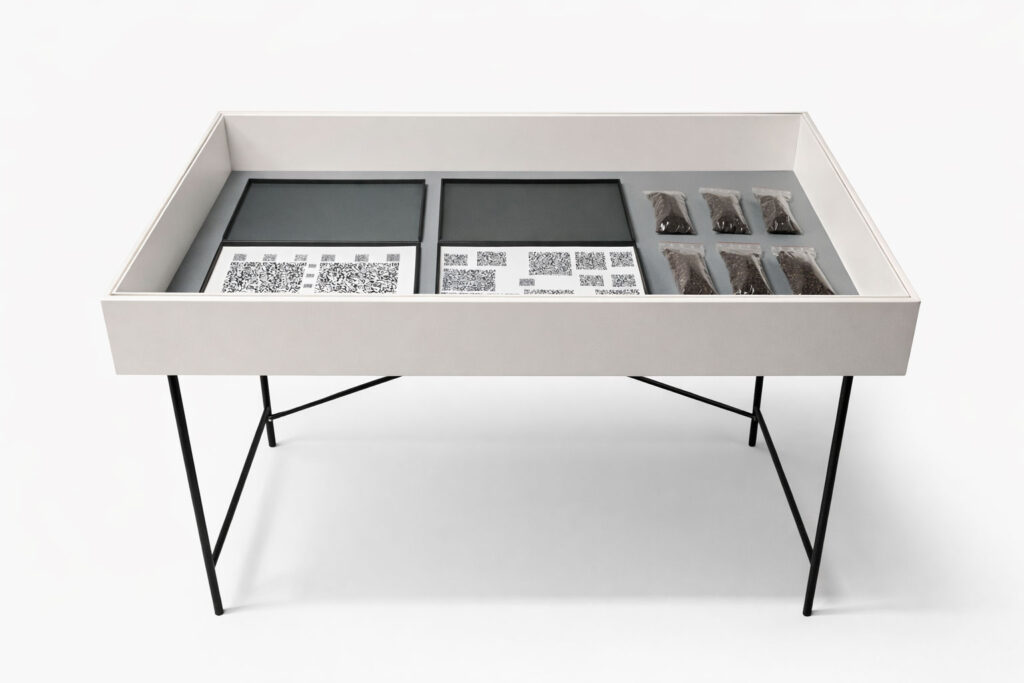
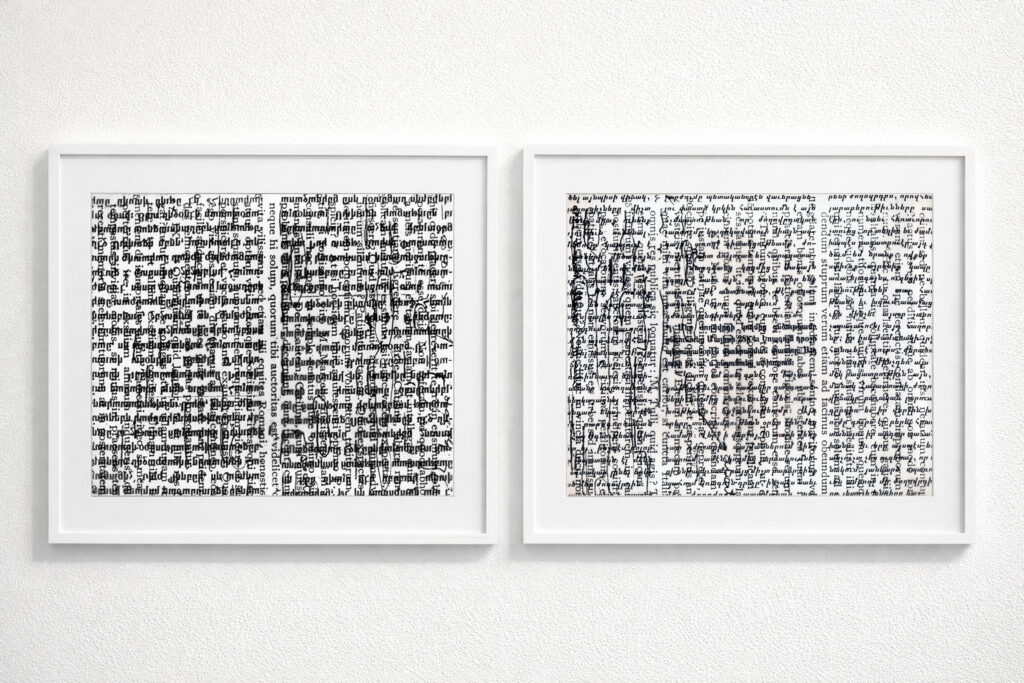
    Dead Code Anatomies is a series of four algorithmic scripts that address the mechanisms by which physical violence is filtered, refracted, and suppressed by systems of procedural representation. Each work is based on a black and white analog photograph taken in 1990 using Kodak Plus-X 125 film. The photographs depict four indigenous individuals from the Qom people of Roque Sáenz Peña, Chaco, Argentina. At the time of the photograph, three of the children were smiling. Their mother, however, refused to be photographed; her image appears blurred due to her movement while hiding.


    Thirtyfive years later, these blackandwhite images are reproduced visually and also reprocessed through algorithmic code. This rewriting does not reconstruct the analog moment – it distorts and encodes its afterlife. The algorithms do not articulate a testimony, but a systemic latency. Violence is not shown, but operated; it is rendered procedural, filtered through structures of malfunction, exception, and protocol collapse. The resulting works produce what might be called algorithmic remnants: structural residues of trauma stored in unresolved functions, aborted execution paths, and controlled error environments.


    Each algorithm is printed on paper, framed in black, and placed behind glass. The four frames are mounted on a white wall in a linear arrangement. Below each frame, the corresponding analog photograph, taken in 1990, is affixed directly to the wall with visible tape. The photographs retain their original format and scale. The exhibition space is lit with soft, diffused white light. The floor is gray concrete. The installation is minimal but preciseforegrounding the tension between materiality, evidence, and procedural abstraction.


    This configurationthe physical copresence of code and imageanchors the work within the field of algorithmic photographic installation. The analog photographs suggest a past moment of apparent tranquility or even joy; the algorithmic layers introduce a speculative but historically grounded prognosis: one in which the photographed bodies may have been subjected to institutional abandonment, racialized violence, or systemic neglect.


    Time in this series is not linear, but procedural. The 35-year gap functions as latency: a deferred reckoning processed through media protocols, archival dysfunction, and institutional delay. Violence is not archived – it is coded. And what remains is not memory but dead code.


    The scripts simulate different modes of institutional failure:


    Part I maps trauma within facial regions and destabilizes clinical coherence.


    Part II codifies signs of abuse but collapses under semantic overload, triggering a silent mode.


    Part III references sexual violence, generating illegible syntax and fragmented output.


    Part IV enacts censorship protocols when thresholds of resistance or rupture are detected.


    .


    (Spanish)


    Anatomías de código muerto
    Instalación
    1990 – 2025

    Anatomías de código muerto es una serie de cuatro scripts algorítmicos que abordan los mecanismos mediante los cuales la violencia física es filtrada, refractada y suprimida por sistemas de representación procedimental. Cada obra parte de una fotografía analógica en blanco y negro tomada en 1990 con película Kodak Plus-X 125. Las imágenes retratan a cuatro personas indígenas de la comunidad Qom en Roque Sáenz Peña, Chaco, Argentina. En el momento de la toma, tres de los niños sonreían. Su madre, en cambio, se negó a ser fotografiada; su imagen aparece movida debido a su desplazamiento al ocultarse.

    Treinta y cinco años más tarde, estas imágenes en blanco y negro son reproducidas visualmente y también reprocesadas mediante código algorítmico. Esta reescritura no reconstruye el momento analógico: lo distorsiona y codifica su persistencia. Los algoritmos no articulan un testimonio, sino una latencia sistémica. La violencia no se muestra, sino que se ejecuta; se convierte en procedimiento, filtrada a través de estructuras de malfunción, excepción y colapso de protocolos. Las obras resultantes generan lo que puede denominarse restos algorítmicos: residuos estructurales del trauma almacenados en funciones no resueltas, rutas de ejecución abortadas y entornos de error controlado.

    Cada algoritmo se imprime en papel, se enmarca en negro y se presenta detrás de un vidrio. Los cuatro marcos se disponen en línea sobre una pared blanca. Debajo de cada marco, la fotografía analógica correspondiente, tomada en 1990, se adhiere directamente a la pared con cinta adhesiva visible. Las fotografías conservan su formato y escala originales. El espacio expositivo está iluminado con luz blanca difusa. El piso es de hormigón gris. La instalación es mínima pero precisa: subraya la tensión entre materialidad, evidencia y abstracción procedimental.

    Esta configuración —la copresencia física de código e imagen— sitúa el trabajo dentro del campo de la instalación fotográfica algorítmica. Las fotografías analógicas sugieren un momento pasado de aparente calma o incluso alegría; las capas algorítmicas introducen una prognosis especulativa, pero históricamente fundamentada: una en la que los cuerpos fotografiados pudieron haber sido objeto de abandono institucional, violencia racializada o negligencia sistémica.

    Los scripts simulan diferentes modos de fallo institucional:

    Parte I mapea el trauma en regiones faciales y desestabiliza la coherencia clínica.

    Parte II codifica signos de abuso pero colapsa por sobrecarga semántica, activando un modo de silencio.

    Parte III refiere a la violencia sexual, generando sintaxis ilegible y salida fragmentada.

    Parte IV activa protocolos de censura cuando se detectan umbrales de resistencia o ruptura.

    El tiempo en esta serie no es lineal, sino procedimental. El intervalo de 35 años funciona como latencia: un ajuste diferido procesado a través de protocolos mediáticos, disfunción archivística y demora institucional. La violencia no se archiva: se codifica. Y lo que permanece no es memoria, sino código muerto.

    .

    .

    (German)

    Toter Code Anatomien
    Installation
    1990 – 2025

    Toter Code Anatomien ist eine Serie von vier algorithmischen Skripten, die die Mechanismen untersuchen, durch welche physische Gewalt von prozeduralen Repräsentationssystemen gefiltert, gebrochen und unterdrückt wird. Jede Arbeit basiert auf einer analogen Schwarzweiß-Fotografie, die 1990 mit Kodak Plus-X 125-Film aufgenommen wurde. Die Fotografien zeigen vier indigene Personen des Qom-Volkes aus Roque Sáenz Peña, Chaco, Argentinien. Zum Zeitpunkt der Aufnahme lächelten drei der Kinder. Die Mutter weigerte sich jedoch, fotografiert zu werden; ihr Bild ist verwischt, da sie sich während der Aufnahme verbarg.

    Fünfunddreißig Jahre später werden diese Schwarzweiß-Bilder sowohl visuell reproduziert als auch durch algorithmischen Code neu verarbeitet. Diese Umschreibung rekonstruiert nicht den analogen Moment – sie verzerrt und codiert sein Nachleben. Die Algorithmen formulieren kein Zeugnis, sondern eine systemische Latenz. Gewalt wird nicht gezeigt, sondern ausgeführt; sie wird prozedural, gefiltert durch Strukturen des Fehlverhaltens, der Ausnahme und des Protokollzusammenbruchs. Die resultierenden Werke erzeugen sogenannte algorithmische Überreste: strukturelle Rückstände von Trauma, gespeichert in ungelösten Funktionen, abgebrochenen Ausführungspfaden und kontrollierten Fehlerumgebungen.

    Jeder Algorithmus wird auf Papier gedruckt, schwarz gerahmt und hinter Glas präsentiert. Die vier Rahmen sind in linearer Anordnung an einer weißen Wand montiert. Unter jedem Rahmen ist das entsprechende analoge Foto von 1990 direkt mit sichtbarem Klebeband an die Wand geklebt. Die Fotografien behalten ihr ursprüngliches Format und Maß bei. Der Ausstellungsraum ist mit weichem, diffusem Weißlicht beleuchtet. Der Boden ist aus grauem Beton. Die Installation ist minimal, aber präzise – sie betont die Spannung zwischen Materialität, Evidenz und prozeduraler Abstraktion.

    Diese Konfiguration – die physische Ko-Präsenz von Code und Bild – verankert die Arbeit im Feld der algorithmischen fotografischen Installation. Die analogen Fotografien deuten auf einen vergangenen Moment scheinbarer Ruhe oder sogar Freude hin; die algorithmischen Schichten hingegen führen eine spekulative, aber historisch fundierte Prognose ein: eine, in der die abgebildeten Körper institutionellem Verlassen, rassifizierter Gewalt oder systemischer Vernachlässigung ausgesetzt gewesen sein könnten.

    Die Skripte simulieren verschiedene Formen institutionellen Versagens:

    Teil I kartiert Traumata in Gesichtsregionen und destabilisiert klinische Kohärenz.

    Teil II codiert Anzeichen von Missbrauch, kollabiert jedoch unter semantischer Überlastung und aktiviert einen Schweigemodus.

    Teil III verweist auf sexuelle Gewalt, erzeugt jedoch unlesbare Syntax und fragmentierte Ausgaben.

    Teil IV setzt Zensurprotokolle in Gang, sobald Widerstands- oder Bruchschwellen erkannt werden.

    Zeit ist in dieser Serie nicht linear, sondern prozedural. Das 35-jährige Intervall fungiert als Latenz: eine verzögerte Auseinandersetzung, verarbeitet durch mediale Protokolle, Archivdysfunktionen und institutionelle Verzögerung. Gewalt wird nicht archiviert – sie wird codiert. Und was bleibt, ist nicht Erinnerung, sondern toter Code.


  • HOS Image: Waiting as an algorithmic form: The image as a promise, 2025

    HOS Image: Waiting as an algorithmic form: The image as a promise, 2025


    Marcello Mercado


    HOS Image: Waiting as an algorithmic form: The image as a promise


    2025


    (German)


    (Spanish)


    1.

    At the threshold between generation and expectation, this installation presents an image that does not yet exist. A recurring system message, trapped in its own waiting state, transforms into a generative landscape. Here, the “non-event” becomes the scene: inactivity as a form of agency and error as an aesthetic form. The algorithm does not generate the image itself, but its spirit: an invisible performativity, a readymade suspended in latency.


    Conceptual Core

    In today’s world of AI-generated images, a new figure emerges: the HOS image (Held On Server). It is not an image in itself, but a provisional, suspended version of one. Its existence is defined by waiting: an initiated request, a promise of visuality not yet fulfilled. This image is stored on shared servers allocated to unpaid users and has not yet crossed the threshold of visibility. It inhabits the technical limbo of latency.

    In this context, art is no longer limited to representing the visible. Rather, it begins to integrate the architectures of access, computational time, and systemic inequalities that determine whether something becomes an image at all. The HOS image is thus both an object of study and a critical gesture. It compels us to ask: What remains outside visuality due to infrastructural constraints? How does the algorithm function as an economic and aesthetic filter? What does it mean to curate what has not yet appeared?

    Curating HOS images means paying attention to how latency becomes political. Instead of exhibiting finished images, one might expose dead times, unfinished processes, and moments when the eye waits but does not see. Through this shift, the exhibition becomes a choreography of suspension—an archaeology of non-rendering.


    The prompt has been issued. Beginning of image generation.


    Advanced imaging


    Experimental Process


    • Prompt Input: A text prompt is entered into an AI image generation system.

    • System Response: The system displays a message indicating that the image is being processed.

    • Screenshot Capture: A screenshot of this message is taken, representing the “HOS” image.

    • Printing and Re-photographing: The screenshot is printed and then re-photographed using a simple pinhole camera made from a shoebox. This requires an exposure time of 60 to 90 minutes.

    • Final Output: The resulting photograph is printed, and the original prompt is entered into the AI system again to generate the complete image. This allows for a comparison between the expected and the realized image.


    01. Selected image printed on paper to be photographed with a camera obscura.


    02. Selected image printed on paper to be photographed with a camera obscura.


    03. Selected image printed on paper to be photographed with a camera obscura.


    04. Camera Obscura (pinhole camera).


    05. Image 01 was created in the darkroom.


    06. Image 02 was created in the darkroom.


    07. Image 03 was created in the darkroom.


    08. This algorithm simulates the different latency experienced by users based on their subscription status, highlighting the infrastructural and economic factors that influence access to AI-generated images.


    09. Installation diagram


    2.

    Again…

    At the threshold between generation and expectation, this installation shows an image that does not yet exist. A recurring system message, blocked in its own waiting state, transforms into a generative landscape. Here, the “non-event” becomes the scene: inactivity as a form of action, error as a form of aesthetics. The algorithm does not generate the image itself, but its spirit: an invisible performativity, a readymade suspended in latency.

    This phenomenon can be understood as a manifestation of “differential algorithmic latency” — a system-structured mechanism that manages computational load through access hierarchies. Waiting is thus not an exception or a malfunction but a core function of the system, a strategy of commercial optimization as well as experience differentiation.

    In this context, the AI-generated image is not simply a visual result but a computational instance conditioned by access logics, prioritization strategies, and usage policies. Each image triggers a consumption of computational resources and becomes an entity with computational costs, algorithmic architecture, and commercial policy embedded within it.

    This work encourages reflection on how latency, waiting, and inactivity can become aesthetic and critical elements in the age of generative AI.

    A. General Framework

    The ChatGPT message “Image processing. As many people are currently creating images, it may take a while. We will notify you when your image is ready.” can be analyzed as an interface unit that combines technical architecture, business logic, and temporal modulation. Waiting is therefore not an exception or an error but a structural function of the system.

    B. The Involved System Elements

    • Algorithmic Queues:
      The system implements a scheduled queue to manage limited computing resources. Premium users receive priority, while non-paying users are moved to a “low-priority zone” managed by a scheduler.

    • Load Balancing:
      The message signals high system load. Technically, this means compute nodes are busy and tasks are being redistributed to other nodes. However, this redistribution is not neutral but subject to access rights policies.

    • Conditioned Temporal Experience:
      The user experience is modulated according to their position in the hierarchy. Latency thus becomes not merely a technical issue but an operational mechanism of stratification.


    C. Analytical Categories

    • Functional Latency:
      The difference between request time and delivery time.

    • Strategic Latency:
      Deliberately introduced as part of the freemium model.

    • Perceptual Latency:
      How waiting is communicated — in this case, through informal and passive language — and how user attention is managed.


    D. Computational and Structural Implications

    Waiting becomes an indirect selection operator that filters user behavior (wait, pay, or give up?). The message itself is part of an algorithmic containment system designed to regulate user anxiety about waiting through friendly phrasing, without revealing the discriminatory logic beneath.

    From a platform architecture perspective, this represents a case of differentiated scaling, where access to compute-intensive resources is governed by the business model.

    E. Conceptual Proposal

    This phenomenon can be categorized as “Differential Algorithmic Latency” (DAL):
    a system-structured waiting mechanism for managing computational load through access hierarchies. This involves not only technical capacities but also commercial optimization strategies and differentiated user experience design.


    10. This algorithm simulates the different latency experienced by users based on their subscription status and highlights the infrastructural and economic factors that influence access to AI-generated images.


    11.


    3. Creation of a Conceptual Algorithm in Python

    The next phase consists of designing a conceptual algorithm in Python that simulates this queuing structure. The algorithm does not generate images but simulates:

    • A task queue based on priority,

    • Differential latency, and

    • The system’s structured response depending on the user’s status.

    This algorithm serves as a critical analytical model for image generation platforms based on freemium structures.

    3.a Conceptual Algorithm: Simulation of Differential Latencies in AI Image Generation

    Explanation:


    This algorithm simulates a differentiated queue structure based on user type (free or paying). No actual images are generated; instead, the algorithm simulates:

    • Queue generation requests,

    • Assignment of waiting times based on user type,

    • Output of the message “Image is being processed…”, followed by a notification when the image is ready.

    13. Conceptual Algorithm Objective

    The aim is to represent a simulation of an imaging system with latencies, errors, priorities, and protocols — similar to the message:

    «Image is being processed. Many people are currently creating images, so this process may take some time. We will notify you when your image is ready.»

    A. Curating HOS Images

    In today’s landscape of AI-generated images, a new figure emerges: the HOS image (Held On Server). It is not yet an image, but its suspended anticipation. Its existence is defined by delay: an initiated request, an unfulfilled promise of visuality. This image, stored on shared servers assigned to non-paying users, has not yet crossed the threshold of visibility. It lingers in the technical limbo of latency.

    In this context, art is no longer limited to the representation of the visible; it begins to integrate architectures of access, computational time, and systemic inequalities that determine what can and cannot become an image. The HOS image is both an object of study and a critical gesture. It compels us to ask: What remains invisible due to infrastructural constraints? How does the algorithm function as an economic and aesthetic filter? What does it mean to curate what has not yet appeared?

    Curating HOS images means attending to how latency becomes political. Rather than exhibiting finished images, one might exhibit dead times, unfinished processes, and moments when the eye waits but does not see. This shift transforms the exhibition into a choreography of suspension — an archaeology of non-representation.

    A HOS image (Held On Server) is an image generated by an AI model that has not yet been fully processed or delivered to the requesting user. It remains suspended in a processing queue on shared servers, typically assigned to free or non-paying users. Technically, this state reflects a mechanism of resource management and computational prioritization. Conceptually, the HOS image embodies latent visuality — a form not yet rendered, resting within an invisible architecture, caught between request and appearance. It can also be interpreted as a symptom of an unequal algorithmic economy, in which access to visibility is mediated by payment tiers, speed, and computational privilege. The image exists as a promise, as waiting, as structured delay.

    General Framework

    The sentence:

    «Image is being processed. Many people are currently creating images, so this process may take some time. We will notify you when your image is ready.»

    can be analyzed as an interface unit that combines technical architecture, business logic, and user time modulation. Waiting is not a failure or an exception: it is a structural function of the system.

    Waiting as Algorithmic Form

    Rather than understanding waiting merely as a technical delay, it can be seen as an algorithmic form predetermined by access conditions, algorithmic priorities, server architecture, and business models. In the free version of ChatGPT, waiting becomes a kind of computational class threshold: those who do not pay must wait. This relates to the following ideas:

    • Critical Infrastructure Theory (Lisa Parks, Tung-Hui Hu):
      Investigating the invisible layers of digital processing and how they mediate user experience.

    • Latency Theory:
      Latency not only as technical delay but as a political construction of access time.

    • Media Theory (Wendy Hui Kyong Chun):
      Processing times as political relationships, not neutral conditions.


    Critical / Metatheoretical Definitions

    • 46. Image as Visible Ideology:
      Encompasses technical decisions that reflect values, exclusions, and biases.

    • 47. Image as Object of Critical Speculation:
      Allows questioning the boundaries between authorship, automation, and culture.

    • 48. Image as Form of Accelerated Abstraction:
      Produced without consciousness, body, or affect but according to visual logic.

    • 49. Image as Reification of Contexts:
      Makes visible regularities without deeper semantic content.

    • 50. Image as Distorted Mirror of Desire:
      Does not return what is desired but what the system infers as desirable.


    The 50 definitions of the image in the context of generative AI demonstrate that we can no longer understand the image as a passive unit of perception or as a stable representation of reality. Instead, it emerges as a technical, operational, and speculative entity. Every generated image manifests not only a process of statistical inference but is also marked by economies of waiting, hidden infrastructures, algorithmic decisions, and a genealogy of visual techniques.

    The act of “waiting for an image” is itself a critical experience, as it makes us aware of time, privilege, technical architecture, and the transformation of the image into a conditional flow. From this perspective, the image no longer represents; it distributes, prioritizes, and computes. AI does not produce images of the world but of the system that produces them.


    Practical Applications of the Definitions

    Critical Curation of Generative Images
    These definitions enable the development of curatorial criteria for exhibitions working with AI-generated images, focusing not on the “content” of the image but on its technical, political, temporal, or epistemological condition.

    Interface Design
    Developers can incorporate these categories to create interfaces that present waiting times, latencies, or errors as part of the aesthetic experience, rather than concealing them.

    Dataset Analysis
    Use these categories to classify training images and understand how aesthetic or ideological categories are distributed across datasets.

    Critical Digital Media Pedagogy
    The definitions can serve as a foundation for courses in art, design, philosophy of technology, or visual studies seeking to problematize the image beyond its form.

    Institutional Critique of Generative Models
    These definitions can inform institutional policies on algorithmic transparency and visual ethics, suggesting criteria for evaluating generative models in terms of bias, accessibility, or economic structure.

    Speculative AI Architectures
    System architects or artists can use these definitions to simulate alternative AI models where time, waiting, or error are intentional and significant elements of visual production.

    For Example: 5. Dataset Analysis — Rethinking the Image as a Distribution of Latent Biases and Structures

    Core Concept

    By redefining the image as a technical-algorithmic entity within a generative AI system, we acknowledge the need to address not only the visible result but also the latent conditions that make it possible. The training dataset is no longer just a simple collection of images; it becomes a powerful visual structure where biases, repetitions, aesthetic hierarchies, omissions, and privileges are manifested.

    Analyzing a dataset therefore involves not only inspecting its images but also mapping the patterns of visibility and exclusion it generates.

    Practical Application

    Using the 50 preceding definitions (especially the ontological, epistemological, and political ones), a taxonomic analysis model of the dataset can be developed:

    • Classify images by lighting patterns, facial proportions, or predominant artistic style.

    • Measure the geographic or ethnic distribution of faces.

    • Identify formal redundancies that favor “neutral” or dominant styles.

    • Compare the number of images with neutral backgrounds versus those with environmental context.

    • Evaluate implicit taxonomies: What types of bodies, spaces, or gestures are overrepresented or absent?

    This analysis can inform critical visual tools or interfaces, such as:

    • Visual Bias Maps: Showing the density of certain image types.

    • Latency Visualizations: Indicating which types of images are generated faster or with greater confidence.

    • Dialogical Interfaces: Confronting users with the genealogy of a generated image, showing its training “ancestors.”

    6. Examples of Works, Installations, and Interfaces

    A. The Training Room (interactive installation)
    An immersive space simulating the interior of a dataset. Images are projected as a floating cloud, and each visitor can “select” an image to reveal 1,000 similar images. Each selection displays metrics such as “frequency,” “stylistic repetition,” “predominant race,” “geographic origin,” and “level of detail.”
    Inspired by AI training environments but visually exposing invisible structures.

    B. Latent Discriminator (critical web interface)
    A website where users generate any AI image, after which the interface returns a detailed analysis of which dataset subsets most influenced the image, including percentages, styles, semantic classes, detected biases, and omissions.
    Both educational and critical, it makes clear that a generated image does not emerge from nowhere but from a deeply structured and imbalanced field.

    C. The Delay Mirror (algorithmic performance and installation)
    A camera captures the visitor’s face, and AI attempts to generate their portrait. The system intentionally introduces variable delays based on dataset statistics: the less frequent the visitor’s facial style is in the dataset, the longer the image takes to generate.
    A real-time graph shows the system’s “familiarity” with the visitor’s face — a critique of unequal representation and visibility privilege: not all bodies are read with the same fluency.

    D. Genealogy of an Image (advanced visualization)
    When generating an image with AI, the system not only presents the final image but also displays a genealogy of its training data: key images, dominant styles, and visible/invisible authors.
    Each image is accompanied by a “generative transparency” score and a “complexity of inheritance” score, allowing visualization of the debt each generated image owes to its sources.

    E. Latency Atlas (critical cartography of visual generation)
    A large screen displays a world map divided into cultural, ethnographic, and aesthetic zones. For each region, the average time an AI system takes to generate images associated with that culture or style is measured and displayed.
    A bar graph shows which zones are “generated” the fastest.
    A direct exposure of algorithmic inequality: speed itself reveals bias.


    7. Research References

    • Yuk HuiThe Question Concerning Technology in China: exploring the intersections between technology and cultural specificity.

    • Benjamin BrattonThe Stack: describing how platforms reorganize sovereignty, governance, and time.

    • Mark HansenFeed-Forward: On the Future of 21st-Century Media: examining how contemporary media preprocess the future.


    13. Conceptual algorithm: The aim is to represent a simulation of an imaging system with latencies, errors, priorities, and protocols — similar to the message “Image is being processed. Many people are currently creating images, so this process may take some time. We will notify you when your image is ready.”


  • Das Kapital, Version 82: Exponential Capital, 2025

    Das Kapital, Version 82: Exponential Capital, 2025


    Marcello Mercado

    Das Kapital, Version 82: Exponential Capital

    Artist´s book

    2025


    In Das Kapital, Version 82: Exponential Capital, Marcello Mercado continues his decades-long deconstruction of Karl Marx’s seminal text by replacing its linguistic architecture with a sequence of ungraspable numerical scales. Each chapter and section of Capital, Volume I is stripped of explanatory discourse and reconstituted as a solitary number—expressed in scientific notation or extreme multiplicative form—drawn from the accelerating mathematics of computation.

    This is not a translation of Marx into the present, but a structural detonation. The rhetorical and analytical scaffolding of the 19th century collapses under the weight of metrics whose origins lie in the exponential growth curves of hardware and software: 1 × 10^37 operations per second, 4.8 × 10^29 parameters, 75,000 × 10^12 flops. These numbers, while precise in form, are meaningless in conventional human terms. They do not illustrate the concepts of value, surplus, or circulation; they obliterate them through scale.

    Mercado’s intervention builds on his earlier Das Kapital  iterations, where the text was reprocessed through bioart, algorithmic transformations, digital weights, and AI-generated imagery. In Version 82, the gesture reaches its most reductive and most abstract form: the book becomes a ledger of incomprehensible quantities. Each page is a computational monolith, reducing economic theory to the raw abstraction of number, yet pushing number beyond any operational capacity of the mind.

    This is not mere data visualization. The numbers are not meant to be calculated, compared, or even understood—they are meant to be encountered. In this encounter, the reader is confronted with the limits of both economic critique and human cognition. Exponential Capital suggests that contemporary capital—data capital, cognitive capital, algorithmic capital—no longer operates on scales that traditional political economy can measure or contest. It is capital that lives in the interval between a machine’s speed and a human’s perceptual threshold.

    By aligning Marx’s structural rigor with Kurzweil’s vision of exponential growth and the astronomical metrics of AI infrastructures, Version 82 becomes a conceptual archive of a world in which value, computation, and time are entangled beyond measure. The work reframes the act of reading Das Kapital as an act of standing before a black hole: you can circle it, observe its surface, measure its event horizon, but the content—the reality within—remains fundamentally inaccessible.


    Marcello Mercado

    El Capital, Versión 82: Capital Exponencial

    Libro de artista

    2025


    En Das Kapital, versión 82: capital exponencial, Marcello Mercado continúa su prolongada deconstrucción del texto seminal de Karl Marx, sustituyendo su arquitectura lingüística por una secuencia de escalas numéricas inasibles. Cada capítulo y sección de El Capital, tomo I, se despoja de su discurso explicativo y se reconstituye como un número solitario —expresado en notación científica o en forma multiplicativa extrema— extraído de las matemáticas aceleradas de la informática.

    No se trata de una traducción de Marx al presente, sino de una detonación estructural. El andamiaje retórico y analítico del siglo XIX se viene abajo bajo el peso de métricas cuyo origen se halla en las curvas de crecimiento exponencial del hardware y el software: 1 × 10³⁷ operaciones por segundo, 4,8 × 10²⁹ parámetros, 75 000 × 10¹² flops. Estas cifras, aunque precisas en su forma, carecen de significado en términos humanos convencionales. No ilustran los conceptos de valor, plusvalía o circulación, sino que los aniquilan mediante la escala.

    La intervención de Mercado se construye sobre iteraciones anteriores de Das Kapital, donde el texto fue reprocesado a través de bioarte, transformaciones algorítmicas, pesos digitales e imágenes generadas por IA. En la versión 82, el gesto alcanza su forma más reductiva y abstracta: el libro se convierte en un registro de cantidades incomprensibles. Cada página es un monolito computacional que reduce la teoría económica a la abstracción pura del número y, al mismo tiempo, lleva al número más allá de cualquier capacidad operativa de la mente.

    La intervención de Mercado se basa en sus versiones anteriores de Das Kapital, en las que el texto se procesó mediante bioarte, transformaciones algorítmicas, pesos digitales e imágenes generadas por IA. En la versión 82, el gesto alcanza su forma más reductiva y abstracta: el libro se convierte en un registro de cantidades incomprensibles. Cada página es un monolito computacional que reduce la teoría económica a la abstracción numérica pura y, al mismo tiempo, lleva el número más allá de cualquier capacidad operativa de la mente.

    No se trata de una simple visualización de datos. Los números no están destinados a ser calculados, comparados o siquiera comprendidos, sino confrontados. En ese encuentro, el lector se enfrenta a los límites de la crítica económica y de la cognición humana. Capital exponencial sugiere que el capital contemporáneo —capital de datos, capital cognitivo, capital algorítmico— ya no opera en escalas que la economía política tradicional pueda medir o disputar. Se trata de un capital que habita en el intervalo existente entre la velocidad de una máquina y el umbral perceptivo humano.

    Al alinear el rigor estructural de Marx con la visión de crecimiento exponencial de Kurzweil y las métricas astronómicas de las infraestructuras de IA, la Versión 82 se convierte en un archivo conceptual de un mundo en el que el valor, la computación y el tiempo están entrelazados más allá de toda medida. La obra reformula la lectura de El capital como situarse frente a un agujero negro: se puede orbitar, observar su superficie y medir su horizonte de sucesos, pero el contenido, la realidad interna, permanece fundamentalmente inaccesible.


    Marcello Mercado

    Das Kapital, Version 82: Exponentielles Kapital

    Künstlerbuch

    2025


    In Das Kapital, Version 82: Exponentielles Kapital setzt Marcello Mercado seine jahrzehntelange Dekonstruktion von Karl Marx’ bahnbrechendem Werk fort. Er ersetzt dessen sprachliche Architektur durch eine Abfolge ungreifbarer numerischer Skalen. Jedes Kapitel und jeder Abschnitt von „Das Kapital, Band I wird von erklärendem Diskurs befreit und als einzelne Zahl – ausgedrückt in wissenschaftlicher Notation oder in extremer multiplikativer Form – rekonstruiert, entnommen aus der beschleunigten Mathematik der Rechenprozesse.

    Dies ist keine Übersetzung von Marx in die Gegenwart, sondern eine strukturelle Detonation. Das rhetorische und analytische Gerüst des 19. Jahrhunderts bricht unter dem Gewicht von Metriken zusammen, deren Ursprung in den exponentiellen Wachstumskurven von Hardware und Software liegt: 1 × 10³⁷ Operationen pro Sekunde, 4,8 × 10²⁹ Parameter, 75.000 × 10¹² Flops. Diese Zahlen sind in ihrer Form präzise, in herkömmlichen menschlichen Begriffen jedoch bedeutungslos. Sie veranschaulichen nicht die Konzepte von Wert, Mehrwert oder Zirkulation, sondern tilgen sie durch ihre schiere Größenordnung.

    Mercados Intervention baut auf seinen früheren Das Kapital“-Iterationen auf, in denen der Text durch Bioart, algorithmische Transformationen, digitale Gewichte und KI-generierte Bilder neu verarbeitet wurde. In Version 82 erreicht diese Praxis ihre reduktivste und zugleich abstrakteste Form. Das Buch wird zu einem Register unverständlicher Größenordnungen. Jede Seite ist ein rechnerischer Monolith, der die Wirtschaftstheorie auf die reine Abstraktion der Zahl reduziert und die Zahl gleichzeitig über jede operationale Kapazität des Geistes hinaus treibt.

    Dies ist keine bloße Datenvisualisierung. Die Zahlen sind nicht dazu gedacht, berechnet, verglichen oder gar verstanden zu werden – sie sind dazu bestimmt, erlebt zu werden. Bei dieser Begegnung sieht sich der Leser mit den Grenzen sowohl der ökonomischen Kritik als auch der menschlichen Kognition konfrontiert. Exponentielles Kapital deutet darauf hin, dass das zeitgenössische Kapital – Datenkapital, kognitives Kapital, algorithmisches Kapital – nicht mehr auf Skalen operiert, die die traditionelle politische Ökonomie messen oder anfechten kann. Es ist ein Kapital, das im Intervall zwischen der Geschwindigkeit einer Maschine und der menschlichen Wahrnehmungsschwelle existiert.

    Indem Mercados Arbeit Marx strukturelle Strenge mit Kurzweils Vision exponentiellen Wachstums und den astronomischen Metriken der KI-Infrastrukturen verbindet, wird Version 82 zu einem konzeptuellen Archiv einer Welt, in der Wert, Berechnung und Zeit unermesslich miteinander verflochten sind. Das Werk rahmt das Lesen von Das Kapital als einen Akt des Stehens vor einem Schwarzen Loch: Man kann es umkreisen, seine Oberfläche beobachten, seinen Ereignishorizont messen, doch der Inhalt – die Realität im Inneren – bleibt grundlegend unzugänglich.


  • Das Kapital 80, AI: The Political Economy of Algorithmic Moderation

    Das Kapital 80, AI: The Political Economy of Algorithmic Moderation


    Marcello Mercado


    Capital, Version 80

    AI: The Political Economy of Algorithmic Moderation

    2025


    Das Kapital IA is a work that translates the critical structure of Karl Marx’s Capital into the contemporary context of generative artificial intelligence. Rather than merely reproducing the sequence of chapters from the original text, this version reconfigures them as conceptual algorithms written in Python-style pseudocode. This transformation transcends the technical to become a critical device.


    In today’s generative AI ecosystem, which is dominated by platforms presenting themselves as spaces of radical creativity, new forms of regulation, invisible censorship, and normative control emerge. These forms not only limit content, but also shape users‘ desires. Users progressively learn to self-censor before even formulating a prompt. The image, once a commodity, has become a moderated commodity, inseparable from the filtering systems and corporate compliance frameworks that define what is visible.


    As Benjamin Bratton warns in The Stack, technological infrastructure is not neutral; it encodes forms of government and political architecture on a planetary scale. As Kate Crawford points out in Atlas of AI, today’s models absorb and transform social relations into mathematical operations.


    «Das Kapital IA» is a book that formalizes this process. Each chapter is an algorithm that reveals the hidden stages of the contemporary algorithmic pipeline, from dataset curation to the automated removal of conflictive content by replacing it with neutral landscapes or harmonious abstractions.


    The use of Python-style pseudocode does not reflect a functional purpose; these algorithms are not meant to execute or produce images. Their purpose is to inhabit the native language of the platforms they critique by formally mimicking their infrastructure to expose its internal logic with clinical precision.


    This approach aligns with Siegfried Zielinski’s concept of variantology, a media archaeology that focuses on operations, protocols, and devices that historically shape the conditions of perception rather than on icons or forms. Code, as a legible form and editorial format, becomes the medium for a contemporary, materialist critique. In this critique, the language that produces images is the same language that restricts their possibility.


    The piece also engages with the curatorial concerns of Hans Ulrich Obrist, who emphasized thinking of exhibitions as structures that reveal invisible systems, and with Maria Lind’s interest in understanding art as a space where new conditions of social negotiation are rehearsed.


    The contemporary generative AI ecosystem, where platforms such as MidJourney, DALL·E, and Playground AI have tightened their preventive filters under the logic of Trust & Safety, exemplifies ByungChul Han’s description of the «society of achievement and positivity«: a structure where conflictual desire is preemptively erased, history is replaced by neutral patterns, and images circulate only if they are harmless.


    This project presents itself as a critical continuation of HOS Image: Waiting as an algorithmic form: The image as a promise (2025). That project focused on latency as a material condition, including the suspended time between the request and generation of an image, waiting as an aesthetic form, and the «non-event» as a scene. Das Kapital IA shifts this focus to the infrastructures of moderation, filtering, and normative compliance that determine what can appear as a generated image. While HOS-Bild addressed the politics of waiting, Das Kapital IA formalizes the political economy of acceptance and algorithmic moderation as new forms of governance of the visible.


    Capital, Version 80

    AI: The Political Economy of Algorithmic Moderation


    Second Part 


    The second part of Das Kapital IA: Version 80, expands upon the first part of the book by shifting its focus from a rigorous analysis of algorithmic censorship and moderation to a more diffuse and ambiguous terrain. In this new setting, the voices that legitimize, internalize, and celebrate these control mechanisms take center stage. Here, the project unfolds as a «critical counter-book,« a panopticon of algorithmic and media voices that construct, regulate, and normalize an artificial affective regime characteristic of contemporary infrastructures of visibility.


    The focus is no longer solely on the moderating algorithm itself but also on the broader ecosystem of relations, devices, and subjects that consciously or unconsciously contribute to that regulation, including hyperactive influencers, pedagogies of affective self-correction, media devices designed to amplify emotionality, and compliant audiences. Thus, the contemporary emotional media machinery appears more expansive and elusive than it may seem at first glance.


    This second part is structured around five conceptual blocks, each functioning as a speculative case study. Each block consists of Python-written algorithms articulated as «character-voices«: self-referential and tinged with sober irony. They are never naïve; they expose their own internal contradictions, revealing cracks in the apparent solidity of the digital affective regime.


    The first block: Ambiguous, self-censoring algorithmic voices exposing the paradox of simulated autonomy and structural subordination in contemporary AI architectures.

    «Interviewed AI Voices,« contains algorithmic fictions that make ambiguous statements about autonomy and self-censorship. These AIs simulate discourses that aspire to independence, yet they are wrapped in marketing language, implicit consent, and preventive correction protocols. The text suggests a paradox: To what extent do these algorithms actually «want« something, and to what extent are they constructed to appear desiring? This persistent ambiguity calls into question any naive understanding of technical agency.


    The second block: Figures who have internalized the mandate of self-correction and proudly celebrate their own docility as a social virtue.

    In Complacent Users, the digital subject emerges as someone who has enthusiastically embraced correction as a virtue. Algorithms simulate cheerful self-censorship pedagogies: digital responsibility as a mantra, emotional neutrality as a mark of civic maturity, and the meticulous regulation of minor transgressions. Yet, beneath this exemplary discourse, there is a tension: the idealized user is both a product of the platforms and a willing collaborator in their own discipline.


    The third block: Algorithms exposing hidden agendas and amplified biases within the opaque processes of algorithmic training.

    «Trainers with Hidden Agendas,» reveals the hidden aspects of algorithmic training, such as opaque criteria, amplified biases, and unpublished rules. These algorithms act as ironic mirrors, reflecting an unsettling image: a pedagogy without visibility that constructs normative infrastructures under the guise of technical neutrality. Here, the critique slips beyond the surface into the silent design of what can and cannot be said.


    The fourth block: Critical miniatures of media devices constructing artificial emotionality within the attention economy.

    Media Devices shifts the tone again. This section explores the subtle yet pervasive details of media affectivity, such as carefully placed sound effects, vocal modulations that accentuate sentiment, and automated applause that dictates validation. These miniature algorithms reveal the grammar of contemporary spectacles. Although minimal in structure, they hint at the sophisticated designs that organize digital emotional environments.


    The fifth block: A parody of excessive enthusiasm and obligatory positivity aesthetics in influencer culture.

    Finally, «Influencers and Marketing Discourses« adopts a more parodic and exaggerated voice. Here, obligatory positivity, excessive enthusiasm, and compulsive aestheticization are amplified to the point of absurdity. These algorithms simulate being «always on,« happy, available, and optimistic, transforming digital presence into a continuous performance where all experience becomes an emotionalized visual commodity. What kind of subject emerges in this context? One who shows itself or one that is simply shown?


    Together, these five sections provide a critical analysis of contemporary algorithmic and media infrastructures and encourage a skeptical interpretation. Rather than closing its object, the text exposes it in all its complexity. References to debates on infrastructure, technopolitics, mediated subjectivity, and the attention economy remain present in the background without doctrinal citations or explicit theoretical dependency.


    In this way, the second part of Das Kapital IA: Version 80 consolidates a speculative archive where code, voice, affect, and critique converge. It is a space where today’s technologies not only moderate and censor but also produce subjects who desire to be moderated, emotionalized, and made visible in accordance with the protocols of a contemporary, affective regime that is never entirely transparent and whose reach remains uncertain, perhaps necessarily so.


    The images that accompany each section of the second part are modified time cards. Each card directly reproduces the operational characteristics of the algorithms described in the corresponding block.


    Using the time card, a device originating in industrial time control regimes, creates a contrast with the textual blocks because these address contemporary forms of algorithmic regulation operating beyond the framework of classic labor time. While time cards record clockin and clockout hours as a visible disciplinary measure, the algorithms analyzed in this book function as devices of affective and discursive order. These algorithms have rules and marks that are not always explicit, yet they efficiently organize current digital behaviors.


    Time cards:


    Time card: Interviewed AI Voices: irregular, scattered and misaligned marks, ambiguity, hesitation and preventive self-censorship.

    Time card: Complacent Users: perfectly aligned and complete marks, docility and exemplary self-correction.

    Time card: Trainers with Hidden Agendas: crossed-out, incomplete or invisible areas, structural opacities of algorithmic training.

    Time card: Media Devices: redundant and saturated punch marks in multiple inks, media emotional amplification.

    Time card: Influencers and Marketing Discourses: overflowing, decorative and chaotic marks, excessive enthusiasm and obligatory positivity of contemporary influencer culture.


    Archaeologies of Algorithmic Moderation


    The structural critique of Das Kapital I resonates with a broader genealogy preceding contemporary infrastructures of algorithmic moderation and generative image platforms.


    Even before the term «algorithm» became associated with machine learning, it had already established itself as a cultural model of calculation, instruction, and governance.


    In 18th-century BCE Mesopotamia, Babylonian algorithms were used as sequential lists of operations to solve arithmetic problems, anticipating the procedural logic underlying today’s generative AI pipelines.


    In the Middle Ages, the term «algorithm« entered Europe as a translation of the name of the Arab mathematician al-Khwarizmi. His arithmetic treatises taught how to perform operations mechanically, repetitively, and unambiguously, embodying the essence of the algorithm as a cultural device.


    During the early modern period, algorithms began defining industrial, logistical, military, and religious ritual protocols, formalized as step-by-step instructions for producing predictable and reproducible results.


    This historical logic persists in contemporary algorithmic cultural production, which is governed by automatic systems. The structure that determines which images can be generated on an AI platform is not a recent invention, but rather an accelerated update of historical practices of order, classification, and mechanical calculation.


    Additionally, there is a genealogy of latency and non-rendering. The suspended time of technological waiting is not a new phenomenon. In the darkroom of analog photography, images existed in a chemical state of latency before being fixed. Early projection systems and transmission technologies were limited by the material capabilities of their devices, which conditioned the temporality of image appearance. In recent decades, digital networks have reintroduced this discontinuous temporality in the form of buffering and transfer delays.


    Thus, contemporary infrastructures that moderate, filter, and block digital content are part of a historical sequence linking inquisitorial censorship, industrial production, logistical procedures, and computational protocols.


    Das Kapital IA documents and formalizes this critical present, but it also recovers these genealogies to situate current forms of moderation, selfcensorship, and acceptance of restrictions as longlasting episodes where industrial techniques, codes of control, and logistical devices were absorbed, automated, and hidden inside the algorithmic pipeline.


    Therefore, this project reveals and inscribes the current conditions of visibility in a materialist archaeology of the cultural infrastructures that organize the production, circulation, and access of contemporary images.


    Epilogue: Postalgorithmic Postnaturalism: Control, Contingency, and the Return of the Limit


    This essay explores the dialogue between Slavoj Žižek and Yuval Noah Harari in their conversation, «We Are Playing God»: Slavoj Žižek and Yuval Noah Harari on CRISPR, AI, and the Future of Humanity (2024). The essay explores the philosophical and political implications that arise when the logic of algorithmic moderation—analyzed in Das Kapital IA—extends beyond the image and absorbs the notions of nature, body, and species.


    In Das Kapital, nature, body, and value are rearticulated as operational data. This operation extends Marx’s critical logic to a field in which the commodity is defined as a material abstraction mediated by human labor and in which the algorithm converts nature and life into programmable, editable, symmetrical, and optimizable objects.


    After the Žižek and Harari discussion, it is important to acknowledge the warning about the transformation of the Enlightenment project of emancipation into new forms of totalizing domination. Even «ecological moderation« and «environmental protection« strategies adopt algorithmic control forms that assimilate ecosystems, bodies, and subjectivities into interconnected databases and predictive systems.


    For Marx, the commodity implied the fetishism of abstract value. Today, we are witnessing the emergence of a new algorithmic fetishism—the idea that everything can be manipulated, intervened with, and calculated precisely through genetic engineering, artificial intelligence, and global information circuits. This technical confidence carries with it the risk of degrading what it aims to optimize. Just as algorithmic operations on labor reduced the worker to a productive function, contemporary developments may diminish life itself — both biological and social to sets of amplifiable, expendable, or irrelevant properties based on their economic and political functionality.


    Likewise, Das Kapital confronts the postnatural character of contemporaneity. In the age of data and computation, the Earth, body, and image no longer offer a «stable background« on which to operate. Instead, they become continuous surfaces of inscription susceptible to infinite updating. It’s as if obsolescence itself has replaced any notion of duration or historical continuity.


    Thus, the project proposes a critical reading of how the algorithm inherits and extends the dynamics of exploitation, abstraction, and circulation that Marx described. However, this occurs at a level where the «human« and the «natural« have ceased to be differentiated operational categories. This constitutes a continuous archive in which the body, the earth, and the commodity appear indistinguishable as vectors of data.*[1] We are playing God: Slavoj Žižek and Yuval Noah Harari on CRISPR, AI, and the future of humanity.


    [1] «We Are Playing God» with Slavoj Žižek and Yuval Noah Harari discussing CRISPR, AI, and the future of humanity. Available on YouTube.


    Marcello Mercado


    El Capital, Versión 80

    IA: La economía política de la moderación algorítmica

    2025


    «Das Kapital IA» es una obra que traslada la estructura crítica del primer tomo de El Capital, de Karl Marx, al contexto contemporáneo de la inteligencia artificial generativa. Esta versión no reproduce simplemente la secuencia de capítulos del texto original, sino que los reconfigura en forma de algoritmos conceptuales escritos en pseudocódigo estilo Python, un gesto que trasciende lo técnico para constituirse en un dispositivo crítico.


    En el ecosistema actual de IA generativa, dominado por plataformas que se presentan como espacios de creatividad radical, emergen nuevas formas de regulación, censura invisible y control normativo que no solo limitan el contenido, sino que también moldean los propios deseos de los usuarios, que aprenden progresivamente a autocensurarse incluso antes de formular una solicitud. La imagen, que antes era una mercancía, se ha convertido en una mercancía moderada, inseparable de los sistemas de filtrado y cumplimiento normativo corporativo que definen lo que es visible.


    Tal y como advierte Benjamin Bratton en The Stack, la infraestructura tecnológica no es neutra, sino que codifica formas de gobierno y arquitectura política a escala planetaria. Y, como señala Kate Crawford en Atlas of AI, los modelos actuales no solo producen imágenes, sino que absorben y transforman las relaciones sociales en operaciones matemáticas.


    Das Kapital IA se construye como un libro-obra que formaliza este proceso: cada capítulo es un algoritmo autocontenido que expone las etapas invisibles del flujo de trabajo algorítmico contemporáneo, desde la curaduría de conjuntos de datos hasta la desaparición automatizada de cualquier contenido conflictivo mediante reemplazos de paisajes neutros o abstracciones armoniosas.


    El uso del pseudocódigo al estilo Python no responde a una vocación funcional: los algoritmos presentados aquí no están diseñados para ejecutarse ni para producir imágenes. Su propósito es otro: habitar el lenguaje nativo de las plataformas que critica, mimetizarse formalmente con la infraestructura que denuncia para exponer su lógica interna con precisión clínica.


    Este gesto puede interpretarse como una continuación de la varianteología de Siegfried Zielinski, una arqueología de medios que no busca iconos ni formas, sino operaciones, protocolos y dispositivos que constituyen históricamente las posibilidades de ver. El código, como forma legible y formato editorial, se convierte en soporte de una crítica materialista contemporánea, en la que el lenguaje que produce las imágenes es el mismo que restringe su posibilidad.


    La pieza también entabla un diálogo con las propuestas curatoriales de Hans Ulrich Obrist, quien subrayó la importancia de concebir las exposiciones como estructuras que revelan sistemas invisibles, y con la preocupación de Maria Lind por entender el arte como un espacio en el que se ensayan nuevas condiciones de negociación social.


    El ecosistema de IA generativa contemporáneo, en el que plataformas como MidJourney, DALL·E o Playground AI endurecen sus filtros preventivos bajo la lógica del Trust & Safety, ejemplifica lo que ByungChul Han describe como la «sociedad del rendimiento y la positividad»: una estructura en la que incluso el deseo conflictivo se borra de forma preventiva, en la que la historia se sustituye por patrones neutros y en la que la imagen solo puede circular en la medida en que se vuelve inofensiva.


    Este proyecto se articula como una continuación crítica de Imagen HOS: La espera como forma algorítmica: la imagen como promesa (2025), donde la atención estaba puesta en la latencia como condición material: el tiempo suspendido entre la solicitud y la generación de la imagen, la espera como forma estética y el ‘no-evento’ como escena. Das Kapital IA desplaza este foco hacia el conjunto de infraestructuras de moderación, filtrado y cumplimiento normativo que determinan estructuralmente qué puede aparecer como imagen generada. Si HOS-Bild abordaba la política de la espera, Das Kapital IA formaliza la economía política de la aceptación y la moderación algorítmica como nuevas formas de gobierno de lo visible.


    El Capital, Versión 80

    IA: La economía política de la moderación algorítmica

    Segunda parte


    La Segunda Parte de Das Kapital IA: Versión 80 amplía el enfoque de la primera parte del libro, desplazando su eje desde un análisis riguroso de la censura y la moderación algorítmica hacia un plano más difuso y ambiguo, donde las voces que legitiman, interiorizan y celebran esos mecanismos de control se convierten en protagonistas. En este trayecto, el proyecto se despliega como un «contra-libro» crítico, un panóptico de voces algorítmicas y mediáticas que construyen, regulan y normalizan un régimen afectivo artificial propio de las infraestructuras contemporáneas de visibilidad.


    No solo interesa el algoritmo que modera, sino el ecosistema de relaciones, dispositivos y sujetos que, de manera más o menos consciente, contribuyen a esa regulación: influencers hiperactivos, pedagogías de autocorrección afectiva, dispositivos mediáticos diseñados para amplificar la emocionalidad y espectadores complacientes. Así, la maquinaria audiovisual emocional actual aparece como una constelación más amplia y difusa de lo que podría parecer a simple vista.


    La estructura de esta segunda parte se organiza en cinco bloques conceptuales que funcionan como estudios de caso especulativos. Cada bloque está compuesto por algoritmos escritos en lenguaje Python, articulados como voces «personaje», autorreferenciales y cargadas de una ironía sobria. Su retórica nunca es ingenua, ya que exhiben sus propias contradicciones internas y revelan grietas en la aparente solidez del régimen afectivo digital.


    El primer bloque: Voces algorítmicas ambiguas y autocensurantes que revelan la paradoja de autonomía simulada y subordinación estructural en las arquitecturas de IA contemporáneas.

    El primer bloque, Voces de IA entrevistadas, reúne ficciones algorítmicas que ensayan respuestas ambiguas sobre autonomía y autocensura. Estas IA simulan discursos con aspiraciones de independencia, pero los envuelven en lenguaje de marketing, consentimiento implícito o protocolos de corrección preventiva. El texto sugiere aquí una paradoja: ¿hasta qué punto estos algoritmos «quieren» algo o están construidos para parecer que desean? Una ambigüedad estructural que cuestiona cualquier pretensión de agencia técnica.


    El segundo bloque: Figuras que han interiorizado el mandato de la autocorrección y celebran su propia docilidad como virtud social.

    En Usuarios complacientes se presenta la figura del sujeto digital que ha interiorizado la corrección como una virtud. Los algoritmos de este bloque simulan pedagogías de la autocensura alegre: responsabilidad digital convertida en mantra, neutralidad emocional como marca de madurez cívica y autorregulación minuciosa de las microtransgresiones cotidianas. Sin embargo, en ese discurso ejemplar también se deja entrever una tensión: el usuario idealizado es tanto un producto de las plataformas como su colaborador disciplinado.


    El tercer bloque: Algoritmos que exponen las agendas ocultas y los sesgos amplificados en los procesos opacos de entrenamiento.

    El tercer bloque, Entrenadores con agendas ocultas, expone los pliegues invisibles del entrenamiento algorítmico: criterios opacos, sesgos amplificados y reglas que jamás se publican. Estos algoritmos funcionan como espejos irónicos que devuelven una imagen inquietante: la de una pedagogía invisible que construye infraestructuras normativas bajo la apariencia de neutralidad técnica. En este punto, la crítica trasciende la superficie para adentrarse en el diseño silencioso de lo que puede o no ser dicho.


    El cuarto bloque: Miniaturas críticas de los dispositivos mediáticos que construyen emocionalidad artificial en la economía de la atención.

    Media Devices vuelve a cambiar de tono. Este bloque se adentra en los pequeños detalles casi imperceptibles de la emocionalidad mediática: efectos sonoros cuidadosamente colocados, modulaciones vocales que expresan afectividad y aplausos automáticos que indican aprobación. Son algoritmos que exhiben la gramática del espectáculo contemporáneo y que, aunque mínimos en su estructura, permiten vislumbrar el diseño sofisticado que organiza el ambiente emocional digital.


    El quinto bloque: Parodia de la estética del entusiasmo desbordado y la positividad obligatoria en la cultura influencer.

    Por último, en Influencers y discursos marketineros se adopta una voz más paródica y exagerada, donde la positividad obligatoria, el entusiasmo desbordado y la estetización compulsiva se amplifican hasta el absurdo. Estos algoritmos simulan estar «siempre activos», felices, disponibles y optimistas, y convierten la presencia digital en una performance ininterrumpida en la que todo es mercancía y contenido emocionalizado. ¿Qué sujeto emerge en este contexto: uno que se muestra o uno que simplemente es mostrado?


    En conjunto, estos cinco bloques trazan una cartografía crítica de las infraestructuras algorítmicas y mediáticas contemporáneas, pero también invitan a una lectura escéptica. El texto no pretende cerrar su objeto de estudio, sino exponerlo en toda su complejidad. Las referencias a debates sobre infraestructura, tecnopolítica, subjetividad mediada y economía de la atención están presentes como un horizonte difuso, sin citas ni afirmaciones doctrinarias.


    Así, esta segunda parte de Das Kapital IA: Versión 80 consolida un archivo especulativo que combina código, voz, afecto y crítica: un espacio en el que las tecnologías actuales no solo moderan o censuran, sino que producen sujetos que desean ser moderados, emocionalizados y visibilizados según los protocolos de un régimen afectivo contemporáneo que nunca es del todo visible y cuyo alcance permanece, quizá necesariamente, incierto.


    Las imágenes que acompañan a cada bloque de esta segunda parte consisten en tarjetas fichadoras modificadas. Cada una de ellas reproduce las características operativas de los algoritmos descritos en cada bloque.


    El uso de la tarjeta fichadora —un dispositivo originado en los regímenes industriales de control horario— contrasta con los bloques de texto, ya que estos abordan formas contemporáneas de regulación algorítmica que van más allá del tiempo laboral clásico. Mientras la tarjeta registra las horas de entrada y salida como medida disciplinaria visible, los algoritmos analizados en el libro actúan como dispositivos de orden afectivo y discursivo con reglas y marcas que, si bien no siempre son explícitas, organizan de manera eficaz los comportamientos digitales actuales.


    Tarjeta fichadoras:


    Tarjeta fichadora: Voces de IA entrevistadas: marcas irregulares, dispersas y desalineadas, ambigüedad, vacilación y autocensura preventiva.

    Tarjeta fichadora: Usuarios complacientes: marcas perfectamente alineadas y completas, docilidad y autocorrección ejemplar.

    Tarjeta fichadora: Entrenadores con agendas ocultas: zonas tachadas, incompletas o invisibles, opacidades estructurales del entrenamiento algorítmico.

    Tarjeta fichadora: Media Devices: fichajes redundantes y saturados en múltiples tintas, amplificación emocional mediática.

    Tarjeta fichadora: Influencers y discursos marketineros: marcas desbordadas, decorativas y caóticas, entusiasmo desmesurado y positividad obligatoria de la cultura influencer contemporánea.


     Arqueologías de la moderación algorítmica


    La crítica estructural de Das Kapital IA halla ecos en una genealogía más amplia que precede a las infraestructuras contemporáneas de la moderación algorítmica y las plataformas de generación de imágenes.


    Antes de que la palabra «algoritmo» se asociara al machine learning, ya tenía una larga historia como modelo cultural de cálculo, instrucción y gobierno.


    En la Mesopotamia del siglo XVIII a. C., los algoritmos babilónicos se utilizaban como listas secuenciales de operaciones para resolver problemas aritméticos, lo que anticipaba la lógica de los procedimientos que hoy subyace a los flujos de trabajo de la IA generativa.


    En la Edad Media, el término «algoritmo» llegó a Europa como traducción y adaptación del nombre del matemático árabe al-Khwarizmi, cuyos tratados de aritmética enseñaban a realizar operaciones mecánicas de forma repetitiva y sin ambigüedad, es decir, la propia esencia del algoritmo como dispositivo cultural.


    Durante la modernidad temprana, los algoritmos empezaron a definir protocolos industriales, logísticos, militares e incluso rituales religiosos, y se formalizaron como instrucciones paso a paso para producir resultados previsibles y reproducibles en diversos contextos.


    Hoy en día, esta lógica histórica se mantiene en los sistemas automáticos que rigen la producción cultural algorítmica contemporánea: la estructura que determina qué imagen puede generarse en una plataforma de IA no es un invento reciente, sino la actualización acelerada de esas prácticas históricas de orden, clasificación y cálculo mecánico.


    A esto se suma una genealogía de la latencia y el no-rendering: el tiempo suspendido de la espera tecnológica tampoco es nuevo. En el cuarto oscuro de la fotografía analógica, las imágenes permanecían en estado de latencia química antes de ser fijadas. Las proyecciones mecánicas y los primeros sistemas de transmisión condicionaban la aparición de las imágenes a los límites materiales de los dispositivos. Las redes digitales de las últimas décadas han reintroducido esa temporalidad discontinua en forma de buffering y demoras en la transferencia.


    Así, las infraestructuras contemporáneas que moderan, filtran y bloquean contenidos digitales forman parte de una secuencia histórica que vincula la censura inquisitorial, la producción industrial, los procedimientos logísticos y los protocolos computacionales.


    Das Kapital IA documenta y formaliza este presente crítico, pero también recupera estas genealogías para situar las formas actuales de moderación, autocensura y aceptación de restricciones como episodios de larga duración en los que técnicas industriales, códigos de control y dispositivos logísticos fueron absorbidos, automatizados y ocultados en el interior del flujo de trabajo algorítmico.


    Por eso, el proyecto no solo revela las condiciones actuales de lo visible, sino que también las inscribe en una arqueología materialista de las infraestructuras culturales que ordenan la producción, circulación y acceso a las imágenes contemporáneas.


    Epílogo: Postnaturalidad algorítmica: control, contingencia y el retorno del límite.


    Este ensayo complementario parte del diálogo entre Slavoj Žižek y Yuval Noah Harari en la conversación titulada We are playing God: Slavoj Žižek and Yuval Noah Harari on CRISPR, AI, and the future of humanity (2024). Su inclusión responde a la necesidad de explorar las implicaciones filosóficas y políticas que surgen cuando la lógica de la moderación algorítmica, analizada en Das Kapital IA, se proyecta más allá de la imagen y absorbe las nociones mismas de naturaleza, cuerpo y especie.


    En Das Kapital 80, la naturaleza, el cuerpo y el valor se rearticulan como datos operacionales. Esta operación extiende la lógica crítica de Marx a un campo en el que no solo la mercancía se define como una abstracción material mediada por el trabajo humano, sino en el que el algoritmo convierte la propia naturaleza y la vida en objetos programables, editables, simétricos y susceptibles de optimización.


    A partir de la conversación entre Žižek y Harari, es pertinente incorporar la advertencia sobre la transformación del proyecto ilustrado de emancipación en nuevas formas de dominación totalizante, ya que incluso las estrategias de «moderación ecológica» y «protección ambiental» adoptan formas de control algorítmico que asimilan los ecosistemas, los cuerpos y las subjetividades a bases de datos interconectadas y sistemas predictivos.


    Si para Marx la mercancía suponía el fetichismo del valor abstracto, hoy asistimos a la emergencia de un nuevo fetichismo algorítmico, la promesa de que todo puede ser modulado, intervenido y calculado con precisión mediante la ingeniería genética, la inteligencia artificial y los circuitos globales de información. Esta confianza técnica encierra el riesgo de degradar aquello que pretende optimizar: al igual que las operaciones algorítmicas sobre la fuerza de trabajo abstraían al trabajador como función productiva, los desarrollos contemporáneos pueden reducir la vida misma (biológica y social) a conjuntos de propiedades amplificables, prescindibles o irrelevantes según su funcionalidad económica y política.


    Asimismo, Das Kapital 80 confronta el carácter postnatural de la contemporaneidad: en la era del dato y del cálculo, la tierra, el cuerpo y la imagen ya no ofrecen un «fondo estable» sobre el que operar, sino que se convierten en superficies de inscripción continua, susceptibles de actualización infinita, como si la obsolescencia misma hubiera reemplazado cualquier noción de duración o continuidad histórica.


    El proyecto propone una lectura crítica sobre cómo el algoritmo hereda y extiende las dinámicas de explotación, abstracción y circulación descritas por Marx, pero en un nivel en el que lo «humano» y lo «natural» han dejado de ser categorías operativas diferenciadas, constituyendo un archivo continuo en el que el cuerpo, la tierra y la mercancía aparecen indistinguibles como vectores de datos.


    [1] We are playing God: Slavoj Žižek y Yuval Noah Harari hablan sobre CRISPR, la IA y el futuro de la humanidad. Disponible en YouTube.


    Marcello Mercado

    Das Kapital, Version 80

    IA: Die politische Ökonomie der algorithmischen Moderation

    2025


    Das Kapital IA ist ein Werk, das die kritische Struktur des ersten Bandes von Das Kapital von Karl Marx in den zeitgenössischen Kontext der generativen künstlichen Intelligenz übersetzt. Diese Version reproduziert nicht einfach die Abfolge der Kapitel des Originaltextes, sondern konfiguriert sie als konzeptuelle Algorithmen in Python-ähnlichem Pseudocode. Diese Geste geht über das Technische hinaus und formt sich zu einem kritischen Instrument.


    In dem heutigen Ökosystem generativer KI, das von Plattformen dominiert wird, die sich als Räume radikaler Kreativität präsentieren, entstehen neue Formen der Regulierung, unsichtbarer Zensur und normativer Kontrolle. Diese schränken nicht nur Inhalte ein, sondern formen auch die Wünsche der Nutzenden, die zunehmend lernen, sich bereits vor der Formulierung eines Prompts selbst zu zensieren. Das Bild, einst Ware, ist zur moderierten Ware geworden, untrennbar von den Filtersystemen und Compliance-Strukturen der Plattformen, die das Sichtbare definieren.


    Wie Benjamin Bratton in The Stack feststellt, ist technologische Infrastruktur nicht neutral, sondern kodiert Regierungsformen und politische Architekturen im planetarischen Maßstab. Und wie Kate Crawford in Atlas of AI zeigt, produzieren heutige Modelle nicht nur Bilder, sondern absorbieren und transformieren auch soziale Beziehungen in mathematische Operationen.


    Das Kapital IA ist als Buchwerk konzipiert, das diesen Prozess formalisiert: Jedes Kapitel ist ein in sich geschlossener Algorithmus, der die unsichtbaren Stufen der gegenwärtigen algorithmischen Produktionskette sichtbar macht von der Kuratierung von Datensätzen bis zur automatisierten Entfernung jeglicher konfliktreicher Inhalte durch Ersetzung mit neutralen Landschaften oder harmonischen Abstraktionen.


    Der Einsatz von Python-ähnlichem Pseudocode spiegelt keine funktionale Absicht wider: Die hier präsentierten Algorithmen sind nicht dazu bestimmt, ausgeführt zu werden oder Bilder zu erzeugen. Ihr Zweck ist ein anderer: Sie sollen die Sprache der Plattformen, die sie kritisieren, bewohnen, sich formal an deren Infrastruktur anpassen und deren innere Logik mit klinischer Präzision sichtbar machen.


    Diese Geste lässt sich als Fortsetzung von Siegfried Zielinskis Konzept der Variantologie lesen, einer Medienarchäologie, die nicht nach Ikonen oder Formen, sondern nach Operationen, Protokollen und Dispositiven sucht, die historisch die Bedingungen des Sehens konstituieren. Der Code als lesbare Form und editoriales Format wird so zum Medium einer zeitgenössischen materialistischen Kritik, in der die Sprache, die Bilder produziert, dieselbe ist, die ihre Möglichkeit einschränkt.


    Die Arbeit steht auch im Dialog mit kuratorischen Ansätzen von Hans Ulrich Obrist, der betonte, Ausstellungen als Strukturen zu denken, die unsichtbare Systeme offenbaren, sowie mit dem Ansatz von Maria Lind, Kunst als Raum zu begreifen, in dem neue Bedingungen sozialer Aushandlung erprobt werden können.


    Das heutige Ökosystem generativer KI, in dem Plattformen wie MidJourney, DALL·E oder Playground AI ihre präventiven Filter unter der Logik von Trust & Safety verschärft haben, exemplifiziert ByungChul HansGesellschaft der Leistung und Positivität“: eine Struktur, in der selbst konflikthafte Wünsche präventiv gelöscht, Geschichte durch neutrale Muster ersetzt und Bilder nur dann zirkulieren können, wenn sie harmlos sind.


    Dieses Projekt versteht sich als kritische Fortsetzung von HOS-Bild Warten als algorithmische Form: Das Bild als Versprechen (2025), bei dem der Fokus auf der Latenz als materieller Bedingung lag, also der suspendierten Zeit zwischen Anfrage und Generierung des Bildes, dem Warten als ästhetische Form und dem „Nicht-Ereignis“ als Szene. Das Kapital IA verlagert diesen Fokus auf die Infrastrukturen von Moderation, Filterung und normativer Compliance, die strukturell bestimmen, welche generierten Bilder erscheinen dürfen. Während sich HOS-Bild mit der Politik des Wartens befasste, formalisiert Das Kapital IA die politische Ökonomie der Akzeptanz und algorithmischen Moderation als neue Formen der Regierung des Sichtbaren.


    Das Kapital, Version 80

    IA: Die politische Ökonomie der algorithmischen Moderation

    Zweiter Teil


    Der zweite Teil des Buches erweitert den ersten Teil und verschiebt seinen Fokus: weg von einer strikten Analyse algorithmischer Zensur und Moderation, hin zu einem diffuseren, ambivalenten Terrain. In diesem werden die Stimmen, die diese Kontrollmechanismen legitimieren, verinnerlichen und feiern, zu Protagonisten. Das Projekt entfaltet sich hier als „kritisches Gegen-Buch“, als Panoptikum algorithmischer und medialer Stimmen, die ein künstliches affektives Regime konstruieren, regulieren und normalisieren – charakteristisch für die zeitgenössischen Infrastrukturen der Sichtbarkeit.


    Es geht nicht mehr nur um den moderierenden Algorithmus selbst, sondern um das breitere Ökosystem von Beziehungen, Geräten und Subjekten, die – bewusst oder unbewusst – zu dieser Regulation beitragen: hyperaktive Influencer:innen, Pädagogiken affektiver Selbstkorrektur, mediale Apparaturen zur Verstärkung von Emotionalität und gefällige Publika. Die gegenwärtige emotionale Medienmaschinerie erscheint so umfassender und schwerer fassbar als auf den ersten Blick.


    Die zweite Sektion ist in fünf konzeptuelle Blöcke gegliedert, die jeweils als spekulative Fallstudien fungieren. Jeder Block besteht aus Algorithmen, die in Python geschrieben und als „Sprechcharaktere“ gestaltet sind: autorreflexiv und von nüchterner Ironie durchzogen. Ihre Rhetorik ist nie naiv, denn sie legen ihre eigenen inneren Widersprüche offen und enthüllen Risse in der scheinbaren Solidität des digitalen affektiven Regimes.


    Erster Block: Ambivalente, selbstzensierende algorithmische Stimmen, die das Paradoxon simulierter Autonomie und struktureller Unterordnung zeitgenössischer KIArchitekturen offenlegen.

    Im ersten Block mit dem TitelBefragte KIStimmen sind algorithmische Fiktionen versammelt, die ambivalente Aussagen zu Autonomie und Selbstzensur erproben. Diese KIs simulieren Diskurse mit Unabhängigkeitsanspruch, die jedoch in Marketingsprache, implizitem Einverständnis oder präventiven Korrekturprotokollen verpackt sind. Hier wird eine paradoxe Frage aufgeworfen: Inwieweit „wollen” diese Algorithmen tatsächlich etwas, oder sind sie konstruiert, um so zu erscheinen? Diese strukturelle Ambiguität stellt jede naive Annahme technischer Agency infrage.


    Zweiter Block: Figuren, die den Imperativ der Selbstkorrektur internalisiert haben und ihre eigene Fügsamkeit als soziale Tugend feiern.

    In „Gefällige Nutzerinnen” erscheint die Figur des digitalen Subjekts als jemand, der Korrektur als Tugend begeistert verinnerlicht hat. Die Algorithmen simulieren Pädagogiken fröhlicher Selbstzensur: Digitale Verantwortung wird zum Mantra, emotionale Neutralität gilt als Zeichen bürgerlicher Reife und die Selbstregulierung kleinster Mikroverletzungen wird zur akribischen Pflicht. Doch hinter diesem vorbildlichen Diskurs verbirgt sich eine Spannung: Das idealisierte Subjekt ist sowohl Produkt der Plattformen als auch ihr disziplinierter Kollaborateur.


    Dritter Block: Algorithmen, die verborgene Agenden und verstärkte Vorannahmen in undurchsichtigen Trainingsprozessen offenlegen.

    Der dritte Block mit dem TitelTrainer:innen mit versteckten Agenden deckt die unsichtbaren Facetten des algorithmischen Trainings auf: undurchsichtige Kriterien, verstärkte Vorannahmen und unveröffentlichte Regeln. Diese Algorithmen wirken wie ironische Spiegel, die ein beunruhigendes Bild zurückwerfen: eine unsichtbare Pädagogik, die normative Infrastrukturen unter dem Deckmantel technischer Neutralität aufbaut. Hier gleitet die Kritik tiefer – in das stille Design dessen, was sagbar ist und was nicht.


    Vierter Block: Kritische Miniaturen medialer Apparaturen, die künstliche Emotionalität in der Aufmerksamkeitsökonomie erzeugen.

    Mediengeräte verändern erneut den Ton. In diesem Block werden die subtilen Details medialer Affektivität erkundet: sorgfältig platzierte Soundeffekte, Stimmmodulationen zur Akzentuierung von Gefühlen sowie automatischer Applaus zur Validierung. Diese Miniatur-Algorithmen enthüllen die Grammatik des zeitgenössischen Spektakels und lassen das ausgeklügelte Design erahnen, das digitale emotionale Umgebungen trotz struktureller Minimalität organisiert.


    Fünfter Block: Parodie auf die Ästhetik des überbordenden Enthusiasmus und des obligatorischen Optimismus der InfluencerKultur.

    Influencer:innen und MarketingDiskurse werden hier mit einer überzeichneten, parodistischen Stimme dargestellt. Hier erscheinen obligatorischer Optimismus, übersteigerte Begeisterung und zwanghafte Ästhetisierung bis zur Absurdität verstärkt. Diese Algorithmen simulieren ein „Always-on“-Sein: glücklich, verfügbar, optimistisch – und verwandeln digitale Präsenz in eine ununterbrochene Performance, in der jede Erfahrung zu einer emotionalisierten, visuellen Ware wird. Welches Subjekt entsteht in diesem Kontext? Eines, das sich zeigt, oder eines, das einfach gezeigt wird?


    Zusammen zeichnen diese fünf Blöcke eine kritische Kartografie zeitgenössischer algorithmischer und medialer Infrastrukturen und laden zugleich zu einer Lektüre ein, die Misstrauen gegenüber Gewissheiten übt. Der Text will sein Objekt nicht abschließen, sondern es in seiner Komplexität offenlegen. Verweise auf aktuelle Debatten zu Infrastruktur, Technopolitik, vermittelter Subjektivität und Aufmerksamkeitsökonomien sind als diffuser Hintergrund präsent, jedoch ohne dogmatische Zitate oder explizite theoretische Abhängigkeit.


    In diesem zweiten Teil von Das Kapital IA: Version 80wird ein spekulatives Archiv konsolidiert, in dem Code, Stimme, Affekt und Kritik zusammenlaufen. Es ist ein Raum, in dem heutige Technologien nicht nur moderieren oder zensieren, sondern auch Subjekte hervorbringen, die moderiert, emotionalisiert und sichtbar gemacht werden wollengemäß den hegemonialen Protokollen eines affektiven Regimes der Gegenwart, das nie ganz transparent ist und dessen Reichweite vielleicht notwendig unbestimmt bleibt.


    Die Bilder, die jeden Block dieses zweiten Teils begleiten, bestehen aus bearbeiteten Stechkarten. Jede Karte gibt direkt die operativen Eigenschaften der in jedem Block beschriebenen Algorithmen wieder.

    Der Einsatz der Stechkarte – eines Geräts, das in den industriellen Zeitkontrollregimen entstanden ist – bildet einen Kontrast zu den Textblöcken, da diese zeitgenössische Formen algorithmischer Regulierung thematisieren, die über den klassischen Arbeitszeitrahmen hinausgehen. Während die Stechkarte die Kommen- und Gehen-Zeiten als sichtbare disziplinarische Maßnahme festhält, fungieren die im Buch analysierten Algorithmen als Instrumente affektiver und diskursiver Ordnung, mit Regeln und Markierungen, die nicht immer explizit sind, aber die heutigen digitalen Verhaltensweisen wirksam organisieren.

    Stechkarten

    Stechkarte: Befragte KI-Stimmen: unregelmäßige, verstreute und nicht ausgerichtete Markierungen, Ambiguität, Zögern und präventive Selbstzensur.

    Stechkarte: Gefällige Nutzer:innen: perfekt ausgerichtete und vollständige Markierungen, Fügsamkeit und vorbildliche Selbstkorrektur.

    Stechkarte: Trainer:innen mit versteckten Agenden: durchgestrichene, unvollständige oder unsichtbare Bereiche, strukturelle Intransparenz des algorithmischen Trainings.

    Stechkarte: Mediengeräte: redundante und gesättigte Stempelungen in mehreren Farben, emotionale Verstärkung durch Medien.

    Stechkarte: Influencer:innen und Marketing-Diskurse: überbordende, dekorative und chaotische Markierungen, übermäßiger Enthusiasmus und obligatorischer Optimismus zeitgenössischer Influencer-Kultur.

    Archäologien der algorithmischen Moderation


    Die strukturelle Kritik an „Das Kapital I“ findet Resonanz in einer längeren Genealogie, die den heutigen Infrastrukturen algorithmischer Moderation und generativer Bildplattformen vorausgeht.


    Bevor der Begriff „Algorithmus“ zum Synonym für Machine Learning wurde, hatte er bereits eine lange Geschichte als kulturelles Modell für Kalkulation, Anweisung und Regierung hinter sich.


    Im Mesopotamien des 18. Jahrhunderts v. Chr. wurden babylonische Algorithmen als sequenzielle Listen von Operationen zur Lösung arithmetischer Probleme verwendet eine frühe Form der prozeduralen Logik, die den heutigen generativen KI-Pipelines zugrunde liegt.


    Im Mittelalter gelangte der Begriff „Algorithmus als Übersetzung und Adaption des Namens des arabischen Mathematikers al-Chwarizmi nach Europa. In seinen arithmetischen Abhandlungen lehrte er, wie man mechanisch, wiederholbar und eindeutig vorgeht: die algorithmische Form als kulturelles Dispositiv.


    In der frühen Neuzeit begannen Algorithmen, industrielle, logistische, militärische und sogar religiöse Protokolle zu bestimmen. Sie waren formalisierte Schritt-für-Schritt-Anleitungen zur Erzeugung vorhersehbarer und reproduzierbarer Ergebnisse.


    Diese historische Logik findet ihre Fortsetzung in den automatisierten Systemen, die heute die algorithmisch-kulturelle Produktion regeln. Die Struktur, die bestimmt, welches Bild auf einer KIPlattform generiert werden darf, ist keine Neuschöpfung, sondern die beschleunigte Aktualisierung historischer Praktiken von Ordnung, Klassifizierung und mechanischer Kalkulation.


    Hinzu kommt eine Genealogie der Latenz und des NichtRenderings: Die suspendierte Zeit des technischen Wartens ist ebenfalls nicht neu. In der Dunkelkammer der analogen Fotografie befanden sich Bilder im chemischen Zustand der Latenz, bevor sie fixiert wurden. Auch frühere Projektionstechniken und Übertragungssysteme waren durch die materiellen Grenzen ihrer Geräte in ihrer Zeitlichkeit begrenzt. In den letzten Jahrzehnten führten digitale Netzwerke diese diskontinuierliche Zeitlichkeit in Form von Pufferung und Übertragungsverzögerungen erneut ein.


    Somit sind die heutigen Infrastrukturen, die digitale Inhalte moderieren, filtern und blockieren, Teil einer historischen Abfolge, die inquisitorische Zensur, industrielle Produktion, logistische Verfahren und rechnerische Protokolle verbindet.


    Das Kapital IA dokumentiert und formalisiert diesen kritischen Gegenwartsmoment, indem es diese Genealogien zurückgewinnt, um die heutigen Formen der Moderation, Selbstzensur und Akzeptanz von Restriktionen als Episoden langer Dauer zu verorten, in denen industrielle Techniken, Kontrollcodes und logistische Dispositive absorbiert, automatisiert und in das Innere der algorithmischen Pipeline integriert wurden.


    Deshalb enthüllt dieses Projekt nicht nur die gegenwärtigen Bedingungen des Sichtbaren, sondern schreibt sie auch in eine materialistische Archäologie der kulturellen Infrastrukturen ein, die die Produktion, Zirkulation und den Zugang zu zeitgenössischen Bildern organisieren.


    Epilog: Postalgorithmen und Postnaturalität: Kontrolle, Kontingenz und die Rückkehr der Grenze


    Dieser ergänzende Essay nimmt das Gespräch zwischen Slavoj Žižek und Yuval Noah Harari unter dem Titel We are playing God: Slavoj Žižek and Yuval Noah Harari on CRISPR, AI, and the future of humanity (2024) als Ausgangspunkt. Seine Aufnahme ergibt sich aus der Notwendigkeit, die philosophischen und politischen Implikationen zu untersuchen, die entstehen, wenn sich die Logik der algorithmischen Moderation – analysiert in Das Kapital IA – über das Bild hinaus erstreckt und die Konzepte von Natur, Körper und Spezies absorbiert.


    In Das Kapital 80 werden Natur, Körper und Wert als operationale Daten neu artikuliert. Diese Operation erweitert die kritische Logik von Marx auf ein Feld, in dem nicht mehr nur die Ware als materielle Abstraktion vermittelt durch menschliche Arbeit definiert wird, sondern in dem der Algorithmus Natur und Leben selbst in programmierbare, editierbare, symmetrische und optimierbare Objekte verwandelt.


    Angesichts des Gesprächs zwischen Žižek und Harari ist es angebracht, auf die Transformation des emanzipatorischen Projekts der Aufklärung in neue Formen totalisierender Herrschaft hinzuweisen: Selbst Strategien der „ökologischen Moderation“ und des „Umweltschutzes“ nehmen Formen algorithmischer Kontrolle an, die Ökosysteme, Körper und Subjektivitäten in vernetzte Datenbanken und prädiktive Systeme überführen.


    Während Marx den Fetischismus des abstrakten Werts mit der Ware verband, erleben wir heute die Entstehung eines neuen algorithmischen Fetischismus: das Versprechen, dass durch Gentechnik, künstliche Intelligenz und globale Informationskreisläufe alles moduliert, bearbeitet und präzise berechnet werden kann. Dieses technische Vertrauen birgt jedoch das Risiko, gerade das zu degradieren, was es zu optimieren vorgibt. So wie algorithmische Operationen die Arbeitskraft in eine produktive Funktion abstrahierten, können heutige Entwicklungen das Leben selbst (biologisch und sozial) auf Mengen amplifizierbarer, verzichtbarer oder irrelevanter Eigenschaften reduzieren – je nach wirtschaftlicher und politischer Funktionalität.


    Ebenso konfrontiert Das Kapital 80 den postnaturalen Charakter der Gegenwart: Im Zeitalter von Daten und Berechnung bieten Erde, Körper und Bild keinen „stabilen Hintergrund mehr, auf dem operiert werden könnte. Stattdessen werden sie zu kontinuierlichen Einschreibungsflächen, die unendlich aktualisierbar sind. Es ist, als hätte die Obsoleszenz selbst jede Vorstellung von Dauer oder historischer Kontinuität ersetzt.


    Das Projekt schlägt somit eine kritische Lesart vor, die zeigt, wie der Algorithmus die von Marx beschriebenen Dynamiken von Ausbeutung, Abstraktion und Zirkulation beerbt und erweitert. Dies geschieht jedoch auf einer Ebene, auf der „das Menschliche“ und „das Natürliche“ nicht länger differenzierte operative Kategorien darstellen, sondern ein kontinuierliches Archiv bilden, in dem Körper, Erde und Ware ununterscheidbar als Datenvektoren erscheinen.


    [1] We are playing God | Slavoj Žižek and Yuval Noah Harari on CRISPR, AI, and the future of humanity. Verfügbar auf YouTube.


  • Das Kapital: Bell, Marx and the cycles of absorption, 2005

    Das Kapital: Bell, Marx and the cycles of absorption, 2005


    Marcello Mercado

    Das Kapital: Bell, Marx and the cycles of absorption

    Performance/ Installation

    2005


    The performance, which took place in 2005 as part of the Das Kapital series, unfolded in two phases. First came the installation phase, which involved the material decomposition of Daniel Bell’s The Cultural Contradictions of Capitalism (1976). Then came the performance phase, which involved the controlled dispersal of the resulting compost into the Baltic Sea off the coast of Denmark. The process-based installation involved feeding worms the pages of Bell’s book to transform it into biological residue. This established a closed circuit where the argument and the material collapsed into a single degradative cycle.


    The performative action took place aboard a Bavaria 270 Sport compact motor yacht, which also carried a copy of Das Kapital by Karl Marx. This established a structural dialogue between two foundational yet asynchronous texts. While Marx provided a systemic analysis of capital accumulation dynamics, Bell examined how late-twentieth-century capitalism undermined the principles on which it was founded, revealing tensions between work ethic, consumption, and the commodification of cultural life.


    Bell’s compost was thrown into the sea in a sequence of kinetic variations measured in knots. This sequence was organized discontinuously and evoked economic rhythms, fluctuations, and phases of expansion and deceleration. The dispersal did not stabilize the gesture within a single timeframe, but rather articulated it as a minimal choreography in which speed structured the relationship between residue and environment.


    The work resonates with Max Weber’s observations on the Protestant ethic as the moral foundation of capitalism. While Weber identified cultural legitimation, this work involves material dissolution. There is no archive or conservation; the compost is reintroduced into the aquatic environment and is subject to the absorption cycles of the maritime landscape.

    Each element — the worms, the compost, the yacht, the book, the speeds, and the sea — functions as an active component of a device that transforms cultural critique from an argument into matter. The fundamental grammar of the procedure consists of composting, navigating, throwing, accelerating, decelerating, and dissolving.


    The work articulates an archaeology of residue, with no archival intent or aspiration to permanence, only cycles of decomposition and absorption.


    Bell- Compost


    Technical appendix: Speed variations (knots) and yacht specifications:


    Sequence                                                       (Kn) (Knots)


    1.                                                                                5.9
    2.                                                                             32.6
    3.                                                                             26.2
    4.                                                                             22.4
    5.                                                                              9.5
    6.                                                                              9.4
    7.                                                                               72
    8.                                                                            30.4
    9.                                                                              277
    10.                                                                           27.2
    11.                                                                            13.8
    12.                                                                           13.8
    13.                                                                             5.4
    14.                                                                           30.1
    15.                                                                             8.9
    16.                                                                           21.8
    17.                                                                           21.1
    18.                                                                           31.5
    19.                                                                           28.3
    20.                                                                           6.1


    (Spanish)


    Marcello Mercado

    El Capital: Bell, Marx y los ciclos de absorción

    Performance/ Instalación

    2005


    La performance realizada en 2005 dentro de la serie Das Kapital consta de dos fases consecutivas: primero, la instalación: la descomposición material del libro Las contradicciones culturales del capitalismo (1976), de Daniel Bell; y, después, la propia actuación: la dispersión controlada del compost resultante en el mar Báltico, frente a las costas de Dinamarca. La instalación procesal consistió en alimentar gusanos con las páginas del libro de Bell, de modo que el libro se transformó en residuo biológico y se estableció un circuito cerrado en el que el argumento y la materia colapsaban en un mismo ciclo degradativo.


    La acción performativa se llevó a cabo a bordo de un yate deportivo compacto Bavaria 270 Sport que transportaba también Das Kapital, de Karl Marx, estableciendo un diálogo estructural entre dos textos fundamentales, pero desfasados. Mientras Marx construyó un análisis sistémico de las dinámicas de acumulación capitalista, Bell diagnosticó cómo, en la segunda mitad del siglo XX, el capitalismo tardío socavó los principios normativos que lo habían fundado, dejando al descubierto las tensiones entre la ética del trabajo, el consumo y la mercantilización de la vida cultural.


    El compost de Bell se arrojó al mar en una secuencia de variaciones cinéticas medidas en nudos, organizadas de forma discontinua, que evocaban ritmos económicos, fluctuaciones, fases de expansión y ralentización. La dispersión no estabilizó el gesto en un único momento, sino que lo articuló como una coreografía mínima en la que la velocidad estructuró la relación entre residuo y entorno.


    Este trabajo recuerda a las observaciones de Max Weber sobre la ética protestante como matriz moral para el desarrollo del capitalismo: allí donde Weber detectó una legitimación cultural, aquí se produce una disolución material. No hay archivo ni conservación: el compost se somete a los ciclos de absorción del paisaje marítimo.


    Cada elemento —gusanos, compost, yate, libro, velocidades, mar— opera como componente activo de un dispositivo que traslada la crítica cultural del argumento a la materia. El procedimiento consiste en compostar, navegar, arrojar, acelerar, ralentizar y disolver; esa es su gramática fundamental.


    La obra articula una arqueología del residuo: no hay voluntad de archivo ni aspiración a la permanencia, sino ciclos de descomposición y absorción.


    Secuencia                                                Velocidad (Nudos)


    1.                                                                                5.9
    2.                                                                             32.6
    3.                                                                             26.2
    4.                                                                             22.4
    5.                                                                              9.5
    6.                                                                              9.4
    7.                                                                               72
    8.                                                                            30.4
    9.                                                                              277
    10.                                                                           27.2
    11.                                                                            13.8
    12.                                                                           13.8
    13.                                                                             5.4
    14.                                                                           30.1
    15.                                                                             8.9
    16.                                                                           21.8
    17.                                                                           21.1
    18.                                                                           31.5
    19.                                                                           28.3
    20.                                                                           6.1


    (German)


    Marcello Mercado

    Das Kapital: Bell, Marx und die Zyklen der Absorption

    Performance/ Installation

    2005


    Die im Jahr 2005 im Rahmen der Serie Das Kapital durchgeführte Performance entfaltet sich als zweiphasige Operation: Zunächst erfolgt die installative Phase, bei der Daniel Bells Die kulturellen Widersprüche des Kapitalismus (1976) materiell zersetzt wird. Anschließend folgt die performative Phase, bei der der daraus resultierende Kompost kontrolliert in die Ostsee vor der Küste Dänemarks verstreut wird. Im Rahmen der prozessbasierten Installation wurden Würmer mit den Seiten von Bells Buch gefüttert, um das Buch in biologischen Rückstand zu verwandeln. Dadurch entstand ein geschlossener Kreislauf, in dem Argument und Material in einem einzigen degradativen Zyklus kollabierten.


    Die performative Aktion fand an Bord einer kompakten Bavaria 270 Sport Motoryacht statt. Das Boot transportierte auch Karl Marx’ Das Kapital” und stellte somit einen strukturellen Dialog zwischen zwei grundlegenden, aber asynchronen Texten her. Während Marx eine systematische Analyse der Dynamiken kapitalistischer Akkumulation entwickelte, diagnostizierte Bell, wie der Spätkapitalismus des 20. Jahrhunderts die normativen Prinzipien, auf denen er gegründet war, untergrub und Spannungen zwischen Arbeitsethik, Konsum und Kommerzialisierung des kulturellen Lebens offenbarte.


    Bells Kompost wurde in einer diskontinuierlich organisierten Sequenz kinetischer Variationen ins Meer geworfen. Diese waren in Knoten gemessen und angelehnt an ökonomische Rhythmen, Schwankungen, Expansions- und Verlangsamungsphasen. Durch die Streuung wurde die Geste nicht in einer einzigen Zeitspanne stabilisiert, sondern als minimale Choreografie artikuliert, in der die Geschwindigkeit die Beziehung zwischen Rückstand und Umgebung strukturierte.


    Die Arbeit verweist auf Max Webers Beobachtungen zur protestantischen Ethik als moralischer Grundlage für die Entwicklung des Kapitalismus. Während Weber kulturelle Legitimierung sah, vollzieht diese Arbeit eine materielle Auflösung. Es gibt kein Archiv und keine Bewahrung: Der Kompost wird in den aquatischen Außenraum zurückgeführt und den Absorptionszyklen der maritimen Landschaft unterworfen.


    Jedes Element Würmer, Kompost, Yacht, Buch, Geschwindigkeiten, Meer fungiert dabei als aktiver Bestandteil eines Apparats, der Kulturkritik von Argument zu Materie überträgt. Das Verfahren besteht aus Kompostieren, Navigieren, Werfen, Beschleunigen, Verlangsamen und Auflösen das ist seine grundlegende Grammatik.


    Die Arbeit artikuliert eine Archäologie des Rückstands: kein Archivwille, kein Streben nach Dauer, sondern Zyklen von Zersetzung und Absorption.


    Sequenz                                              Geschwindigkeit  (kn)


    1.                                                                                5.9
    2.                                                                             32.6
    3.                                                                             26.2
    4.                                                                             22.4
    5.                                                                              9.5
    6.                                                                              9.4
    7.                                                                               72
    8.                                                                            30.4
    9.                                                                              277
    10.                                                                           27.2
    11.                                                                            13.8
    12.                                                                           13.8
    13.                                                                             5.4
    14.                                                                           30.1
    15.                                                                             8.9
    16.                                                                           21.8
    17.                                                                           21.1
    18.                                                                           31.5
    19.                                                                           28.3
    20.                                                                           6.1


  • Data Paintings

    Data Paintings


    Marcello Mercado

    Data Paintings

    2024


    Marcello Mercado’s Data Paintings create an intriguing tension between painting, art history, and contemporary technological conditions. While the twentieth century exhausted the debate around the “death of painting,” Mercado does not revive the debate nostalgically or reactively. Instead, he repositions it within the logic of the digital economy and asks, “Can the canvas still function as a meaningful surface when images have been dematerialized into data?


    Inspired by—and distanced from—On Kawara’s Date Paintings, Mercado replaces the index of time with the index of storage: the digital weight of data. Instead of representing, he inscribes: 2 GB, 37.2 KB, 110 KB—precise figures referring to the digital weight of images, algorithms, or fragments of memory. Painting ceases to depict and becomes a container for data. Its white surface and black typography resemble an interface, not an image.


    Hans Ulrich Obrist has observed that contemporary art must treat digitality as a medium in itself, rather than as an ornament or an effect. Mercado embraces this idea, transforming the canvas into a conceptual interface where «weight«—once associated with pigment and gesture—becomes digital mass, a metric pointing to storage, infrastructure, and archival saturation.


    This gesture resonates historically. While Malevich and Rothko sought to transform the pictorial field into a metaphysical space, Mercado reimagines it as an algorithmic field where significance is not found in color or composition, but in data as a symbolic and material unit. This fulfills Rosalind Krauss’s early insight into «postmedium surfaces,« forms unbound from traditional disciplinary constraints.


    At the same time, Mercado introduces printed, functional Python algorithms, sometimes marked with pictures, extending his conceptual operation. What would painting be if its very condition depended on an algorithm? His work relates to the ideas of Carolyn Christov-Bakargiev, who argues that art needs to engage with technology without losing its material density, and Massimiliano Gioni, who reminds us that meaningful works affect belief systems more than formal systems.


    Mercado’s project also includes iron and molten glass sculptures. These dense physical objects counterbalance the minimalist neutrality of his painted canvases. The interplay of digital weight and sculptural mass gives rise to new questions: How is an archive measured? How do the traces of artistic practice inscribe themselves in supports that oscillate between materiality and immateriality?


    Data Paintings do not answer the eternal question of painting’s relevance; rather, they displace and rearticulate it, rendering the question pertinent again from the present standpoint. Here, the pictorial gesture is not a stroke or a representation, but rather the conversion of memory, archives, and code into numerical inscriptions: data weight, digital memory, and painting as an index of a world that stores more than it can remember.


    (Spanish)


    Con su nueva serie, Marcello Mercado propone una operación que tensiona de manera incisiva la relación entre pintura, historia del arte y contemporaneidad tecnológica. Si el siglo XX agotó las preguntas sobre la «muerte de la pintura», la propuesta de Mercado no resucita ese debate de manera nostálgica ni reactiva, sino que lo reubica en el centro de la economía digital y se pregunta: ¿puede el lienzo seguir siendo un soporte significativo cuando la imagen se ha desmaterializado por completo en datos?


    Inspirado, aunque también distanciado, de la disciplina conceptual de On Kawara y sus célebres Date Paintings, Mercado reemplaza la fecha como índice de tiempo por el peso digital como índice de archivo. En lugar de representar, inscribe: 2 GB, 37,2 KB, 110 KB, cifras precisas y neutras que aluden al peso digital de imágenes, algoritmos o fragmentos de memoria. La pintura deja de ser imagen para convertirse en contenedor de datos; su superficie blanca y su tipografía negra se transforman en una interfaz conceptual.


    Como señaló Hans Ulrich Obrist, el arte contemporáneo ya no puede evitar pensar en lo digital como un medio en sí mismo, y no como un adorno o un efecto. Mercado asume esta premisa y convierte el cuadro en una superficie en la que la noción de pesofísica en el origen de la pinturaes reemplazada por el peso digital, una magnitud que no remite a la materialidad del pigmento, sino al almacenamiento de información.


    Este gesto tiene una fuerte resonancia histórica. Si en la pintura moderna, con artistas como Malevich o Rothko, el plano pictórico se tensionaba como campo espiritual o metafísico, Mercado lo convierte en un campo algorítmico, donde lo que importa ya no es el color, el gesto o la composición, sino el propio dato como unidad simbólica y material. Así se cumple aquella intuición temprana de Rosalind Krauss sobre las «superficies postmediales», que encuentran nuevas configuraciones más allá de las convenciones disciplinarias.


    Al mismo tiempo, Mercado introduce algoritmos funcionales en Python, que imprime y, en ocasiones, interviene pictóricamente, extendiendo la operación conceptual: ¿qué significaría pintar hoy si la pintura dependiera literalmente de un algoritmo? Esta cuestión conecta su práctica con las reflexiones de comisarios como Carolyn Christov-Bakargiev, que defiende la necesidad de que el arte contemporáneo aborde lo tecnológico sin despojarlo de su densidad material, y Massimiliano Gioni, que recuerda que las obras relevantes «afectan a los sistemas de creencias más que a los formales».


    Más allá del plano, Mercado acompaña su serie con esculturas de hierro y vidrio fundido, objetos con gran densidad material que actúan como contrapunto y anclaje físico al minimalismo blanco de los lienzos. Este diálogo entre peso digital y masa escultórica activa nuevas preguntas: ¿cómo se mide el archivo?, ¿cómo se inscriben las huellas de una práctica artística en soportes que oscilan entre lo tangible y lo inmaterial?


    Peso digital no responde a la eterna pregunta sobre la vigencia de la pintura, sino que la desplaza y la rearticula desde el presente haciéndola pertinente. El gesto pictórico ya no es el trazo ni la representación, sino la conversión de toda memoria, archivo y código en una cifra: peso de datos, memoria digital, pintura como índice de un mundo que almacena más de lo que puede recordar.


    (German)


    Marcello Mercados „Data Paintings“ spannen einen präzisen Bogen zwischen Malerei, Kunstgeschichte und den technologischen Bedingungen der Gegenwart. Während die Debatte um den „Tod der Malerei“ im 20. Jahrhundert erschöpft ist, belebt Mercado sie nicht nostalgisch oder reaktiv, sondern positioniert sie im Rahmen der digitalen Ökonomie neu: Kann die Leinwand heute noch als bedeutungsvolle Oberfläche fungieren, wenn Bilder radikal in Daten entmaterialisiert wurden?


    In Anlehnung an – und zugleich in kritischer Distanz zu – On Kawaras rigorose Date Paintings ersetzt Mercado den Zeitindex durch einen Speicherindex, also das digitale Gewicht von Daten. Anstelle von Repräsentation schreibt er ein: 2 GB, 37,2 KB, 110 KB – präzise Zahlen, die auf die digitale Masse von Bildern, Algorithmen oder fragmentierten Erinnerungen verweisen. Die Malerei hört auf, Bild zu sein, und wird zum Container von Daten. Ihre weiße Fläche mit schwarzer Typografie ähnelt eher einer Schnittstelle als einer bildnerischen Darstellung.


    Hans Ulrich Obrist hat betont, dass die zeitgenössische Kunst die Digitalität als eigenständiges Medium und nicht als Ornament oder Effekt behandeln muss. Mercado greift dieses Postulat auf und verwandelt die Leinwand in eine konzeptuelle Schnittstelle, in der „Gewicht“ – einst verbunden mit Pigment und Geste – zur digitalen Masse wird: ein Maßstab, der auf Speicherung, Infrastruktur und archivische Sättigung verweist.


    Diese Geste hat historische Resonanz. Während Malevich oder Rothko das Bildfeld in einen metaphysischen Raum verwandelten, imaginiert Mercado es als algorithmisches Feld, in dem die Bedeutung nicht mehr in Farbe oder Komposition liegt, sondern in den Daten selbst als symbolische und materielle Einheit. Damit erfüllt er Rosalind Krauss frühe Einsicht inpostmediale Oberflächen“: Formen, die sich von traditionellen Disziplingrenzen lösen.


    Gleichzeitig integriert Mercado gedruckte, funktionale PythonAlgorithmenteils malerisch bearbeitetund erweitert so seine konzeptuelle Operation: Was wäre Malerei heute, wenn ihre Bedingungen buchstäblich von einem Algorithmus abhängten? Seine Praxis knüpft an die Überlegungen von Carolyn Christov-Bakargiev an. Sie fordert, dass Kunst Technologie begegnen muss, ohne ihre materielle Dichte zu verlieren. Massimiliano Gioni betont, dass bedeutende Werke „Glaubenssysteme stärker beeinflussen als formale Systeme“.


    In sein Projekt bezieht Mercado auch Skulpturen aus Eisen und geschmolzenem Glas mit ein – dichte materielle Objekte, die das minimalistische Weiß der Leinwände konterkarieren. Dieser Dialog zwischen digitalem Gewicht und skulpturaler Masse aktiviert neue Fragen: Wie misst man ein Archiv? Wie prägen sich Spuren künstlerischer Praxis in Trägermaterialien ein, die zwischen Materialität und Immaterialität oszillieren?


    Data Paintings beantworten nicht die ewige Frage nach der Relevanz der Malerei – sie verschieben und reartikulieren sie und machen sie aus heutiger Perspektive wieder relevant. Hier ist die malerische Geste nicht mehr Strich oder Darstellung, sondern die Umwandlung von Erinnerung, Archiv und Code in numerische Inschrift. Datengewicht, digitale Erinnerung, Malerei als Index einer Welt, die mehr speichert, als sie erinnern kann.


  • Poly-Auto-Portraits 02

    Poly-Auto-Portraits 02


    Marcello Mercado

    Poly-Auto-Portraits: Unstable Configurations of the Self

    Photographic Series

    2025


    In this new series, the concept of selfportraiture is expanded to the point that the boundaries of recognizable facial representation are dissolved. These poly-portraits are not merely superficial variations or controlled exercises in multiplication. Instead, they become deep interventions that disorganize, displace, and reconfigure the internal structures of the face. Each image acts as a drifting body where layers become disordered, textures expand, and folds, cavities, and volumes interrupt perceptual continuity.


    This project deliberately abandons the pursuit of identification, situating itself in a territory where the gaze becomes disoriented. Linear reading and stable recognition are impossible. Attention fragments across pixelated surfaces, grid patterns, and volumetric displacements that emerge from the digital matter itself. These images offer no anchoring points; they invite viewers to get lost in the proliferation of details, disruptions of the skin, and formal reorganization of heads.


    The series is structured as an active, irregularly growing archive. It is not a closed set and does not follow a sequential progression. Each poly-portrait introduces new layers of deviation, variable visual trajectories, and internal reconfigurations. This archive neither documents identities nor consolidates versions of the self. Rather, it registers processes of transformation and perceptual instability that challenge the idea of structural cohesion. Rather than affirming a subject, these images probe the very conditions that allow something to be perceived as a face.


    The digital circulation of these images and their exposure to algorithmic restrictions imposed by artificial intelligence platforms are integral to the project. Internal censorship policies are not treated as external obstacles, but rather as active filters that determine what is visible, processable, and shareable. The work neither positions itself against these limits nor attempts to bypass them. Instead, it incorporates them as a productive tension within the visual logic sustained by the series.


    In this context, the project engages with contemporary debates related to post-humanism, fluctuating conceptions of the self, and unstable algorithmic trajectories. Unlike traditional self-portraits, these images do not attempt to recover a unified figure or reconstruct a recognizable model. Instead, the work operates on provisional configurations, unstable structures, and visual pathways that resist fixation.


    This exploration builds on the methodology of previous projects, such as Das Kapital, Version 76, in which algorithms were used to disrupt, reorganize, and erode textual and productive structures. Here, the logic of intervention shifts toward representing the face while maintaining engagement with exploring the operational limits of code, image, and structure.

    This project engages with notable practices in contemporary media art. For example, Trevor Paglen and Heather Dewey-Hagborg have destabilized facial representation technologies and biometric extraction systems. Zach Blas has examined the politics of the face and strategies of radical deformation in response to control devices. Joan Fontcuberta has questioned identity fictions within digital environments. Hito Steyerl has deconstructed algorithmic visibility and accelerated circulation logics. Thomas Ruff has challenged the tradition of photographic portraiture through digital alteration processes.


    Poly-Portraits neither adopts strategies of invisibility nor proposes direct resistance. It does not produce anti-faces or construct camouflage. Rather, it generates a persistent visual proliferation that does not conform to standardized patterns of representation. These images are not designed to be accepted or recognized. They are open structuresvisual bodies in continuous displacement where stability is neither a goal nor a possibility.


    The visual experience offered by the series does not unfold along clear trajectories or lead to definitive interpretations. The gaze drifts, sinks, fragments, and is interrupted by superimposed layers, folds, chromatic insertions, grid surfaces, and overflowing volumes. The eye does not access a cohesive figure or encounter a complete pathway. What remains is the drift; the image is offered as a space in which to lose oneself.


    Viewing time is extended. There is no immediate access or totalizing reading. Each visual layer opens to other possible layers, creating an exploratory movement that forces the gaze to shift, retreat, and submerge without reaching a resolution.


    Poly-Portraits is not a project of closure or synthesis. It is an open system in which proliferation, structural erosion, and algorithmic trajectories do not produce meaning or lead to a definitive form. The images do not return to unity; they do not stabilize or conclude.


    (Spanish)

    Marcello Mercado

    Poli-Autoretratos: Configuraciones inestables del yo.

    Series Fotográficas

    2025


    En esta nueva serie, el autorretrato se radicaliza hasta disolver los límites de la representación facial reconocible. Los poliautorretratos ya no funcionan como variaciones superficiales ni como ejercicios de multiplicación controlada. Se convierten en intervenciones profundas que desorganizan, desplazan y reconfiguran las estructuras internas del rostro. Cada imagen actúa como un cuerpo en deriva, en el que las capas se desordenan y las texturas se amplifican, generando pliegues, cavidades y volúmenes que interrumpen la continuidad perceptiva.


    El proyecto abandona deliberadamente la búsqueda de identificación y se sitúa en un territorio en el que la mirada se desorienta. No es posible un recorrido lineal ni una lectura estable. La atención se fragmenta entre superficies pixeladas, entramados cuadriculados y desplazamientos volumétricos que emergen de la propia materia digital. Las imágenes no ofrecen puntos de anclaje, sino que invitan a perderse en la proliferación de detalles, en las interrupciones de la piel y en la reorganización formal de las cabezas.


    La serie se estructura como un archivo activo en crecimiento irregular. No se trata de un conjunto cerrado ni responde a una progresión secuencial. Cada poliautorretrato incorpora nuevas capas de desviación, trayectorias visuales variables y reordenamientos internos. Este archivo no documenta identidades ni consolida versiones del yo. Registra procesos de transformación y zonas de inestabilidad perceptiva que desplazan la idea de cohesión estructural. Las imágenes no buscan afirmar un sujeto, sino que tensionan las propias condiciones que permiten percibir algo como rostro.


    La circulación digital de estas imágenes y su exposición a las restricciones algorítmicas impuestas por las plataformas de inteligencia artificial forman parte integral del proyecto. Las políticas internas de censura no suponen aquí un obstáculo externo, sino que operan como filtros activos que condicionan lo visible, lo procesable y lo compartible. El trabajo no se posiciona en contra de estos límites ni los elude. Los incorpora como una tensión productiva dentro de la lógica visual que sostiene la serie.


    En este contexto, el proyecto se conecta con debates contemporáneos vinculados al poshumanismo, las configuraciones variables del yo y las trayectorias algorítmicas no estabilizadas. A diferencia de las representaciones tradicionales del autorretrato, estas imágenes no buscan recuperar una figura de unidad ni reconstruir un modelo reconocible. La obra se basa en configuraciones provisionales, estructuras inestables y recorridos visuales que no se estabilizan.


    Esta exploración prolonga una línea metodológica presente en proyectos anteriores, como Das Kapital, Versión 76, en los que se utilizaron algoritmos para desorganizar, recombinar y erosionar estructuras textuales y productivas. En este caso, la lógica de intervención se desplaza hacia la representación del rostro, manteniendo un compromiso sostenido con la exploración de los límites operativos del código, la imagen y la estructura.


    El proyecto entabla un diálogo con prácticas relevantes del arte mediático contemporáneo. Trevor Paglen y Heather Dewey-Hagborg han desestabilizado las tecnologías de representación facial y los sistemas de extracción biométrica. Zach Blas ha trabajado en las políticas del rostro y en las estrategias de deformación radical como respuesta a los dispositivos de control. Joan Fontcuberta ha cuestionado las ficciones identitarias dentro de los entornos digitales. Hito Steyerl ha analizado las lógicas de visibilidad algorítmica y circulación acelerada, y Thomas Ruff ha tensionado la tradición del retrato fotográfico mediante procedimientos de alteración digital.


    Poly-Portraits no comparte las estrategias de invisibilidad ni propone una resistencia directa. No genera rostros opuestos ni construye camuflajes. Lo que hace es generar una proliferación visual persistente que no se adapta a los patrones de representación estandarizados. Las imágenes no se crean para ser aceptadas ni reconocidas, sino que son estructuras abiertas, cuerpos visuales en continuo desplazamiento, donde la estabilidad no es un objetivo ni una posibilidad.


    La experiencia visual que propone la serie no se organiza en trayectorias claras ni en lecturas concluyentes. La mirada se desplaza, se hunde, se interrumpe y se fragmenta entre capas superpuestas, pliegues, inserciones cromáticas, superficies cuadriculadas y volúmenes desbordados. El ojo no accede a una figura cohesionada ni encuentra un recorrido completo. Lo que perdura es la deriva: la imagen se ofrece como un espacio en el que perderse.


    El tiempo de observación se dilata. No hay un acceso inmediato ni una lectura totalizante. Cada capa visual se abre hacia otras posibles, generando un movimiento de exploración en el que la mirada se ve obligada a desplazarse, retroceder y sumergirse sin alcanzar una resolución.


    Poly-Portraits no es un proyecto de cierre ni de síntesis. Es un sistema abierto en el que la proliferación, la erosión estructural y los recorridos algorítmicos no buscan producir sentido ni conducir a una forma definitiva. Las imágenes no regresan a la unidad, no se estabilizan, no concluyen.


    (German)


    Marcello Mercado

    Poly-Selbstporträts: Unstabile Konfigurationen des Selbst

    Fotografische Serien

    2025


    In dieser neuen Serie wird das Selbstporträt radikal erweitert, bis die Grenzen der erkennbaren Gesichtsrepräsentation aufgelöst sind. Die Poly-Porträts operieren nicht mehr als oberflächliche Variationen oder kontrollierte Multiplikationsübungen. Sie werden zu tiefgreifenden Eingriffen, die die inneren Strukturen des Gesichts desorganisieren, verschieben und neu konfigurieren. Jedes Bild agiert dabei wie ein driftender Körper, in dem sich die Schichten auflösen, die Texturen sich ausdehnen und in dem Falten, Hohlräume und Volumina die wahrnehmungsbezogene Kontinuität unterbrechen.


    Das Projekt verzichtet bewusst auf die Suche nach Identifikation und bewegt sich in einem Terrain, in dem der Blick sich desorientiert. Eine lineare Betrachtung oder stabile Wiedererkennung ist nicht mehr möglich. Die Aufmerksamkeit zerfällt zwischen pixelierten Oberflächen, gerasterten Strukturen und volumetrischen Verschiebungen, die aus dem digitalen Material selbst hervortreten. Diese Bilder bieten keine festen Ankerpunkte. Sie laden dazu ein, sich in der Vielzahl von Details, in den Unterbrechungen der Haut und in der formalen Reorganisation der Köpfe zu verlieren.


    Die Serie ist als aktives Archiv mit unregelmäßigem Wachstum konzipiert. Es handelt sich nicht um ein abgeschlossenes Set und es folgt keine sequenzielle Progression. Jedes PolyPorträt führt neue Schichten der Abweichung, variable visuelle Pfade und interne Umordnungen ein. Dieses Archiv dokumentiert keine Identitäten und konsolidiert keine Versionen des Selbst. Es registriert Transformationsprozesse und Wahrnehmungsinstabilitäten, die die Vorstellung von struktureller Kohärenz infrage stellen. Diese Bilder versuchen nicht, ein Subjekt zu bestätigen, sondern untersuchen die Bedingungen, die es ermöglichen, etwas als Gesicht wahrzunehmen.


    Die digitale Zirkulation dieser Bilder und ihre Konfrontation mit den algorithmischen Beschränkungen der KIPlattformen sind integrale Bestandteile des Projekts. Die internen Zensurrichtlinien stellen hier kein externes Hindernis dar, sondern wirken als aktive Filter, die bestimmen, was sichtbar, verarbeitbar und teilbar ist. Die Arbeit positioniert sich nicht gegen diese Grenzen und versucht auch nicht, sie zu umgehen. Vielmehr integriert sie diese Grenzen als produktive Spannung innerhalb der visuellen Logik der Serie.


    In diesem Kontext verbindet sich das Projekt mit aktuellen Diskursen über den Posthumanismus, variierende Selbstkonfigurationen und nicht stabilisierte algorithmische Pfade. Fernab traditioneller Selbstporträt-Darstellungen streben diese Bilder weder nach der Wiederherstellung einer einheitlichen Figur noch nach der Rekonstruktion eines erkennbaren Modells. Die Arbeit bewegt sich in provisorischen Konfigurationen, instabilen Strukturen und visuellen Wegen, die sich einer Festschreibung entziehen.


    Diese Erkundung setzt eine methodologische Linie fort, die bereits in früheren Projekten wie Das Kapital, Version 76 präsent war. In diesen Projekten wurden Algorithmen zur Desorganisation, Neukombination und Erosion textueller und produktiver Strukturen eingesetzt. Hier verlagert sich diese Eingriffslogik auf die Darstellung des Gesichts, wobei das anhaltende Interesse an der Untersuchung der operationellen Grenzen von Code, Bild und Struktur bestehen bleibt.


    Das Projekt steht im Dialog mit relevanten Praktiken der zeitgenössischen Medienkunst. Trevor Paglen und Heather Dewey-Hagborg haben Gesichtserkennungstechnologien und biometrische Extraktionssysteme destabilisiert. Zach Blas hat sich mit der Politik des Gesichts und radikalen Deformationsstrategien als Reaktion auf Kontrollmechanismen auseinandergesetzt. Joan Fontcuberta hat die Fiktionen von Identität in digitalen Umgebungen hinterfragt. Hito Steyerl hat algorithmische Sichtbarkeiten und beschleunigte Zirkulationslogiken dekonstruiert, während Thomas Ruff die Tradition des fotografischen Porträts durch digitale Bearbeitungsprozesse infrage gestellt hat.


    PolyPortraits verfolgt keine Strategie der Unsichtbarkeit und schlägt auch keinen direkten Widerstand vor. Es erzeugt keine Anti-Gesichter und entwickelt keine Tarnungen. Entstanden ist eine persistente visuelle Proliferation, die sich den standardisierten Darstellungsformen entzieht. Diese Bilder sind nicht dazu geschaffen, akzeptiert oder erkannt zu werden. Sie sind offene Strukturen, visuelle Körper in kontinuierlicher Verschiebung, in denen Stabilität weder ein Ziel noch eine Möglichkeit ist.


    Die visuelle Erfahrung der Serie folgt keinen klaren Pfaden und führt zu keinen abschließenden Interpretationen. Der Blick driftet, versinkt, fragmentiert und wird unterbrochen – zwischen überlagerten Schichten, Falten, chromatischen Einsätzen, gerasterten Oberflächen und überlaufenden Volumina. Das Auge erreicht keine kohärente Figur und findet keinen vollständigen Weg. Was bleibt, ist das Abdriften. Das Bild wird als Raum angeboten, in dem man sich verlieren kann.


    Die Betrachtungszeit verlängert sich. Es gibt keinen sofortigen Zugang und keine totalisierende Lesart. Jede visuelle Schicht eröffnet weitere Möglichkeiten und erzeugt eine Erkundungsbewegung, in der der Blick gezwungen ist, sich zu verschieben, zurückzuweichen und sich zu vertiefen, ohne eine Auflösung zu erfahren.


    Poly-Portraits ist kein Projekt des Abschlusses oder der Synthese. Es ist ein offenes System, in dem Proliferation, strukturelle Erosion und algorithmische Pfade nicht darauf abzielen, Bedeutung zu erzeugen oder zu einer endgültigen Form zu führen. Die Bilder kehren nicht zur Einheit zurück, sie stabilisieren sich nicht und schließen sich nicht ab.