These works were produced between 1996 and 2005, at a moment when the internet was
still unstable, slow and materially visible. Rather than using the web as a neutral support,
the projects treat it as a field of interruption,delay, translation, surveillance and collapse.
The works are presented here as fragments of an archaeology of early network culture.
Some works survive only partially. Broken links, obsolete formats and missing images are
part of the work.
How does the Inconsistence work, practically?
more
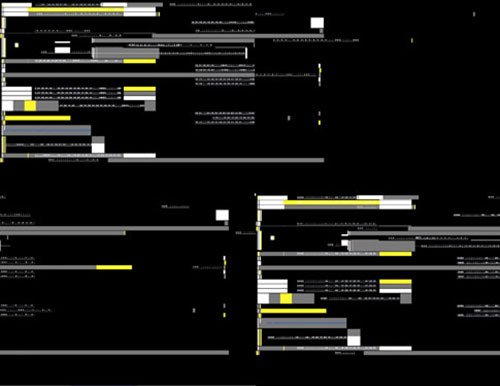
Interactive net-art environment combining DNA sequences, Marx, bureaucratic language, scientific discourse, absurd equivalences and pop-up visual systems. The work explores inconsistency not as an error outside the system, but as the hidden logic through which systems operate.
more
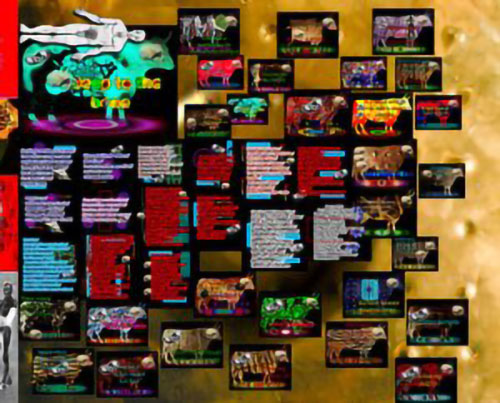
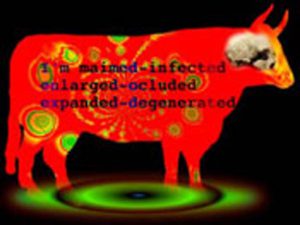
An early net-art work built in HTML and animated GIFs for Internet Explorer. The piece assembles disconnected fragments of Argentine history, violence and memory: cows, fetuses, bullets, bodies, police narratives and broken hypertexts. Colorful English texts, repeated gunshots and unstable links produce a fragmented body in which the private and the political become inseparable. The work remains unchanged online, preserving the same images and intensity while the country around it changes.
more
Early web-based work exploring the economy as a fragmented visual system of data, text and instability.
more
nline hypercomic and fragmented narrative composed of medical language, software errors, genetic diagrams, bureaucratic speech and multilingual fragments.
Mutter transforms the body into an unstable interface where identity, technology and information collapse into each other. 500 internal mutter server error
more
Created for the global teleconference Salon Digital, organized by the Goethe-Institut and the ZKM | Center for Art and Media Karlsruhe on the occasion of the opening of the new museum in 1997, this work formed part of one of the earliest distributed net-art events. Twenty Goethe Institutes around the world were connected online, exchanging texts, images, sound and live video in real time.
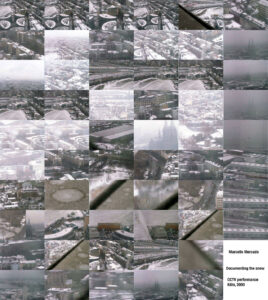
Netart Performance: Documenting the snow
CCTV Performance
2000
more
On a day of snowfall in Cologne, the artist repeatedly photographed the movements and changing angles of a traffic camera overlooking a large section of the city. The work follows the camera’s shifting views between distant snowy panoramas and close details: melting water, drops running over the concrete support on which the camera itself was installed. The performance transforms urban surveillance into an accidental landscape and the traffic camera into both observer and subject.
more
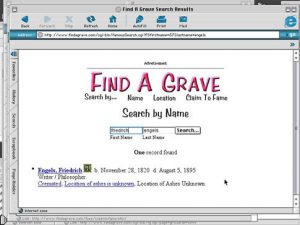
A virtual visit to the graves of Marx and Engels, documented through screenshots taken with Internet Explorer..
more
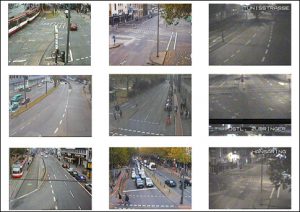
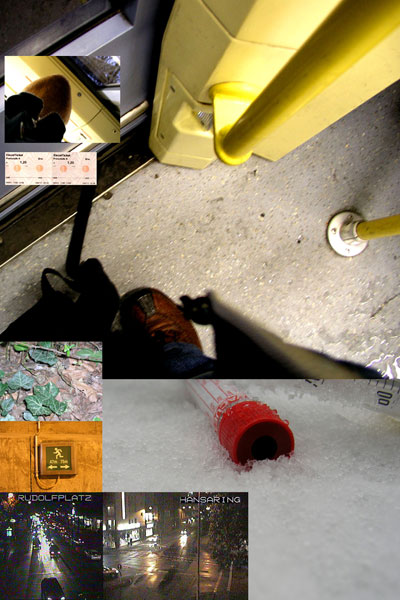
A one-day performance based on Nam June Paik’s instruction
“Antique Rome is Everybody’s Memory.” After converting the
text into speech with an early Macintosh voice and recording
it onto CD, the artist took a taxi through Taipei in search
of a “computer restaurant,” following the instructions
literally and documenting the route through traffic cameras,
repetition and displacement.
more
A distributed bio-performative system in which Californian worms are fed with the incompleteness theorems of Kurt Gödel, reduced to pulp and transformed into biological substrate. The extracted DNA is then repeatedly dripped in front of six traffic cameras in Cologne over a three-year period. Parallel to this action, Gödel’s theorems are read continuously. The work does not interpret the theorems: it metabolizes, displaces and exposes them to surveillance, repetition and decay.
more
curated by José Luis Brea, did not operate as a conventional exhibition or selection, but as part of a horizontal communication network within the net.art community. Rather than illustrating a theme or establishing hierarchies, the project emerged from proposals sent spontaneously through the community itself, producing a rhizomatic map of exchanges, interests and connections. The works were included as part of an underground geography of communication flowing through and beyond the structures of the traditional art world. The title of the exhibition referred explicitly to Rhizome and to the writings of Gilles Deleuze and Félix Guattari, proposing net.art as a multidirectional, decentralized and collective field.
Links, 2000
more
An online environment composed of broken questionnaires,
delays, art-historical references, job forms, simulations
and interrupted conversations. The work unfolds as a chain
of associations and unstable hyperlinks, where social
control, memory, internet culture and art history become
indistinguishable.
Biorrealismus, 2005
more
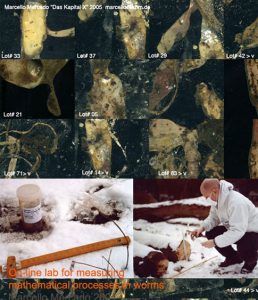
A series of performances using DNA extracted from different groups of worms
fed with individual chapters of Das Kapital.
The resulting DNA was poured through the streets of Cologne in front of 14 traffic cameras, transforming Marx’s text into biological matter, surveillance and public space. The photographs refer to a live DNA extraction performance in Berlin presented during Fraktale IV: Death.
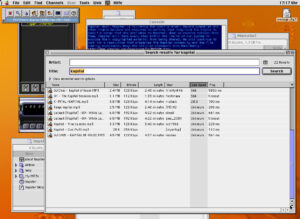
Das Kapital / Napster Search, 1999
more
In September 1999, a search for the word “Kapital” on Napster became the work itself. Instead of finding Das Kapital, the search returned MP3 files, fragments, errors and accidental associations circulating through the early peer-to-peer network. Today, with Napster extinct, only this screenshot remains: an archaeological trace of a moment when political theory, digital exchange and online noise briefly occupied the same space.
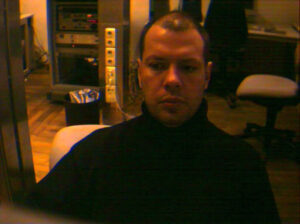
Netart Performance, Das Kapital Glossolalia August 9, 1999
more
Performed from a classroom at the Kunsthochschule für Medien Köln on 9 August 1999, this work belongs to the first generation of artistic experiments that understood the internet not as a site of representation, but as a space of transmission, delay, instability and bodily displacement.
In the piece, Marcello Mercado streams himself reading fragments from Chapter 7 of Karl Marx’s Das Kapital, but the text does not appear in German, Spanish or any recognizable language. Instead, it is translated live into a private glossolalia: an improvised and unstable idiom situated somewhere between speech, noise, stuttering, trance and machine transmission.