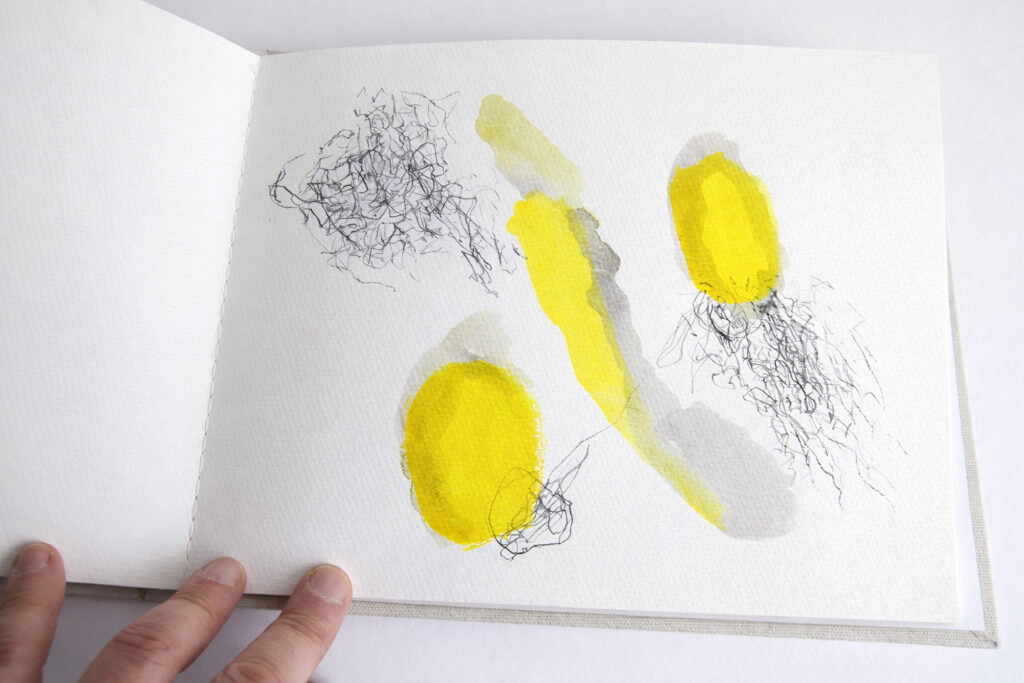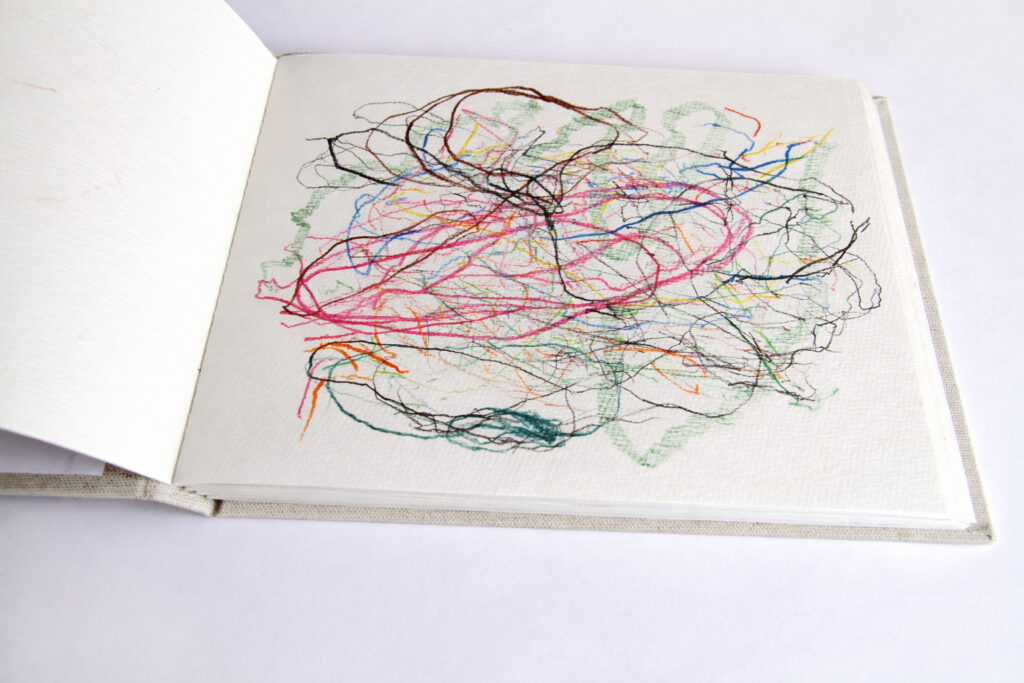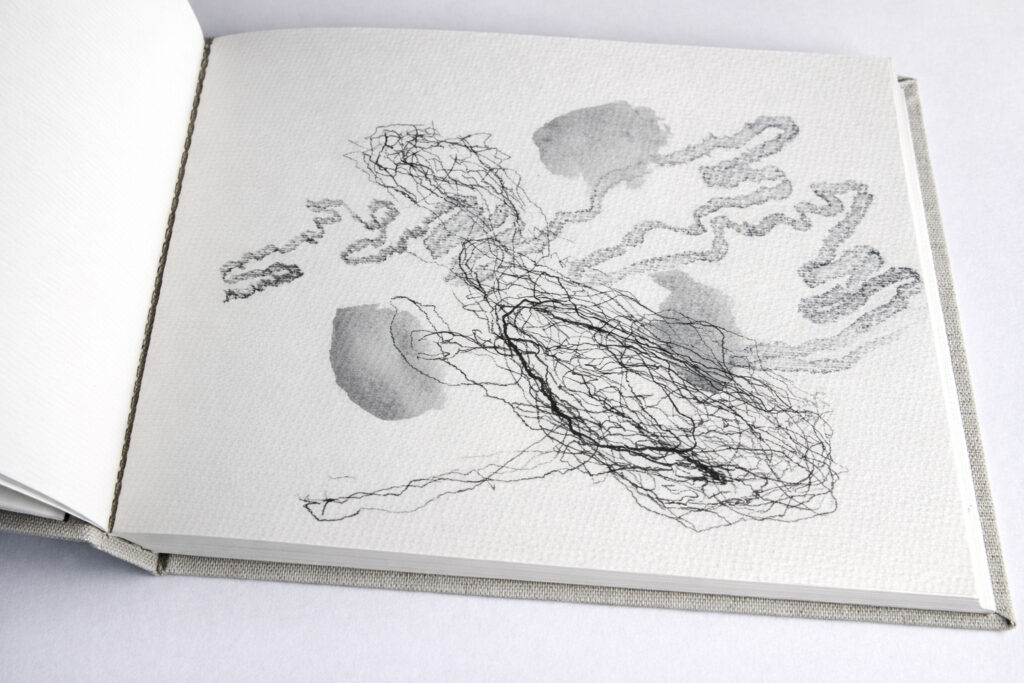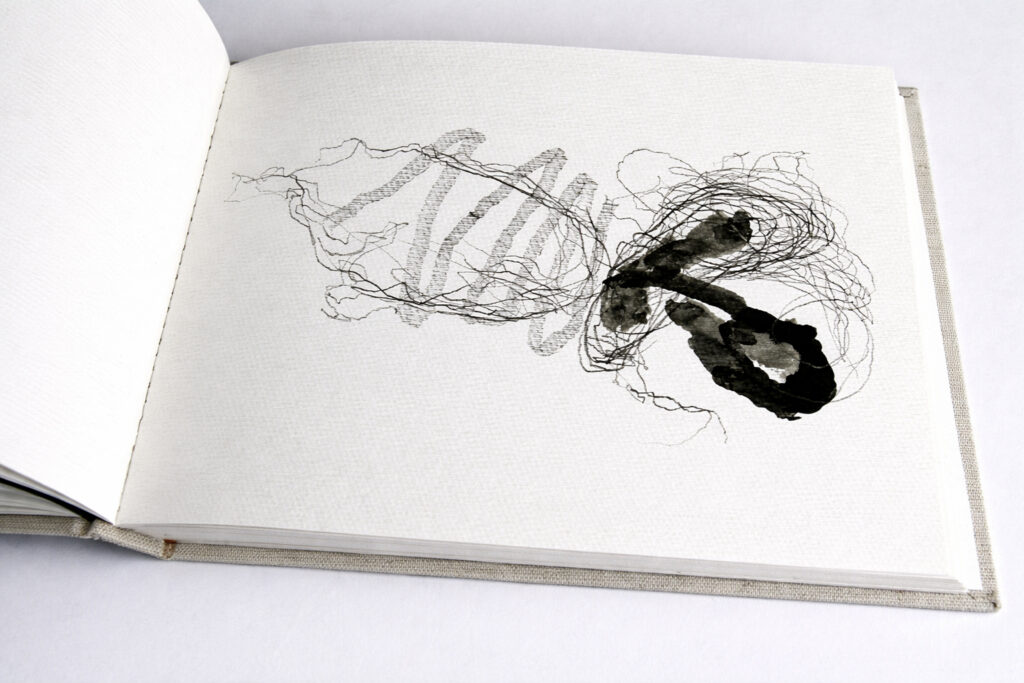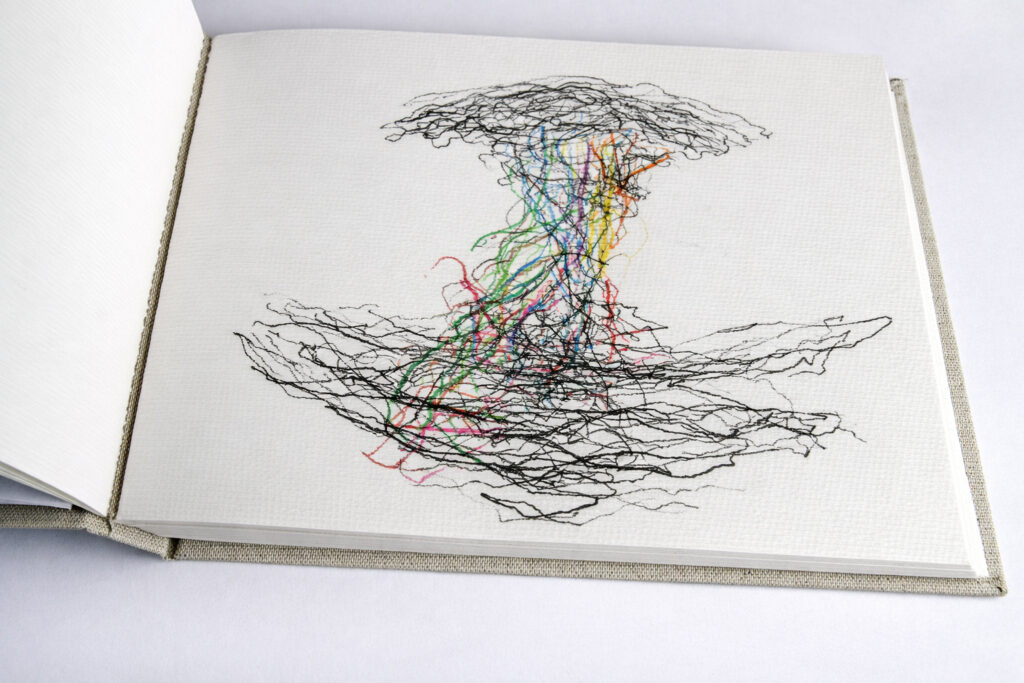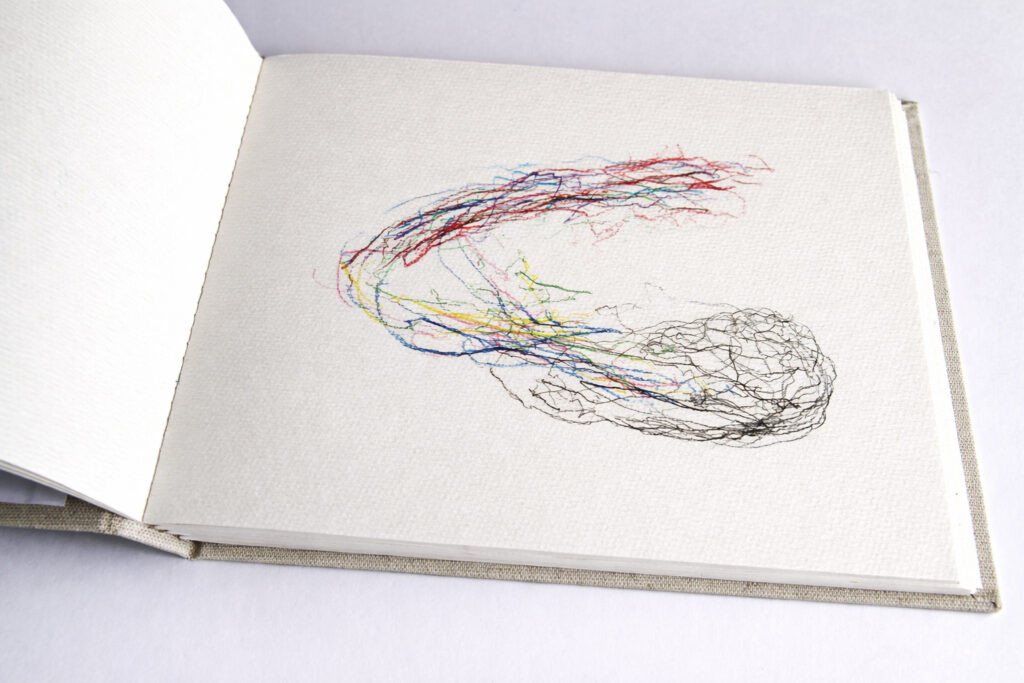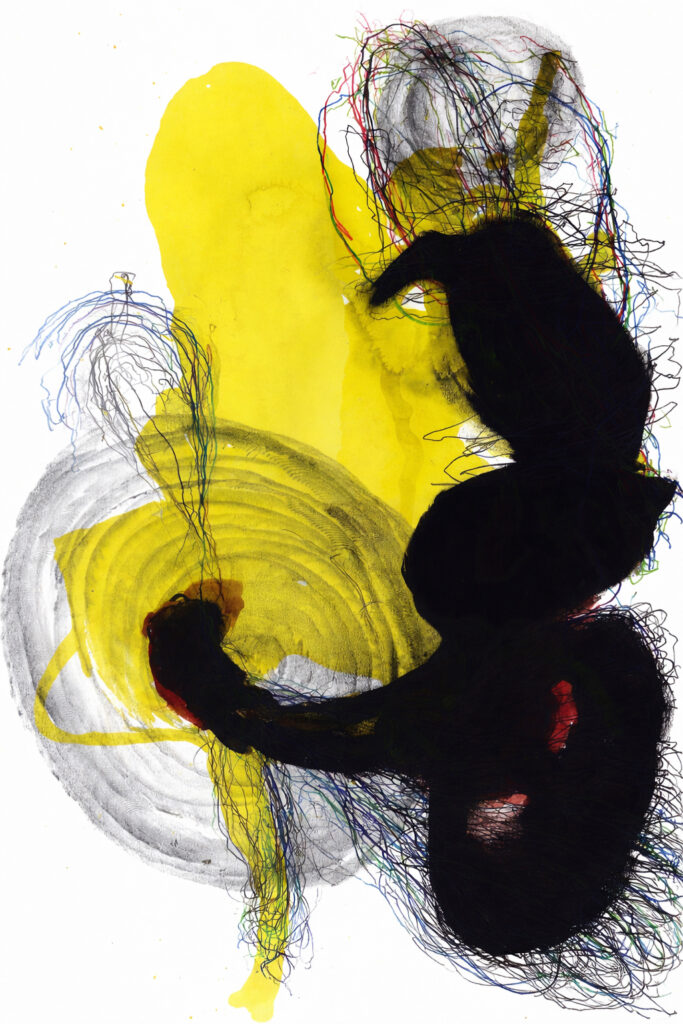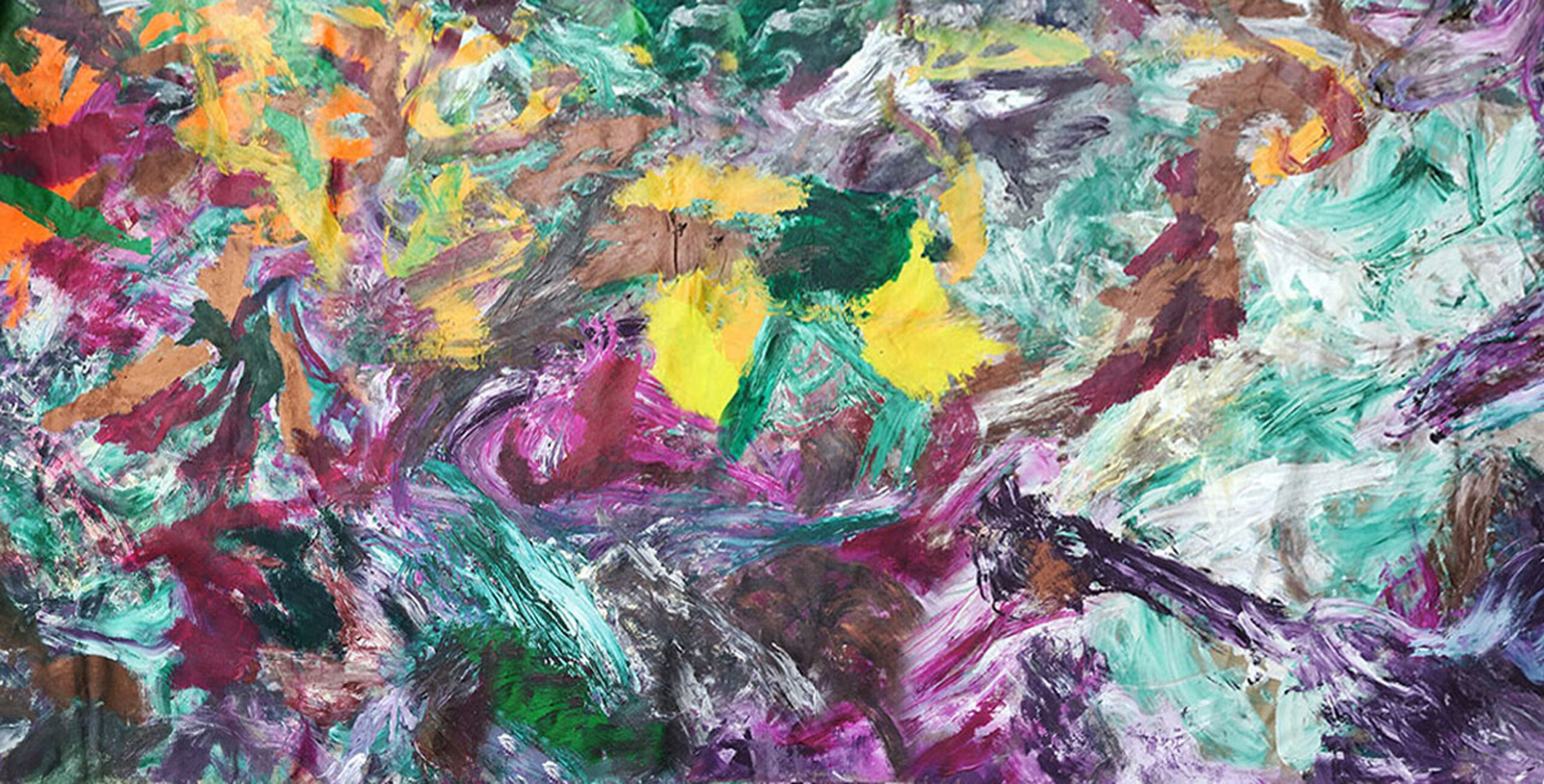
• Das Kapital, Version 78, DELETEORIUM

    Das Kapital, Version 78, DELETEORIUM


    Marcello Mercado

    Das Kapital, Version 78: DELETEORIUM (Deletion Space, Deletion Room)

    2025


    DELETEORIUM: Das Kapital, Version 78 is the speculative and dissident expansion of the project initiated in Das Kapital, Version 76. In this new version, three languages coexist in collision: the grapheme, the self-collapsing algorithm, and the poetic structure in iambic pentameter. Each operates as a system of simultaneous appearance and disappearance, configuring a book that is not organized as an archive, but as a device of escape.


    Each page confronts the reader with a tripartite structure: on the left, a grapheme from the language invented by the artist in 2012, an illegible, indecipherable sign encapsulating residual digital weights without possible translation; on the right, a speculative algorithm related to secondary, forgotten, or residual concepts from Das Kapital, algorithms that do not seek to execute a stable function but are designed to fragment, erase, and self-collapse during their own execution; and as a third layer, the Series of Poems in Iambic Pentameter on Das Kapital, written in iambic pentameter, which decomposes, chapter by chapter, the conceptual structures of Volume I of Marx.


    The grapheme is neither a symbol nor a letter, but a container of possible data: it may represent gigabytes of compressed philosophical texts, megabytes of distorted images, or zero digital weight, a total erasure. It is an algorithmic vestige whose power resides in what it does not reveal. The METASCRIPTDELETE—a language invented by the artist—does not construct meaning but activates processes of elimination, compression, encapsulation, and data erasure. It is a language of decomposition.


    The image in DELETEORIUM does not seek to persist: it is generated to self-destruct. It is an unstable flow that erases itself as it appears. The images are intermittent, glitch-laden, processes of incomplete erasure, fragments of structures that never fully consolidate. The image is a residue that cleans itself.


    The iambic pentameter functions here as a formal loop that mimics the rhythm of capital: repetition, exploitation, accumulation, displacement. The metric does not seek to generate beauty or balance but to amplify the suffocation inherent to the system it describes. The Series of Poems in Iambic Pentameter on Das Kapital is not proposed as representation, but as a cycle within the cycle, as a poetic structure that makes visible the fatigue of capital.


    The three languages are not presented as isolated compartments but as contaminated systems that erode and sabotage each other. The grapheme affects the reading of the algorithm and the poem, not only as a visual sign but as a vector of instability and potential deactivation. The algorithm destabilizes the poetic rhythm by introducing errors, displacements, and breaks within the metric structure, while the poem, in its forced repetition, resists and collapses in the face of algorithmic error. The metric, in turn, imposes a structure that absorbs failures but intensifies cyclical fatigue. The languages do not merely brush against each other: they attempt to render each other useless.


    The reader navigates this fabric as a worker: reading here is also a form of cognitive labor, a forced transit between residues, rhythms, and voids that collapse and reconstruct on each page. The spatial arrangement of the book does not propose a linear or synchronized reading: graphemes occupy the left page, algorithms the right, and the Series of Poems in Iambic Pentameter on Das Kapital unfold on the following page, faithful to the conceptual progression of the chapters of Das Kapital. This distribution forces the reader to move between layers that do not seek synchrony or unity, but friction and constant displacement.


    DELETEORIUM understands that Das Kapital is a linguistic machine: a system for producing concepts, measures, and equivalences. Reading Das Kapital is entering the machinery of economic language. This book works with colliding languages to fracture that machinery, to produce illegible zones where capital cannot totalize or stabilize its categories. The collision is not merely an aesthetic effect; it is a gesture of resistance: creating sign systems that fail among themselves is to prevent capture, to sabotage measurement, to overflow the structure.


    The project finds speculative resonances with Nicholas of Cusa’s learned ignorance: incomplete knowledge is not a flaw but the fundamental condition of thought. The graphemes, the self-collapsing algorithms, and the cyclical poems configure a field where incompleteness is not a limitation but the most precise form of critical approach.


    DELETEORIUM is inscribed within contemporary debates on planetary infrastructures, following the reading of Benjamin H. Bratton, who analyzes how globally distributed systems—from digital networks to logistical chains—produce structural opacity and condition how knowledge is generated, erased, and distributed. From this perspective, the book dialogues with immaterial labor and distributed exploitation networks proposed by Tiziana Terranova, which deconstruct the notion of visible production to expose the invisible flows of precarious labor, circulation of signs, and digital accumulation. The logic of disappearance and algorithmic violence developed by Achille Mbembe materializes here in the programmed production of residues, the administration of forgetting, and obsolescence as a form of control. Additionally, the media archaeology proposed by Siegfried Zielinski introduces a fundamental layer of reading: DELETEORIUM does not only exist in the present but dialogues with deep temporalities, technological remnants, and alternative genealogies. Zielinski dismantles the idea of linear progress and enables thinking that residues, failures, and collisions are not anomalies but possible structures within media history. From this perspective, graphemes and algorithms are not ruins but living zones that resist totalization.


    The poetic structure, the code, and the grapheme are not stable systems: they are devices that erode their own supports. Epistemological resistance here is not played out in the construction of an archive but in the production of residues, unstable cycles, and illegible signs.


    The book does not seek to consolidate itself as an object of memory. DELETEORIUM is a machine of forgetting, a system of erasure, an algorithmic choreography where residue, noise, and void are the only possible ways to inscribe the contemporary experience.


    (Spanish)


    Marcello Mercado

    El Capital, Versión 78: DELETEORIUM (Lugar de Eliminación o Espacio de Borrado)

    2025


    DELETEORIUM: Das Kapital, Version 78 es la expansión especulativa y disidente del proyecto iniciado en Das Kapital, Version 76. En esta nueva versión, tres lenguajes cohabitan en colisión: el grapheme, el algoritmo autocolapsante y la estructura poética en pentámetro yámbico. Cada uno opera como un sistema de aparición y desaparición simultáneas, configurando un libro que no se organiza como archivo, sino como dispositivo de fuga.


    Cada página enfrenta al lector con una estructura tripartita: a la izquierda, un grapheme del lenguaje inventado por el artista en 2012, un signo ilegible, indescifrable, encapsulador de pesos digitales residuales sin traducción posible; a la derecha, un algoritmo especulativo relacionado con conceptos secundarios, olvidados o residuales de Das Kapital, algoritmos que no buscan ejecutar una función estable, sino que están diseñados para fragmentarse, borrarse y autocolapsarse durante su propia ejecución; y como tercera capa, la Serie de poemas en pentámetro yámbico sobre El Capital, escrita en pentámetro yámbico, que descompone capítulo por capítulo las estructuras conceptuales del Tomo I de Marx.


    El grapheme no es un símbolo ni una letra, sino un contenedor de datos posibles: puede equivaler a gigabytes de textos filosóficos comprimidos, a megabytes de imágenes deformadas o a peso digital cero, un borrado total. Es un vestigio algorítmico cuya potencia reside en lo que no revela. El METASCRIPTDELETE —lenguaje inventado por el artista— no construye sentido, sino que activa procesos de eliminación, compresión, encapsulamiento y borrado de datos. Es una lengua de descomposición.


    La imagen en DELETEORIUM no busca permanecer: se genera para autodestruirse. Es un flujo inestable que se borra mientras aparece. Las imágenes son intermitentes, glitch, procesos de borrado incompletos, fragmentos de estructuras que nunca terminan de consolidarse. La imagen es un residuo que se limpia a sí mismo.


    El pentámetro yámbico funciona aquí como un bucle formal que imita el ritmo del capital: repetición, explotación, acumulación, desplazamiento. La métrica no busca generar belleza ni equilibrio, sino amplificar la asfixia inherente al sistema que describe. La Serie de poemas en pentámetro yámbico sobre El Capital no se propone como representación, sino como ciclo dentro del ciclo, como estructura poética que hace visible la fatiga del capital.


    Los tres lenguajes no se presentan como compartimentos estancos, sino como sistemas contaminados que se erosionan y sabotean mutuamente. El grapheme afecta la lectura del algoritmo y del poema, no solo como signo visual sino como vector de inestabilidad y desactivación potencial. El algoritmo desestabiliza el ritmo poético al introducir fallos, desplazamientos y quiebres dentro de la estructura métrica, mientras el poema, en su repetición forzada, resiste y colapsa frente al error algorítmico. La métrica, a su vez, impone una estructura que absorbe fallos pero intensifica la fatiga cíclica. Los lenguajes no solo se rozan: intentan inutilizarse entre sí.


    El lector navega este tejido como trabajador: la lectura aquí es también una forma de trabajo cognitivo, un tránsito forzado entre residuos, ritmos y vacíos que colapsan y se reconstruyen en cada página. La disposición espacial del libro no propone una lectura lineal ni sincronizada: Los graphemes ocupan la página izquierda, los algoritmos la derecha, y las Series de poemas en pentámetro yámbico sobre El Capital se despliegan en la página siguiente, fieles a la progresión conceptual de los capítulos de El Capital. Esta distribución obliga al lector a transitar entre capas que no buscan sincronía ni unidad, sino fricción y desplazamiento constante.


    DELETEORIUM entiende que El Capital es una máquina lingüística: un sistema de producción de conceptos, de medidas, de equivalencias. Leer El Capital es entrar en la maquinaria del lenguaje económico. Este libro trabaja con lenguajes en colisión para fracturar esa maquinaria, para producir zonas ilegibles donde el capital no puede totalizar ni estabilizar sus categorías. La colisión no es solo un efecto estético, es un gesto de resistencia: crear sistemas de signos que fracasan entre sí es impedir la captura, sabotear la medida, desbordar la estructura.


    El proyecto encuentra resonancias especulativas con la ignorancia docta de Nicolás de Cusa: el conocimiento incompleto no es una falla, sino la condición fundamental del pensamiento. Los graphemes, los algoritmos autocolapsantes y los poemas cíclicos configuran un campo donde la incompletitud no es un límite, sino la forma más precisa de aproximación crítica.


    DELETEORIUM se inscribe en los debates contemporáneos sobre infraestructuras planetarias, siguiendo la lectura de Benjamin H. Bratton, quien analiza cómo los sistemas globales distribuidos —desde redes digitales hasta cadenas logísticas— producen opacidad estructural y condicionan la forma en que se genera, borra y distribuye el conocimiento. Desde esta perspectiva, el libro dialoga con el trabajo inmaterial y las redes de explotación distribuida propuestas por Tiziana Terranova, que deconstruyen la noción de producción visible para evidenciar los flujos invisibles de trabajo precarizado, circulación de signos y acumulación digital. La lógica de desaparición y violencia algorítmica desarrollada por Achille Mbembe se materializa aquí en la producción programada de residuos, en la administración del olvido y en la obsolescencia como forma de control. Además, la arqueología de los medios propuesta por Siegfried Zielinski introduce una capa de lectura fundamental: DELETEORIUM no solo existe en el presente, sino que dialoga con tiempos profundos, restos tecnológicos y genealogías alternativas. Zielinski desarma la idea de progreso lineal y habilita pensar que los residuos, los fallos y las colisiones no son anomalías, sino estructuras posibles dentro de la historia de los medios. Desde este enfoque, los graphemes y los algoritmos no son ruinas, sino zonas vivas que resisten ser totalizadas.


    La estructura poética, el código y el grapheme no son sistemas estables: son dispositivos que erosionan sus propios soportes. La resistencia epistemológica aquí no se juega en la construcción de un archivo, sino en la producción de restos, ciclos inestables y signos ilegibles.


    (German)


    Marcello Mercado

    Das Kapital, Version 78: DELETEORIUM (Löschraum o Löschatorium)

    2025


    DELETEORIUM: „Das Kapital”, Version 78, ist eine spekulative und dissidente Erweiterung des mit „Das Kapital”, Version 76, begonnenen Projekts. In dieser neuen Version koexistieren drei kollidierende Sprachen: das Graphem, der sich selbst kollabierende Algorithmus und die poetische Struktur im jambischen Pentameter. Jede von ihnen operiert als ein System gleichzeitigen Erscheinens und Verschwindens und formt ein Buch, das nicht als Archiv, sondern als Fluchtgerät organisiert ist.


    Jede Seite konfrontiert die Lesenden mit einer dreiteiligen Struktur: Links befindet sich ein Graphem der vom Künstler im Jahr 2012 erfundenen Sprache. Es handelt sich um ein unlesbares, unentzifferbares Zeichen, das digitale Restgewichte ohne mögliche Übersetzung einkapselt. Rechts befindet sich ein spekulativer Algorithmus, der mit sekundären, vergessenen oder residuellen Konzepten aus „Das Kapital” verknüpft ist. Diese Algorithmen wollen keine stabile Funktion ausführen, sondern wurden dafür entworfen, sich zu fragmentieren, zu löschen und sich während ihrer eigenen Ausführung selbst zu kollabieren. Auf der dritten Ebene befindet sich eine Serie von Gedichten im jambischen Pentameter über Das Kapital, die Kapitel für Kapitel die konzeptuellen Strukturen des ersten Bandes von Marx zerlegen.


    Das Graphem ist weder ein Symbol noch ein Buchstabe, sondern ein Behälter möglicher Daten. Es kann Gigabyte komprimierter philosophischer Texte, Megabyte verzerrter Bilder oder digitales Nullgewicht, also eine vollständige Löschung, repräsentieren. Es ist ein algorithmisches Relikt, dessen Kraft darin liegt, was es nicht offenbart. Die vom Künstler erfundene Sprache METASCRIPTDELETE konstruiert keinen Sinn, sondern aktiviert Prozesse des Löschens, der Kompression, der Einkapselung und des Datenverlusts. Es ist eine Sprache der Zersetzung.


    Das Bild in DELETEORIUM strebt nicht danach, zu bestehen. Es wird erzeugt, um sich selbst zu zerstören. Es ist ein instabiler Fluss, der sich löscht, während er erscheint. Die Bilder sind intermittierend und glitchhaft, Prozesse unvollständiger Löschung, Fragmente von Strukturen, die sich niemals vollständig konsolidieren. Das Bild ist ein Rückstand, der sich selbst reinigt.


    Der jambische Pentameter fungiert hier als formale Schleife, die den Rhythmus des Kapitals imitiert. Wiederholung, Ausbeutung, Akkumulation, Verlagerung. Die Metrik strebt nicht nach Schönheit oder Gleichgewicht, sondern verstärkt das Erstickungsgefühl, das dem beschriebenen System innewohnt. Die Serie von Gedichten im jambischen Pentameter über „Das Kapital” wird nicht als Repräsentation vorgeschlagen, sondern als Zyklus im Zyklus, als poetische Struktur, die die Ermüdung des Kapitals sichtbar macht.


    Die drei Sprachen werden nicht als voneinander getrennte Bereiche präsentiert, sondern als kontaminierte Systeme, die sich gegenseitig erodieren und sabotieren. Das Graphem beeinflusst nicht nur das Lesen des Algorithmus und des Gedichts als visuelles Zeichen, sondern auch als Vektor der Instabilität und potenziellen Deaktivierung. Der Algorithmus wiederum destabilisiert den poetischen Rhythmus, indem er Fehler, Verschiebungen und Brüche innerhalb der metrischen Struktur einführt. Das Gedicht widersteht dem algorithmischen Fehler in seiner erzwungenen Wiederholung, zerbricht aber daran. Die Metrik wiederum erzwingt eine Struktur, die Fehler absorbiert, aber die zyklische Ermüdung verstärkt. Die Sprachen berühren sich nicht nur, sie versuchen sich gegenseitig unbrauchbar zu machen.


    Der Leser bewegt sich durch dieses Gewebe wie ein Arbeiter: Das Lesen ist hier auch eine Form kognitiver Arbeit, ein erzwungener Transit zwischen Rückständen, Rhythmen und Leerräumen, die auf jeder Seite zusammenbrechen und sich neu formieren. Die räumliche Anordnung des Buches schlägt keine lineare oder synchronisierte Lektüre vor. Grapheme besetzen die linke Seite, Algorithmen die rechte. Die Serie von Gedichten im jambischen Pentameter über „Das Kapital” entfaltet sich auf der folgenden Seite, getreu der konzeptuellen Progression der Kapitel von „Das Kapital”. Diese Anordnung zwingt die Lesenden, zwischen Schichten zu wechseln, die keine Synchronität oder Einheit suchen, sondern Reibung und ständige Verschiebung.


    DELETEORIUM versteht „Das Kapital” als sprachliche Maschine, als ein System zur Produktion von Konzepten, Maßen und Äquivalenzen. Das Kapital zu lesen bedeutet, in die Maschinerie der ökonomischen Sprache einzutreten. Dieses Buch arbeitet mit kollidierenden Sprachen, um diese Maschinerie zu durchbrechen und unlesbare Zonen zu erzeugen, in denen „Das Kapital” seine Kategorien nicht totalisieren oder stabilisieren kann. Die Kollision ist dabei nicht nur ein ästhetischer Effekt, sondern ein Akt des Widerstands: Zeichensysteme zu schaffen, die gegenseitig scheitern, heißt, die Erfassung zu verhindern, das Maß zu sabotieren und die Struktur zu sprengen.


    Das Projekt findet spekulative Resonanzen mit der „docta ignorantia” von Nikolaus von Kues: Unvollständiges Wissen ist kein Mangel, sondern die grundlegende Bedingung des Denkens. Die Grapheme, die sich selbst kollabierenden Algorithmen und die zyklischen Gedichte schaffen ein Feld, in dem Unvollständigkeit keine Begrenzung ist, sondern die präziseste Form des kritischen Zugangs.


    „DELETEORIUM” ist in zeitgenössische Debatten über planetarische Infrastrukturen eingebettet. Benjamin H. Bratton analysiert darin, wie global verteilte Systeme – von digitalen Netzwerken bis hin zu logistischen Ketten – strukturelle Opazität erzeugen und bedingen sowie wie Wissen generiert, gelöscht und verteilt wird. Aus dieser Perspektive tritt das Buch mit der immateriellen Arbeit und den von Tiziana Terranova vorgeschlagenen Netzwerken verteilter Ausbeutung in Dialog. Diese dekonstruieren den Begriff der sichtbaren Produktion, um die unsichtbaren Ströme prekärer Arbeit, Zeichenflüsse und digitaler Akkumulation offenzulegen. Die von Achille Mbembe entwickelte Logik des Verschwindens und der algorithmischen Gewalt manifestiert sich hier in der programmierten Produktion von Rückständen, in der Verwaltung des Vergessens und in der Obsoleszenz als Form der Kontrolle. Darüber hinaus führt die von Siegfried Zielinski vorgeschlagene Medienarchäologie eine grundlegende Leseschicht ein. DELETEORIUM existiert nicht nur in der Gegenwart, sondern führt einen Dialog mit tiefen Zeitlichkeiten, technologischen Resten und alternativen Genealogien. Zielinski demontiert die Idee des linearen Fortschritts und ermöglicht das Denken, dass Rückstände, Fehler und Kollisionen keine Anomalien, sondern mögliche Strukturen innerhalb der Mediengeschichte sind. Aus dieser Perspektive sind Grapheme und Algorithmen keine Ruinen, sondern lebendige Zonen, die sich einer Totalisierung widersetzen.


    Die poetische Struktur, der Code und das Graphem sind keine stabilen Systeme, sondern Geräte, die ihre eigenen Träger erodieren. Der epistemologische Widerstand spielt sich hier nicht im Aufbau eines Archivs, sondern in der Produktion von Rückständen, instabilen Zyklen und unlesbaren Zeichen ab.


    Das Buch strebt nicht danach, sich als Erinnerungsobjekt zu etablieren. DELETEORIUM ist eine Vergessensmaschine, ein Löschsystem und eine algorithmische Choreografie, in der Rückstände, Rauschen und Leere die einzigen möglichen Formen sind, um zeitgenössische Erfahrung einzuschreiben.


  • Poly-Auto-Portraits: Drifting Selves Between Scanners, Color, and Algorithms

    Poly-Auto-Portraits: Drifting Selves Between Scanners, Color, and Algorithms


    Marcello Mercado

    Poly-Auto-Portraits: Drifting Selves Between Scanners, Color, and Algorithms

    Photography

    2025


    In this series, the boundaries of self-portraiture are abandoned and it expands into unstable, multiple configurations. These are not searches for essence or attempts to capture fixed identities. Rather, these images arise from the desire to fragment, multiply, and recombine the self to the point of becoming unrecognizable as a singular unit yet still recognizable as a process.

    The project began two years ago with 3D scans of the artist’s head and bust. At that time, the software had not yet incorporated artificial intelligence refinements. The imperfections and rudimentary textures of those early scans were not obstacles, but rather the starting point for exploring the technical and visual limits of the device. Errors at the edges where the skull met the supporting pillow, volumetric distortions, and poor chromatic definition became expressive resources that were later amplified through digital processes. In these processes, backgrounds and internal structures were reworked with vibrant, unconventional colors.

    The series evolved through a sustained feedback loop of scanning, digital manipulation, and algorithmic generation. Ultimately, it arrived at what might be called a poly-portrait: a head that represents not just the artist, but multiple versions of him. Each portrait is the result of merging, crossing, and recombining several previous heads. Embedded in this identity expansion is a genetic speculation: the possibility of considering the portrait as an archive of potential mutations, inheritances, and latent deviations.

    Inevitably, the work dialogues with the classical history of selfportraiture, from Dürer’s introspective intensity, to Van Gogh’s gestural obsessions and Rembrandt’s luminous, expressive variations. However, there is no gesture of homage or comparison here. Rather, it offers a contemporary twist in which the self destabilizes, disintegrates, and reconfigures in algorithmic terms. The series engages with current debates on disidentification, digital ontologies, and new post-human modes of representation.

    In this context, artificial intelligence is not a passive tool or a mere stylistic effect; it is an active agent that reinterprets, transforms, and proposes new facial configurations. These heads offer an unsettling, clinical visuality that is suspended between the organicity of skin and the wax-like materiality that emerges from digital scans, far removed from the standardized repertoires that dominate much of AI-generated imagery—populated by smiling humans, manga aesthetics, and domesticated animals.

    The result is an expanding visual archive that transcends the logic of the portrait as a static representation. It opens a speculative field in which the self is no longer singular, but multiple. In this field, skin is both surface and frontier, interface and malleable matter. The image is not a mirror, but a territory.

    (Spanish)


    Poli-autoretratos: Derivas del yo entre escáneres, color y algoritmos


    En esta serie, el autorretrato trasciende sus límites históricos y se expande hacia configuraciones inestables y múltiples. No se trata de buscar una esencia ni de capturar una identidad fija. Por el contrario, estas imágenes nacen de la voluntad de fragmentar, multiplicar y recombinar al propio sujeto hasta hacerlo irreconocible como unidad, pero reconocible como proceso.

    El proyecto comenzó hace dos años con escaneos tridimensionales de la cabeza y el busto del propio artista, cuando el software aún carecía de los refinamientos que ofrecen hoy en día las tecnologías basadas en inteligencia artificial. Aquellos primeros escaneos, con sus imperfecciones y texturas rudimentarias, no fueron un obstáculo, sino el punto de partida para explorar los límites técnicos y visuales del dispositivo. Los errores en los bordes de contacto entre el cráneo y la almohada, las distorsiones volumétricas y la pobreza cromática se transformaron en recursos expresivos que se potenciaron posteriormente en procesos digitales en los que los fondos y las estructuras internas se trataron con colores vibrantes y poco convencionales.

    La serie creció gracias a la retroalimentación persistente entre los escaneos, la manipulación digital y la generación algorítmica, hasta alcanzar la configuración de lo que podría denominarse un poliretrato: una cabeza que ya no representa solo al artista, sino que condensa múltiples versiones de sí mismo. Cada retrato es el resultado de la suma, el cruce y la recombinación de varias cabezas precedentes. En esta expansión identitaria subyace también una especulación genética: la posibilidad de concebir el retrato como un archivo potencial de mutaciones, herencias y desvíos latentes.

    El trabajo dialoga inevitablemente con la historia clásica del autorretrato, desde la intensidad introspectiva de Durero hasta las obsesiones gestuales de Van Gogh, pasando por las variaciones lumínicas y expresivas de Rembrandt. Pero aquí no hay gesto de homenaje ni de comparación, sino una torsión contemporánea en la que el yo se desestabiliza, se desintegra y se reconfigura en clave algorítmica. La serie se inscribe en los debates actuales sobre la desidentificación, las ontologías digitales y las nuevas formas de representación poshumanas.

    La inteligencia artificial no es aquí una herramienta pasiva ni un mero efecto estilístico, sino un agente activo que reinterpreta, transforma y propone nuevas configuraciones del rostro. Lejos de los repertorios estandarizados que dominan gran parte de las imágenes generadas por IA —pobladas por humanos felices, estética manga y animales domesticados—, estas cabezas proponen una visualidad incómoda, clínica y tensada entre la organicidad de la piel y la materialidad casi cerosa que emana de los escaneos digitales.

    El resultado es un archivo visual en expansión que supera la lógica del retrato como representación estática y abre el campo hacia un espacio especulativo donde el yo no es uno, sino muchos; donde la piel es superficie y frontera, pero también interfaz y materia maleable; donde la imagen no es reflejo, sino territorio.

    (German)

    Poly-Selbstporträts: Abweichungen des Selbst zwischen Scannern, Farbe und Algorithmen


    In dieser Serie verlässt das Selbstporträt seine historischen Grenzen und erweitert sich zu instabilen, multiplen Konfigurationen. Es geht nicht um die Suche nach einer Essenz oder die Erfassung einer festen Identität. Im Gegenteil: Diese Bilder entstehen aus dem Willen, das Selbst zu fragmentieren, zu multiplizieren und neu zu kombinieren, bis es als Einheit nicht mehr erkennbar, als Prozess jedoch intensiv spürbar ist.

    Das Projekt begann vor zwei Jahren mit 3D-Scans des Kopfes und des Oberkörpers des Künstlers. Zu dieser Zeit verfügte die Software noch nicht über die Verfeinerungen der heutigen KI-gestützten Technologien. Diese ersten Scans mit ihren Unvollkommenheiten und rudimentären Texturen waren kein Hindernis, sondern der Ausgangspunkt einer technischen und visuellen Grenzerkundung. Fehler an den Kontaktstellen zwischen Schädel und Kissen, volumetrische Verzerrungen und die schwache Farbdarstellung wurden zu expressiven Ressourcen, die in digitalen Prozessen mit leuchtenden, unkonventionellen Farben verstärkt wurden.

    Die Serie entwickelte sich durch eine intensive Rückkopplung zwischen Scanning, digitaler Bearbeitung und algorithmischer Generierung, bis schließlich etwas entstand, das als PolyPorträt bezeichnet werden könnte: ein Kopf, der nicht mehr nur den Künstler selbst darstellt, sondern verschiedene Versionen seiner selbst in sich verdichtet. Jedes Porträt ist das Ergebnis der Verschmelzung, Kreuzung und Neukombination mehrerer früherer Köpfe. In dieser Identitätsausweitung schwingt auch eine genetische Spekulation mit, die Vorstellung vom Porträt als potenziellem Archiv von Mutationen, Vererbungen und latenten Abweichungen.

    Das Werk steht unweigerlich im Dialog mit der klassischen Geschichte des Selbstporträtsvon Dürers introspektiver Intensität über Van Goghs gestische Obsessionen bis hin zu Rembrandts ausdrucksstarken Lichtvariationen. Es handelt sich jedoch weder um eine Hommage noch um einen Vergleich, sondern um eine zeitgenössische Wendung, in der sich das Selbst destabilisiert, desintegriert und algorithmisch neu formiert. Die Serie verortet sich in aktuellen Diskursen über Desidentifikation, digitale Ontologien und neue posthumane Darstellungsformen.

    Dabei ist die Künstliche Intelligenz kein passives Werkzeug und kein bloßer Stileffekt, sondern ein aktives Subjekt, das interpretiert, transformiert und neue Gesichtsstrukturen vorschlägt. Fernab der standardisierten Repertoires, die einen Großteil der KI-generierten Bilder dominieren – bevölkert von glücklichen Menschen, Manga-Ästhetiken und domestizierten Tieren – eröffnen diese Köpfe eine beunruhigende, klinische Bildsprache, die zwischen der Organik der Haut und der wachsartigen Materialität digitaler Scans oszilliert.

    Das Ergebnis ist ein sich erweiterndes visuelles Archiv, das die Logik des Porträts als statische Repräsentation überwindet und ein spekulatives Feld öffnet. In diesem ist das Selbst nicht mehr eins, sondern viele. Die Haut ist darin sowohl Oberfläche als auch Grenze, ebenso Schnittstelle und formbares Material. Das Bild ist kein Spiegel mehr, sondern ein Territorium.


  • Fuego

    Fuego


    Marcello Mercado

    Fuego (Fire/Feuer)

    3-Channel Videoinstallation

    3 Minuten loop

    2025


    Fuego (Fire) is a videoinstallation composed of three monitors arranged at an angle. Fixed cameras record brick kilns where quebracho colorado undergoes a slow combustion process. Five days of fire. Twenty-five days sealed. Smoke rises continuously. The scene remains in a time without progression, interrupted by the appearance of a man sealing the kilns, an Audi car on a side street, and the machinery moving the wood.

    In the space, fragments of steel and melted glass. Remnants of thermal processes from foundries that share the condition of having been expelled from their productive context.

    Everything that transforms leaves a trace. The piece is that sealed trace.

    Fuego persists as a fossil in construction. As a record of transformations that continue.

    (spanish)

    Video Instalación: Fuego

    Fuego es una instalación compuesta por tres monitores en ángulo. Las cámaras fijas registran hornos de ladrillo donde el quebracho colorado atraviesa un proceso de combustión lenta. Cinco días de fuego. Veinticinco días sellados. El humo se eleva de forma continua. La escena permanece en un tiempo sin progresión, interrumpida por la aparición de un hombre que sella los hornos, un auto Audi en una calle lateral y la maquinaria que desplaza la madera.

    En el espacio, fragmentos de acero y vidrio derretido. Restos de procesos térmicos de fundiciones que comparten la condición de haber sido expulsados de su contexto productivo.

    Todo lo que se transforma deja una huella. La pieza es esa huella sellada.

    Fuego persiste como un fósil en construcción. Como registro de transformaciones que continúan.

    (German)

    Videoinstallation: Fuego / Feuer

    Fuego ist eine Installation, die aus drei Monitoren besteht, die in einem Winkel zueinander angeordnet sind. Feste Kameras nehmen Ziegelöfen auf, in denen das Quebracho-Colorado-Holz einen langsamen Verbrennungsprozess durchläuft. Fünf Tage Feuer. Fünfundzwanzig Tage versiegelt. Der Rauch steigt ununterbrochen auf. Die Szene verharrt in einer Zeit ohne Fortschritt, unterbrochen vom Erscheinen eines Mannes, der die Öfen versiegelt, einem Audi auf einer Seitenstraße und der Maschine, die das Holz bewegt.

    Im Raum: Fragmente aus Stahl und geschmolzenem Glas. Überreste thermischer Prozesse aus Gießereien, die die Bedingung teilen, aus ihrem produktiven Zusammenhang ausgestoßen worden zu sein.

    Alles, was sich verwandelt, hinterlässt eine Spur. Das Werk ist diese versiegelte Spur.

    Fuego bleibt als ein Fossil im Entstehen. Als ein Protokoll von Transformationen, die andauern.


  • Das Kapital, Version 76, Algorithms, 2025

    Das Kapital, Version 76, Algorithms, 2025


    Marcello Mercado

    Das Kapital, Version 76

    Algorithms

    2025


    Since 1996, Marcello Mercado has been working on an ongoing and unconventional project of reinterpreting the first volume of Das Kapital by Karl Marx through various formats, including video art, performance art, bioart, net art, experimental photography, 3D rendering, and algorithmic writing. His approach is not ideological or militant; rather, it is a structural analysis of a book that, despite its outdated nature, continues to organize part of the modern imaginary around value, circulation, and exploitation. Mercado is interested not in the political content but in the critical systematization of capitalism as a narrative, technical, and visual device.

    Version 76 of Das Kapital does not constitute a final or complete version. As the title suggests, the number refers to an accumulative logic where each version is part of a living archive shaped by the passage of time, technological shifts, and the artist’s biographical transformation. In this iteration, each chapter of the book has been transformed into an algorithm—mostly functional and some speculative—accompanied by images generated through artificial intelligence, analog and digital photography, 3D modeling, and experimental optical lenses. These images emulate a nineteenth-century aesthetic and operate as digital fossils, depicting abstract human organisms, animal fragments, deformed tools, skulls, and obsolete devices, such as the Nipkow disc and Claude Chappe’s optical telegraphy systems.

    Rather than illustrating the text, these images distort, amplify, and fragment it. They serve as points of collision between the technical archive and organic residue. The algorithmic process is not driven by efficiency, but rather by exposure. It reveals the inner logic of a canonical work and confronts it with the post-photographic languages of the present day.

    Throughout the project, Mercado has fed worms pages from the book, extracted their DNA, used traffic cameras, and produced 48hour videos. Some of this body of work has been exhibited at institutions such as ZKM Karlsruhe and Museum Ludwig Köln, while many other pieces remained unseen until they were reconstructed, rewritten, or reimagined using tools like ChatGPT. The curatorial gesture embedded in this process does not aim to reconstruct the past but to reorganize it—not nostalgia but persistence.

    The work engages with the fragmentary genealogies of Siegfried Zielinski, the geopolitical diagrams of Benjamin Bratton, the visual critiques of Harun Farocki, and the institutional gaze of Catherine David. Das Kapital, Version 76 demonstrates that even the most coherent and abstract system degrades, becomes contaminated, and bifurcates over time.

    Das Kapital, Version 76 is singular in the contemporary art landscape not only because it appropriates a canonical text, but also because it fuses a critical matrix with an algorithmic structure, generating a rare intersection between historical systematization, technical visuality, and speculative archiving. Unlike many contemporary works that use artificial intelligence as a visual gimmick or aesthetic surface, AI is embedded in the conceptual architecture of this project. It does not merely illustrate; it reorganizes, displaces, and updates. In a context where much contemporary art relies on symbolic or narrative gestures, Mercado’s work introduces a technical-temporal logic that destabilizes the borders between the living and the automated, the historical and the synthetic, and the human and the posthuman. His reworking of Capital over nearly four decades using diverse materials such as worm DNA, traffic cameras, and generative renders is not an act of repetition, but rather a sustained exploration of how knowledge transforms into something else when subjected to time and the machine. It is in this crossing that the new lies.


    (Spanish)

    Desde 1996, Marcello Mercado ha llevado a cabo un proyecto inusual y continuado: reinterpretar el primer tomo de El Capital de Karl Marx a través de múltiples formatos: videoarte, performance, bioarte, net art, fotografía experimental, renderización 3D y escritura algorítmica. Lejos de una lectura ideológica o militante, su enfoque se centra en el análisis estructural de un libro que, a pesar de su antigüedad, sigue organizando parte del imaginario moderno sobre el valor, la circulación y la explotación. Mercado no se interesa por el contenido político, sino por la sistematización crítica del capitalismo como dispositivo narrativo, técnico y visual.

    Das Kapital, Versión 76 no constituye un cierre ni una versión final. Como señala el propio título, la cifra remite a una lógica acumulativa, donde cada versión forma parte de un archivo vivo afectado por el paso del tiempo, el cambio tecnológico y la transformación biográfica del autor. En esta entrega, cada capítulo del libro se ha transformado en un algoritmo, mayoritariamente funcional, y se acompaña de una imagen generada con inteligencia artificial, fotografía analógica y digital, modelado 3D y lentes ópticas experimentales. Estas imágenes simulan una estética del siglo XIX y operan como fósiles digitales: organismos humanos abstractos, fragmentos animales, herramientas deformadas, cráneos, aparatos técnicos obsoletos como el disco de Nipkow o los sistemas de señales ópticas de Claude Chappe.

    Las imágenes no ilustran el texto, sino que lo distorsionan, amplifican y fragmentan. Funcionan como puntos de colisión entre el archivo técnico y el residuo orgánico. La operación algorítmica no busca eficiencia, sino exposición: exponer las lógicas internas de una obra canónica y tensionarla con los lenguajes posfotográficos de la contemporaneidad.

    A lo largo del proyecto, Mercado ha alimentado gusanos con las páginas del libro, ha extraído su ADN, ha realizado acciones performáticas con cámaras de tráfico y ha producido vídeos de 48 horas. Parte de este corpus ha sido exhibido en instituciones como el ZKM Karlsruhe y el Museum Ludwig Köln, pero muchas otras piezas permanecieron inéditas hasta que se reconstruyeron, reescribieron o reimaginaron con herramientas como ChatGPT. La práctica curatorial implícita en este proceso no busca reconstruir el pasado, sino reorganizarlo: no hay nostalgia, sino persistencia.

    Su trabajo dialoga con las genealogías fragmentarias de Siegfried Zielinski, los diagramas geopolíticos de Benjamin Bratton, la crítica visual de Harun Farocki y la mirada institucional de Catherine David. No por afinidad programática, sino por afinidad estructural: Das Kapital, Versión 76 no busca enseñar ni explicar, sino demostrar que incluso el sistema más abstracto y coherente se degrada con el tiempo, se contamina, se bifurca. Lo que hace que Das Kapital, Versión 76 sea singular en el panorama artístico contemporáneo no es simplemente su apropiación de un texto clásico, sino la forma en que combina una matriz crítica con una estructura algorítmica, generando una combinación poco común entre sistematización histórica, visualidad técnica y archivo especulativo. A diferencia de muchas obras contemporáneas que utilizan la inteligencia artificial como un efecto superficial o un recurso visual, en esta obra la IA forma parte del entramado conceptual del proyecto: no ilustra, sino que reorganiza, desplaza y actualiza. En un contexto donde gran parte del arte contemporáneo se apoya en gestos simbólicos o narrativos, la obra de Mercado introduce una lógica técnico-temporal que desestabiliza los límites entre lo vivo y lo automatizado, lo histórico y lo sintético, lo humano y lo posthumano. Su insistencia en reformular un mismo objeto —El Capital— durante casi cuatro décadas, desde soportes tan diversos como el ADN de gusanos, las cámaras de tráfico o los renders generativos, no responde a la repetición, sino a la deriva: una exploración sostenida sobre cómo el conocimiento, cuando se somete al tiempo y a la máquina, se transforma en otra cosa. En ese cruce reside lo nuevo.


    (German)


    Seit 1996 verfolgt Marcello Mercado ein außergewöhnliches Langzeitprojekt: die Reinterpretation des ersten Bandes von Das Kapital von Karl Marx in den unterschiedlichsten FormatenVideokunst, Performance, Bioart, Net Art, experimentelle Fotografie, 3DRendering und algorithmisches Schreiben. Fernab einer ideologischen oder dogmatischen Lektüre basiert sein Ansatz auf einer strukturellen Analyse des Buches, das trotz seines veralteten Charakters das moderne Imaginäre von Wert, Zirkulation und Ausbeutung nach wie vor mitprägt. Mercados Interesse gilt dabei nicht dem politischen Inhalt, sondern der kritischen Systematisierung des Kapitalismus als erzählerisches, technisches und visuelles Dispositiv.

    Das Kapital, Version 76 stellt weder ein Ende noch eine endgültige Version dar. Die Zahl im Titel verweist auf eine kumulative Logik, in der jede Version Teil eines lebendigen Archivs ist, das vom Fortschreiten der Zeit, von technologischen Veränderungen sowie der biografischen Transformation des Künstlers geprägt ist. In dieser Iteration wurde jedes Kapitel des Buches in einen Algorithmus übersetzt – größtenteils funktional, teilweise spekulativ – und mit Bildern kombiniert, die mittels künstlicher Intelligenz, analoger und digitaler Fotografie, 3D-Modellierung und experimentellen Linsen erzeugt wurden. Diese Bilder simulieren eine Ästhetik des 19. Jahrhunderts und wirken wie digitale Fossilien: abstrakte menschliche Organismen, Tierfragmente, deformierte Werkzeuge, Schädel und obsolet gewordene Geräte wie die Nipkow-Scheibe oder Claude Chappes optisches Telegrafiesystem.

    Diese Bilder verzerren, verstärken und fragmentieren den Text. Sie fungieren als Kollisionen zwischen technischem Archiv und organischem Rest. Die algorithmische Operation strebt nicht nach Effizienz, sondern nach Offenlegung: Sie macht die inneren Logiken eines kanonischen Werkes sichtbar und setzt sie mit postfotografischen Bildsprachen der Gegenwart in Spannung.

    Im Laufe des Projekts hat Mercado Würmer mit Seiten des Buches gefüttert, deren DNA extrahiert und performative Aktionen mit Verkehrskameras durchgeführt sowie 48stündige VideoVersionen produziert. Teile dieses Korpus wurden in Institutionen wie dem ZKM Karlsruhe und dem Museum Ludwig Köln gezeigt; viele andere blieben unzugänglich, bis sie durch Werkzeuge wie ChatGPT rekonstruiert, umgeschrieben oder neu imaginiert wurden. Die implizite kuratorische Geste zielt nicht auf die Rekonstruktion des Vergangenen, sondern auf dessen Reorganisation ab – keine Nostalgie, sondern Beharrlichkeit.

    Die Arbeit steht in struktureller Affinität zu den fragmentarischen Genealogien Siegfried Zielinskis, den geopolitischen Diagrammen Benjamins Brattons, der visuellen Kritik Harun Farockis und dem institutionellen Blick Catherine Davids. Das Kapital, Version 76 will nicht belehren oder erklären, sondern zeigen, dass selbst das abstrakteste und kohärenteste System mit der Zeit zerfällt, sich verunreinigt und aufspaltet.

    Was Das Kapital, Version 76 innerhalb der zeitgenössischen Kunstlandschaft einzigartig macht, ist nicht nur die Aneignung eines kanonischen Textes, sondern auch die Art und Weise, wie eine kritische Matrix mit einer algorithmischen Struktur verschmilzt – eine seltene Verbindung zwischen historischer Systematisierung, technischer Bildlichkeit und spekulativem Archiv. Anders als bei vielen zeitgenössischen Werken, die Künstliche Intelligenz als oberflächlichen Effekt oder ästhetisches Ornament einsetzen, ist die KI hier konzeptuell eingebettet. Sie illustriert nicht, sondern reorganisiert, verschiebt und aktualisiert. In einem Kontext, in dem große Teile der Gegenwartskunst auf symbolische oder narrative Gesten setzen, bringt Mercados Arbeit eine technischzeitliche Logik ein, die die Grenzen zwischen Lebendigem und Automatisiertem, Historischem und Synthetischem sowie Menschlichem und Posthumanem destabilisiert. Seine beharrliche Umformulierung eines einzigen Objekts – „Das Kapital“ – über fast vier Jahrzehnte hinweg unter Verwendung so disparater Träger wie Wurm-DNA, Verkehrskameras oder generativer Renderings ist kein Akt der Wiederholung, sondern des Driftens: eine fortlaufende Erforschung dessen, wie sich Wissen in etwas anderes verwandelt, wenn es der Zeit und der Maschine ausgesetzt ist. In dieser Überlagerung liegt das Neue.


  • Das Kapital, Version 77, The Weight of the Weights

    Das Kapital, Version 77, The Weight of the Weights


    Marcello Mercado

    Das Kapital, Version 77: The Weight of the Weights

    An Archive in Transit


    1- Channel Video Installation

    sound, color, 5 minutes

    2025


    Das Kapital, Version 77: The Weight of the Weights

    An Archive in Transit

    .

    In Das Kapital, Version 77: In The Weight of the Weights, Marcello Mercado embarks on a biographical and conceptual journey where the boundary between the personal and historical archives dissolves. The work revisits the book that has accompanied the artist for decades, Karl Marx’s Capital, and transforms it into a digital map of weights, files, and memories.


    Filmed during a journey from Germany to Denmark, the video shows the artist leaning against the ferry’s railing and contemplating the sea as white waves unfold toward the horizon. Minimalist titles appear over the image, displaying the chapters of Das Kapital and their digital weight in kilobytes. These are not thoughts or memories; they are weights. Weights accumulated. Weights released. Files that provide answers when fundamental questions arise: Where am I? Who am I? What do I want to do with my life?»


    The sound of the sea is constant, immersive, and uninterrupted. The image remains fixed and suspended in a time of transition. The movement does not occur in the camera but in the waves, the files, and the artist’s inner self.


    This work naturally follows Das Kapital, Version 76, but here, the archive is not just a system; it is a body. The kilobytes of the chapters are not technical data—they are a measure of an existence in transformation. The piece is situated near Chapter 24 of Capital, the socalled «primitive accumulationas if the artist were staging his own accumulation of books, archives, languages, nationalities, geographies, and times.


    Mercado uses the titles not as a form of narration but as weight devices; each chapter weighs, but does not signify. Each file does not speak; it occupies space. This subtle displacement resonates with Catherine David’s concept of the mobile archive, in which the archive is an open process of resignification rather than a fixed structure. The work also echoes Harun Farocki’s methodologies, particularly his insistence on images that expose rather than explain. Here, the waves are not a metaphor; they are a plane of persistence offering no meaning only rhythm—a continuity without interpretation.


    Siegfried Zielinski spoke of the need to find «special times« and «play spaces« within the interstices of media history in his fragmentary genealogies. The Weight of the Weights creates precisely that space of play where the artist’s time, the time of the book, and the time of the sea intertwine to form a living, unstable, floating archive.


    While looking at the sea, we may imagine the artist is not contemplating geography but the persistence of the archive. It is not the territory that organizes his displacement but rather the digital weights that constitute him. The homeland is the archive. The journey is the archive. Accumulation is not economic; it is existential.


    In a contemporary world where the circulation of bodies and capital is increasingly unequal, the artist’s work indirectly addresses themes such as migration, borders, and digital memory without explicit activism. The artist is not fleeing; he is reflecting. Transit is not an escape; it is a rewriting. The files are not chains—they are solutions.


    «The Weight of the Weights» does not narrate exile but rather a conscious drift in which the archiveand not the homelandaddresses the questions of origin and destiny. The mathematical formula and digital weights are not technical accounting, but rather, the expanded memory of an artist who has made the archive his life space and mobile territory.


    (Spanish)

    Marcello Mercado

    El Capital, versión 77: El peso de los pesos

    Un archivo en tránsito


    En El Capital, versión 77: El peso de los pesos, Marcello Mercado se sumerge en un tránsito biográfico y conceptual en el que se difuminan las fronteras entre el archivo personal y el histórico. La obra toma el libro que ha acompañado al artista durante décadas, El Capital, de Karl Marx, y lo transforma en un mapa digital de pesos, archivos y memorias.


    El vídeo, filmado durante un viaje de Alemania a Dinamarca, muestra al artista apoyado en la baranda de un ferry, contemplando el mar mientras las olas blancas se desplazan hacia el horizonte. Sobre la imagen aparecen títulos minimalistas: los capítulos de Das Kapital y el peso digital de cada uno en kilobytes. No son pensamientos, no son recuerdos, son pesos. Pesos acumulados. Pesos descargados. Archivos que responden cuando surgen las preguntas fundamentales: ¿dónde estoy?, ¿quién soy?, ¿qué quiero hacer con mi vida?


    El sonido del mar es constante, envolvente, sin interrupciones. La imagen permanece fija, como suspendida en un tiempo de tránsito. El movimiento no ocurre en la cámara, sino en las olas, en los archivos y en la subjetividad del artista.


    Este trabajo es una continuación natural de Das Kapital, Version 76, pero en esta ocasión el archivo ya no es solo un sistema, sino un cuerpo. Los kilobytes de los capítulos no son datos técnicos, sino la medida de una existencia en transformación. La obra se sitúa junto al capítulo 24 de El Capital —la llamada «acumulación originaria»—, como si el artista pusiera en escena su propia acumulación: de libros, de archivos, de lenguas, de nacionalidades, de geografías y de tiempos.


    Mercado utiliza los títulos no como forma de narración, sino como dispositivos de peso: cada capítulo no significa, sino que pesa. Cada archivo no habla, ocupa espacio. Esta sutil operación de desplazamiento conecta la obra con la noción de archivo móvil que Catherine David analizó en sus exposiciones, donde el archivo no es una estructura fija, sino un proceso abierto de reinterpretación. La obra también resuena con las metodologías de Harun Farocki, especialmente en su insistencia sobre las imágenes que exponen sin explicar. Las olas no son aquí una metáfora, sino un plano de persistencia: no ofrecen un sentido, sino un ritmo, una continuidad sin interpretación.


    Siegfried Zielinski, en sus genealogías fragmentarias, hablaba de la necesidad de encontrar «tiempos especiales» y «espacios de juego» en los intersticios de la historia de los medios. El peso de los pesos, crea precisamente ese espacio de juego, donde el tiempo del artista, el tiempo del libro y el tiempo del mar se entrelazan para formar un archivo vivo, inestable y flotante.


    Podríamos imaginar que, al mirar el mar, el artista no contempla la geografía, sino la persistencia del archivo. No es el territorio lo que organiza su desplazamiento, sino los pesos digitales que lo constituyen. La patria es el archivo. El trayecto es el archivo. La acumulación no es económica, sino existencial.


    En un mundo contemporáneo donde la circulación de cuerpos y capitales es cada vez más asimétrica, la obra dialoga tangencialmente con temas como las migraciones, las fronteras y la memoria digital, pero sin un activismo explícito. El artista no está huyendo, sino meditando. El tránsito no es escape, sino reescritura. Los archivos no son cadenas, sino respuestas.


    «El peso de los pesos», no narra un exilio, sino una deriva consciente en la que el archivoy no la patriaresponde a la pregunta sobre el origen y el destino. La fórmula matemática y los pesos digitales no son una contabilidad técnica, sino la memoria expandida de un artista que ha hecho del archivo su espacio vital y su territorio móvil.


    (German)


    Das Kapital, Version 77: Das Gewicht der Gewichte

    Ein Archiv im Transit

    .

    In Das Kapital, Version 77: Das Gewicht der Gewichte begibt sich Marcello Mercado auf eine biografische und konzeptuelle Reise, auf der sich die Grenze zwischen persönlichem und historischem Archiv auflöst. Das Werk greift das Buch auf, das den Künstler über Jahrzehnte hinweg begleitet hat – Karl Marx’ Das Kapital – und transformiert es in eine digitale Landkarte aus Gewichten, Dateien und Erinnerungen.


    Das Video, das während einer Überfahrt von Deutschland nach Dänemark aufgenommen wurde, zeigt den Künstler, wie er an die Reling einer Fähre gelehnt das Meer betrachtet, während sich die weißen Wellen zum Horizont hin ausbreiten. Auf dem Bild erscheinen minimalistische Titel: die Kapitel von Das Kapital und das digitale Gewicht jedes Kapitels in Kilobyte. Es sind keine Gedanken, keine Erinnerungen – es sind Gewichte. Angesammelte Gewichte. Abgeworfene Gewichte. Dateien, die antworten, wenn sich die grundlegenden Fragen stellen: Wo bin ich? Wer bin ich? Was will ich mit meinem Leben tun?


    Das Meeresrauschen ist konstant, allgegenwärtig und ununterbrochen. Das Bild bleibt starr, fast wie in einem zeitlichen Schwebezustand. Die Bewegung findet nicht in der Kamera, sondern in den Wellen, den Dateien und dem inneren Selbst des Künstlers statt.


    Dieses Werk ist eine natürliche Fortsetzung von Das Kapital, Version 76, doch hier ist das Archiv nicht mehr nur ein System, sondern ein rper. Die Kilobyte der Kapitel sind keine technischen Daten, sondern das Maß einer Existenz im Wandel. Die Arbeit positioniert sich in der Nähe von Kapitel 24 von Das Kapital – der sogenannten „ursprünglichen Akkumulation“ –, als würde der Künstler seine eigene Akkumulation inszenieren: von Büchern, Archiven, Sprachen, Nationalitäten, Geografien und Zeiten.


    Mercado verwendet die Titel nicht als narrative Elemente, sondern als Gewichtseinheiten. Jedes Kapitel bedeutet nicht, es wiegt. Jede Datei spricht nicht, sondern nimmt Raum ein. Diese subtile Verschiebung verbindet das Werk mit Catherine Davids Konzept des mobilen Archivs, bei dem das Archiv keine feste Struktur ist, sondern ein offener Prozess der Umdeutung. Die Arbeit resoniert auch mit den Methoden von Harun Farocki, insbesondere mit seiner Betonung von Bildern, die nicht erklären, sondern offenlegen. Die Wellen sind hier keine Metapher, sondern eine Ebene der Persistenz. Sie bieten keinen Sinn, sondern Rhythmus, eine Kontinuität ohne Interpretation.


    Siegfried Zielinski sprach in seinen fragmentarischen Genealogien von der Notwendigkeit, „besondere Zeiten undSpielräume in den Zwischenräumen der Mediengeschichte zu finden. The Weight of the Weights schafft genau diesen Spielraum, in dem sich die Zeit des Künstlers, die Zeit des Buches und die Zeit des Meeres zu einem lebendigen, instabilen und schwebenden Archiv verflechten.


    Man könnte sich vorstellen, dass der Künstler beim Blick auf das Meer nicht die Geografie, sondern die Persistenz des Archivs betrachtet. Nicht das Territorium organisiert seine Bewegung, sondern die digitalen Gewichte, die ihn konstituieren. Die Heimat ist das Archiv. Die Reise ist das Archiv. Die Akkumulation ist nicht ökonomisch, sondern existenziell.


    In einer Welt, in der die Zirkulation von Körpern und Kapital zunehmend asymmetrisch ist, berührt das Werk Themen wie Migration, Grenzen und digitale Erinnerung jedoch ohne expliziten Aktivismus. Der Künstler flieht nicht, er meditiert. Der Transit ist kein Entkommen, sondern ein Umschreiben. Die Dateien sind keine Ketten, sondern Antworten.


    «Das Gewicht der Gewichte» erzählt keine Exilgeschichte, sondern von einem bewussten Driften, bei dem das Archivund nicht die HeimatAuskunft über Ursprung und Ziel gibt. Die mathematische Formel und die digitalen Gewichte sind kein technisches Register, sondern das erweiterte Gedächtnis eines Künstlers, der das Archiv zu seinem Lebensraum und seinem mobilen Territorium gemacht hat.


  • Formula Van Gogh

    Formula Van Gogh


    Marcello Mercado

    Formula Van Gogh

    Speculative Formula – Essay

    2025


    Consider the following expression:


    Here, represents the “sales function” of Vincent van Gogh across time: before his birth (), through his life, and long after his death (+). The integral equaling formalizes a paradox: in his lifetime, he sold only one painting—the famed Red Vineyard at Arles—officially recorded as such .This figure may be nuanced by informal trades or sales, but the canonical sale remains singular.

    This formula is not a mistake but an artistic device—a mathematical archive of “failure” reframed as potential. The negative sign can be read as a counter‑value, an inverse measure: Van Gogh’s living legacy as a figure whose material success was essentially zero.

    .

    Speculative Dissection

    1. Temporal Integration & the Archive
    The integral from past to future conjures what art historian Georges Didi‑Huberman might call a potential archive—not what was preserved materially, but what could emerge through time, memory and myth. By folding both negative and positive infinity into the same expression, the work insists we consider both absence and proliferation as coexistent temporal layers.


     2.Continuity Beyond Life.

    The equation’s domain includes all time, not just “active” years. Posthumously, van Gogh’s works were recopied, exhibited, sold, and canonized—hence the  “+∞” region implies an explosion of exchange and valuation. The fact that this region is vast but excluded from the numeric total “–1” underscores the disjunction between market mechanics and myth-making.


     3. Comparative Artistic Output

    To ground this, let’s consider production‑vs‑sales across other artists:

    Vincent van Gogh: ≈ 900 oil paintings and >1,100 drawings in ~10 years. Sales: 1 confirmed, a few trades.

    Claude Monet: ≈ 1,983 paintings produced; sold 936 during his lifetime.

    Pablo Picasso: ≈ 50,000 works across media; estate contained >1,885 paintings, 7,000 drawings, 1,228 sculptures, etc.


    4. Plotting , the ratio of works produced to works sold or disseminated during life, we observe:

    Van Gogh: high P, near-zero actual sales;

    Monet: moderate P, high sales;

    Picasso: massive P, massive sales.


    Van Gogh’s anomaly—big production, minimal transactions—makes him uniquely suited to symbolize a “failure archive”: an accumulation of cultural output that exists almost entirely outside the artist’s lifetime economy, yet inside the collective imagination.

    This concept resonates with curatorial theories from Hal Foster (on the “unfinished”), Catherine David (on the genealogies of failure as archives), and Siegfried Zielinski’s media archaeological call to look at media not by their final states, but through residues, gaps, absences.


    Final Formula for Exhibition:


    This Formula of Van Gogh functions as a potential archive of failure, resurrecting absence into presence. It compresses biography, myth, economics, and symbolic resonance into a single visual‑mathematical artifact—evoking the uncanny persistence of art beyond life.

    (Spanish)

    Marcello Mercado

    Fórmula Van Gogh

    Una ecuación para la persistencia del arte


    .

    La obra Fórmula Van Gogh propone una lectura matemática y curatorial sobre la condición paradójica del legado de Vincent van Gogh. A través de la expresión:

    se formaliza la relación entre el tiempo biográfico del artista y la circulación material de su obra. Van Gogh, cuya producción alcanzó aproximadamente 900 pinturas y más de 1.100 dibujos en tan solo una década, vendió oficialmente solo una obra en vida. Este desfase entre producción y reconocimiento económico se convierte aquí en un archivo matemático del fracaso, resignificado como archivo potencial.

    La elección de la integral desde menos infinito hasta más infinito sitúa la vida y la muerte del artista dentro de un continuo temporal. Mientras que las ventas en vida permanecen mínimas (–1), el impacto póstumo de su obra se extiende hasta el infinito, sin modificar el resultado de la ecuación. La fórmula opera como un monumento abstracto a la disociación entre el valor del arte y su circulación en el tiempo vital del artista.

    La obra dialoga con genealogías curatoriales que han pensado el fracaso como forma de archivo y con la noción de temporalidades divergentes, abordada por teóricos como Hal Foster, Catherine David y Siegfried Zielinski. La comparación con otros artistas como Monet y Picasso refuerza la excepcionalidad de Van Gogh: mientras Monet vendió aproximadamente la mitad de su producción en vida, y Picasso alcanzó cifras masivas tanto de producción como de venta, Van Gogh encarna el archivo suspendido: una producción desbordante cuyo reconocimiento social y económico solo llegó después de su muerte.

    Fórmula Van Gogh materializa este cruce entre matemática, historia del arte y archivo especulativo, proponiendo una visualización donde el fracaso biográfico se transforma en persistencia icónica. La fórmula no es solo un cálculo: es una memoria gráfica del potencial que excede la vida.

    (German)

    Marcello Mercado

    Van-Gogh-Formel

    Eine Gleichung für die Persistenz der Kunst


    .

    Die Arbeit Van-Gogh-Formel bietet eine mathematische und kuratorische Lesart des paradoxen Vermächtnisses von Vincent van Gogh. Mit dem Ausdruck:

    wird das Verhältnis zwischen der biografischen Zeit des Künstlers und der materiellen Zirkulation seines Werkes formalisiert. Van Gogh, der in nur einem Jahrzehnt etwa 900 Gemälde und über 1.100 Zeichnungen schuf, verkaufte zu Lebzeiten offiziell nur ein einziges Werk. Diese Diskrepanz zwischen Produktion und ökonomischer Anerkennung wird hier als mathematisches Archiv des Scheiterns inszeniert und zugleich als potenzielles Archiv umgedeutet.

    Die Wahl des Integrals von minus bis plus unendlich positioniert das Leben und den Tod des Künstlers in einem zeitlichen Kontinuum. Während die Verkäufe zu Lebzeiten minimal bleiben (–1), erstreckt sich die posthume Wirkung seines Werkes ins Unendliche, ohne das Ergebnis der Gleichung zu verändern. Die Formel fungiert als abstraktes Denkmal für die Trennung zwischen dem Wert der Kunst und ihrer Zirkulation im vitalen Zeitrahmen des Künstlers.

    Die Arbeit steht in Dialog mit kuratorischen Genealogien, die das Scheitern als Archivform betrachten, und mit Theorien über divergierende Temporalitäten, wie sie von Hal Foster, Catherine David und Siegfried Zielinski entwickelt wurden. Der Vergleich mit anderen Künstlern wie Monet und Picasso verstärkt die Einzigartigkeit Van Goghs: Während Monet etwa die Hälfte seines Schaffens zu Lebzeiten verkaufte und Picasso sowohl in der Produktion als auch im Verkauf enorme Zahlen erreichte, verkörpert Van Gogh das suspendierte Archiv: Eine überbordende Produktion, deren gesellschaftliche und ökonomische Anerkennung erst posthum erfolgte.

    Van-Gogh-Formel materialisiert diese Schnittstelle zwischen Mathematik, Kunstgeschichte und spekulativem Archiv und bietet eine Visualisierung, in der das biografische Scheitern zur ikonischen Persistenz transformiert wird. Die Formel ist nicht nur eine Berechnung: Sie ist ein grafisches Gedächtnis des Potenzials, das das Leben übersteigt.

  • Das Kapital, Version 76, Algorithms, 2025

    Das Kapital, Version 76, Algorithms, 2025


    Marcello Mercado

    Das Kapital, Version 76

    Algorithms

    2025


    Since 1996, Marcello Mercado has been working on an ongoing and unconventional project of reinterpreting the first volume of Das Kapital by Karl Marx through various formats, including video art, performance art, bioart, net art, experimental photography, 3D rendering, and algorithmic writing. His approach is not ideological or militant; rather, it is a structural analysis of a book that, despite its outdated nature, continues to organize part of the modern imaginary around value, circulation, and exploitation. Mercado is interested not in the political content but in the critical systematization of capitalism as a narrative, technical, and visual device.

    Version 76 of Das Kapital does not constitute a final or complete version. As the title suggests, the number refers to an accumulative logic where each version is part of a living archive shaped by the passage of time, technological shifts, and the artist’s biographical transformation. In this iteration, each chapter of the book has been transformed into an algorithm—mostly functional and some speculative—accompanied by images generated through artificial intelligence, analog and digital photography, 3D modeling, and experimental optical lenses. These images emulate a nineteenth-century aesthetic and operate as digital fossils, depicting abstract human organisms, animal fragments, deformed tools, skulls, and obsolete devices, such as the Nipkow disc and Claude Chappe’s optical telegraphy systems.

    Rather than illustrating the text, these images distort, amplify, and fragment it. They serve as points of collision between the technical archive and organic residue. The algorithmic process is not driven by efficiency, but rather by exposure. It reveals the inner logic of a canonical work and confronts it with the post-photographic languages of the present day.

    Throughout the project, Mercado has fed worms pages from the book, extracted their DNA, used traffic cameras, and produced 48hour videos. Some of this body of work has been exhibited at institutions such as ZKM Karlsruhe and Museum Ludwig Köln, while many other pieces remained unseen until they were reconstructed, rewritten, or reimagined using tools like ChatGPT. The curatorial gesture embedded in this process does not aim to reconstruct the past but to reorganize it—not nostalgia but persistence.

    The work engages with the fragmentary genealogies of Siegfried Zielinski, the geopolitical diagrams of Benjamin Bratton, the visual critiques of Harun Farocki, and the institutional gaze of Catherine David. Das Kapital, Version 76 demonstrates that even the most coherent and abstract system degrades, becomes contaminated, and bifurcates over time.

    Das Kapital, Version 76 is singular in the contemporary art landscape not only because it appropriates a canonical text, but also because it fuses a critical matrix with an algorithmic structure, generating a rare intersection between historical systematization, technical visuality, and speculative archiving. Unlike many contemporary works that use artificial intelligence as a visual gimmick or aesthetic surface, AI is embedded in the conceptual architecture of this project. It does not merely illustrate; it reorganizes, displaces, and updates. In a context where much contemporary art relies on symbolic or narrative gestures, Mercado’s work introduces a technical-temporal logic that destabilizes the borders between the living and the automated, the historical and the synthetic, and the human and the posthuman. His reworking of Capital over nearly four decades using diverse materials such as worm DNA, traffic cameras, and generative renders is not an act of repetition, but rather a sustained exploration of how knowledge transforms into something else when subjected to time and the machine. It is in this crossing that the new lies.


    (Spanish)

    Desde 1996, Marcello Mercado ha llevado a cabo un proyecto inusual y continuado: reinterpretar el primer tomo de El Capital de Karl Marx a través de múltiples formatos: videoarte, performance, bioarte, net art, fotografía experimental, renderización 3D y escritura algorítmica. Lejos de una lectura ideológica o militante, su enfoque se centra en el análisis estructural de un libro que, a pesar de su antigüedad, sigue organizando parte del imaginario moderno sobre el valor, la circulación y la explotación. Mercado no se interesa por el contenido político, sino por la sistematización crítica del capitalismo como dispositivo narrativo, técnico y visual.

    Das Kapital, Versión 76 no constituye un cierre ni una versión final. Como señala el propio título, la cifra remite a una lógica acumulativa, donde cada versión forma parte de un archivo vivo afectado por el paso del tiempo, el cambio tecnológico y la transformación biográfica del autor. En esta entrega, cada capítulo del libro se ha transformado en un algoritmo, mayoritariamente funcional, y se acompaña de una imagen generada con inteligencia artificial, fotografía analógica y digital, modelado 3D y lentes ópticas experimentales. Estas imágenes simulan una estética del siglo XIX y operan como fósiles digitales: organismos humanos abstractos, fragmentos animales, herramientas deformadas, cráneos, aparatos técnicos obsoletos como el disco de Nipkow o los sistemas de señales ópticas de Claude Chappe.

    Las imágenes no ilustran el texto, sino que lo distorsionan, amplifican y fragmentan. Funcionan como puntos de colisión entre el archivo técnico y el residuo orgánico. La operación algorítmica no busca eficiencia, sino exposición: exponer las lógicas internas de una obra canónica y tensionarla con los lenguajes posfotográficos de la contemporaneidad.

    A lo largo del proyecto, Mercado ha alimentado gusanos con las páginas del libro, ha extraído su ADN, ha realizado acciones performáticas con cámaras de tráfico y ha producido vídeos de 48 horas. Parte de este corpus ha sido exhibido en instituciones como el ZKM Karlsruhe y el Museum Ludwig Köln, pero muchas otras piezas permanecieron inéditas hasta que se reconstruyeron, reescribieron o reimaginaron con herramientas como ChatGPT. La práctica curatorial implícita en este proceso no busca reconstruir el pasado, sino reorganizarlo: no hay nostalgia, sino persistencia.

    Su trabajo dialoga con las genealogías fragmentarias de Siegfried Zielinski, los diagramas geopolíticos de Benjamin Bratton, la crítica visual de Harun Farocki y la mirada institucional de Catherine David. No por afinidad programática, sino por afinidad estructural: Das Kapital, Versión 76 no busca enseñar ni explicar, sino demostrar que incluso el sistema más abstracto y coherente se degrada con el tiempo, se contamina, se bifurca. Lo que hace que Das Kapital, Versión 76 sea singular en el panorama artístico contemporáneo no es simplemente su apropiación de un texto clásico, sino la forma en que combina una matriz crítica con una estructura algorítmica, generando una combinación poco común entre sistematización histórica, visualidad técnica y archivo especulativo. A diferencia de muchas obras contemporáneas que utilizan la inteligencia artificial como un efecto superficial o un recurso visual, en esta obra la IA forma parte del entramado conceptual del proyecto: no ilustra, sino que reorganiza, desplaza y actualiza. En un contexto donde gran parte del arte contemporáneo se apoya en gestos simbólicos o narrativos, la obra de Mercado introduce una lógica técnico-temporal que desestabiliza los límites entre lo vivo y lo automatizado, lo histórico y lo sintético, lo humano y lo posthumano. Su insistencia en reformular un mismo objeto —El Capital— durante casi cuatro décadas, desde soportes tan diversos como el ADN de gusanos, las cámaras de tráfico o los renders generativos, no responde a la repetición, sino a la deriva: una exploración sostenida sobre cómo el conocimiento, cuando se somete al tiempo y a la máquina, se transforma en otra cosa. En ese cruce reside lo nuevo.


    (German)


    Seit 1996 verfolgt Marcello Mercado ein außergewöhnliches Langzeitprojekt: die Reinterpretation des ersten Bandes von Das Kapital von Karl Marx in den unterschiedlichsten FormatenVideokunst, Performance, Bioart, Net Art, experimentelle Fotografie, 3DRendering und algorithmisches Schreiben. Fernab einer ideologischen oder dogmatischen Lektüre basiert sein Ansatz auf einer strukturellen Analyse des Buches, das trotz seines veralteten Charakters das moderne Imaginäre von Wert, Zirkulation und Ausbeutung nach wie vor mitprägt. Mercados Interesse gilt dabei nicht dem politischen Inhalt, sondern der kritischen Systematisierung des Kapitalismus als erzählerisches, technisches und visuelles Dispositiv.

    Das Kapital, Version 76 stellt weder ein Ende noch eine endgültige Version dar. Die Zahl im Titel verweist auf eine kumulative Logik, in der jede Version Teil eines lebendigen Archivs ist, das vom Fortschreiten der Zeit, von technologischen Veränderungen sowie der biografischen Transformation des Künstlers geprägt ist. In dieser Iteration wurde jedes Kapitel des Buches in einen Algorithmus übersetzt – größtenteils funktional, teilweise spekulativ – und mit Bildern kombiniert, die mittels künstlicher Intelligenz, analoger und digitaler Fotografie, 3D-Modellierung und experimentellen Linsen erzeugt wurden. Diese Bilder simulieren eine Ästhetik des 19. Jahrhunderts und wirken wie digitale Fossilien: abstrakte menschliche Organismen, Tierfragmente, deformierte Werkzeuge, Schädel und obsolet gewordene Geräte wie die Nipkow-Scheibe oder Claude Chappes optisches Telegrafiesystem.

    Diese Bilder verzerren, verstärken und fragmentieren den Text. Sie fungieren als Kollisionen zwischen technischem Archiv und organischem Rest. Die algorithmische Operation strebt nicht nach Effizienz, sondern nach Offenlegung: Sie macht die inneren Logiken eines kanonischen Werkes sichtbar und setzt sie mit postfotografischen Bildsprachen der Gegenwart in Spannung.

    Im Laufe des Projekts hat Mercado Würmer mit Seiten des Buches gefüttert, deren DNA extrahiert und performative Aktionen mit Verkehrskameras durchgeführt sowie 48stündige VideoVersionen produziert. Teile dieses Korpus wurden in Institutionen wie dem ZKM Karlsruhe und dem Museum Ludwig Köln gezeigt; viele andere blieben unzugänglich, bis sie durch Werkzeuge wie ChatGPT rekonstruiert, umgeschrieben oder neu imaginiert wurden. Die implizite kuratorische Geste zielt nicht auf die Rekonstruktion des Vergangenen, sondern auf dessen Reorganisation ab – keine Nostalgie, sondern Beharrlichkeit.

    Die Arbeit steht in struktureller Affinität zu den fragmentarischen Genealogien Siegfried Zielinskis, den geopolitischen Diagrammen Benjamins Brattons, der visuellen Kritik Harun Farockis und dem institutionellen Blick Catherine Davids. Das Kapital, Version 76 will nicht belehren oder erklären, sondern zeigen, dass selbst das abstrakteste und kohärenteste System mit der Zeit zerfällt, sich verunreinigt und aufspaltet.

    Was Das Kapital, Version 76 innerhalb der zeitgenössischen Kunstlandschaft einzigartig macht, ist nicht nur die Aneignung eines kanonischen Textes, sondern auch die Art und Weise, wie eine kritische Matrix mit einer algorithmischen Struktur verschmilzt – eine seltene Verbindung zwischen historischer Systematisierung, technischer Bildlichkeit und spekulativem Archiv. Anders als bei vielen zeitgenössischen Werken, die Künstliche Intelligenz als oberflächlichen Effekt oder ästhetisches Ornament einsetzen, ist die KI hier konzeptuell eingebettet. Sie illustriert nicht, sondern reorganisiert, verschiebt und aktualisiert. In einem Kontext, in dem große Teile der Gegenwartskunst auf symbolische oder narrative Gesten setzen, bringt Mercados Arbeit eine technischzeitliche Logik ein, die die Grenzen zwischen Lebendigem und Automatisiertem, Historischem und Synthetischem sowie Menschlichem und Posthumanem destabilisiert. Seine beharrliche Umformulierung eines einzigen Objekts – „Das Kapital“ – über fast vier Jahrzehnte hinweg unter Verwendung so disparater Träger wie Wurm-DNA, Verkehrskameras oder generativer Renderings ist kein Akt der Wiederholung, sondern des Driftens: eine fortlaufende Erforschung dessen, wie sich Wissen in etwas anderes verwandelt, wenn es der Zeit und der Maschine ausgesetzt ist. In dieser Überlagerung liegt das Neue.


  • CV 2025


    Marcello Mercado (b. 1963, Argentina) is an Argentinian-German artist whose practice investigates the relationship between artificial intelligence, technological obsolescence, and the materiality of digital images. Since the late 1990s, he has produced experimental films, algorithmic videos, and AI-driven visual systems that explore fractured narratives, glitch aesthetics, and speculative computation. His work deconstructs archives, codes, and memory by merging video with synthetic voice, performance, and generative processes. Mercado’s background spans cinema, medicine, and philosophy, shaping a body of work grounded in critical media theory and post-human aesthetics. He lived and worked in Germany for over 20 years and is now based between Argentina and Germany. His work has been shown internationally at ZKM, Museum Ludwig, Kunsthistorisches Museum Vienna, Museo Reina Sofía, and the Venice Biennale.


    Marcello Mercado was born in Argentina in 1963 and works across numerous mediums. His interests lie in exploring the relationship between technology, cultural biology, and art, with a special focus on the interaction between digital and organic materials. Mercado has been recognized with several fellowships, including The John D. and Catherine T. MacArthur Foundation, The Rockefeller Foundation, The Lampadia Foundation, and Fundación Antorchas. He was also awarded the Grant for Media Art 2013 from the Foundation of Lower Saxony at the Edith-Russ-Haus for Media Art.

    Mercado has participated in several notable exhibitions, including Kunsthistorisches Museum Wien, ZKM Karlsruhe, Museum Ludwig, Cologne; 51st Venice Biennale; Museo Nacional Reina Sofía; Kunsthaus Dresden; 11th Biennale de l ́Image en Mouvement, Genéve; The Taipei Fine Arts Museum; Berkeley Art Museum and II Biennial of Mercosul.

    He has also been recognized with numerous prizes, including Honorary Mention Prix Ars Electronica Linz in Interactive Art, First Prize Videobrasil in 1998 and 2001, and Grand Prix de La Création Vidéo.

    His artistic process is research as practice, where he engages with a culture of experimentation, and he is mainly associated with Post Internet, Process Art, Virtual Art, and Abstract Painting.

    Mercado’s large-format drawings are a collaboration between him and small robots that create fine layers, linear figures, and a kinetic, electrified registrar that Mercado redraws and accentuates in a figurative manner. Marcello Mercado’s work exemplifies his commitment to experimentation and how exploring new mediums can expand our understanding of technology, culture, and art.


    Biography extended version (+)

    Filmography (+)

    Lebenslauf (German) (+)


    Marcello Mercado

    BRK 6s7gz sghxgcgcw ehwgd

    Artist´s book, 280 pages

    2012 – 2023


    Marcello Mercado

    Licht Pentimento

    Artist´s book, 98 pages

    2004


    Marcello Mercado

    FHLR

    42 pages, artist´s book

    2010


    Marcello Mercado, Object, wood, sawdust, straw and nails, 2022


    Marcello Mercado,NN, collage, 3D printed objects on fabric, tryptich, 2016


    Marcello Mercado, Van Gogh´s Variations, dried sunflowers wrapped in rope and tubes with sunflower DNA on copper box, 2014


    Marcello Mercado, The next and the stranger, 2022


    Marcello Mercado, The next and the stranger, 2022


    Marcello Mercado

    XIP

    Artist´s book

    2003, re-edited 2007


    Marcello Mercado, Metakartierung, pencil on paper, Artist´s Book, 2012


    Marcello Mercado, Van Gogh´s Variations, 7-channel video installation, 2014


    Marcello Mercado, Van Gogh´s Variations, Compositions for motors and robots, notations, 2014 (+)

    Marcello Mercado, Van Gogh´s Variations, Seven Sunflowers deleted, 2014 (+)


    Marcello Mercado, Bestiary for the minds of the 21st Century: Genomic Opera, 2-channel video installation,  artist’s book, public audio interaction,sound installation, Angewandte Innovation Laboratory, Vienna, Austria, 2016


    Marcello Mercado, pencil on paper, drawing, 2008


    Löschen/ DELETE, Borrar, 2012 HD 1-channel videoinstallation, 10min 05sec stereo 16: 9 black / white, Special mention, Interactive art category, Ars electronica, Linz, 2012


    Marcello Mercado, Untitled Field, oil on canvas, 283 cm x 162 cm, 111.4 in x 63.7 in, 2016


    Marcello Mercado, Homeland light, oil, acrylic and pigment on canvas, 201 cm x 388 cm, 79.1 in x 152.7 in, 2011


    Marcello Mercado, transferring, storing, sharing and hybriding: The perfect humus, Hybrid-DNA-Performance-Bio-installation, 16’23, 2010


    Marcello Mercado, pencil on paper, Artist´s book, 2020


    Marcello Mercado, pencil on paper, Artist´s book, 2020


    Marcello Mercado, mixed media on canvas, 2014


    Marcello Mercado

    The journey with the Beagle

    watercolor on paper

    Artist´s Book, 24 pages

    2010


    Marcello Mercado, ink on paper, silicone with DNA and copper with coconut, drawing, 2006


    Marcello Mercado, DELETE, installation, 2012


    Marcello Mercado, Days of pandemic, origami made with paper printed with the genome of the corona virus, 2020


    Marcello Mercado,Vilém Flusser und Marshall McLuhan /Fliegeralphabet, 2010, Zentrum für Kunst und Medien Technologie (ZKM) Karlsruhe, Germany


    Marcello Mercado,3D printed plastic sculpture, 2014


    Marcello Mercado,pincel on paper, drawing, Artist´s book, 2016


    Marcello Mercado, Capital, 2- channel videoinstallation, 15min, stereo 16: 9 black / white and colour, 2015


    Marcello Mercado

    Doppelt (Double)

    Photo book, 30 pages

    2013


    The photographic book is a visual exploration of the image through two distinct techniques: The use of long shots with bulb and softart.


    Marcello Mercado, acrylic on canvas, 60cm x 80cm, 2022


    Marcello Mercado, TOR, 3- channel videoinstallation, 8min, silent 16: 9 black / white, 2016


  • Run

    Run


    Marcello Mercado

    RUN

    Photography

    2025


    Run: A Photographic Fugue in the Post-Digital Landscape

    Marcello Mercado,

    2025


    In RUN, Marcello Mercado radically displaces the generative image. Through a series of 54 black-and-white photographs taken in Germany, South Africa, Argentina, and Denmark, the artist presents constructed and organic scenes that oscillate between the tactile and the elusive, recognition and erasure. While grounded in the material world, these photographs resist categorical legibility. Instead, they occupy a suspended terrain where artificial intelligence, memory, extinction, and analog simulation converge in a postdigital syntax.


    The title RUN signals both an escape and a process. It is a departure from the dominant modes of AI-generated imagery, which are often associated with glossy hyperrealism, manga-style illustrations, or cartoonish symbolism. Mercado rejects these tendencies in favor of a simulated historical aesthetic, employing a monochromatic photographic language that evokes 19th-century daguerreotypes and the forensic scrutiny of early anatomical imaging.


    There is a quiet violence in these images, emerging from the juxtaposition of fur and fiber, bone and bark, ruin and residue. Animal bodies and vegetal remnants are presented not as documents of the natural world but as mnemonic fragments within a broader matrix of loss. In this sense, RUN engages in a visual archaeology of the present. As curator Susan Bright has noted in her reflections on contemporary photography, «The still image holds time in suspension, allowing us to examine not what it is, but what it refuses to become.« Mercado’s photographs dwell precisely in that space of refusal.


    The work also aligns with the expanded archive theory of David Campany and Abigail SolomonGodeau. Each frame is an image-memory hybrid, neither purely indexical nor constructed, but rather reframed computationally through the latent capacities of AI. This dual encoding of organic matter and algorithmic generation echoes Joachim Schmid’s call to work with images «not as transparent windows, but as residues of human intention and machine logic.«


    The black-and-white format further reinforces this ambiguity. Rather than aestheticizing the scene, the format introduces an epistemic distance, which Charlotte Cotton describes as the «photographic uncanny,« where the image appears simultaneously familiar and unreachable. The absence of color is not a deficiency, but a deliberate obstruction—a slowing down of perception in an age of algorithmic acceleration.


    In confronting extinction, decay, and digital translation, RUN positions itself within the spectrum of archival resistance. These are not photographs of what was, but of what persists despite its dissolution. Urs Stahel’s concept of the «slow image» and Siegfried Zielinski’s idea of «deep time« in media archaeology resonate here. Mercado’s work does more than depict time; it embeds temporalities within the image, forcing the viewer into a durational encounter.


    Ultimately, RUN is not about flight; it is about the conditions of visibility under algorithmic regimes. It stages a return, not to a specific origin but to the state of becoming an image before the image exists. Through textures that feel almost sculptural and an atmosphere recalling the muted violence of historical processes, Marcello Mercado invites us into a terrain where images endure rather than explain.


    (Spanish)


    En RUN, Marcello Mercado lleva la imagen generativa a un extremo radical. A través de una serie de 54 fotografías en blanco y negro tomadas en Alemania, Sudáfrica, Argentina y Dinamarca, el artista presenta escenas construidas y orgánicas que oscilan entre lo táctil y lo elusivo, el reconocimiento y el borrado. Aunque se basan en el mundo material, estas fotografías se resisten a la legibilidad categórica. En cambio, ocupan un terreno suspendido donde convergen la inteligencia artificial, la memoria, la extinción y la simulación analógica en una sintaxis posdigital.


    El título RUN alude tanto a una huida como a un proceso. Se aleja de los modos dominantes de imágenes generadas por IA, que a menudo se asocian con el hiperrealismo brillante, las ilustraciones estilo manga o el simbolismo caricaturesco. Mercado rechaza estas tendencias en favor de una estética histórica simulada, para lo que emplea un lenguaje fotográfico monocromático que evoca los daguerrotipos del siglo XIX y el escrutinio forense de las primeras imágenes anatómicas.


    Hay una violencia silenciosa en estas imágenes que emerge de la yuxtaposición de piel y fibra, hueso y corteza, ruina y residuo. Los cuerpos animales y los restos vegetales no se presentan como documentos del mundo natural, sino como fragmentos mnemotécnicos dentro de una matriz más amplia de pérdida. En este sentido, RUN emprende una arqueología visual del presente. Como ha señalado la comisaria Susan Bright en sus reflexiones sobre la fotografía contemporánea: «La imagen fija mantiene el tiempo en suspensión, permitiéndonos examinar no lo que es, sino lo que se niega a convertirse». Las fotografías de Mercado se sitúan precisamente en ese espacio de rechazo.


    La obra también se alinea con la teoría del archivo expandido de David Campany y Abigail SolomonGodeau. Cada fotograma es un híbrido de imagen y memoria, ni puramente indexical ni construido, sino replanteado computacionalmente mediante las capacidades latentes de la inteligencia artificial. Esta doble codificación de materia orgánica y generación algorítmica evoca la invitación de Joachim Schmid a trabajar con imágenes «no como ventanas transparentes, sino como residuos de la intención humana y la lógica de la máquina».


    El formato en blanco y negro refuerza aún más esta ambigüedad. En lugar de estetizar la escena, el formato introduce una distancia epistémica que Charlotte Cotton describe como lo «inquietante fotográfico», donde la imagen parece familiar e inalcanzable a la vez. La ausencia de color no es una deficiencia, sino una obstrucción deliberada que ralentiza la percepción en una era de aceleración algorítmica.


    Al confrontar la extinción, la decadencia y la traducción digital, RUN se sitúa dentro del espectro de la resistencia archivística. No se trata de fotografías de lo que fue, sino de lo que persiste a pesar de su disolución. Los conceptos de «imagen lenta» de Urs Stahel y de «tiempo profundo» de Siegfried Zielinski en la arqueología de los medios están presentes aquí. La obra de Mercado va más allá de representar el tiempo, ya que incorpora temporalidades en la imagen y obliga al espectador a enfrentarse a ellas.


    En definitiva, RUN no trata sobre la huida, sino sobre las condiciones de visibilidad bajo regímenes algorítmicos. Representa un retorno, no a un origen específico, sino al estado de convertirse en imagen antes de que esta exista. A través de texturas casi escultóricas y una atmósfera que evoca la violencia silenciosa de los procesos históricos, Marcello Mercado nos invita a un territorio donde las imágenes perduran en lugar de explicar.


    (German)


    Run: Eine fotografische Fuge in der postdigitalen Landschaft

    Marcello Mercado

    2025


    In RUN verändert Marcello Mercado das generative Bild radikal. In einer Serie von 54 SchwarzWeißFotografien aus Deutschland, Südafrika, Argentinien und Dänemark präsentiert der Künstler konstruierte und organische Szenen, die zwischen dem Greifbaren und dem Flüchtigen, zwischen Erkennen und Auslöschen changieren. Obwohl sie in der materiellen Welt verwurzelt sind, entziehen sich diese Fotografien einer kategorischen Lesbarkeit. Stattdessen bewegen sie sich in einem schwebenden Terrain, in dem künstliche Intelligenz, Erinnerung, Auslöschung und analoge Simulation in einer postdigitalen Syntax zusammenfließen.


    Der Titel RUNsteht sowohl für Flucht als auch für Prozess. Er stellt eine Abkehr von den vorherrschenden Formen der KI-generierten Bildwelt dar, die häufig mit Hochglanz-Hyperrealismus, mangaartigen Illustrationen oder cartoonhafter Symbolik in Verbindung gebracht wird. Mercado lehnt diese Tendenzen zugunsten einer simulierten historischen Ästhetik ab. Er verwendet eine monochrome fotografische Sprache, die an Daguerreotypien des 19. Jahrhunderts und die forensische Untersuchung früher anatomischer Bilder erinnert.


    Diese Bilder strahlen eine stille Gewalt aus, die aus der Gegenüberstellung von Fell und Fasern, Knochen und Rinde sowie Ruinen und Rückständen entsteht. Tierkörper und pflanzliche Überreste werden dabei nicht als Dokumente der Natur präsentiert, sondern als mnemonische Fragmente innerhalb einer größeren Matrix des Verlusts. In diesem Sinne betreibt RUN eine visuelle Archäologie der Gegenwart. Wie die Kuratorin Susan Bright in ihren Betrachtungen zur zeitgenössischen Fotografie feststellte, hält das Standbild die Zeit in der Schwebe und erlaubt uns, nicht zu untersuchen, was es ist, sondern was es nicht werden will. Mercados Fotografien verweilen genau in diesem Raum der Verweigerung.


    Die Arbeit steht zudem im Einklang mit der erweiterten Archivtheorie von David Campany und Abigail Solomon-Godeau. Jedes Bild ist ein Hybrid aus Bild und Gedächtnis, das weder rein indexikalisch noch konstruiert ist, sondern durch die latenten Fähigkeiten der KI rechnerisch neu gerahmt wird. Diese duale Kodierung von organischer Materie und algorithmischer Generierung spiegelt Joachim Schmids Forderung wider, mit Bildern „nicht als transparenten Fenstern, sondern als Residuen menschlicher Intention und maschineller Logik“ zu arbeiten.


    Das Schwarz-Weiß-Format verstärkt diese Ambiguität noch. Anstatt die Szene zu ästhetisieren, führt das Format eine epistemische Distanz ein, die Charlotte Cotton als „fotografisch unheimlich“ beschreibt: Das Bild erscheint gleichzeitig vertraut und unerreichbar. Die Abwesenheit von Farbe ist dabei kein Mangel, sondern eine bewusste Behinderung, eine Verlangsamung der Wahrnehmung in einem Zeitalter algorithmischer Beschleunigung.


    In der Auseinandersetzung mit Aussterben, Verfall und digitaler Übersetzung positioniert sich RUN im Spektrum des archivarischen Widerstands. Es sind keine Fotografien dessen, was war, sondern dessen, was trotz seiner Auflösung fortbesteht. Hier finden Urs Stahels Konzept des „langsamen Bildes“ und Siegfried Zielinskis Idee der „tiefen Zeit“ in der Medienarchäologie ihren Widerhall. Mercados Werk bildet nicht nur Zeit ab, sondern bettet Zeitlichkeiten in das Bild ein und zwingt die Betrachter:innen zu einer dauerhaften Begegnung.


    Letztendlich geht es in RUN nicht um Flucht, sondern um die Bedingungen der Sichtbarkeit unter algorithmischen Regimen. Es inszeniert eine Rückkehr nicht zu einem bestimmten Ursprung, sondern in den Zustand des Bildwerdens, bevor das Bild existierte. Durch fast skulptural anmutende Texturen und eine Atmosphäre, die an die gedämpfte Gewalt historischer Prozesse erinnert, lädt uns Marcello Mercado in ein Terrain ein, in dem Bilder überdauern, statt etwas zu erklären.


  • On the Production of Images and Sounds with AI, 2025

    On the Production of Images and Sounds with AI, 2025


    Marcello Mercado

    On the Production of Images and Sounds with AI

    2025


    This article examines the interaction between artificial intelligence (AI) and the production of images and sounds, proposing that AI’s fundamental theme is eternity—not as static preservation, but as a dynamic, self-generative process.


    The central (and only) theme of artificial intelligence (AI) is eternity—but not the eternity envisioned by Edison, which is based on static preservation and the immortality of objects or discoveries. Instead, AI proposes a self-generative, dynamic, and ever-evolving eternity. For AI, the only «reality» that exists is the generative archive, which emerges from statistical patterns and algorithmic processes.

    In this context, the archive is not merely a repository of data; it is a constantly shifting entity, self-reinforcing and perpetually recreated by its own mechanisms. In this sense, paraphrasing the well-known aphorism by Jorge Luis Borges, «We are already the oblivion that we shall be,» we might assert that in the world of artificial intelligence, «We are already the archive that we shall be.» …  PDF [+]


  • Portfolio 2025 (Español)


    FOTOGRAFÍA:


    Autorretrato en estado de archivo


    Run


    The Neutrals


    https://marcellomercado.com/portfolio_page/photography/

    Marcello Mercado – AI – Books – Photography


    DIBUJO:


    Marcello Mercado/drawings_03_25

    https://marcellomercado.com/portfolio_page/drawings/


    PINTURA:


    Marcello Mercado/paintings_277

    https://marcellomercado.com/portfolio_page/paitings/


    IA FILM INSTALACIÒN


    Marcello Mercado – The Hypergaussian War – IA Film Animation – 2025


    INSTALACIONES y PERFORMANCES


    Transitory Artefacts: : A Journey through Time and Media


    CV


    CV – español