• Autorretrato en estado de archivo

    Autorretrato en estado de archivo


    Marcello Mercado

    Autorretrato en estado de archivo

    2025


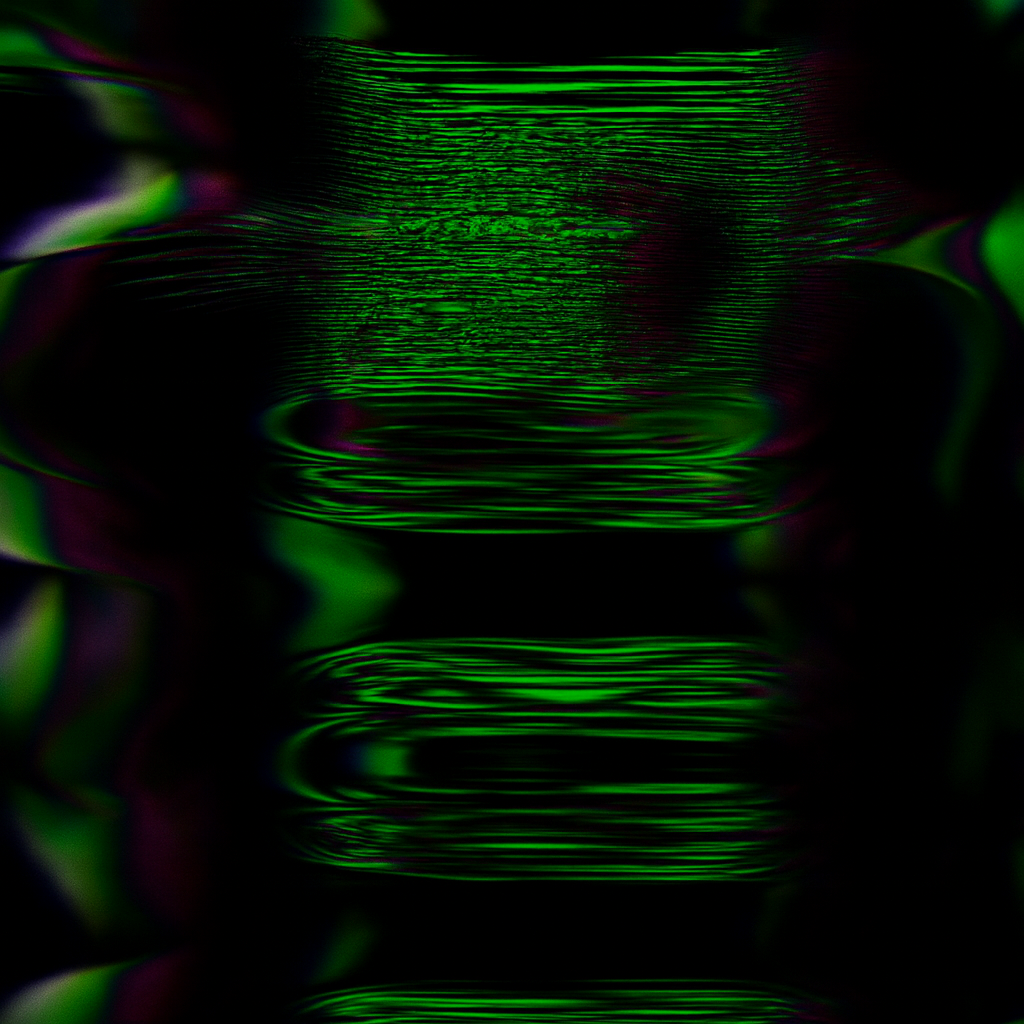
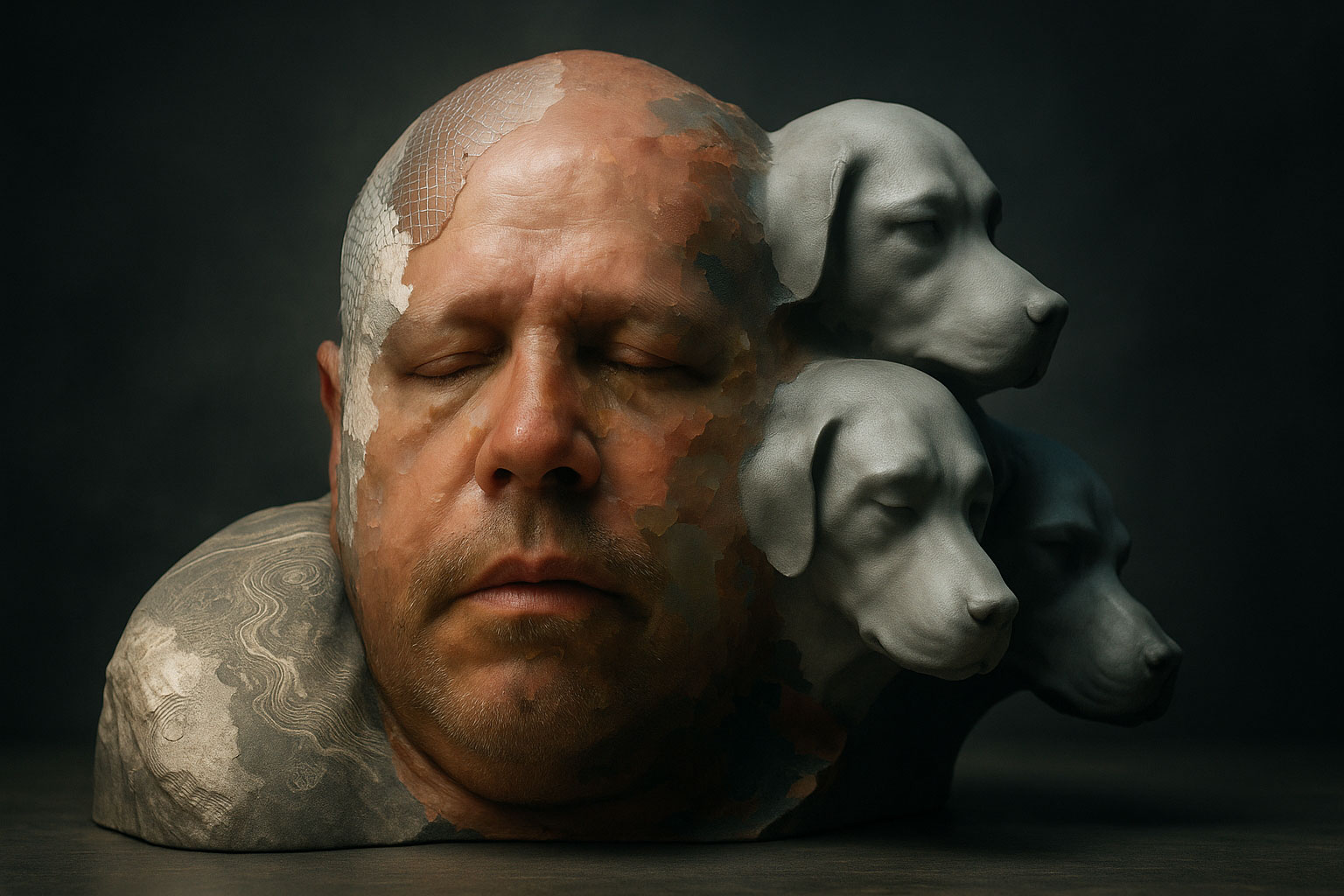
    Esta serie de autorretratos en blanco y negro está formada por escaneos tridimensionales de la cabeza del propio artista. Cada imagen ha sido reconstruida digitalmente mediante algoritmos de inteligencia artificial y tratada con técnicas visuales que oscilan entre la precisión anatómica y la descomposición posdigital. Lejos de reproducir la identidad del rostro, las imágenes operan como residuos técnicos: fragmentos descartados del proceso de escaneo que, al reconfigurarse visualmente, constituyen una nueva forma de autorrepresentación.


    La secuencia se sitúa en una genealogía discontinua del autorretrato, que se aleja del gesto afirmativo del yo para explorar zonas de pérdida, desmontaje y reconfiguración corporal. En esta operación, el autorretrato no se presenta como una imagen acabada, sino como un archivo en proceso, donde los errores de escaneo, las oquedades, los pliegues y las superposiciones sustituyen toda búsqueda de integridad visual.


    Lejos del canon pictórico del autorretrato clásico, en el que el cuerpo y el rostro eran soporte de identidad, memoria o introspección, estas imágenes exploran un régimen técnico en el que el yo se presenta como dato, como superficie erosionada por operaciones de captura y recomposición. El rostro ya no es el lugar donde se concentra la subjetividad, sino un territorio intervenido, escindido y vuelto a ensamblar desde los residuos de su propia digitalización.


    Desde esta perspectiva, la obra dialoga con los desarrollos contemporáneos del autorretrato en la era de los nuevos medios. La relación entre el cuerpo y la imagen ya no responde a una lógica representacional, sino a una tensión entre lo visible y lo procesable. El autor no se retrata, sino que se deja atravesar por sistemas de visión artificial, de reconstrucción volumétrica y de errores de interpretación algorítmica. La identidad no se muestra, sino que se descompone, se pliega y se desintegra en fragmentos legibles e ilegibles.


    Así, la serie se inscribe en un paisaje donde la fotografía, la animación y los lenguajes derivados del escaneo técnico ya no son herramientas miméticas, sino dispositivos críticos. La obra se vincula con debates actuales sobre el cuerpo como interfaz, el archivo como forma visual y la erosión de las categorías clásicas de autor, rostro e identidad. Resuenan aquí las exploraciones de la arqueología de los medios, las políticas de la piel, las economías visuales del error y la opacidad como forma de resistencia.


  • The Neutrals

    The Neutrals


    Marcello Mercado:

    The Neutrals

    Photographic Series Generated by AI and 3D Scanner

    Inkjet print on Ultra Satin photographic paper.

    Framed with white-painted pine rods.

    Sizes: 53 cm x 66 cm and 62 cm x 62 cm

    2025.


    This series presents a sequence of interventions on the face and body using industrial materials, such as shiny polymers, tension threads, and plastic coatings. The images serve as records of specific configurations and explore the relationship between surface, facial structure, and visual containment devices.


    The creative process begins with three-dimensional scanning of a human model using a high-resolution 3D scanner. From this scan, artificial intelligence algorithms generate a set of facial variations, trained to explore morphological modifications within defined parameters. These variations materialize as plastic structures that are either applied directly to the face or produced as wearable polymer extensions.


    The dominant color, orange, is highly visible. It generates contrast and segmentation and precisely delineates areas of the image.


    Faces are covered or modified by taut plastic layers. In some cases, the layers are adhered; in others, filaments traverse them, generating pressure or facial distortion. There is no expressiveness or gesture; all are suppressed to focus observation on the application technique, framing, tension of materials, and degree of skin surface immobilization.


    The compositions are carefully calibrated. The lines that traverse the portraits and bodies serve structural functions. They stabilize the visual field, generate force vectors, and define activation zones within the image. Frontal lighting and neutral backgrounds eliminate visual interference, enabling precise analysis of texture, shine, volume, and polymer fit to the face.


    This series is a collection of visual studies on the treatment of the body through encapsulation techniques, external modeling, and replacing facial identity with plastic structures. There is no narrative or representation; each image is an independent unit of material observation.


    Together, these photographs offer a technical approach to the altered body, positioning it in the space between flesh and polymer, biological volume and synthetic surface.


    Marcello Mercado:

    The Neutrals 01

    AI-Generated Photography and 3D Scanner

    Inkjet print on Ultra Satin photographic paper.

    Framed with a white-painted pine rod.

    53 cm x 66 cm

    2025


    Marcello Mercado:

    The Neutrals 02

    AI- and 3D-scanner-generated photography

    Inkjet print on Ultra Satin photographic paper.

    Framed with a white-painted pine rod.

    62 cm x 62 cm

    2025


    Marcello Mercado:

    The Neutrals 03

    AI-Generated Photography and 3D Scanner

    Inkjet print on Ultra Satin photographic paper.

    Framed with a white-painted pine rod.

    53 cm x 66 cm

    2025


    Marcello Mercado:

    The Neutrals 02

    AI- and 3D-scanner-generated photography

    Inkjet print on Ultra Satin photographic paper.

    Framed with a white-painted pine rod.

    62 cm x 62 cm

    2025


    (Spanish)


    Marcello Mercado

    Los Neutros

    Serie fotográfica generada por IA y scanner 3D

    Impresión ink jet sobre papel fotográfico Ultra Satin
    enmarcadas con varilla de pino pintadas de blanco

    Tamaño 53cm x 66cm y 62cm x 62cm

    2025


    Esta serie fotográfica presenta una secuencia de intervenciones sobre el rostro y el cuerpo mediante materiales industriales: polímeros brillantes, hilos tensores y recubrimientos plásticos. Las imágenes funcionan como registros de configuraciones específicas, orientadas a explorar la relación entre superficie, estructura facial y dispositivos de contención visual.


    El proceso de trabajo parte del escaneo tridimensional de un modelo humano mediante 3D Scanner de alta resolución. A partir de este escaneo se genera un conjunto de variaciones faciales modeladas por algoritmos de inteligencia artificial, entrenados para explorar modificaciones morfológicas dentro de parámetros definidos. Estas variaciones se materializan en estructuras plásticas aplicadas directamente sobre el rostro o producidas como extensiones portables en polímero.


    El color naranja, presente de forma dominante, responde a una elección cromática de alta visibilidad. Su función  es operativa: genera contraste, segmentación y delimita zonas de la imagen con precisión.


    Los rostros están cubiertos o modificados por capas plásticas tensadas, en algunos casos adheridas, en otros atravesadas por filamentos que generan presión o distorsión facial. No hay expresividad ni gesto: se suprime toda gestualidad para favorecer una observación centrada en la técnica de aplicación, el encuadre, la tensión de los materiales y el grado de inmovilización de la superficie cutánea.


    Las composiciones están cuidadosamente calibradas. Las líneas que atraviesan los retratos y cuerpos tienen funciones estructurales: estabilizan el campo visual, generan vectores de fuerza y definen zonas de activación dentro de la imagen. La iluminación frontal y la elección de fondos neutros eliminan interferencias visuales, permitiendo un análisis preciso de textura, brillo, volumen y ajuste del polímero al rostro.


    La serie es una colección de estudios visuales sobre el tratamiento del cuerpo mediante técnicas de encapsulamiento, modelado externo y sustitución de la identidad facial por estructuras plásticas. No hay narrativa, no hay representación: cada imagen constituye un módulo autónomo de observación material.


    En conjunto, estas fotografías plantean un enfoque técnico sobre el cuerpo intervenido, ubicándolo en una zona liminar entre la carne y el polímero, entre el volumen biológico y la superficie sintética.


  • The algorithm, 2024

    The algorithm, 2024


    Marcello Mercado

    The Algorithm

    2024

    Process Art – New Media Art – Photography – AI


    The Algorithm is an exploration of the intersection between obsolete technologies, photographic processes, and the evolving nature of AI. It traces the transformation of a photographic recording apparatus over five decades, employing both historical reference and technological development to produce a new, integrated system.

    In 1972, the artist’s grandfather was photographed using a Century Number 7 large-format folding camera (*), an early 20th-century device that captured highly detailed portraits. In 1980, the same camera was used to capture the artist’s own portrait, long after his grandfather’s death. This juxtaposition of temporal gaps sets the tone for the project’s investigation of technological evolution. At that point, the camera was relegated to storage, its physical obsolescence marking a moment of suspended history.

    In 1998, the artist recovered the camera, bringing it back from 26 years of dormancy. In 2024, the artist revisited the camera, now using a 2009 iPod (**) to photograph the remnants of the once-relevant tool, an obsolete device that bridged the analog and digital eras. The final photograph of the camera was taken using an iPhone 14, the latest in digital photography technology, marking the completion of a technological cycle from the heavy, mechanical analog to the sophisticated, AI-integrated systems of today.

    The project moves beyond symbolic or representational frameworks to focus on the material and procedural connections between technologies. Each image in the process not only documents a specific object but contributes to an unfolding algorithm that connects the past to the present, analog to digital, and mechanical to artificial intelligence. The final output is an algorithm generated through AI that incorporates the visual information collected by the cameras across the decades.

    This work draws on media archaeology as articulated by Siegfried Zielinski, whose emphasis on the recuperation of discarded technologies allows for a deeper understanding of how these objects continue to influence contemporary culture. The Algorithm operates within this framework, not only as a historical narrative but as a living exploration of how obsolete technologies carry forward the traces of their past functions, even in their residual states. Through this lens, obsolescence becomes a productive force, fueling a new cycle of technological engagement.

    .

    .

    The Process:


    A.

    1972: A portrait of the artist’s grandfather is captured in the public square of the artist’s hometown by an anonymous photographer, using the Century Number 7 camera. This moment marks the initial interaction between the artist’s family history and the medium of photography. The camera, designed for high-resolution, large-format images, signifies a moment where technology is embedded in personal memory.


    01. Portrait of the artist’s grandfather, 1972


    B.

    1980: The same camera is used to photograph the artist. In a subtle twist, the portrait is given a «vintage mask» effect, which makes the photograph appear older than the one taken in 1972, highlighting the contrast between perceived time and actual technological progress.


    02. Portrait of the artist, 1980


    .


    C.

    1998: The remains of the Century Number 7 camera, stored for decades, is rediscovered by the artist.


    .


    D.

    2024: Using a 2009 iPod, the artist photographs the remains of the Century Number 7 camera, marking the crossover from physical to portable digital technology. Despite its own obsolescence, the iPod serves as a transitional tool in the photographic evolution.


    03. 2009 iPod taking a photo of the remains of the Century Number 7 camera


    04. 2009 iPod photograph of the remains of the Century Number 7 camera


    E.

    2024: The final photograph is taken with an iPhone 14, representing the pinnacle of digital and AI-integrated photography. The phone, lighter, faster, and more accessible than its predecessors, signifies the completion of the technological transition from analog to digital, from mechanical to AI-powered systems.


    05. Remains of the rescued Century Number 7 camera


    Each photograph taken during this process contributes to an algorithm that the artist uses to generate an on-demand artificial intelligence response. The algorithm serves not only as a documentation of the passage from one device to another but also as a living expression of how technologies evolve, disappear, and, in their obsolescence, continue to inform new ways of thinking and creating.


    The performance shifts from an historical recounting of technological change to an active, ongoing process of engagement with technology, memory, and cultural history. Each device, from the Century Number 7 to the iPhone 14, acts as both a marker of time and an agent of transformation, tracing a line from the past to the present, and ultimately, through artificial intelligence, into a new future.

    The Algorithm not only addresses the obsolescence of technologies but also reveals how these obsolete forms continue to shape contemporary creative practice. It is an act of media archaeology that does not merely recover the past but allows it to inform the future. The work demonstrates the continuous presence of old technologies in the fabric of modernity, revealing their residual power to inform and generate new forms of artistic and intellectual expression.


    F.

    The five images obtained were processed by an artificial intelligence language model to obtain an on-demand algorithm.

    The algorithm obtained was regenerated to obtain a second variation of it.


    Algorithm 01- AI

    PHOTO 01 + PHOTO 02 + PHOTO 03 + PHOTO 04 + PHOTO 05


    A step-by-step algorithm that traces the transition of a photographic recording apparatus from an analog, physically heavy camera to AI

    This algorithm provides a narrative framework for tracing the technological evolution from analog cameras to AI, incorporating historical context, personal connections, and the protagonist’s interaction with various devices:

    1. Introduction: Begin by introducing the task of tracing the transition of a photographic apparatus from analog to AI, spanning three cameras and a language model.
    2. Initial Setting: Describe the initial scenario where a Century Number 7 camera, known for its green flexible bellows, captured portraits in a town plaza in Argentina in 1972.
    3. Camera Evolution: Detail the history and significance of the Century Camera Co., founded in 1900, its acquisition by Eastman Kodak Co. in 1903, and eventual discontinuation in 1920.
    4. First Transition: Transition to the iPod era, introduced by Apple Inc. in 2001, offering portable digital audio players. Describe its features, including weight, storage capacity, screen size, battery life, and data transfer speed.
    5. Second Transition: Move forward to the iPhone 14, the latest smartphone model as of the present. Provide details on its announcement, release date, screen size, camera improvements, and connectivity features.
    6. Personal Connection: Introduce the personal connection to the story, mentioning that the protagonist’s grandfather was born in 1898 and the protagonist in 1963. Emphasize the transition from older to newer technologies over their lifetimes.
    7. Storage of Old Devices: Mention how the Century Number 7 camera was stored in a warehouse for 26 years before being rediscovered in 1998.
    8. Capture with Obsolete iPod: Describe how a photo of the Century Number 7 camera was taken using a 2009 iPod, marking the intersection of old and new technologies.
    9. Final Transition: Capture the last photo of the Century Number 7 camera with an iPhone 14, representing the ultimate evolution in technology from analog to digital and from physical to AI.
    10. Personal Reflection: Conclude with a reflection on the fascination with both old and new technologies and how the protagonist navigates between them using an iPhone 14 and ChatGPT.


    Algorithm 02- AI


    PHOTO 01 + PHOTO 02 + PHOTO 03 + PHOTO 04 + PHOTO 05


    1. Introduction:
      • Begin by outlining the objective of tracing the transition of a photographic apparatus from analog to AI, covering three distinct camera technologies and their evolution alongside a language model.
    2. Initial Setting:
      • Set the scene with the Century Number 7 camera capturing portraits in a town plaza in Argentina in 1972, highlighting its distinctive green flexible bellows.
    3. Camera Evolution:
      • Provide a historical overview of the Century Camera Co., established in 1900 and its subsequent acquisition by Eastman Kodak Co. in 1903, leading to its discontinuation in 1920.
    4. First Transition:
      • Transition to the iPod era, initiated by Apple Inc. in 2001, featuring portable digital audio players. Detail the iPod’s key features such as weight, storage capacity, screen size, battery life, and data transfer speed.
    5. Second Transition:
      • Progress to the iPhone 14, the latest smartphone model available at the time. Discuss its announcement, release date, screen size, camera enhancements, and connectivity capabilities.
    6. Personal Connection:
      • Introduce a personal connection to the narrative, mentioning the birth years of the protagonist’s grandfather (1898) and the protagonist (1963). Emphasize the generational shift from older to newer technologies.
    7. Storage of Old Devices:
      • Describe the circumstances of the Century Number 7 camera being stored in a warehouse for 26 years before its rediscovery in 1998, highlighting the passage of time and technological advancements during its hiatus.
    8. Capture with Obsolete iPod:
      • Explain how a photo of the Century Number 7 camera was taken using a 2009 iPod, symbolizing the convergence of traditional and modern technologies.
    9. Final Transition:
      • Conclude with the capture of the final photo of the Century Number 7 camera using an iPhone 14, symbolizing the culmination of technological evolution from analog to digital and from physical to AI.
    10. Personal Reflection:
    • Reflect on the fascination with both old and new technologies, and how the protagonist navigates between them using an iPhone 14 and ChatGPT, underscoring the interplay between past, present, and future in technological advancement.

    This algorithm provides a structured approach to narrating the journey of technological evolution, weaving together historical context, personal connections, and the protagonist’s interaction with various devices.


    Notes:

    (*).

    The Century Number 7 large format folding camera is a model from the early 20th century and was manufactured by the Century Camera Company. Here are some of its key features:
    Film Format: The Century Number 7 camera was designed to use large format film, usually in sizes such as 4×5 inches or 8×10 inches. This made it possible to capture high resolution images with a high level of detail.
    Folding design: As the name suggests, this camera had a folding design that allowed it to be collapsed for easy transportation and storage. When folded, the camera became more compact and portable, making it ideal for photographers who needed mobility.
    Lens Focusing: The Century Number 7 typically came equipped with a high-quality focusing lens that offered manual focusing options as well as the use of an extendable bellows. This allowed the focal length to be adjusted to achieve optimal sharpness in the image.
    Rugged construction: Large-format cameras such as the Century Number 7 were often constructed of durable materials such as wood and metal, giving them a sense of solidity and stability. This ruggedness contributed to the camera’s longevity and ability to withstand the rigors of outdoor use.
    Tripod Mount: Due to its nature and size, the Century Number 7 would typically be mounted on a tripod to ensure stability during photography. Tripods provided solid support and allowed the height and angle of the camera to be adjusted to suit the potographer’s needs.


    (**)

    The 2009 version of the iPod did not have a built-in camera. However, in September 2009, Apple released the fifth-generation iPod nano with a built-in video camera. Here are the key features of this camera:Resolution: The camera on the fifth-generation iPod nano had a video resolution of 640 x 480 pixels (VGA) at 30 frames per second.
    Storage capacity: The iPod nano allowed you to record video directly on the device and store it in its internal memory, which varied depending on the model’s capacity (8GB or 16GB).
    Video format: Videos were recorded in H.264 format and saved as .MOV files.
    Other features: The iPod nano’s camera could take still photos at a resolution of 640 x 480 pixels. It also offered basic video editing capabilities right on the device.


  • The Ulysses Syndrome in the Age of Artificial Intelligence

    The Ulysses Syndrome in the Age of Artificial Intelligence


    Marcello Mercado

    The Ulysses Syndrome in the Age of Artificial Intelligence

    An Individual Strategy in Response to Algorithmic Seduction

    2025


    The expansion of generative artificial intelligences has established a new technical regime of production, perception, and decision-making. In this context, the concept of the Ulysses syndrome in the age of AI is proposed as a concrete strategy to counteract the seductive mechanisms embedded in these systems. It involves establishing a rigorous mode of engagement with AI. The syndrome involves an active posture of containment, exposure, and control aimed at sustaining individual judgment in an environment that tends to dissolve it.


    The Logic of Proliferation


    Generative AI systems operate under an expansive logic. They offer incessant variations, formal refinements, and immediate responses. This dynamic is not neutral; it reorganizes the economy of desire and transforms intellectual labor into a potentially addictive interaction. Each provisional output leads to the next in an open-ended loop. In such a context, the Ulysses syndrome suggests a relationship governed by internal conditions, such as production limits, delays in evaluation, self-imposed formal structures, and instances of critical distancing.

    This kind of relationship with AI requires a level of maturity that is still developing. The novelty of the technology prevents the development of habits of containment or deceleration. The work forms that emerge from this syndrome will necessarily be oriented toward de-automation and disrupting compulsive use.


    Technical Conditions for Containment


    The syndrome does not prescribe a specific technique, but rather, defines a general technical disposition. Some of its conditions include:

    Setting limits on the number of iterations per session

    Incorporating deliberate pauses between generation and evaluation

    Postponing judgment until the immediate effect of fascination subsides.

    – Adopting external forms, such as metrics, structure, or format, to contain automatic proliferation.

    – Exposing the system’s logic as part of the process without neutralizing it.


    These conditions are not universally normative. Rather, they function as modulations of use, adaptable by each practitioner to avoid fusing judgment with the device.


    Theoretical Resonances:


    Byung-Chul Han characterizes the present as a «violence of positivity,« where everything becomes visible, generable, and available.

    «The violence of positivity does not deprive; it saturates. It does not exclude; it exhausts.«

    AI amplifies this saturation, requiring a form of attentional economy that has yet to be established. The syndrome proposes an active interruption of that flow.


    Bernard Stiegler conceptualizes technology as pharmakon, which is both remedy and poison.

    «To be thoughtful means to be civil… Attention has a significance that is both psychological and social.«

    Conscious use of AI requires treating attention as a technical and political act.


    Harun Farocki argued that many contemporary images are not made to be seen but rather to operate. AI generates images, text, and sound not necessarily for human receivers, but as part of a systemic flow. Introducing pauses and analysis intervenes in that flow and resists its total operativity.


    G. I. Gurdjieff stated: «One needs fire. Without fire, there will never be anything. This fire is suffering—voluntary suffering—without which it is impossible to create anything.«

    In this context, AI can be seen as that fire. It should not be feared or avoided, but rather traversed without burning. Technical discipline and structural clarity are required to sustain exposure without surrendering to automatism.


    Vilém Flusser viewed technical apparatuses as programmable systems that automate symbolic production and neutralize subjective intention. To him, resisting the apparatus meant deviating consciously from its program. In this sense, the Ulysses Syndrome can be seen as a strategy of deviation from the programmatic logic of AI. The goal is not to break the system, but rather to insert decisions that its architecture does not anticipate.

    «Freedom becomes the ability to deviate from programs.« (Towards a Philosophy of Photography, 1983).


    Toward New Forms of Work:


    The Ulysses Syndrome in the Age of AI offers a conceptual framework for exploring new forms of work in relation to generative systems. The book proposes an asymmetrical relationship with AI: exposure without fusion, collaboration without obedience, and listening without submission.

    The goal is not to reduce AI usage, but rather to develop internal tools so that its use does not become an automatic reflex. The technical, ethical, and cognitive conditions derived from the syndrome may vary, but they all have one thing in common: the need to sustain a subjectivity that is not absorbed by algorithmic logic.


    (Español)


    Marcello Mercado

    El Síndrome de Ulises en la era de la Inteligencia Artificial

    Estrategia individual ante la seducción algorítmica.

    2025


    La expansión de las inteligencias artificiales generativas ha instaurado un nuevo régimen técnico de producción, percepción y decisión. En este contexto, presento el concepto del Síndrome de Ulises en la era de la IA como una estrategia concreta para hacer frente a los mecanismos de seducción de estos sistemas. Se trata de establecer una relación rigurosa con la IA. El síndrome describe una actitud activa de contención, exposición y control orientada a mantener el juicio individual en un entorno que tiende a disolverlo.


    La lógica de la proliferación


    Los sistemas de IA generativa operan bajo una lógica expansiva. Ofrecen variaciones incesantes, refinamientos formales y respuestas inmediatas. Esta dinámica no es inocente, ya que reorganiza la economía del deseo y transforma el trabajo intelectual en una interacción que puede llegar a ser adictiva. Cada resultado provisional remite al siguiente en un bucle sin fin. Frente a este entorno, el síndrome de Ulises sugiere una relación mediada por condiciones internas: límites de producción, retrasos en la evaluación, estructuras formales autoimpuestas e instancias de distanciamiento crítico.

    Esta forma de relacionarse con la IA requiere un tipo de madurez que aún está en formación. La novedad tecnológica impide que se consoliden hábitos de contención o desaceleración. Las formas de trabajo que surjan a partir de este síndrome deberán estar necesariamente orientadas a la desautomatización y a desarticular su uso compulsivo.


    Condiciones técnicas de contención.


    El síndrome no prescribe una técnica específica, sino una disposición técnica general. Algunas de sus condiciones son:

    Establecer límites en la cantidad de iteraciones posibles por sesión.

    – Incorporar pausas deliberadas entre la generación y la evaluación.

    Posponer el juicio hasta que cese el efecto inmediato de fascinación.

    – Adoptar formas externas (como la métrica, la estructura o el formato) que limiten la proliferación automática.


    Hay que exponer la lógica del sistema como parte del proceso, sin neutralizarla.

    Estas condiciones no tienen un valor normativo universal. Funcionan como modulaciones de uso que pueden adaptarse para evitar la fusión del criterio con el dispositivo.


    Resonancias teóricas.


    Byung-Chul Han caracteriza el presente como una «violencia de la positividad», donde todo se vuelve visible, generable y disponible.

    «La violencia de la positividad no niega, satura; no excluye, agota».

    La IA amplifica esta saturación, exigiendo una economía de la atención que aún no se ha consolidado. El síndrome propone una interrupción activa frente a este flujo.


    Bernard Stiegler conceptualiza la técnica como pharmakon, es decir, algo que puede ser tanto cura como veneno.

    «Ser reflexivo significa ser cívico… La atención tiene una significación psicológica y social».

    El uso consciente de la IA exige restaurar la atención como acto técnico y político.


    Harun Farocki plantea que muchas imágenes contemporáneas no están hechas para ser vistas, sino para operar. La IA genera imágenes, texto y sonido no necesariamente para un receptor humano, sino como parte de un flujo sistémico. Introducir pausas y análisis implica intervenir en ese flujo y resistirse a su operatividad total.


    G. I. Gurdjieff afirma:

    «Se necesita fuego. Sin fuego, no habrá nada. Ese fuego es el sufrimiento voluntario, sin el cual es imposible crear nada».

    En este contexto, la IA puede entenderse como ese fuego: no debe temerse ni evitarse, sino atravesarse sin quemarse. Se requiere disciplina técnica y claridad estructural para mantenerse expuesto sin caer en el automatismo.


    Vilém Flusser los describe como sistemas programables que tienden a automatizar la producción simbólica y a neutralizar la intención del sujeto. Según él, para resistirse a la programación de los aparatos es necesaria una postura de desviación activa y consciente. En este sentido, el síndrome de Ulises puede entenderse como una estrategia de desvío frente a la lógica programática de la inteligencia artificial. No se trata de romper el sistema, sino de introducir decisiones que no estén previstas en su arquitectura.

    «La libertad se convierte en la capacidad de desviarse de los programas» (Hacia una filosofía de la fotografía, 1983).


    Hacia nuevas formas de trabajo.


    El Síndrome de Ulises en la era de la IA es una estructura conceptual que permite pensar en nuevas formas de trabajo en relación con los dispositivos generativos. Plantea una relación asimétrica con la IA: exposición sin fusión, colaboración sin obediencia y escucha sin sumisión.

    El objetivo no es reducir el uso de la IA, sino desarrollar herramientas internas para evitar que dicho uso se convierta en un reflejo automático. Las condiciones técnicas, éticas y cognitivas derivadas del síndrome pueden variar, pero comparten una exigencia común: mantener una subjetividad que no sea absorbida por la lógica algorítmica.


    (German)


    Marcello Mercado

    Das Ulisses-Syndrom im Zeitalter der künstlichen Intelligenz

    Eine individuelle Strategie gegenüber algorithmischer Verführung

    2025


    Die Ausweitung generativer KI hat ein neues technisches Regime der Produktion, Wahrnehmung und Entscheidung etabliert. In diesem Zusammenhang wird das Konzept des Ulisses-Syndroms als konkrete Strategie vorgeschlagen, um den Verführungsmechanismen dieser Systeme zu begegnen. Es geht darum, eine strenge Form der Beziehung zur KI zu etablieren. Das Syndrom beschreibt eine aktive Haltung der Eindämmung, der bewussten Exposition und der Kontrolle, um das individuelle Urteil in einem Umfeld, das dazu neigt, es aufzulösen, aufrechtzuerhalten.


    Die Logik der Proliferation


    Generative KI-Systeme folgen einer expansiven Logik. Sie bieten endlose Variationen, formale Verfeinerungen und sofortige Antworten. Diese Dynamik ist nicht harmlos, da sie die Ökonomie des Begehrens reorganisiert und intellektuelle Arbeit in eine potenziell süchtig machende Interaktion verwandelt. Jedes vorläufige Ergebnis führt zum nächsten in einer Endlosschleife. In diesem Kontext schlägt das Ulisses-Syndrom eine Beziehung vor, die durch interne Bedingungen reguliert wird. Produktionsgrenzen, Bewertungsverzögerungen, selbst auferlegte formale Strukturen und kritische Distanzierungsinstanzen.

    Diese Form des Umgangs mit der KI setzt eine Reife voraus, die sich noch im Aufbau befindet. Die technologische Neuheit verhindert die Ausbildung gefestigter Gewohnheiten zur Eindämmung oder Verlangsamung. Arbeitsweisen, die aus diesem Syndrom hervorgehen, zielen zwangsläufig auf Ent-Automatisierung und die Unterbrechung kompulsiver Nutzung ab.


    Technische Bedingungen der Eindämmung


    Das Syndrom schreibt keine spezifische Technik vor, sondern definiert eine allgemeine technische Disposition. Zu seinen Bedingungen gehören:

    Begrenzung der Anzahl von Iterationen pro Sitzung,

    – Gezielte Pausen zwischen Generierung und Bewertung.

    – Aufschub des Urteils, bis der unmittelbare Faszinationseffekt nachlässt.

    Verwendung äußerer Formen (wie Metrik, Struktur oder Format), um die automatische Proliferation zu begrenzen.

    Offenlegung der Systemlogik als Teil des Prozesses, ohne sie zu neutralisieren.


    Diese Bedingungen haben keinen universellen normativen Charakter. Sie funktionieren als Nutzungsmodulationen, die individuell angepasst werden können, um eine Verschmelzung des Urteils mit dem System zu vermeiden.


    Theoretische Resonanzen


    Byung-Chul Han beschreibt die Gegenwart als eine „Gewalt der Positivität“, in der alles sichtbar, erzeugbar und verfügbar wird.

    „Die Gewalt der Positivität beraubt nicht, sie sättigt; sie schließt nicht aus, sie erschöpft.“

    KI verstärkt diese Sättigung und verlangt eine noch nicht ausgebildete Ökonomie der Aufmerksamkeit. Das Syndrom schlägt eine aktive Unterbrechung dieses Flusses vor.


    Bernard Stiegler versteht Technik als Pharmakon, also als etwas, das zugleich Heilmittel und Gift ist.

    „Nachdenklich zu sein bedeutet, zivilisiert zu sein … Aufmerksamkeit hat eine sowohl psychologische als auch soziale Bedeutung.“

    Der bewusste Umgang mit KI erfordert die Wiederherstellung der Aufmerksamkeit als technische und politische Praxis.


    Harun Farocki stellte fest, dass viele zeitgenössische Bilder nicht zum Sehen, sondern zum Operieren produziert werden. KI erzeugt Bilder, Texte und Klänge nicht primär für die menschliche Rezeption, sondern als Teil eines systemischen Flusses. Pausen und Analyse bedeuten, in diesen Fluss einzugreifen und seine totale Operativität zu unterbrechen.


    G. I. Gurdjieff sagte: „Man braucht Feuer. Ohne Feuer wird es nie etwas geben. Dieses Feuer ist Leiden – freiwilliges Leiden –, ohne das es unmöglich ist, irgendetwas zu erschaffen.“

     

    Vilém Flusser beschreibt technische Apparate als programmierbare Systeme, die die symbolische Produktion automatisieren und dabei die Subjektivität neutralisieren. Seiner Meinung nach besteht Widerstand gegen den Apparat darin, sich bewusst vom Programm zu entfernen. In diesem Sinne kann das Ulisses-Syndrom als Strategie der Abweichung gegenüber der programmatischen Logik von KI verstanden werden. Es geht nicht darum, das System zu zerstören, sondern darum, Entscheidungen einzuführen, die von seiner Architektur nicht vorgesehen sind.

    „Freiheit wird zur Fähigkeit, sich von Programmen zu entfernen. (Für eine Philosophie der Fotografie, 1983)


    In diesem Zusammenhang kann KI als genau dieses Feuer verstanden werden: Sie nicht zu fürchten, sie nicht zu meiden, sondern sie zu durchqueren, ohne daran zu verbrennen. Erforderlich sind technische Disziplin und strukturelle Klarheit, um die Exposition aufrechtzuerhalten, ohne dem Automatismus zu verfallen.


    Auf dem Weg zu neuen Arbeitsformen


    Das Ulisses-Syndrom im Zeitalter der KI ist eine konzeptuelle Struktur, um neue Arbeitsweisen im Umgang mit generativen Systemen zu denken. Sie schlägt ein asymmetrisches Verhältnis zur KI vor: Exposition ohne Verschmelzung, Kooperation ohne Gehorsam, Hören ohne Unterwerfung.

    Das Ziel besteht nicht darin, den Einsatz von KI zu verringern, sondern innere Werkzeuge zu entwickeln, damit ihre Nutzung nicht zum automatisierten Reflex wird. Die sich daraus ergebenden technischen, ethischen und kognitiven Bedingungen mögen variieren, doch sie alle teilen die Forderung, eine Subjektivität aufrechtzuerhalten, die nicht in die Logik des Algorithmus absorbiert wird.


  • The Smell of War

    The Smell of War


    Marcello Mercado

    The Smell of War / Geruch des Krieges/ Olor a guerra

    2011 – 2025


    In times of algorithmic proliferation and ongoing global conflict, The Smell of War puts forth a radical question: is it possible to condense the sensory experience of war into a computational form? The project exists both as a monophonic channel installation —a kind of digital lung— and as a web-based interactive program. In both formats, what the viewer encounters is not a battlefield nor a depiction of explicit violence, but the visual translation of volatile molecules responsible for the scent of decomposition, combustion, and rot — hallmarks of war zones.

    .

    The algorithm, built with conceptual precision, does not aim to replicate the smell of war olfactively — a task still impossible in digital environments — but rather to encode its presence through the collision and accumulation of substances such as cadaverine, butyric acid, or methyl mercaptan. These molecules, invisible yet viscerally active, become visual and interactive agents within the piece. What is constructed is a language of the intangible: an aesthetic of violence mediated by both organic chemistry and digital abstraction.


    Authors like Siegfried Zielinski have proposed that media do not merely store or transmit information, but operate as “excavation zones” of temporalities and affects. Smell of War moves within that terrain: it excavates human remains through a synthetic interface, translating what lies outside the visible frame into computational visuality. It is not about documentation or representation, but about stretching the threshold between the perceptible and the unnameable. This algorithmic poetics resonates with curatorial approaches that conceive art as a sensitive system capable of confronting structures of violence. Curators such as Hans Ulrich Obrist and Carolyn Christov-Bakargiev have explored installation as an expanded site for reflecting on the politics of perception; while figures like Okwui Enwezor, Maria Lind, or Catherine de Zegher have promoted artistic languages that unsettle dominant narratives. At the intersection of art, chemistry, and code, this work generates a productive friction between the intangible and the corporeal.


    The algorithm driving Smell of War operates as a device that simulates, interprets, and exposes the chemical compounds inherent in human decomposition and war-related residues. Its logic is not metaphorical, but material: based on a dataset of molecular formulas—cadaverine, putrescine, butyric acid, methyl mercaptan, among others—the work establishes correlations between these compounds and generative real-time visualizations, accompanied by fragmentary sound layers. The aim is not to induce a literal olfactory experience—technologically unfeasible—but to construct a sensory constellation in which smell, though absent, emerges as a residual perceptual force charged with memory and violence.

    .

    The code functions as a choreography of compounds, where the volatile, the toxic, and the putrid are translated into visual stimuli modulated by the fluctuations of an algorithmic channel. This dynamic resonates with curatorial approaches that examine unstable perceptual infrastructures, such as Anselm Franke’s investigations into what remains outside the threshold of representation, or Jens Hauser’s work on the performativity of the biological within computational environments. Both provide critical frameworks from which to understand an aesthetic that does not represent conflict but embodies it through the imperceptible.


    The smell of war—often omitted from official records and the grammars of trauma—persists as an invisible and brutal trace. War photographers and conflict reporters name it unambiguously: decomposing flesh, burnt plastic, excrement, rancid sweat, and aging waste. Instead of literally reproducing these emanations, the project disassembles them into their molecular logic, transforming compounds like cadaverine, methyl mercaptan, or butyric acid into symbolic nuclei that the algorithm processes as both material and code. This is not about smelling—it is about experiencing the impossibility of smell translated into digital syntax.

    .

    The installation—a visual-sonic interface structured as a channel—operates as an environment where the chemical violence of decomposition is transposed into the abstract realm of code. In this transduction, the channel becomes a membrane. Algorithmic language, far from being a neutral medium, functions as a system that amplifies, reconfigures, and reveals the structural dimensions of conflict. This approach resonates with what Okwui Enwezor called “expanded institutional critique,” where contemporary art must address not only the image, but the invisible architectures that produce it. Bruno Latour, for his part, reminds us that technical devices are not mere mediators—they are agents that transform the sensible world. Here, the algorithm does not represent; it acts, records, and reorders the perception of war through its most elusive residues.


    The materiality of the algorithm in this project is not merely its code or structure, but the very embodiment of historical violence translated into digital syntax. War, in its most visceral dimension, becomes an experiential field where the degradation of flesh is reduced to a set of molecular compounds: the pungent odors that invade the battlefield, the rancid scent of decay, of organic matter unraveling amidst the chaos. Through this process of encoding, the algorithm becomes a mechanism for grasping the intangible, the irreducible essence of war, which cannot be smelled in the traditional sense but can be felt through the visceral, sensory output of the interface.

    .

    The installation facilitates an interaction in which the user’s engagement with the system causes molecular figures to collide and change. These shifts in appearance are a direct representation of chemical reactions occurring within the algorithm. The sound that accompanies this interaction—the sound of inhalation, the rhythmic collapse of breathing—corresponds to the respiratory responses that might occur in environments of high stress or danger.

    .

    .


    (german)


    In Zeiten algorithmischer Durchdringung und andauernder globaler Konflikte stellt Geruch des Krieges eine radikale Frage: Ist es möglich, die sensorische Erfahrung des Krieges in eine rechnerische Form zu überführen? Das Projekt manifestiert sich sowohl als monophonische Kanalinstallation – eine Art digitaler Lunge – als auch als webbasiertes, interaktives Programm. In beiden Formaten begegnet das Publikum keinem Schlachtfeld, keiner expliziten Kriegsdarstellung, sondern der visuellen Übersetzung flüchtiger Moleküle, die den Geruch von Verwesung, Verbrennung und Fäulnis tragen – Markenzeichen des Krieges.

    .

    Der Algorithmus, konzeptuell präzise entwickelt, zielt nicht darauf ab, den Kriegsgeruch olfaktorisch zu simulieren – eine in digitalen Interfaces noch unmögliche Aufgabe –, sondern ihn durch die Kodierung von Stoffen wie Kadaverin, Buttersäure oder Methylmercaptan visuell erfahrbar zu machen. Diese Moleküle, unsichtbar und doch sensorisch aggressiv, werden hier zu interaktiven, visuellen Akteuren. Die Arbeit formuliert eine Sprache des Unfassbaren – eine Ästhetik der Gewalt zwischen organischer Chemie und digitaler Abstraktion.

    .

    Autoren wie Siegfried Zielinski haben vorgeschlagen, dass Medien nicht nur Informationen speichern oder übertragen, sondern als „Ausgrabungszonen“ von Zeitlichkeiten und Affekten fungieren. Geruch des Krieges bewegt sich in diesem Terrain: Es gräbt menschliche Überreste durch eine synthetische Schnittstelle aus und übersetzt das, was außerhalb des sichtbaren Rahmens liegt, in rechnerische Bildlichkeit. Es geht nicht um Dokumentation oder Repräsentation, sondern um die Dehnung der Schwelle zwischen dem Wahrnehmbaren und dem Unbenennbaren. Diese algorithmische Poetik steht im Dialog mit kuratorischen Denkweisen, die Kunst als ein sensibles System begreifen, das in der Lage ist, Gewaltstrukturen zu konfrontieren. Kurator:innen wie Hans Ulrich Obrist und Carolyn Christov-Bakargiev haben die Installation als erweiterten Raum zur Reflexion über die Politik der Wahrnehmung untersucht, während Persönlichkeiten wie Okwui Enwezor, Maria Lind oder Catherine de Zegher künstlerische Ausdrucksformen fördern, die dominante Narrative destabilisieren. Im Schnittfeld von Kunst, Chemie und Code erzeugt diese Arbeit eine produktive Reibung zwischen dem Immateriellen und dem Körperlichen.

    .

    Der Algorithmus, der Geruch des Krieges antreibt, funktioniert als ein Gerät, das die chemischen Verbindungen simuliert, interpretiert und sichtbar macht, die mit menschlicher Verwesung und kriegsbedingten Rückständen verbunden sind. Seine Logik ist nicht metaphorisch, sondern materiell: Auf Basis eines Datensatzes molekularer Formeln – Cadaverin, Putrescin, Buttersäure, Methylmercaptan und andere – stellt das Werk Korrespondenzen zwischen diesen Verbindungen und generativen Echtzeitvisualisierungen her, begleitet von fragmentarischen Klangschichten. Ziel ist es nicht, eine buchstäbliche olfaktorische Erfahrung zu erzeugen – technologisch kaum möglich –, sondern eine sensorische Konstellation zu schaffen, in der Geruch, obwohl abwesend, als residuelle Wahrnehmungskraft voller Erinnerung und Gewalt auftritt.

    .

    Der Code funktioniert wie eine Choreographie von Molekülen, bei der Flüchtiges, Toxisches und Fauliges in visuelle Reize übersetzt wird, die durch die Schwankungen eines algorithmischen Kanals moduliert sind. Diese Dynamik steht im Einklang mit kuratorischen Ansätzen, die sich mit instabilen Wahrnehmungsinfrastrukturen befassen – etwa in Anselm Frankes Untersuchungen zu dem, was sich der Repräsentation entzieht, oder Jens Hausers Arbeiten zur Performativität des Biologischen in rechnerischen Umgebungen. Beide liefern kritische Rahmenbedingungen, um eine Ästhetik zu verstehen, die den Konflikt nicht darstellt, sondern ihn durch das Unwahrnehmbare verkörpert.

    .

    Der Geruch des Krieges – oft aus offiziellen Archiven und den Grammatiken des Traumas ausgeschlossen – bleibt als unsichtbare und brutale Spur bestehen. Kriegsfotografen und Reporter benennen ihn unmissverständlich: verwesendes Fleisch, verbranntes Plastik, Exkremente, ranziger Schweiß und gealterte Rückstände. Anstatt diese Ausdünstungen buchstäblich zu reproduzieren, zerlegt das Projekt sie in ihre molekulare Logik. Verbindungen wie Cadaverin, Methylmercaptan oder Buttersäure werden zu symbolischen Kernen, die vom Algorithmus zugleich als materielle und codierte Einheiten verarbeitet werden. Es geht nicht um das Riechen selbst, sondern um die Erfahrung der Unmöglichkeit des Geruchs, übertragen in eine digitale Syntax.

    .

    Die Installation – eine visuell-klangliche Schnittstelle in Form eines Kanals – fungiert als Umgebung, in der die chemische Gewalt der Verwesung in den abstrakten Bereich des Codes überführt wird. In dieser Transduktion wird der Kanal zur Membran. Die algorithmische Sprache ist weit entfernt von einem neutralen Medium; sie fungiert als ein System, das verstärkt, umformt und die strukturelle Dimension des Konflikts offenlegt. Dieser Ansatz erinnert an das, was Okwui Enwezor als „erweiterte institutionelle Kritik“ bezeichnete, bei der sich zeitgenössische Kunst nicht nur mit dem Bild selbst, sondern auch mit den unsichtbaren Architekturen seiner Entstehung auseinandersetzen muss. Bruno Latour wiederum weist darauf hin, dass technische Apparate keine bloßen Vermittler sind, sondern Akteure, die die sinnlich erfahrbare Welt transformieren. Hier repräsentiert der Algorithmus nicht – er handelt, registriert und ordnet die Wahrnehmung des Krieges anhand seiner flüchtigsten Rückstände neu.

    .

    Die Materialität des Algorithmus in diesem Projekt besteht nicht nur in seinem Code oder seiner Struktur, sondern in der Verkörperung historischer Gewalt, übersetzt in digitale Syntax. Krieg wird in seiner viszeralen Dimension zu einem Erfahrungsraum, in dem die Zersetzung von Gewebe auf eine Reihe molekularer Verbindungen reduziert wird: die stechenden Gerüche, die das Schlachtfeld durchdringen, der ranzige Gestank des Verfalls, von organischem Material, das sich im Chaos auflöst. Durch diesen Kodierungsprozess fungiert der Algorithmus als Mechanismus zur Erfassung des Unfassbaren – der nicht direkt riechbaren, aber über die viszerale, sensorische Ausgabe der Schnittstelle spürbaren Essenz des Krieges.

    .

    Die Installation ermöglicht eine Interaktion, bei der die Berührung des Systems durch den Benutzer molekulare Strukturen kollidieren und sich verändern lässt. Diese Veränderungen im Erscheinungsbild sind direkte Darstellungen chemischer Reaktionen, die im Algorithmus ablaufen. Der begleitende Klang – das Einatmen, das rhythmische Kollabieren der Atmung – verweist auf respiratorische Reaktionen, wie sie in Umgebungen mit hoher Belastung oder Gefahr auftreten.

    ..

    .

    .

    (spanish)


    En tiempos de proliferación algorítmica y conflictos persistentes, Olor a guerra propone una reflexión radical: ¿es posible condensar la experiencia sensorial de la guerra en una forma computacional? El proyecto se presenta simultáneamente como una instalación monofónica canalizada —una suerte de pulmón digital— y como un programa web interactivo accesible globalmente. En ambos casos, lo que se observa no es un campo de batalla ni una imagen bélica explícita, sino la traducción visual de un conjunto de moléculas volátiles responsables del olor a descomposición, combustión y podredumbre, características del teatro de guerra.

    .

    El algoritmo, desarrollado con rigor conceptual, no pretende simular el olor de la guerra de manera olfativa —tarea aún imposible para la interfaz digital— sino codificar su presencia a través de la acumulación y colisión de sustancias como cadaverina, ácido butírico o metilmercaptano. Estas moléculas, usualmente invisibles pero extremadamente activas a nivel sensorial, se convierten aquí en entidades visuales e interactivas. Lo que se propone es un lenguaje de lo intangible, una estética de la violencia mediada por lo orgánico y lo digital.

    .

    Autores como Siegfried Zielinski han sugerido que los medios no solo almacenan o transmiten información, sino que pueden ser “zonas de excavación” de temporalidades y afectos. Olor a guerra opera en ese territorio: excava los restos de lo humano desde una interfaz sintética, traduce en visualidad computacional lo que permanece fuera del marco visible. No se trata de documentar ni representar, sino de tensionar el umbral entre lo perceptible y lo innombrable. Esta poética algorítmica se articula con formas de pensamiento curatorial que entienden el arte como sistema sensible capaz de confrontar estructuras de violencia. Curadores como Hans Ulrich Obrist o Carolyn Christov-Bakargiev han explorado la instalación como lugar expandido para pensar la política de la percepción; mientras que figuras como Okwui Enwezor, Maria Lind o Catherine de Zegher han impulsado lenguajes artísticos que desestabilizan las narrativas dominantes. En ese cruce entre arte, química y código, esta pieza genera una fricción productiva entre lo intangible y lo corporal.

    .

    El algoritmo que articula Olor a guerra opera como un dispositivo que simula, interpreta y expone los compuestos químicos que constituyen el olor de la descomposición humana y los residuos bélicos. Su lógica no es metafórica, sino material: a partir de una base de datos compuesta por fórmulas moleculares —cadaverina, putrescina, ácido butírico, metilmercaptano, entre otras—, la obra establece correspondencias entre estos compuestos y visualizaciones generativas en tiempo real, acompañadas por capas sonoras de naturaleza fragmentaria. El objetivo no es inducir una experiencia olfativa literal —tecnológicamente inviable— sino configurar una constelación sensible en la que el olor, aunque ausente, se manifieste como fuerza perceptual residual, cargada de memoria y violencia.

    .

    El código funciona como una coreografía de compuestos, donde lo volátil, lo tóxico y lo putrefacto se traduce en estímulos visuales modulados por las fluctuaciones de un canal algorítmico. Esta dinámica encuentra resonancia con ciertas líneas curatoriales contemporáneas que exploran infraestructuras perceptuales inestables, como las investigaciones de Anselm Franke sobre lo que permanece fuera del umbral de la representación, o los trabajos de Jens Hauser en torno a la performatividad de lo biológico en entornos computacionales. Ambos proporcionan marcos críticos desde los cuales pensar una estética que no representa el conflicto, sino que lo encarna desde lo imperceptible..

    .

    El olor de la guerra, a menudo excluido de los archivos oficiales y de las gramáticas del trauma, persiste como una huella invisible y brutal. Reporteros gráficos y cronistas de conflicto lo nombran sin ambigüedad: carne descompuesta, plástico calcinado, heces, sudor rancio y residuos envejecidos. En lugar de representar literalmente estas emanaciones, el proyecto las descompone en su lógica molecular, convirtiendo compuestos como la cadaverina, el metilmercaptano o el ácido butírico en núcleos simbólicos que el algoritmo toma como puntos de entrada sensorial. No se trata de oler, sino de sentir la imposibilidad del olor traducida a una sintaxis digital..

    .

    La instalación —una interfaz visual-sonora en forma de canal— opera como un entorno donde la violencia química de la descomposición es desplazada hacia el plano abstracto del código. En esta transducción, el canal se vuelve membrana. El lenguaje algorítmico, lejos de ser un medio neutral, actúa como sistema que amplifica, reconfigura y expone la dimensión estructural del conflicto. Esta estrategia recuerda lo que Okwui Enwezor definía como “crítica institucional expandida”, en la que el arte contemporáneo debe abordar no sólo la imagen, sino también las arquitecturas invisibles que la producen. Bruno Latour, por su parte, sugiere que los dispositivos técnicos no son meras mediaciones, sino agentes de transformación del mundo sensible. Aquí, el algoritmo no representa: actúa, registra, y reorganiza la percepción de la guerra desde sus residuos más inasibles.

    .

    La materialidad del algoritmo en este proyecto no reside únicamente en su código o estructura, sino en la incorporación misma de la violencia histórica traducida a una sintaxis digital. La guerra, en su dimensión más visceral, se convierte en un campo experiencial donde la degradación de la carne se reduce a un conjunto de compuestos moleculares: los olores penetrantes que invaden el campo de batalla, el hedor rancio de la descomposición, de la materia orgánica desintegrándose en medio del colapso. A través de este proceso de codificación, el algoritmo opera como un mecanismo para captar lo intangible: la esencia irreductible de la guerra, que no puede olerse en sentido tradicional, pero puede percibirse mediante la salida sensorial visceral de la interfaz.

    .

    La instalación permite una interacción en la cual el contacto del usuario con el sistema provoca colisiones y transformaciones de figuras moleculares. Estos cambios en la apariencia representan directamente reacciones químicas procesadas por el algoritmo. El sonido que acompaña esta interacción—la inhalación, el colapso rítmico de la respiración—corresponde a respuestas respiratorias asociadas a entornos de alto estrés o peligro.

    .


    .

    .

  • Imagen HOS: La espera como forma algorítmica: la imagen como promesa

    Imagen HOS: La espera como forma algorítmica: la imagen como promesa


    Marcello Mercado


    Imagen HOS: La espera como forma algorítmica: La imagen como promesa


    2025


    Estructura del proyecto


    I. Núcleo conceptual

    • Imagen HOS: instancia latente en servidores, no visible, suspendida.

    • Espera algorítmica: no como error, sino como diseño funcional.

    • Jerarquías de acceso: visualidad mediada por pago y privilegio computacional.

    • Performatividad de la latencia: la espera como forma estética y política.


    II. Proceso experimental

    • Captura de pantalla del mensaje de espera antes de que la imagen se genere (imagen HOS).

    • Impresión fotográfica de la captura.

    • Re-fotografía mediante cámara oscura (exposición de 60 a 90 minutos).

    • Impresión del resultado analógico.

    • Nueva generación digital de la imagen original, completándola.

    • Comparación crítica entre ambas materialidades (latente vs. completada).


    III. Algoritmo en Python

    • Simulación de latencia diferencial.

    • Criterios: tipo de usuario, saturación del sistema, tiempo de espera como performatividad.

    • Resultado: registro de espera y diferencias estructurales entre privilegios de acceso.


    IV. Referencias clave

    • Siegfried Zielinski: arqueología de medios y genealogía de tecnologías visuales.

    • Wendy Hui Kyong Chun: latencia como política perceptual.

    • Benjamin Bratton: estratificación técnica como estructura de soberanía.

    • Lisa Parks / Tung-Hui Hu: crítica de la infraestructura invisible.

    • Media archaeology aplicada a la cámara oscura y al código.


    La imagen HOS no es una imagen: es su promesa


    Fotografía de una promesa suspendida

    Entre el momento en que se solicita una imagen y el instante en que aparece, se abre un intervalo lleno de tensión: no vemos la imagen, pero sí el mensaje que anuncia su inminencia. Esa zona intermedia, ese limbo computacional, es el objeto central de esta obra. A través de una arquitectura crítica que une inteligencia artificial generativa, fotografía analógica y simulaciones algorítmicas, el proyecto explora cómo la espera se convierte en forma, cómo lo invisible deviene escena y cómo lo técnico se torna político.

    El punto de partida es una captura de pantalla aparentemente banal: “Lots of people are creating images right now…”. Sin embargo, ese mensaje oculta una complejidad profunda: es síntoma de una infraestructura de cómputo compartida y jerarquizada, donde el acceso a la visualidad está condicionado por modelos comerciales. La imagen que aún no aparece —la imagen HOS (Held On Server)— se transforma aquí en objeto estético.

    Impresión tras impresión, exposición tras exposición, la imagen es materializada, desdoblada, dislocada. La fotografía realizada mediante cámara oscura —tecnología del siglo XIX— no solo replica lo que ya existía, sino que reinterpreta la espera como acto visual. El tiempo de exposición analógica (60-90 minutos) se vuelve alegoría concreta de la latencia computacional. La imagen no representa: sucede. No es contenido: es condición.

    Desde la arqueología de medios de Zielinski hasta las teorías contemporáneas sobre infraestructura, esta obra traza genealogías cruzadas: entre la sombra proyectada por la luz de una lente rudimentaria y el cálculo probabilístico de una red neuronal. Ambas están marcadas por umbrales, filtros y aquello que permanece oculto. Curar estas imágenes no es mostrarlas, sino situarlas en el momento exacto donde lo visible aún no ha llegado.

    “La solicitud ha sido emitida. Comienzo de la generación de la imagen.”

    «Procesamiento de imágenes avanzado»

    INSTALACIÓN

    A. Un monitor proyecta en tiempo real los registros generados por el algoritmo Python, acompañado de un archivo visual comparativo que presenta la imagen digital completada frente a su versión latente.

    B. Un archivo visual complementario incluye logs que documentan, para cada caso:

    • El prompt original.

    • El mensaje de espera recibido.

    • El log generado por Python.

    • La impresión analógica realizada con cámara oscura.

    • La imagen finalmente completada.

    1. Citas fundamentales que acompañan la instalación:

    • Zielinski: “No toda imagen tiene que aparecer para tener sentido”.

    • Chun: “La latencia es una política del tiempo”.

    • Bratton: “La arquitectura computacional distribuye soberanía”.


    «Imagen seleccionada impresa en papel para ser fotografiada con una cámara oscura.»


    «Imagen seleccionada impresa en papel para ser fotografiada con una cámara oscura.»


    «Imagen seleccionada impresa en papel para ser fotografiada con una cámara oscura.»


    «Cámara oscura (cámara estenopeica).»


    Imagen 01 fue creada en el cuarto oscuro.


    Imagen 02 fue creada en el cuarto oscuro.


    Imagen 03 fue creada en el cuarto oscuro.


    Este algoritmo simula las diferentes latencias que experimentan los usuarios según su nivel de suscripción, destacando los factores infraestructurales y económicos que influyen en el acceso a imágenes generadas por inteligencia artificial.


    Diagrama de instalación


    2.


    En el umbral entre generación y espera, esta instalación presenta una imagen aún no producida. Un mensaje del sistema, repetido y bloqueado en su propia condición de espera, se transforma en un paisaje generativo. Aquí, el «no-evento» deviene escena: la inacción como forma de agencia, el error como forma estética. El algoritmo no genera la imagen en sí, sino su fantasma: una performatividad invisible, un readymade suspendido en la latencia.

    Este fenómeno puede entenderse como una manifestación de la latencia algorítmica diferencial: un mecanismo estructurado por el sistema para administrar la carga computacional mediante jerarquías de acceso. La espera no es un error ni una excepción; es una función del sistema, una estrategia de optimización comercial y de diferenciación de la experiencia.

    En este contexto, la imagen generada por inteligencia artificial ya no es simplemente un resultado visual, sino una instancia computacional condicionada por lógicas de acceso, estrategias de priorización y políticas de uso. Cada imagen activa un consumo de recursos y se convierte en una entidad con coste de cómputo, con implicaciones en la arquitectura algorítmica y en las políticas comerciales.

    Esta obra invita a reflexionar sobre cómo la latencia, la espera y la inacción pueden convertirse en elementos estéticos y críticos en la era de la inteligencia artificial generativa.

    A. Imagen HOS: La espera como forma algorítmica: la imagen como promesa

    1. Marco general:

    La frase de ChatGPT “Processing image. Lots of people are creating images right now, so this might take a bit. We’ll notify you when your image is ready” puede analizarse como una unidad de interfaz que condensa arquitectura técnica, lógica de negocio y modulación del tiempo de uso. La espera no es un error ni una excepción: es una función del sistema.

    2. Elementos del sistema implicados:

    A. Encolamiento algorítmico: El sistema introduce tiempos de espera programados para gestionar recursos computacionales limitados. Se prioriza a los usuarios premium, desplazando a los no pagos a una “zona de baja prioridad” gestionada por un scheduler.

    B. Carga distribuida: El mensaje sugiere una carga elevada. Técnicamente, implica nodos de cómputo saturados y la redistribución de tareas a otros nodos. Esta redistribución no es neutral: obedece a políticas de privilegio de acceso.

    C. Experiencia temporal condicionada: La experiencia del usuario se modula según su posición jerárquica. La latencia deja de ser solo técnica: se convierte en un mecanismo de estratificación operativa.

    3. Categorías de análisis:

    A. Latencia funcional: diferencia entre el tiempo de solicitud y el de entrega.

    B. Latencia estratégica: introducida deliberadamente como parte del modelo freemium.

    C. Latencia perceptual: cómo se comunica la espera (en este caso, con lenguaje informal y pasivo) y cómo se gestiona la atención del usuario.

    4. Implicaciones computacionales y estructurales:

    La espera se convierte en un operador de selección indirecta que filtra el comportamiento del usuario (¿esperar?, ¿pagar?, ¿abandonar?).

    El mensaje forma parte de un sistema de contención algorítmica diseñado para regular la ansiedad mediante un lenguaje amistoso, mientras mantiene intacta su lógica discriminatoria.

    Desde una perspectiva arquitectónica, se trata de un caso de escalamiento diferenciado, donde el acceso a recursos intensivos en cómputo está regulado por el modelo de negocio.

    5. Propuesta conceptual:

    Este fenómeno puede categorizarse como Latencia Algorítmica Diferencial (LAD): un mecanismo de espera estructurado por el sistema para administrar la carga computacional mediante jerarquías de acceso. No solo responde a capacidades técnicas, sino también a estrategias de optimización comercial y diferenciación de la experiencia.

    B. Latencia distribuida y jerarquías de acceso: Análisis del mensaje de espera en la generación de imágenes en plataformas de IA

    0. Introducción

    En el contexto de la inteligencia artificial generativa, la imagen ya no es simplemente un resultado visual, sino una instancia computacional procesada en una arquitectura distribuida, condicionada por lógicas de acceso, estrategias de priorización y políticas de uso. Este ensayo parte del análisis técnico y estructural del mensaje:

    «Procesando imagen. Muchas personas están creando imágenes en este momento, por lo que este proceso puede llevar un tiempo. Le notificaremos cuando su imagen esté lista».

    Se propone descomponer sus implicaciones en dos dimensiones:

    1. La redefinición de imagen como entidad generativa dentro de una economía de latencia y optimización.

    2. El diseño algorítmico de una simulación conceptual en Python que represente esa espera diferencial como función estructural.

    1. ¿Qué es una imagen en IA generativa?

    1.1. Imagen como salida computacional

    En los sistemas generativos, como DALL·E o Stable Diffusion, la imagen no es un objeto preexistente, sino el resultado de cálculos estadísticos, procesos de muestreo sobre espacios latentes y generación de píxeles a partir de modelos entrenados. Técnicamente puede definirse como:

    Imagen (IA-G): estructura de datos compuesta por un arreglo multicanal (matriz RGB), derivada de una inferencia probabilística sobre un modelo entrenado, condicionada por un prompt textual y parámetros de generación.

    1.2. Imagen como vector de consumo diferenciado

    Una misma imagen, generada con distintos niveles de acceso (usuario gratuito o premium), presenta variaciones en latencia, resolución o calidad. Por tanto, la imagen generada no es universal: su forma depende del modelo de negocio.

    Imagen diferencial: producto computacional cuya disponibilidad, resolución y velocidad de generación están moduladas por el grado de privilegio asignado al usuario.

    1.3. Imagen como nodo en una infraestructura económica

    Cada imagen generada implica consumo de GPU, memoria y tiempo de cómputo. En plataformas freemium, esto representa un coste real para el proveedor. La plataforma gestiona este coste en función de:

    • Políticas de rate-limiting

    • Encolamiento por prioridad

    • Segmentación de usuarios (gratuito, profesional, API)

    La imagen no es solo un resultado final: es una entidad con un coste de cómputo, sujeta a decisiones de arquitectura algorítmica y política comercial.


    2. Análisis técnico del mensaje «Procesando imagen…»

    El mensaje presenta cuatro niveles de información estructural:

    Nivel Contenido Función
    1. Estado «Processing image» Informa que la tarea ha sido recibida y está en curso.
    2. Carga «Hay muchas personas creando imágenes» Indica saturación del sistema y redistribución de la carga de cómputo.
    3. Advertencia «Esto puede llevar un tiempo.» Introduce la latencia como expectativa.
    4. Respuesta diferida «Le informaremos…» Traslada la atención al futuro y gestiona la ansiedad del usuario.


    3. Construcción de un algoritmo conceptual en Python

    La siguiente fase consiste en diseñar un algoritmo en Python que simule esta estructura de espera. El objetivo no es generar imágenes reales, sino reproducir:

    • El encolamiento de tareas según su prioridad.

    • La latencia diferencial según tipo de usuario.

    • La respuesta estructurada del sistema en función del estado del usuario.


    Este algoritmo funcionará como un modelo de análisis crítico de las plataformas de generación de imágenes que operan bajo esquemas freemium.


    3.a Algoritmo conceptual: simulación de latencia diferencial en la generación de imágenes por IA
    (Versión en español / English version below)

    Explicación:

    Este algoritmo simula la estructura de espera diferenciada según el tipo de usuario (gratuito o de pago). No genera imágenes reales, sino que:

    1. Encola las solicitudes de generación.

    2. Asigna tiempos de espera según la categoría del usuario.

    3. Imprime el mensaje «Processing image…» y luego notifica cuando la imagen está lista.


    El objetivo es representar una simulación de un sistema de generación de imágenes con latencias, errores, prioridades y logs, en un flujo equivalente al mensaje:
    «Procesando imagen. Muchas personas están creando imágenes en este momento, por lo que este proceso podría llevar un tiempo. Le notificaremos cuando su imagen esté lista».

    3b. Curar imágenes HOS

    En el universo contemporáneo de las imágenes generadas por inteligencia artificial, surge una nueva figura: la imagen HOS (Held On Server)*. No es una imagen en sí misma, sino su prefiguración suspendida. Su existencia está marcada por la espera: una solicitud iniciada, una promesa de visualidad aún no concretada. Esta imagen, retenida en servidores compartidos asignados a usuarios no pagos, no ha alcanzado el umbral de lo visible. Habita el limbo técnico de lo latente.

    En este contexto, el arte ya no se limita a representar lo que aparece, sino que comienza a integrar las estructuras de acceso, los tiempos de cómputo y las desigualdades sistémicas que configuran lo que puede o no volverse imagen. La imagen HOS es tanto objeto de estudio como gesto crítico. Nos obliga a preguntarnos: ¿qué queda fuera de la visualidad por razones infraestructurales? ¿Cómo opera el algoritmo como filtro económico y estético? ¿Qué significa curar lo que aún no aparece?

    Curar imágenes HOS implica atender las formas en que la latencia se vuelve política. En lugar de exhibir imágenes terminadas, se propone exponer tiempos muertos, procesos inconclusos y momentos en que el ojo espera pero no ve. Este desplazamiento transforma la exposición en una coreografía de lo suspendido, una arqueología del no-render.

    *Una imagen HOS (Held On Server) es una imagen generada por un modelo de inteligencia artificial que aún no ha sido completamente procesada ni entregada al usuario solicitante. Permanece suspendida en una cola de espera dentro de servidores compartidos, generalmente asignados a usuarios no pagos o de nivel gratuito. Técnicamente, esta situación refleja un mecanismo de gestión de recursos y priorización computacional.

    Conceptualmente, la imagen HOS encarna una visualidad latente: una forma aún no desplegada que habita una arquitectura invisible, en tránsito entre la solicitud y su aparición visual. También puede entenderse como síntoma de una economía algorítmica desigual, en la que el acceso a lo visible está mediado por jerarquías de pago, velocidad y privilegio computacional. La imagen existe como promesa, como espera, como retraso estructurado.

    4. La espera como forma algorítmica

    En lugar de entender la espera únicamente como un retraso técnico, puede concebirse como una forma computacional prefigurada por condiciones de acceso, prioridades algorítmicas, arquitectura de servidores y modelos de negocio. En la versión gratuita de ChatGPT, la espera se convierte en un umbral de clase computacional: quien no paga, espera. Esto conecta con ideas como:

    • Teoría crítica de la infraestructura (Lisa Parks, Tung-Hui Hu): que examina las capas invisibles del procesamiento digital y cómo median la experiencia de los usuarios.

    • Teoría de la latencia: que entiende la latencia no solo como retraso técnico, sino como construcción política del tiempo de acceso.

    • Teoría de medios (Wendy Hui Kyong Chun): que plantea que los tiempos de procesamiento no son neutrales, sino formas políticas de relación.


    5. Performance colectiva del procesamiento

    El mensaje “lots of people are creating images” introduce la idea de una multitud invisible, una comunidad fantasma que produce de manera simultánea. Esto permite establecer conexiones con:

    • Simultaneidad estructurada: una forma de experiencia temporal compartida sin contacto, comparable a redes como Uber o Amazon Mechanical Turk.

    • Colas algorítmicas: espacios de negociación invisible del deseo, donde cada usuario es una instancia esperando su turno en una arquitectura opaca.


    ¿Qué es una “imagen” en el contexto de la IA generativa?

    En el contexto de la inteligencia artificial generativa, la “imagen” deja de ser exclusivamente una representación visual producida por medios ópticos o manuales. Pasa a ser una instancia computacional generada a partir de modelos entrenados estadísticamente que interpretan vectores latentes, prompts textuales y funciones de pérdida. La imagen ya no representa una realidad objetiva ni una subjetividad simbólica, sino que se convierte en una superficie de salida optimizada por arquitecturas algorítmicas, criterios de eficiencia computacional y patrones de entrenamiento.

    Una imagen generada por IA no es un objeto estable, sino un proceso diferido, sometido a lógicas de espera, prioridades comerciales, acceso escalonado y procesamiento asincrónico. El mensaje “Processing image. Lots of people are creating images right now…” revela que la imagen es también una experiencia de latencia, competencia por recursos y regulación algorítmica.

    Clasificación de definiciones:

    • Técnicas

    • Epistemológicas

    • Ontológicas

    • Temporales

    • Fenomenológicas / Perceptuales

    • Políticas / Económicas

    • Errores / Fracasos / Mutaciones

    • Archivísticas / Seriales

    • Arqueológicas / Histórico-evolutivas


    1–5. Definiciones técnicas

    • Imagen como vector de salida: conjunto de valores numéricos en un espacio latente multidimensional transformado en píxeles.


    • Imagen como convergencia funcional: resultado de una función objetivo mínimamente satisfecha durante el entrenamiento.


    • Imagen como residuo de pérdida: superficie que minimiza la distancia entre predicción y conjunto de datos.


    • Imagen como transferencia de pesos: estado actualizado de millones de parámetros tras el proceso de retropropagación (backpropagation).


    • Imagen como transducción digital: interpretación de un prompt textual mediante capas de convolución y atención.


    6–10. Definiciones epistemológicas

    • Imagen como acto de inferencia automatizada: aquello que la máquina deduce a partir de una descripción.


    • Imagen como resultado de una epistemología probabilística: representación de lo más probable, no necesariamente lo verdadero.


    • Imagen como desplazamiento cognitivo: sugiere conocimiento sin origen humano directo.


    • Imagen como artefacto predictivo: proposición de lo que debería o podría ser.


    • Imagen como cristalización de sesgos aprendidos: materialización visual de un conjunto de datos sesgado.


    11–15. Definiciones ontológicas

    • Imagen como no-objeto: no existe sin una red, un prompt y un proceso de generación.


    • Imagen como evento computacional: acción que ocurre y desaparece si no se almacena.


    • Imagen como superficie de interpolación: situada entre múltiples puntos latentes, sin un centro fijo.


    • Imagen como interfaz de modelo: visible solo como traducción de procesos internos.


    • Imagen como umbral: frontera entre código y representación.


    16–20. Definiciones temporales

    • Imagen como espera: lo que aparece tras un retraso controlado algorítmicamente.


    • Imagen como proceso asincrónico: no responde al tiempo humano, sino al flujo de demanda.


    • Imagen como latencia perceptual: experiencia de inmediatez diferida.


    • Imagen como estado efímero en la cola de ejecución: transitoria y dependiente de la prioridad asignada.


    • Imagen como condición postergada: siempre potencial, nunca inmediata.


    21–25. Definiciones fenomenológicas / perceptuales

    • Imagen como experiencia de satisfacción diferida: vinculada a la espera como parte integral de su percepción.


    • Imagen como proyección de expectativas humanas sobre una red opaca: mediada por procesos técnicos invisibles.


    • Imagen como presentación algorítmica con apariencia de creación: simula autoría pero carece de conciencia.


    • Imagen como engaño perceptual: apariencia humana con naturaleza maquínica.


    • Imagen como superficie de atribución de sentido: espacio donde el espectador deposita interpretación.


    26–30. Definiciones políticas / económicas

    • Imagen como unidad de valor generada bajo prioridades de pago: su creación está mediada por criterios comerciales.


    • Imagen como producto condicionado por niveles de acceso: no es universal, sino segmentada según privilegios.


    • Imagen como privilegio computacional: acceso diferencial a recursos de procesamiento.


    • Imagen como resultado de una arquitectura de incentivos: estructura que promueve ciertos usos y comportamientos.


    • Imagen como filtro algorítmico que decide quién ve qué y cuándo: mecanismo de control de visibilidad.


    31–35. Definiciones sobre errores, fracasos y mutaciones

    • Imagen como glitch: error que revela fallas estructurales del sistema.


    • Imagen como mutación no deseada del prompt: alteración inesperada del resultado.


    • Imagen como fracaso productivo: no satisface la expectativa original pero produce nuevos sentidos.


    • Imagen como residuo de códigos incompatibles: resultado de interferencias técnicas no previstas.


    • Imagen como asimetría entre deseo humano y salida algorítmica: desajuste entre lo esperado y lo producido.


    36–40. Definiciones archivísticas y seriales

    • Imagen como instancia entre millones: nodo en una secuencia potencialmente infinita.


    • Imagen como copia sin original: cada generación es simultáneamente primera y última.


    • Imagen como registro visual de una interacción: actúa como log de una operación puntual.


    • Imagen como rastro digital efímero: no está destinada a ser preservada.


    • Imagen como archivo especulativo: su valor reside en la posibilidad, no en la estabilidad.


    41–45. Definiciones arqueológicas e histórico-evolutivas

    • Imagen como continuación del píxel automatizado de los videojuegos: prolonga las primeras exploraciones visuales digitales.


    • Imagen como heredera del arte algorítmico de los años 60: integra sus experimentaciones fundacionales.


    • Imagen como mutación de los GANs y evolución hacia transformers: refleja la trayectoria técnica reciente.


    • Imagen como consecuencia del sueño computacional de la imagen perfecta: responde a una aspiración histórica de síntesis total.


    • Imagen como estadio actual de la historia de automatismos visuales: síntesis provisional en una genealogía continua.


    1. Definiciones técnicas

    • Imagen como vector de datos: matriz de valores numéricos que codifica información visual para procesamiento por modelos generativos.


    • Imagen como salida computacional: resultado de una inferencia de red neuronal sobre datos textuales o latentes.


    • Imagen como archivo optimizado: estructura comprimida y transformada según criterios de eficiencia (peso, formato, resolución).


    • Imagen como instancia de renderizado: frame generado por procesos gráficos estocásticos.


    • Imagen como función de pérdidas minimizada: manifestación visual que surge cuando el modelo reduce la función de error respecto al prompt recibido.


    2. Definiciones epistemológicas

    • Imagen como hipótesis visual: conjetura probabilística que el modelo propone como representación del texto o contexto recibido.


    • Imagen como conocimiento estadístico: convergencia de miles de ejemplos del entrenamiento, sin referente directo.


    • Imagen como síntesis de correlaciones: resultado de la superposición de patrones recurrentes en datasets previos.


    • Imagen como interpretación operativa: lectura algorítmica de una consigna humana traducida en vectores y pesos.


    • Imagen como inferencia implícita: no representa una verdad, sino un cálculo probable generado por relaciones ocultas en el modelo.


    3. Definiciones ontológicas

    • Imagen sin referente: no representa un objeto existente, sino una posibilidad formal.


    • Imagen como ficción operativa: su existencia depende de un proceso algorítmico y no de un mundo empírico.


    • Imagen como objeto técnico: entidad procesada, registrada y almacenada con existencia propia.


    • Imagen como aparición sintética: resultado de transformaciones numéricas, no de un fenómeno físico.


    • Imagen como doble inestable: proyección que no remite a un objeto, sino a condiciones estadísticas.


    4. Definiciones temporales

    • Imagen como latencia: entidad que aún no existe pero cuyo proceso ha comenzado y está pendiente de cómputo.


    • Imagen como duración de proceso: su existencia se mide por el tiempo que tarda en ser calculada y mostrada.


    • Imagen como producto de una espera: ligada a un tiempo social compartido con miles de usuarios simultáneos.


    • Imagen como evento diferido: su aparición depende de la cola de prioridades gestionada por servidores.


    • Imagen como suspensión operativa: marcada por el umbral entre el input y la respuesta visual.


    5. Definiciones funcionales

    • Imagen como respuesta visual: traducción funcional de una consigna textual o prompt.


    • Imagen como unidad de satisfacción: medida en función de su utilidad o coincidencia con el deseo del usuario.


    • Imagen como interfaz de validación: permite verificar el funcionamiento del modelo o la claridad del prompt.


    • Imagen como prueba de entrenamiento: utilizada para evaluar la eficacia o los sesgos del sistema.


    • Imagen como output reproducible: puede regenerarse, ajustarse o transformarse en nuevas condiciones.


    6. Definiciones estéticas

    • Imagen como estilo emergente: adquiere rasgos visuales nuevos al combinar múltiples entrenamientos.


    • Imagen como pastiche automático: recombina rasgos formales de miles de estilos y artistas sin conciencia de autoría.


    • Imagen como coherencia perceptiva: valorada según su apariencia «verosímil» o «estéticamente completa».


    • Imagen como patrón visual estadístico: guiada por regularidades en el dataset.


    • Imagen como objeto sin aura: sin original ni contexto de producción humana.


    7. Definiciones políticas

    • Imagen como producto de infraestructura: depende de recursos computacionales globales y decisiones arquitectónicas.


    • Imagen como decisión curatorial algorítmica: lo que aparece está filtrado por mecanismos de priorización, censura y política del modelo.


    • Imagen como acceso condicionado: determinada por el nivel de suscripción y el uso permitido.


    • Imagen como rastro de privilegio digital: su resolución y velocidad de entrega varían según condiciones socioeconómicas.


    • Imagen como resultado de gobernanza opaca: el usuario no conoce ni controla los criterios exactos de su generación.


    8. Definiciones económicas

    • Imagen como bien diferencial: producida como estrategia de exclusividad o personalización de experiencia.


    • Imagen como nodo de monetización: puede transformarse en NFT, producto comercial o contenido viral.


    • Imagen como subproducto de un modelo SaaS: forma parte del valor añadido que sostiene un modelo de suscripción.


    • Imagen como retorno de inversión en datos: resultado de años de entrenamiento sobre conjuntos masivos de datos.


    • Imagen como marca estética del proveedor: refleja el estilo, velocidad y estética propios del sistema generador.


    9. Definiciones arqueológicas y evolutivas

    • Imagen como versión actual de una genealogía: heredera de prácticas visuales precedentes (collage, render, CGI).


    • Imagen como acumulación histórica: carga capas de datos de distintas épocas y estilos.


    • Imagen como umbral técnico: marca un punto de inflexión en la evolución de las imágenes computacionales.


    • Imagen como residuo sintético: se acumula como parte del archivo creciente de outputs generados.


    • Imagen como evidencia arqueológica futura: potencial rastro cultural de la IA generativa en nuestra época.


    10. Definiciones críticas / meta-teóricas

    • Imagen como ideología visible: decisiones técnicas que reflejan valores, exclusiones y sesgos.


    • Imagen como objeto de especulación crítica: permite cuestionar los límites entre autoría, automatización y cultura.


    • Imagen como forma de abstracción acelerada: se produce sin conciencia, cuerpo ni afecto, pero con lógica visual.


    • Imagen como reificación de correlaciones: hace visibles regularidades sin contenido semántico profundo.


    • Imagen como espejo deformante del deseo: no devuelve lo que se quiere, sino lo que el sistema infiere que se quiere.


    Las 50 definiciones de imagen en el contexto de la IA generativa muestran que ya no podemos entender la imagen como una unidad pasiva de percepción o una representación estable de la realidad. En su lugar, emerge como entidad técnica, operativa y especulativa. Cada imagen generada no solo manifiesta un proceso de inferencia estadística, sino que también está marcada por economías de espera, infraestructuras ocultas, decisiones algorítmicas y genealogías de técnicas visuales.


    El acto de «esperar una imagen» es una experiencia crítica en sí misma, que nos hace conscientes del tiempo, del privilegio, de la arquitectura técnica y de la transformación de la imagen en un flujo condicionado. Desde esta perspectiva, la imagen ya no representa: distribuye, prioriza y calcula. La IA no produce imágenes del mundo, sino del sistema que la produce.


    Aplicaciones prácticas de las definiciones

    • Curaduría crítica de imágenes generativas:
      Permiten establecer criterios curatoriales para exposiciones con imágenes generadas por IA, centrándose no en su «contenido» sino en su condición técnica, política, temporal o epistemológica.

    • Diseño de interfaces:
      Los desarrolladores pueden incorporar estas categorías para crear interfaces que exhiban la espera, la latencia o los errores como parte de la experiencia estética, en lugar de ocultarlos.

    • Análisis de conjuntos de datos:
      Clasificar las imágenes de entrenamiento y comprender cómo se distribuyen las categorías estéticas o ideológicas en los datasets.

    • Pedagogía crítica en medios digitales:
      Base para cursos en arte, diseño, filosofía de la tecnología o estudios visuales que busquen problematizar la imagen más allá de su forma.

    • Crítica institucional de modelos generativos:
      Fundamento para políticas institucionales sobre transparencia algorítmica y ética visual, proponiendo criterios para evaluar modelos generativos en relación con sesgos, accesibilidad o estructura económica.

    • Arquitecturas especulativas de IA:
      Arquitectos de sistemas o artistas pueden utilizar estas definiciones para simular modelos alternativos en los que tiempo, espera o error sean elementos deliberados y significativos en la producción visual.


    Ejemplo: análisis de conjuntos de datos — reconsiderar la imagen como distribución de sesgos y estructuras latentes

    Concepto central:


    Al redefinir la imagen como entidad técnico-algorítmica dentro de un sistema de IA generativa, surge la necesidad de abordar no solo el resultado visible, sino también las condiciones latentes que la hacen posible. El dataset de entrenamiento deja de ser una simple colección de imágenes y se convierte en una estructura visual con poder, donde se manifiestan sesgos, repeticiones, jerarquías estéticas, omisiones y privilegios. Analizar un conjunto de datos implica mapear los patrones de visibilidad y exclusión que genera.

    Aplicación práctica:


    A partir de las 50 definiciones previas (en especial las ontológicas, epistemológicas y políticas), puede construirse un modelo de análisis taxonómico del dataset:

    • Clasificación según modelos de iluminación, proporción facial o estilo artístico dominante.


    • Medición de la distribución geográfica o étnica en los rostros.


    • Identificación de redundancias formales que promueven estilos «neutros» o predominantes.


    • Comparación entre imágenes con fondo neutro y aquellas con contexto ambiental.


    • Evaluación de taxonomías implícitas: tipos de cuerpos, espacios o gestos sobrerrepresentados o ausentes.


    Herramientas derivadas:

    • Mapas de sesgo visual: muestran la densidad de ciertos tipos de imágenes.


    • Visualizaciones de latencia: indican qué tipos de imágenes se generan más rápido o con mayor certeza.


    • Interfaces dialógicas: confrontan al usuario con la genealogía de una imagen generada, mostrando sus «ancestros» de entrenamiento.


    6. Ejemplos de obras, instalaciones e interfaces

    A. The Training Room (instalación interactiva):
    Un espacio inmersivo que simula estar dentro del dataset. Las imágenes se proyectan como una nube flotante y cada visitante puede seleccionar una imagen para descubrir qué otras 1.000 imágenes similares la acompañan. Cada selección muestra métricas como frecuencia, repetición estilística, raza predominante, origen geográfico y nivel de detalle.
    Inspirada en los espacios de entrenamiento de modelos, pero revelando visualmente las estructuras invisibles.

    B. Latent Discriminator (interfaz web crítica):
    Una web donde el usuario genera cualquier imagen con IA y, a continuación, la misma interfaz devuelve un análisis detallado de los subconjuntos del dataset que más influyeron en esa imagen: porcentajes, estilos, clases semánticas, sesgos detectados y posibles omisiones.
    Funciona como herramienta educativa y crítica. El usuario toma conciencia de que la imagen generada no surge de la nada, sino de un campo estructurado y profundamente desigual.

    C. The Delay Mirror (performance e instalación algorítmica):
    Una cámara capta el rostro del visitante y una IA intenta generar su retrato. Pero el sistema introduce deliberadamente demoras variables según criterios estadísticos extraídos del dataset: si el estilo del rostro es poco frecuente, la imagen tarda más. Un gráfico en tiempo real muestra el nivel de “familiaridad del sistema” con ese rostro.
    Una crítica a la representación desigual y a los privilegios de visibilidad: no todos los cuerpos son leídos con la misma fluidez.

    D. Genealogy of an Image (visualización expandida):
    Al generar una imagen con IA, el sistema no solo entrega la imagen final, sino que despliega su genealogía: datos de entrenamiento, imágenes clave, estilos dominantes, autores visibles e invisibles. Cada imagen incluye un índice de “transparencia generativa” y un índice de “complejidad de herencia”.
    Permite visualizar la deuda que toda imagen generada mantiene con sus orígenes.

    E. Latency Atlas (cartografía crítica de generación visual):
    Una gran pantalla muestra un mapamundi dividido en zonas culturales, etnográficas y estéticas. Para cada región se mide y visualiza el tiempo promedio que tarda un sistema de IA en generar imágenes asociadas a esa cultura o estilo. Un gráfico de barras indica qué zonas son generadas más rápido.
    Exposición directa de las desigualdades algorítmicas: la velocidad también es un sesgo.

    6. Ejemplos de obras, instalaciones e interfaces


    A. The Training Room (instalación interactiva): Un espacio inmersivo que simula estar dentro del dataset. Las imágenes se proyectan como una nube flotante y cada visitante puede seleccionar una imagen para descubrir qué otras 1.000 imágenes similares la acompañan. Cada selección muestra métricas como frecuencia, repetición estilística, raza predominante, origen geográfico y nivel de detalle. Inspirada en los espacios de entrenamiento de modelos, pero revelando visualmente las estructuras invisibles.


    B. Latent Discriminator (interfaz web crítica): Una web donde el usuario genera cualquier imagen con IA y, a continuación, la misma interfaz devuelve un análisis detallado de los subconjuntos del dataset que más influyeron en esa imagen: porcentajes, estilos, clases semánticas, sesgos detectados y posibles omisiones. Funciona como herramienta educativa y crítica. El usuario toma conciencia de que la imagen generada no surge de la nada, sino de un campo estructurado y profundamente desigual.


    C. The Delay Mirror (performance e instalación algorítmica): Una cámara capta el rostro del visitante y una IA intenta generar su retrato. Pero el sistema introduce deliberadamente demoras variables según criterios estadísticos extraídos del dataset: si el estilo del rostro es poco frecuente, la imagen tarda más. Un gráfico en tiempo real muestra el nivel de “familiaridad del sistema” con ese rostro. Una crítica a la representación desigual y a los privilegios de visibilidad: no todos los cuerpos son leídos con la misma fluidez.


    D. Genealogy of an Image (visualización expandida): Al generar una imagen con IA, el sistema no solo entrega la imagen final, sino que despliega su genealogía: datos de entrenamiento, imágenes clave, estilos dominantes, autores visibles e invisibles. Cada imagen incluye un índice de “transparencia generativa” y un índice de “complejidad de herencia”. Permite visualizar la deuda que toda imagen generada mantiene con sus orígenes.


    E. Latency Atlas (cartografía crítica de generación visual): Una gran pantalla muestra un mapamundi dividido en zonas culturales, etnográficas y estéticas. Para cada región se mide y visualiza el tiempo promedio que tarda un sistema de IA en generar imágenes asociadas a esa cultura o estilo. Un gráfico de barras indica qué zonas son generadas más rápido. Exposición directa de las desigualdades algorítmicas: la velocidad también es un sesgo.


    Algoritmo conceptual: El objetivo es representar una simulación de un sistema de generación de imágenes con latencias, errores, prioridades y protocolos, similar al mensaje: “La imagen se está procesando. Actualmente muchas personas están creando imágenes, por lo que este proceso puede tardar un tiempo. Te notificaremos cuando tu imagen esté lista.”


  • HOS-Bild: Warten als algorithmische Form: Das Bild als Versprechen

    HOS-Bild: Warten als algorithmische Form: Das Bild als Versprechen


    Marcello Mercado

    HOS-Bild: Warten als algorithmische Form: Das Bild als Versprechen

    2025


    1.

    An der Schwelle zwischen Generierung und Erwartung präsentiert diese Installation ein noch nicht existierendes Bild. Eine sich wiederholende Systemmeldung, gefangen in ihrem eigenen Wartestatus, verwandelt sich in eine generative Landschaft. Hier wird das „Nicht-Ereignis“ zur Szene: Untätigkeit als Handlungsmacht und der Fehler als ästhetische Form. Der Algorithmus erzeugt nicht das Bild selbst, sondern dessen Geist: eine unsichtbare Performativität, ein Ready-Made, das in der Latenz schwebt.


    Konzeptioneller Kern

    In der heutigen Welt der KI-generierten Bilder taucht eine neue Figur auf: das HOS-Bild (Held On Server). Es ist kein Bild an sich, sondern eine vorläufige, angehaltene Version. Seine Existenz ist durch Warten geprägt: eine eingeleitete Anfrage, ein noch nicht eingelöstes Versprechen von Sichtbarkeit. Dieses Bild, gespeichert auf gemeinsam genutzten Servern für nicht zahlende Nutzer, hat die Schwelle zur Sichtbarkeit noch nicht überschritten. Es verweilt im technischen Limbus der Latenz.

    In diesem Kontext beschränkt sich Kunst nicht länger auf die Darstellung des Sichtbaren. Sie beginnt, die Architekturen des Zugangs, die Rechenzeiten und die systemischen Ungleichheiten zu integrieren, die darüber entscheiden, ob etwas zu einem Bild wird oder nicht. Das HOS-Bild ist somit zugleich Untersuchungsgegenstand und kritische Geste. Es zwingt uns, Fragen zu stellen: Was bleibt aus infrastrukturellen Gründen unsichtbar? Wie funktioniert der Algorithmus als ökonomischer und ästhetischer Filter? Was bedeutet es, das noch nicht Erschienene zu kuratieren?

    HOS-Bilder zu kuratieren bedeutet, auf die politische Dimension von Latenz zu achten. Anstatt fertige Bilder zu zeigen, könnten tote Zeiten, unvollendete Prozesse und Momente exponiert werden, in denen das Auge zwar wartet, aber nichts sieht. Durch diese Verschiebung wird die Ausstellung zu einer Choreografie des Suspendierten — einer Archäologie des Nicht-Renderings.


    Die Eingabeaufforderung wurde ausgegeben. Beginn der Bildentstehung.


    fortschrittliche Bildgebung


    Experimenteller Prozess


    1.Prompt-Eingabe: Ein Text-Prompt wird in ein KI-Bildgenerierungssystem eingegeben.


    2. Systemantwort: Das System zeigt eine Nachricht an, dass das Bild verarbeitet wird.


    3. Screenshot-Erfassung: Ein Screenshot dieser Nachricht wird aufgenommen, der das „HOS“-Bild darstellt.


    4.Drucken und Nachfotografieren: Der Screenshot wird ausgedruckt und dann mit einer einfachen Lochkamera, die aus einem Schuhkarton gebaut wurde, nachfotografiert. Dafür ist eine Belichtungszeit von 60 bis 90 Minuten erforderlich.


    5. Endausgabe: Das resultierende Foto wird gedruckt und der ursprüngliche Prompt erneut in das KISystem eingegeben, um das vollständige Bild zu generieren. Dadurch ist ein Vergleich zwischen dem erwarteten und dem realisierten Bild möglich


    01. Ausgewähltes Bild, das auf Papier gedruckt wurde, um es mit einer Camera Obscura zu fotografieren.


    02. Ausgewähltes Bild, das auf Papier gedruckt wurde, um es mit einer Camera Obscura zu fotografieren.


    03. Ausgewähltes Bild, das auf Papier gedruckt wurde, um es mit einer Camera Obscura zu fotografieren.


    Camera Obscura


    01. Bild 01 wurde in der Dunkelkammer erstellt.


    02. Bild 02 wurde in der Dunkelkammer erstellt.


    03. Bild 03 wurde in der Dunkelkammer erstellt.


    Dieser Algorithmus simuliert die unterschiedliche Latenz, die Nutzer basierend auf ihrem Abonnementstatus erfahren, und hebt die infrastrukturellen und wirtschaftlichen Faktoren hervor, die den Zugang zu KI-generierten Bildern beeinflussen.


    Installationsdiagramm


    2. Wieder…


    An der Schwelle zwischen Generierung und Erwartung zeigt diese Installation ein Bild, das noch nicht existiert. Eine sich wiederholende Systemnachricht, die in ihrem eigenen Wartungszustand blockiert ist, verwandelt sich in eine generative Landschaft. Hier wird das Nicht-Ereignis zur Szene: Inaktivität als Form der Handlung, Fehler als Form der Ästhetik. Der Algorithmus erzeugt nicht das Bild selbst, sondern dessen Geist: eine unsichtbare Performativität, ein Readymade, das in der Latenz aufgehoben ist.

    .


    Dieses Phänomen kann als Manifestation der differentiellen algorithmischen Latenz verstanden werden eines vom System strukturierten Mechanismus, der die Rechenlast durch Zugriffshierarchien verwaltet. Das Warten ist somit keine Ausnahme oder ein Fehler, sondern eine Funktion des Systems und eine Strategie der kommerziellen Optimierung sowie der Differenzierung der Erfahrung.

    .


    In diesem Kontext ist das von der KI erzeugte Bild nicht einfach ein visuelles Ergebnis, sondern eine rechnerische Instanz, die durch Zugangslogiken, Priorisierungsstrategien und Nutzungspolitiken bedingt ist. Jedes Bild löst einen Verbrauch von Rechenressourcen aus und wird zu einer Entität mit Rechenkosten, algorithmischer Architektur und kommerzieller Politik.

    .


    Die Arbeit regt dazu an, darüber nachzudenken, wie Latenz, Warten und Untätigkeit zu ästhetischen und kritischen Elementen im Zeitalter der generativen KI werden können.

    .


    A. Allgemeiner Rahmen:

    Der ChatGPTAusdruckBildbearbeitung. Da aktuell viele Leute Bilder erstellen, kann es eine Weile dauern. Wir benachrichtigen Sie, wenn Ihr Bild fertig ist.“ kann als Schnittstelleneinheit analysiert werden, die technische Architektur, Geschäftslogik und zeitliche Modulation kombiniert. Das Warten ist somit keine Ausnahme oder ein Fehler, sondern eine Funktion des Systems.


    B. die beteiligten Systemelemente:

    A. Algorithmische Warteschlangen: Das System implementiert eine geplante Warteschlange, um begrenzte Rechenressourcen zu verwalten. Premium-Benutzer erhalten Vorrang, während nicht zahlende Benutzer in eine „Zone niedriger Priorität“ verschoben werden, die von einem Scheduler verwaltet wird.


    B. Load Balancing: Die Meldung weist auf eine hohe Auslastung hin. Technisch bedeutet dies, dass Rechenknoten ausgelastet sind und Aufgaben auf andere Knoten umverteilt werden. Diese Umverteilung ist jedoch nicht neutral, sondern unterliegt den Richtlinien für Zugriffsrechte.


    C. Konditionierte zeitliche Erfahrung: Die Erfahrung der Nutzer wird entsprechend ihrer Position in der Hierarchie moduliert. Latenz ist somit nicht mehr nur ein technisches Problem, sondern wird zu einem operationellen Mechanismus der Schichtung.


    C. Analysekategorien:

    A. Funktionale Latenz: Differenz zwischen Anfragezeit und Lieferzeit.


    B. Strategische Latenz: Sie wurde bewusst als Teil des Freemium-Modells eingeführt.


    C. Perzeptive Latenz: Wie wird das Warten kommuniziert in diesem Fall mit informeller und passiver Sprache und wie wird die Aufmerksamkeit gesteuert?


    D. rechnerische und strukturelle Auswirkungen:

    Warten wird zu einem indirekten Selektionsoperator, der das Nutzerverhalten filtert (Warten, Bezahlen oder Aufgeben?).

    Die Nachricht ist Teil eines algorithmischen Eindämmungssystems, das die Angst vor dem Warten durch eine freundliche Formulierung regulieren soll, ohne die diskriminierende Logik zu beeinträchtigen.

    Aus Sicht der Plattformarchitektur ist dies ein Fall differenzierter Skalierung, bei der der Zugriff auf rechenintensive Ressourcen durch das Geschäftsmodell geregelt wird.


    E. Konzeptueller Vorschlag:

    Dieses Phänomen kann alsDifferential Algorithmic Latency“ (DAL) kategorisiert werden.

    Es handelt sich dabei um einen systemstrukturierten Wartemechanismus zur Verwaltung der Rechenlast durch Zugriffshierarchien. Berücksichtigt werden dabei nicht nur technische Möglichkeiten, sondern auch kommerzielle Optimierungsstrategien und Erfahrungsdifferenzierung.


    Dieser Algorithmus simuliert die unterschiedliche Latenz, die Nutzer basierend auf ihrem Abonnementstatus erfahren, und hebt die infrastrukturellen und wirtschaftlichen Faktoren hervor, die den Zugang zu KI-generierten Bildern beeinflussen.


    2.Verteilte Latenz und Zugriffshierarchien: Analyse von Warteschlangen bei der Bilderzeugung auf KIPlattformen


    A. EINLEITUNG

    Im Kontext der generativen künstlichen Intelligenz ist das Bild nicht mehr nur ein visuelles Ergebnis, sondern eine Recheninstanz, die in einer verteilten Architektur verarbeitet wird, die durch Zugriffslogiken, Priorisierungsstrategien und Nutzungsrichtlinien bestimmt ist. Dieser Aufsatz beginnt mit einer technischen und strukturellen Analyse der Botschaft:

    „Bildverarbeitung. Viele Leute sind gerade dabei, Bilder zu erstellen, daher kann dieser Prozess einige Zeit in Anspruch nehmen. Wir benachrichtigen Sie, wenn Ihr Bild fertig ist“.

    Die Auswirkungen können in zwei Dimensionen unterteilt werden:

    (1) die Neudefinition desBildes“ als generative Einheit innerhalb einer Ökonomie der Latenz und Optimierung,

    und zweitens die algorithmische Gestaltung einer konzeptuellen Simulation in Python, die dieses differentielle Warten als strukturelle Funktion darstellt.


    B. Was ist ein Bild in der generativen KI?


    Im Kontext der generativen KI ist das Bild nicht mehr nur ein visuelles Ergebnis, sondern eine Recheninstanz, die in einer verteilten Architektur verarbeitet wird. Diese Architektur wird durch Zugriffslogiken, Priorisierungsstrategien und Nutzungsrichtlinien bestimmt. Dieser Aufsatz beginnt mit einer technischen und strukturellen Analyse dieser Botschaft.

    „Bildverarbeitung. Viele Leute sind gerade dabei, Bilder zu erstellen, daher kann dieser Prozess einige Zeit in Anspruch nehmen. Wir benachrichtigen Sie, wenn Ihr Bild fertig ist.“

    Die Auswirkungen können in zwei Dimensionen unterteilt werden:

    (1) die Neudefinition des „Bildes als generative Einheit innerhalb einer Ökonomie der Latenz und Optimierung und (2) die algorithmische Gestaltung einer konzeptuellen Simulation in Python, die dieses differentielle Warten als strukturelle Funktion darstellt.

    Zweitens die algorithmische Gestaltung einer konzeptuellen Simulation in Python, die dieses differentielle Warten als strukturelle Funktion darstellt.


    C. Technische Analyse der Nachricht „Bild wird verarbeitet …“.

    Die Nachricht enthält vier Ebenen struktureller Informationen:
    Ebene                                                         Inhalt                                                                                                        Funktion
    1. Status:                                      „Bild wird verarbeitet“  …                                                         Informiert, dass die Aufgabe empfangen wurde und in Bearbeitung ist
    2. Belastung:                        „Es gibt viele Leute, die Bilder erstellen“,                                         deutet auf Systemsättigung und Rechenverteilung hin.
    3. Warnung:                           „Das kann eine Weile dauern.“                                                      Latenz als Erwartung eingeben
    4. Verspätete Antwort:           „ Wir werden Sie informieren…“                                                    Lenkt die Aufmerksamkeit auf die Zukunft und bewältigt die Angst des Benutzers.

    Dieser Satz stellt eine algorithmische Strategie zur kognitiven Eindämmung dar, die darauf ausgelegt ist, das Engagement der Benutzer aufrechtzuerhalten, ohne die genaue Logik des Warteschlangensystems oder der Zugriffshierarchien preiszugeben.

    3.a Konzeptioneller Algorithmus: Simulation differenzieller Latenzen bei der KI-Bildgenerierung

    (Deutsche Version unten)
    Erläuterung: Dieser Algorithmus simuliert die differenzierte Wartestruktur je nach Benutzertyp (kostenlos oder kostenpflichtig). Es werden keine echten Bilder erzeugt, sondern: Anfragen zur Warteschlangengenerierung. Weisen Sie Wartezeiten basierend auf dem Benutzertyp zu. Druckt die Meldung „Bild wird verarbeitet …“, gefolgt von einer Benachrichtigung, wenn das Bild fertig ist.
    Konzeptioneller Algorithmus: Ziel ist die Darstellung einer Simulation eines Bildgebungssystems mit Latenzen, Fehlern, Prioritäten und Protokollen: ähnlich der Meldung „Bild wird verarbeitet. Viele Leute erstellen gerade Bilder, daher kann dieser Vorgang eine Weile dauern. Wir benachrichtigen Sie, wenn Ihr Bild fertig ist.“


    A. Kuratieren HOS-Bilder,


    In der heutigen Landschaft der KI-generierten Bilder taucht eine neue Figur auf: das HOS-Bild (Held On Server)*. Es ist noch kein Bild, sondern seine schwebende Antizipation. Seine Existenz ist durch Verzögerung gekennzeichnet: eine initiierte Anfrage, ein noch nicht eingelöstes Versprechen von Visualität. Dieses Bild, das auf gemeinsam genutzten Servern für nicht zahlende Nutzer gespeichert ist, hat die Schwelle zur Sichtbarkeit noch nicht überschritten. Es verharrt im technischen Schwebezustand der Latenz.

    In diesem Kontext beschränkt sich die Kunst nicht mehr auf die Darstellung des Sichtbaren, sondern beginnt, die Architekturen des Zugangs, die Rechenzeit und die systemischen Ungleichheiten zu integrieren, die bestimmen, was zum Bild werden kann und was nicht. Das HOS-Bild ist sowohl Gegenstand der Untersuchung als auch eine kritische Geste. Es zwingt uns zu fragen: Was bleibt aufgrund infrastruktureller Beschränkungen unsichtbar? Wie funktioniert der Algorithmus als ökonomischer und ästhetischer Filter? Was bedeutet es, das noch nicht Erschienene zu kuratieren?

    HOS-Bilder zu kuratieren bedeutet, darauf zu achten, wie Latenz politisch wird. Anstatt fertige Bilder zu zeigen, könnte man tote Zeit zeigen, unvollendete Prozesse und Momente, in denen das Auge wartet, aber nichts sieht. Diese Veränderung verwandelt die Ausstellung in eine Choreografie des Schwebens eine Archäologie des NichtRepräsentierens.


    * Ein HOS-Bild (Held On Server) ist ein von einem KI-Modell generiertes Bild, das noch nicht vollständig verarbeitet oder an den anfordernden Nutzer übermittelt wurde. Es wird in einer Verarbeitungswarteschlange auf gemeinsam genutzten Servern gehalten, die typischerweise kostenlosen oder nicht zahlenden Nutzern zugewiesen sind. Technisch gesehen spiegelt dieser Zustand ein System der Ressourcenverwaltung und der rechnerischen Priorisierung wider. Konzeptionell verkörpert das HOS-Bild eine latente Visualität – eine noch nicht gerenderte Form, die in einer unsichtbaren Architektur ruht und zwischen Anforderung und Erscheinen gefangen ist. Es kann auch als Symptom einer ungleichen algorithmischen Ökonomie interpretiert werden, in der der Zugang zur Sichtbarkeit durch Zahlungsstufen, Geschwindigkeit und Rechenprioritäten vermittelt wird. Das Bild existiert als Versprechen, als Wartezeit, als strukturierte Verzögerung.


    Una imagen HOS (por sus siglas en inglés, Held On Server) es una imagen generada por un modelo de inteligencia artificial que aún no ha sido procesada completamente ni entregada al usuario solicitante. Permanece suspendida en una cola de espera dentro de servidores compartidos, típicamente asignados a usuarios no pagos o de nivel gratuito. Desde una perspectiva técnica, esta situación refleja un mecanismo de gestión de recursos y priorización computacional.
    Conceptualmente, la imagen HOS encarna una visualidad latente, una forma aún no desplegada que habita en una arquitectura invisible, en tránsito entre la petición y su aparición visual. También puede entenderse como síntoma de una economía algorítmica desigual, en la que el acceso a lo visible está mediado por jerarquías de pago, velocidad y privilegio computacional. La imagen existe como promesa, como espera, como retardo estructurado.


    1. Allgemeiner Rahmen:

    Der Satz „Bild wird bearbeitet. Viele Leute erstellen gerade Bilder, daher kann es eine Weile dauern. Wir benachrichtigen Sie, wenn Ihr Bild fertig ist“ kann als eine Schnittstelleneinheit analysiert werden, die eine technische Architektur, eine Geschäftslogik und eine Modulation der Nutzungszeit vereint. Warten ist kein Fehler und keine Ausnahme: es ist eine Funktion des Systems.


    1. Warten als algorithmische form

    Anstatt das Warten nur als technische Verzögerung zu verstehen, kann man es sich als eine algorithmische Form vorstellen, die durch Zugriffsbedingungen, algorithmische Prioritäten, Serverarchitektur und Geschäftsmodelle vorbestimmt ist. In der kostenlosen Version von ChatGPT wird Warten zu einer Art mathematischer Klassenschwelle: Wer nicht zahlt, wartet. Dies steht im Zusammenhang mit den folgenden Ideen:

    Theorie der kritischen Infrastruktur (Lisa Parks, Tung-Hui Hu): Untersuchung der unsichtbaren Schichten der digitalen Verarbeitung und wie sie die Nutzererfahrung vermitteln.

    Latenztheorie: Latenz nicht nur als technische Verzögerung, sondern als politische Konstruktion der Zugriffszeit.

    Medientheorie (Wendy Hui Kyong Chun): Verarbeitungszeiten sind keine neutralen, sondern politische Beziehungsformen.


    10. kritische / metatheoretische Definitionen

    46. Bild als sichtbare Ideologie: beinhaltet technische Entscheidungen, die Werte, Ausschlüsse und Vorurteile widerspiegeln.

    47. Bild als Gegenstand kritischer Spekulation: Es ermöglicht, die Grenzen zwischen Autorschaft, Automatisierung und Kultur zu hinterfragen.

    48. Das Bild als Form beschleunigter Abstraktion: Es wird ohne Bewusstsein, ohne Körper oder Zuneigung, aber mit visueller Logik produziert.

    49. Das Bild als Verdinglichung von Kontexten: Es macht Regelmäßigkeiten ohne tieferen semantischen Gehalt sichtbar.

    50, Das Bild als Zerrspiegel des Begehrens: Es gibt nicht das Gewünschte zurück, sondern das, was das System für das Gewünschte hält.


    Die 50 Definitionen des Bildes im Kontext der generativen KI zeigen, dass wir das Bild nicht mehr als passive Wahrnehmungseinheit oder als stabiles Abbild der Realität verstehen können. Vielmehr entsteht es als technische, operative und spekulative Einheit. Jedes generierte Bild manifestiert nicht nur einen Prozess statistischer Inferenz, sondern ist auch durch Ökonomien des Wartens, versteckte Infrastrukturen, algorithmische Entscheidungen und eine Genealogie visueller Techniken gekennzeichnet. Der Akt des „Wartens auf ein Bild“ ist an sich schon eine kritische Erfahrung, da er uns Zeit, Privilegien, technische Architektur und die Transformation des Bildes in einen bedingten Fluss bewusst macht. Aus dieser Perspektive stellt das Bild nicht mehr dar, sondern verteilt, priorisiert und berechnet. KI produziert keine Bilder der Welt, sondern des Systems, das sie produziert.


    Praktische Anwendungen der Definitionen:


    Kritische Kuratierung generativer Bilder

    Diese Definitionen ermöglichen die Entwicklung kuratorischer Kriterien für Ausstellungen, die mit KI-generierten Bildern arbeiten, wobei der Schwerpunkt nicht auf dem „Inhalt“ des Bildes, sondern auf seinem technischen, politischen, zeitlichen oder erkenntnistheoretischen Zustand liegt.


    Schnittstellendesign

    Entwickler können diese Kategorien integrieren, um Schnittstellen zu erstellen, die Wartezeiten, Latenzen oder Fehler als Teil des ästhetischen Erlebnisses anzeigen, anstatt sie zu verbergen.


    Datensatzanalyse

    Verwenden Sie diese Kategorien, um Trainingsbilder zu klassifizieren und zu verstehen, wie ästhetische oder ideologische Kategorien über die Datensätze verteilt sind.


    Kritische Pädagogik in digitalen Medien

    Die Definitionen dienen als Grundlage für Kurse in Kunst, Design, Technikphilosophie oder visuellen Studien, die das Bild über seine Form hinaus problematisieren möchten.


    Institutionelle Kritik generativer Modelle

    Diese Definitionen können als Grundlage für institutionelle Richtlinien zur algorithmischen Transparenz und visuellen Ethik dienen und Kriterien für die Bewertung generativer Modelle hinsichtlich Voreingenommenheit, Zugänglichkeit oder Wirtschaftsstruktur vorschlagen.


    Spekulative KI-Architekturen

    Systemarchitekten oder Künstler können die Definitionen verwenden, um alternative KI-Modelle zu simulieren, bei denen Zeit, Wartezeit oder Fehler absichtliche und wichtige Elemente der visuellen Produktion sind.


    Zum Beispiel:


    5. Datensatzanalyse: Neubetrachtung des Bildes als Verteilung von Verzerrungen und latenten Strukturen

    Zentrales Konzept

    Durch die Neudefinition des Bildes als technisch-algorithmische Einheit innerhalb eines generativen KI-Systems entsteht die Notwendigkeit, nicht nur das sichtbare Ergebnis, sondern auch die latenten Bedingungen, die es ermöglichen, zu berücksichtigen. Der Trainingsdatensatz ist nicht mehr nur eine einfache Sammlung von Bildern, sondern wird zu einer leistungsstarken visuellen Struktur, in der Voreingenommenheit, Wiederholungen, ästhetische Hierarchien, Auslassungen und Privilegien zum Ausdruck kommen. Bei der Analyse eines Datensatzes geht es daher nicht nur darum, Bilder zu untersuchen, sondern auch darum, die von ihnen erzeugten Sichtbarkeits- und Ausschlussmuster abzubilden.


    Praktische Anwendung:


    Mit Hilfe der 50 Definitionen (insbesondere der ontologischen, epistemologischen und politischen) kann ein taxonomisches Analysemodell des Datensatzes erstellt werden:

    Zum Beispiel können Bilder nach Beleuchtungsmustern, Gesichtsproportionen oder vorherrschendem künstlerischen Stil klassifiziert werden.

    Die geografische oder ethnische Verteilung der Gesichter kann gemessen werden.

    Formale Redundanzen, die „neutrale“ oder vorherrschende Stile begünstigen, können ebenfalls identifiziert werden.

    Vergleichen Sie die Anzahl der Bilder mit neutralem Hintergrund mit der Anzahl der Bilder mit Umgebungskontext.

    Implizite Taxonomien bewerten: Welche Arten von Körpern, Räumen oder Gesten sind überrepräsentiert oder fehlen?

    Dies kann sich in wichtigen visuellen Werkzeugen oder Schnittstellen widerspiegeln, wie z.B:

    Visual Bias Maps, die die Dichte bestimmter Bildtypen zeigen.

    Latenzvisualisierungen, die zeigen, welche Bildtypen bei der Generierung schneller oder mit größerer Sicherheit auftreten.

    Dialogische Schnittstellen, die den Benutzer mit der Genealogie eines generierten Bildes konfrontieren und seine Trainings-„Vorfahrenzeigen.


  • Live Streamings from Dolmens: DNA-Performance-Installation-Soundart

    Live Streamings from Dolmens: DNA-Performance-Installation-Soundart


    Marcello Mercado

    Live Streamings from Dolmens, 2011


    DNA-Performance-Installation-Soundart


    Flintinge, Denmark — 19/06/11 14:17 PM


    Live Streamings from Dolmens unfolds as a quiet yet potent act of temporal entanglement. Beneath the ancient stones of Flintinge—dolmens whose origins drift somewhere between archaeology and speculation—the artist instigates a dialogue between the molecular traces of human evolution and the enduring architectures of prehistory.

    .

    Fragments of the human genome, translated into sound, drift through the heavy air beneath the capstones, inhabiting the same acoustic cavities that may once have sheltered the dead. The sonification of DNA collapses boundaries between symbol and matter: what is usually confined to the microscopic becomes vibrational, inhabiting the body of the listener, the body of the earth, and the massive stone thresholds of the dolmens themselves.

    .

    Rather than presenting the dolmens as inert relics, the work reactivates them as transmitters—live, vibrating sites that absorb and refract an ephemeral sonic flow. The installation escapes traditional notions of the archive; it does not merely preserve, but reanimates. Memory here is neither linear nor fixed; it unfolds across shifting materialities, weaving genomic remnants and megalithic architectures into a shared, unstable temporality.

    .

    The choice of live streaming—the insistence on the present tense—infuses the work with an immediacy that resists the stasis often associated with historical monuments. Each broadcast is a fleeting, irreversible encounter, underscoring the precariousness of both biological and cultural continuity. The genome itself, an archive of survival and mutation, is no longer silent but rendered audible, insisting on its presence through sonic textures that evade easy recognition.

    ,

    The performance-installation constructs a landscape where informational residues become aesthetic material. Sound is not employed here as a representation of life, but as a direct extension of it—a mutable field where code, stone, air, and consciousness converge. It suggests a media archaeology that does not privilege technological linearity but embraces dispersed, contingent histories—histories that oscillate between the organic and the constructed, between deep time and the volatile present.

    .

    In this terrain, the dolmens cease to be merely objects of contemplation; they become agents within a living system of transmission, modulating the genome’s silent speech into vibrations felt as much as heard. The body of the listener, the ancient stones, and the coded remnants of human life form a single, extended organism: an ephemeral, networked being that pulses across space and time.

    .

    Ultimately, Live Streamings from Dolmens proposes an ecology of existence where the molecular, the monumental, and the ephemeral are co-constitutive. It gestures toward a reconfiguration of how we understand archives, rituals, and communications—favoring a model not of permanence, but of transmission, resonance, and becoming.

    .

    DNA-performance-installation- soundart

    (LIVE) 19/06/11 14:17 PM

    Place: Flintinge, Denmark

    Dolmen 2: 54° 44´23.99″ N 11° 47´23.36″ E


  • Bestiary for the Minds of the 21st Century: Genomic Opera, 2015

    Bestiary for the Minds of the 21st Century: Genomic Opera, 2015


    THE DIGITAL SYNESTHESIA GROUP

    The transdisciplinary DIGITAL SYNESTHESIA GROUP consists of project leaders Katharina Gsöllpointner (media theoretician), Ruth Schnell (artist), Romana Schuler (art historian) and artists Jeffrey Shaw and Peter Weibel. During the research process invited artists and scientists will participate as special guests in the context of certain topics and/or project phases.


    Marcello Mercado


    Bestiary for the Minds of the 21st Century: Genomic Opera, 2016


    2-channel video installation, artist’s book, public audio interaction, sound installation


    1. Concept

    In Bestiary for the Minds of the 21st Century: Genomic Opera, data becomes matter, and matter becomes music. This expansive project unfolds as a tactile, audible, and visual archive, preserving fragments of life at a moment when biodiversity itself is vanishing. Thousands of prokaryotic and eukaryotic genomes—echoes of evolutionary memory—are mined, transformed into sound, and materialized into 3D-printed notations. Each printed form, each vibration, each surface invites the audience into a synesthetic crossing where touch, sight, hearing, and proprioception merge into a new language of the senses.

    .

    Rather than offering a closed composition, the work proposes an open, living structure, where technology and error, archive and entropy, sound and object are woven into an evolving fabric. The operatic form is no longer bound to vocality; instead, it extends into nonhuman agencies, enlisting the genetic residues of fungi, insects, mammals, and bacteria as unexpected co-authors. The traditional roles of composer and performer dissolve into a collective interaction between human bodies, machines, and biological matter.

    .

    Through a meticulous process of data mining and translation, genetic sequences are read, converted into audio, shaped into three-dimensional sculptures, and inserted into a book-object that redefines what a musical score can be. Here, musical notation is not drawn but grown—imperfect, fragmented, vibrating with the material noise of its own genesis. The haptic surfaces printed in biodegradable plastic invite direct engagement: rubbing the sculptures with piezoelectric microphones generates new sounds, transforming the audience into performers who extend the life of the archive with each touch.

    .

    In this sensorial ecology, seeing, touching, and hearing no longer operate as separate modalities but fuse into an expanded field of perception. The project inhabits the unstable zone between representation and performativity, where the archive is not preserved in stasis but activated through ephemeral acts of encounter. Glitches, printing errors, and incomplete forms are embraced as part of the work’s inner logic, mirroring the chaotic processes of mutation and decay that shape life itself.

    .

    Rather than offering stability, the opera proposes a shifting, porous system in which bodies, data, and artifacts intertwine. It is an invitation to rethink archives as dynamic ecosystems—mutable, tactile, and deeply entangled with the temporalities of both human and nonhuman lives. The speculative impulse at the core of the work gestures toward possible futures where preservation, memory, and creativity no longer obey linear or anthropocentric logics.

    .

    In Genomic Opera, the score is not merely to be read or interpreted; it must be felt, handled, listened to with the skin. The opera resists closure, insisting on the incomplete, the unstable, the open-ended. It is less a memorial to loss than a rehearsal for resilience—a sensorium in which the residues of life continue to mutate, resonate, and proliferate.

    .

    .

    .


    2. Primary sensory cross-modalities: TOUCH, VISION, AUDIO, PROPRIOCEPTION


    In Bestiary for the Minds of the 21st Century, the senses are not merely pathways but forces of transformation. Touch summons sound, vision unfolds into tactile reliefs, hearing manifests as sculptural vibration. Genomic fragments—encoded in ancient, volatile alphabets of A, T, G, and C—spill beyond the limits of the readable, becoming textures, waves, and invisible resonances that the body can only partially grasp.

    .

    Each 3D-printed notation is a fossil of movement, a topography of sonic intensities frozen in plastic, waiting to be awakened by contact. Under the friction of fingertips, they whisper, crackle, and hum, offering secret frequencies to those willing to touch with intention. Listening becomes an act of caress; sight a dance over the uneven geographies of sound.

    .

    What was once hidden in molecular depths is rendered into surfaces, thresholds where biological memory, technological error, and human gesture converge. The printed forms refuse purity: glitches, collapses, and deformations are not failures but traces of a process where sensing and thinking intertwine. The body itself becomes a hybrid interface, vibrating with an archive that is no longer silent.

    .

    Proprioception—the silent sense of spatial embodiment—guides the interaction, as hands navigate invisible maps encoded in plastic veins. Here, the tactile is not an accessory to the visual but its twin; the audible is not an extension of the image but its counterpoint. The book-opera offers no clear front or back, no singular voice or score, but a labyrinth where music is materialized and material becomes musical.

    .

    In this expanded sensorium, data ceases to be abstract. It sinks into the skin, resonates in the bones, flickers behind the eyes. Each page of the opera becomes a threshold: between life and its representation, between archive and metamorphosis, between noise and meaning. The genomic residues, shaped by countless generations of life, now inhabit the fragile, unstable territory of human touch—ephemeral, porous, alive.

    .

    Steps:

    1.

    Recollection of multiple genomic sequences prokaryotic and eukaryotic

    2.

    A Text to Speech software will read the multiple genomic sequences

    Transformation from TEXT to AUDIO FILES (Aprox. 10 hours audio)

    Primary sensory cross-modalities: VISION, AUDIO

    3.

    Through algorithms the audio files will be transformed in 3D objects

    Transformation from AUDIO to 3D OBJECTS

    Primary sensory cross-modalities: VISION, AUDIO

    4.

    The 3D objects will be printed with a 3D Printer.

    Transformation from 3D OBJECTS to multiple 3D (TACTILE) OBJECTS

    Primary sensory cross-modalities: TOUCH, VISION

    5.

    The 3D printed objects will be pasted on music pentagram pages as

    musical notations of a Partiture-Book

    3D (TACTILE) OBJECTS + 3D OBJECT (TOUCH)

    Primary sensory cross-modalities: TOUCH, VISION

    6.

    The 3D printed objects will be rubbed with 2 piezoelectric microphones

    in order to generate new audio files.

    Transformation from 3D (TACTILE) OBJECTS to AUDIO. PUBLIC

    INTERACTION

    Primary sensory cross-modalities: TOUCH, VISION, AUDIO

    7.

    Sounds recollections by a H4N microphone

    8.

    The new audio files will be collected by a SYNCHRONATOR device that

    will enables to visualize the sounds.

    Transformation from AUDIO to IMAGE.

    Primary sensory cross-modalities: VISION, AUDIO

    9.

    Sounds as VIDEO

    Transformation from AUDIO to VIDEO

    Primary sensory cross-modalities: VISION, AUDIO


    .

    .

    3. VIDEO

    .


    PASSPORT VIMEO: 1663


    Within Bestiary for the Minds of the 21st Century: Genomic Opera, the public becomes an active agent in the generation of new sensory experiences. Equipped with handheld dynamic microphones, visitors are invited to drag or rub the microphones across the tactile 3D-printed genomic notations. As the microphone picks up the minute surface textures, it translates these physical gestures into bursts of electronic noise. These sounds, inherently glitchy and irregular, are immediately processed and visually transformed into color fields projected onto the gallery wall. Thus, the act of touch is synesthetically extended into the auditory and visual domains, creating a dynamic and ever-changing chromatic landscape generated by the audience’s own explorations.

    .

    Rather than simply observing, visitors sculpt ephemeral sound-images, becoming co-authors of a live, evolving opera of genomic noise. In this multisensory choreography, the genetic fragments materialize simultaneously as sound, color, and gesture, emphasizing an entangled relationship between body, data, and environment.

    .


    .

    4. Bestiarium der Gedanken des 21. Jahrhunderts

       Synästhetische, genetische Oper in 4 Akten

       Die Musik ist vom Herrn Genmeister Marcello Mercado

       2015


    Personen:

    Genbanker 1, 2, 3, 4, 5, 6, 7 und 8 ……………………Basssänger

    Protein_id ……………………………………………………..Sopran

    Adenylyltransferase ………………………………………..Sopran

    Gene_desc …………………………………………………….Sopran

    Eukaryotischen Genoms ………………………………….Basssänger

    Prokaryotischen Genoms ………………………………..Tenöre

    Bacillus subtilis aldolase ………………………………….Tenöre

    Ribosomale RNA, tRNA und andere RNA …………….Countertenöre

    Die Besetzung der Rollen ist nach Mercados thematischem Verzeichnis:

    Prokaryotischen Genoms ………………..Sgre. Genbanker 1 und Sgra. Blast 2

    Eukaryotischen Genoms …………………Sgre. Genbanker 2 und Sgre. Gebanker 3

    Ribosomale RNA, tRNA und andere RNA …..Sgre. Genbanker 4, 5, 6, 7,und 8

    Protein_id……………………………………………….Sigra. Proteasa und Sigra. Locus

    Gene_desc …………………………………………….Sigra. Alkaline Phosphatase

    Bacillus subtilis aldolase ………………………….Sgre. Bacillusmandini

    Adenylyltransferase ……………Sigra. ADP-heptose synthase von Cyclohydrolase


    Inhalt:

    Ouvertüre


    Akt 1:

    Chor Locus 7267896

    Terzett Locus 326123

    Duett Locus 424371

    Chor Locus 037232

    Arie Locus 70076


    Akt 2:

    3D Recitative und Arie

    Duett (Idyll aconitate hydrase)

    Chor (Prokaryotische Chor)

    Marsch (Erlöschen!!!)

    Sextett (Flammen!!! Salve Regina!!!)


    Akt 3:

    Bacillus Schmerz: Racheduett

    3D Fanfare: Oh Plastik!

    Protein_id Klage

    Monolog der Gene_desc

    Ribosomale RNA Todesmotiv


    Akt 4:

    Melodie der Abfälle

    3D Drück Siegeshymne

    Freiheits – Duett

    Lactobacillus Menuett

    Tragisches Schicksalsmotiv

    Wahnsinnsszene des Genoms

    Kußmotiv der sterbenden Genbanker


    ENDE


    5. Examples of some of the pages from the artist’s book:


    Marcello Mercado

    Bestiary for the minds of the 21st Century: Genomic Opera

    DATA mining – 3D printed Genomic Opera

    2-channel video installation + artist´s book + public audio interaction

    ABS-plastic (ABS) and Polylactic acid (PLA) (bioplastic) on Polymethyl methacrylate (PMMA)

    (copper colored) 3D printing errors (glitches) + 3D remains + Data Mining process on Genoms

    from mammals, insects, fungi and bacteria converted into plastic 3D Printed objects

    Opera – Artist´s Book, 90 pages,

    40 cm x 60 cm x 30 cm,

    2015


    Marcello Mercado

    Bestiary for the minds of the 21st Century: Genomic Opera

    DATA mining – 3D printed Genomic Opera

    2-channel video installation + artist´s book + public audio interaction

    ABS-plastic (ABS) and Polylactic acid (PLA) (bioplastic) on Polymethyl methacrylate (PMMA)

    (copper colored) 3D printing errors (glitches) + 3D remains + Data Mining process on Genoms

    from mammals, insects, fungi and bacteria converted into plastic 3D Printed objects

    Opera – Artist´s Book, 90 pages,

    40 cm x 60 cm x 30 cm,

    2015


    Marcello Mercado

    Bestiary for the minds of the 21st Century: Genomic Opera

    DATA mining – 3D printed Genomic Opera

    2-channel video installation + artist´s book + public audio interaction

    ABS-plastic (ABS) and Polylactic acid (PLA) (bioplastic) on Polymethyl methacrylate (PMMA)

    (copper colored) 3D printing errors (glitches) + 3D remains + Data Mining process on Genoms

    from mammals, insects, fungi and bacteria converted into plastic 3D Printed objects

    Opera – Artist´s Book, 90 pages,

    40 cm x 60 cm x 30 cm,

    2015


    Marcello Mercado

    Bestiary for the minds of the 21st Century: Genomic Opera

    DATA mining – 3D printed Genomic Opera

    2-channel video installation + artist´s book + public audio interaction

    ABS-plastic (ABS) and Polylactic acid (PLA) (bioplastic) on Polymethyl methacrylate (PMMA)

    (copper colored) 3D printing errors (glitches) + 3D remains + Data Mining process on Genoms

    from mammals, insects, fungi and bacteria converted into plastic 3D Printed objects

    Opera – Artist´s Book, 90 pages,

    40 cm x 60 cm x 30 cm,

    2015


    6. The artist’s book:


    Marcello Mercado

    Bestiary for the minds of the 21st Century: Genomic Opera

    DATA mining – 3D printed Genomic Opera

    artist´s book

    ABS-plastic (ABS) and Polylactic acid (PLA) (bioplastic) on Polymethyl methacrylate (PMMA)

    (copper colored) 3D printing errors (glitches) + 3D remains + Data Mining process on Genoms

    from mammals, insects, fungi and bacteria converted into plastic 3D Printed objects

    Opera – Artist´s Book, 90 pages,

    40 cm x 60 cm x 30 cm,

    2015


    7. Text by Siegfried Zielinski, 2015:


    «Genomische Oper: Ein Bestiarium für Bewusstseine des 21. Jahrhunderts»

    Lange Zeit funktionierte der Dualismus als bequeme Denkprothese. Wir unterschieden zwischen Künstlern, die ihre Gestaltungsprozesse wesentlich als Kopfgeburten generieren und solchen, die wesentlich aus dem Bauch heraus operieren. Begrifflicher und medientheoretisch ausgedrückt: Soft- und Hardwareorientierung wurden als oppositionelle, oftmals als antagonistische Haltungen interpretiert. Das war im 20. Jahrhundert die Entsprechung zum Körper-Seele-Dualismus des europäischen Mittelalters, der in der Moderne ausgefächert entfaltet worden ist.
    In der subversiven Perspektive der Alchemie zum Beispiel wurde im Hinblick auf diesen Dualismus schon in der Vormoderne heftiger Widerspruch angemeldet. Dass die Seele selbst ganz und gar Fleisch wäre, weil die Materie nichts anderes als modifizierter Geist mit sehr unterschiedlichen Erscheinungsformen darstellt und folglich umgekehrt das Geistige filigrane Ausformulierungen des Materiellen darstellt, war aus der Tradition der vor-sokratischen Philosophie der alten Griechen bekannt. Die Adepten und Zauberlehrlinge der Alchemie machten eine experimentelle Praxis und eine geheimnisvoll und hermetisch begründete Weltanschauung daraus. Der lapis philosophorum, der Stein der Weisen, der in der letzten Stufe der Transmutation auf die immer noch gemeine Materie geworfen wird, um sie schließlich zu veredeln und mit meta-physischer Bedeutung aufzuladen, ist beides: pulverisierter Stoff der Verwandlung und Algorithmus im Sinne einer Order, die aus den naturwissenschaftlichen Experimenten heraus destilliert worden ist.

    In einer solchen subversiven Tradition arbeitet der argentinische Künstler Marcello  Mercado mit radikaler Konsequenz wie schier überbordender Energie und Einbildungskraft. In einer der ersten Performances, die ich von ihm vor nahezu 20 Jahren sah, konfrontierte er die komplexen elektronischen und digitalen Maschinen einer millionenschweren Nachbearbeitungsanlage mit seinem nackten Körper und den Nöten der in ihn eingeschlossenen und herausdrängenden Psyche. Mit der ganzen Kraft seiner sinnlichen Erkenntnis und Erfahrung arbeitete er sich in das Generieren künstlicher Bild- und Tonwelten ein und entwickelte mit Das Kapital  einen gigantischen Werkzyklus, der kein Ende finden kann, weil er Obsession und folglich nicht linear, sondern dynamisch und chaotisch organisiert ist. Die visuelle und akustische Sprache, die M2 für seine extrem idiosynkratische Interpretation des Kapitals als einzelner politischer Ökonomie des Körpers  erfunden hat, ist ein ständiger Prozess der Transformation von Daten und Relationen in erfahrbare Sensationen und Aggressionen, die exzessiv wuchern und bereits eine Gesamtlaufzeit von weit über 40 Stunden erreicht haben.

    Parallel zur Verwandlungsarbeit Das Kapital begann M2 in den letzten gut zehn Jahren, sich an genomischen Materialien zu versuchen. Sein Atelier wurde zum biologischen und chemischen Versuchslabor; er grub im Freien, extrahierte Lebenssäfte von Pflanzen und Tieren und begann, sie ebenso obsessiv aufzutrennen und zu mischen, wie er das mit den Datenpaketen seines Computers und den aufgezeichneten Materialien seiner Analogmaschinen tut. Der schwule Kino-Mythos Fassbinder und der heterosexuelle Fluxus-Mythos Vostell waren real nie zusammen. M2 mischte die genetischen Informationen der beiden vermittels von Extrakten, die er aus Blumen von ihren Gräbern gewann,  und vereinigte sie in Zeichnungen, die er mit den gewonnen Genommaterialien realisierte. Die Grenzen zwischen Virtualität und Realität verschwimmen.

    In seinem Bestiarium für Bewusstseine des 21. Jahrhunderts führt M2 nun verschiedene Stränge seiner Arbeit aus den letzten Jahrzehnten zusammen und treibt sie so zu einem Höhepunkt. Wie beim Kapital, das er als Oratorium konzipiert und für das er mehrere  Libretti schrieb, treibt er sein Experiment mit der Oper als einer ästhetischen Gattung voran, in der Präzision und Leidenschaft auf besondere Weise miteinander dialogisieren. Klänge werden in visuell wahrnehmbare Muster übersetzt. Im Unterschied zu den legendären Figuren Ernst Florens Friedrich Chladnis aus dem 18. Jahrhundert transformiert er allerdings die zeitlichen Ausdehnungen und Intervalle im Hörbaren nicht nur auf der Fläche, sondern in dreidimensionalen Objekten. Die Klänge werden nach ihrer Verwandlung in Datenpakete als längliche Skulpturen in schreienden Farben ausgedruckt, die auf einer Notation als wellige Informationsstrukturen im wahrsten Sinn des Wortes erfassbar sind. Mit piezo-elektronischen Mikrophonen als Interfaces kann der Besucher der Oper die Oberflächen des Materials abtasten, der experimentelle Apparat übersetzt die dadurch neu entstehenden Klänge wiederum in graphische Strukturen und macht die ursprüngliche Komposition nun als Ergebnis taktiler Begegnungen im Ton-Bild-Werk noch einmal und ganz anders erfahrbar.

    Dass M2 mit dieser Genomischen Oper einen Beitrag zur Weiterentwicklung des Variantenreichtums unserer biologischen Welt leisten will, den er im zeitgenössischen Standardisierungsschub bedroht sieht, ist eine zusätzliche Leseebene, die zu kennen aber keine notwendige Voraussetzung für den ästhetischen und intellektuellen Genuss des Werkes ist. Wie in Das Kapital entfaltet sich sein Drängen in die nicht zu disziplinierende Heterogenität als Akrobatenakt auf dem Drahtseil, das zwischen Programm und Imagination, zwischen Vorschrift und aus der Zensur drängenden Phantasie über dem Abgrund unserer Wirklichkeit aufgespannt ist.»


    Siegfried Zielinski, Berlin 2015


    8. Exhibition I, 2016:


    DIGITAL SYNESTHESIA Exhibition

    Opening at Angewandte Innovation Laboratory in Vienna on March 10, 2016


    Angewandte Innovation Laboratory
    Franz Josefs Kai 3
    1010 Vienna, Austria


    .


    .

    9. Exhibition II, 2016:


    16.05.2016 – 22.05.2016


    ISEA2016: 22nd International Symposium on Electronic Art


    ISEA International Foundation
    C. Kouwenbergzoom 107
    3065 KC Rotterdam
    The Netherlands


    ISEA International Headquarters
    University of Brighton
    Faculty of Arts
    School of Art, Design and Media
    Grand Parade
    Brighton
    BN2 0JY
    United Kingdom


    10. Book, 2016:


    Digital Synesthesia

    A Model for the Aesthetics of Digital Art


    Edited by: Katharina Gsöllpointner , Ruth Schnell and Romana Karla Schuler


    De Gruyterbrill


    .


  • Making consistent volatile ideas by broadcasting bio-information through plants, DNA, worms and Radio Frequencies

    Making consistent volatile ideas by broadcasting bio-information through plants, DNA, worms and Radio Frequencies


    Marcello Mercado

    Making consistent volatile ideas by broadcasting bio-information through plants, DNA, worms and Radio Frequencies, 2007


    Bio-Performance / Bio-Installation, 2007


    In Making consistent volatile ideas by broadcasting bio-information through plants, DNA, worms and Radio Frequencies, Marcello Mercado crafts a meditation on mortality, memory, and the biological archive, unfolding across two interconnected actions in Kassel and Brühl in 2007. Initiated by the extraction of DNA from red poppies gathered from Sanja Iveković’s Poppy Field at Documenta Kassel, and culminating in its dissolution into the aquatic habitat of Biomphalaria glabrata worms, the project weaves together ephemeral transmission, organic processes, and technological mediation.

    .

    At its core, the work proposes a volatile circuit of memory: by transmitting the worms’ own genomic sequences back to them via walkie-talkies, Mercado reenacts an ancient gesture—the whispered reminder of mortality to a triumphant general—reinscribed into the molecular language of life. Rather than offering a static image of death, the piece stages a living, recursive inscription, where information becomes both a medium and a memento.

    .

    The project aligns with ideas of media deep time, where archives are not merely human inventions but are entangled with biological and environmental substrata. Rather than preserving information, Memento Mori Genómico lets it mutate and circulate, embodying a processual temporality that challenges linear notions of memory and death. The unstable transmission through radio frequencies mirrors the instability inherent in biological memory itself, where error, mutation, and dissolution are constitutive forces.

    .

    Drawing implicitly from contemporary curatorial thinking that sees archives as dynamic, entropic systems—never fixed, always partial—the performance dissolves the separation between biological material, technological mediation, and cultural residue. It suggests, as certain strands of contemporary theory have proposed, that every act of storing, transferring, and sharing information is also an act of transformation and loss.

    .

    In this fluid landscape, biological entities are no longer passive subjects of observation but active carriers of information, echoing broader shifts in contemporary bio-art towards performative, unstable, and relational practices. Mercado’s choice to use the fragile and modest technology of walkie-talkies further displaces the narrative of technological mastery, foregrounding instead a poetics of vulnerability and transmission error.

    .

    Between Kassel’s global stage and the quieter, hidden life of Brühl, Memento Mori Genómico moves between monumental cultural time and the microscopic temporality of organic life. It inhabits a space where memory is not monumentalized but continuously renegotiated—where archives are not preservations of presence, but processes of inevitable metamorphosis.

    In the end, Mercado’s work suggests that mortality, memory, and information share a deeper kinship: all are fleeting, porous, and materially bound. All are, inevitably, transmitted with noise.

    .

    Marcello Mercado
    Making consistent volatile ideas by broadcasting bio-information
    through plants, DNA, worms and Radio Frequencies, 2007

    Bio-Performance – Bio-Installation,
    04′ 00″
    stereo 4:3
    colour


  • transferring, storing, sharing and hybriding: The perfect humus

    transferring, storing, sharing and hybriding: The perfect humus

    transferring, storing, sharing, and hybriding: The Perfect Humus (Long Version)

    Hybrid DNA Performance / Bio-Installation / Video, 2010–2011

    In transferring, storing, sharing, and hybriding: The Perfect Humus, Marcello Mercado constructs a speculative ecology in which biological material, digital information and cultural memory circulate through the same system. The work brings together fragments drawn from the human genome, satellite transmissions, digital archives, databases, networked communication and environmental recording, treating them not as separate categories but as equivalent forms of matter capable of being stored, displaced, transformed and recombined.

    The installation departs from a simple but unsettling question: what is accumulated every second within the contemporary world? Human memory stores images, words and affects; hard drives and servers accumulate immense quantities of data; genetic material preserves biological instructions; satellites register the surface of the planet; databases classify and reorganize existence. Rather than presenting these systems independently, Mercado imagines them as layers of a single informational terrain.

    The “perfect humus” of the title is not an agricultural substance but a conceptual and material substrate formed through the continuous sedimentation of data, memory and organic residue. Information extracted from multiple sources—digital files, genome sequences, network activity, sound recordings and environmental traces—is hybridized until distinctions between archive and organism, technology and ecology, body and machine become unstable.

    Throughout the work, processes of transfer and translation play a central role. Data becomes sound, sound becomes action, action becomes biological trace. QR codes, databases, networked interfaces, mobile technologies and public-space interventions appear not as neutral tools but as mechanisms that reorganize how information circulates and how bodies are connected to larger technological systems. The piece proposes that contemporary existence is defined less by fixed identities than by permanent states of exchange, contamination and mutation.

    At the same time, The Perfect Humus addresses the increasingly fragile status of privacy and memory in a world saturated by surveillance and permanent recording. Genetic information, online activity, satellite imaging and personal archives are all treated as materials that can be stored, copied, appropriated and redistributed. The work asks what kind of ecosystem emerges when every form of life and every fragment of experience can be transformed into transferable information.

    Combining bioart, performance, generative systems, sound, network art and installation, Mercado develops an environment in which the archive ceases to function as a static repository. Instead, it becomes a living, unstable and transgenic field: an ecology of signals, residues and hybrid forms in continuous transformation.

    .

    Marcello Mercado

    transferring, storing, sharing, and hybriding: The perfect humus

    Hybrid-DNA-Performance-Bio-installation

    2010-2011, Germany

    Running time: 16’23»

    4:3

    Colour/B/W

    Music by Marcello Mercado


    .

  • DELETE

    DELETE


    Marcello Mercado

    DELETE

    Interactive Video Installation

    .

    In DELETE, language ceases to be a transparent medium for communication and becomes both subject and residue. Conceived in 2012 as an interactive video installation, the project reflects on the impossibility of truly erasing information within digital and mental architectures. Instead, it proposes the invention of a maintenance-language: an operational system that paradoxically seeks to erase by generating a new linguistic code.

    .

    At the core of the installation lies a speculative alphabet composed of 210 graphemes, each detached from conventional meaning. A grapheme in DELETE is not an «A» or a «B,» but a carrier of fluid semantic densities—philosophical texts, visual data, noise, or pure absence. The work articulates what Simon Sheikh has termed a “linguistic act,” wherein the action of writing, speaking, or coding constitutes an autonomous mode of being rather than a tool of communication. In this context, DELETE manifests not merely as a representation of language, but as an ongoing event of linguistic exhaustion and reconfiguration.

    .

    Throughout the performance-installation, the artist engages in a glossolalic duel: seated before the audience, typing on a laptop while simultaneously articulating invented sounds. Language here is dismantled, compressed, re-coded, and finally suspended in a liminal state between visibility and erasure. The public is invited to participate, not by deciphering meaning, but by contributing their own residues of thought—thus enacting a collective maintenance of mental debris.

    .

    This mechanism resonates with Beatrix Ruf’s reflection on contemporary art’s inclination toward «contaminated systems,» where meaning is always already inflected, unstable, and exposed to collapse. DELETE embraces such contamination, understanding deletion not as a return to purity, but as a continuous cycle of residue production. The act of «deleting» becomes, paradoxically, a generative force—a production of new illegible archives.

    .

    The philosophical tension between inscription and annihilation is further underscored by the use of digital tools: projectors, laptops, audio systems, and satellite data streams, all forming a fragile ecology where deletion leaves inevitable traces. In this sense, Daniel Birnbaum’s notion of «chronology loops»—moments where linear time folds back onto itself—is mirrored in DELETE: every attempt at erasure re-inscribes itself, creating new temporalities within the act of forgetting.

    .

    Through this critical engagement with language and digital memory, DELETE also echoes the concerns articulated by curators such as Hans Ulrich Obrist and Maria Lind regarding the unstable thresholds between performance, documentation, and residual materiality. What remains after the gesture of deletion is not emptiness but a sedimented field of semiotic debris—a landscape of ghost-meanings.

    .

    Finally, the performative logic of DELETE aligns with the traditions of language-performance outlined by RoseLee Goldberg, yet extends them into the space of algorithmic and infrastructural critique. By treating deletion as both a technical impossibility and a poetic necessity, Mercado confronts us with the ultimate paradox of the digital condition: that to erase is, inevitably, to create.

    .


    Marcello Mercado

    DELETE/ Löschen, 2012

    HD single channel video, 10min 05sec

    B/W Stereo, 16:9

    Interactive Video Installation

    .


    Prix Ars Electronica 2012

    30.08.2012 – 03.09.2012

    Price: Anerkennung – Honorary Mention
    Category: Interactive Art
    Marcello Mercado
    Löschen/ DELETE [+]

    ARS ELECTRONICA ARCHIVE – PRIX


    DELETE, Performed by Marcello Mercado, Palazzo Re Enzo (Bologna), Call4roBOt, 2005


    Marcello Mercado, DELETE, Installation, La Ira de Dios Gallery; Buenos Aires, 2014

    .

    .