

Cultural Compression describes the transformation of complex cultural structures into minimal operational traces.
The Theory of Cultural Compression
Works and Experiments 1995–2025
Marcello Mercado
Table of Contents
Preface
Cultural Compression
Chapter I
Compression as Method
Chapter II
Logic as Compost
The Gödel Performances
Chapter III
Music as Glyph
SUMMA – Notations
Chapter IV
Theatre as Gesture
Searching for the Short Version of Hamlet
Chapter V
Theory as Algorithm
Das Kapital
Chapter VI
Culture as Data
Artificial Intelligence and the Computational Archive
Chapter VII
Toward an Archaeology of Compressed Culture
Appendix
Impossible Scores and Residual Archives
Preface
Cultural Compression
In the digital age, culture increasingly exists in compressed forms.
Music circulates as files.
Images circulate as pixels.
Texts circulate as databases.
Technological infrastructures transform cultural objects into structures optimized for storage, transmission and computation.
Yet compression does not merely reduce the size of cultural material. It alters its internal structure.
Duration collapses into symbols.
Narrative becomes metadata.
Archives become datasets.
This transformation produces a fundamental question:
What remains of cultural works when their structures are compressed beyond their original form?
Over more than three decades, the work of Marcello Mercado has repeatedly returned to this question.
Through performances, bioart experiments, symbolic systems and algorithmic procedures, the artist subjects cultural structures to radical processes of reduction and translation.
Music becomes glyph.
Theatre becomes gesture.
Logic becomes biological matter.
Theory becomes algorithm.
Taken together, these works outline what may be described as The Theory of Cultural Compression.
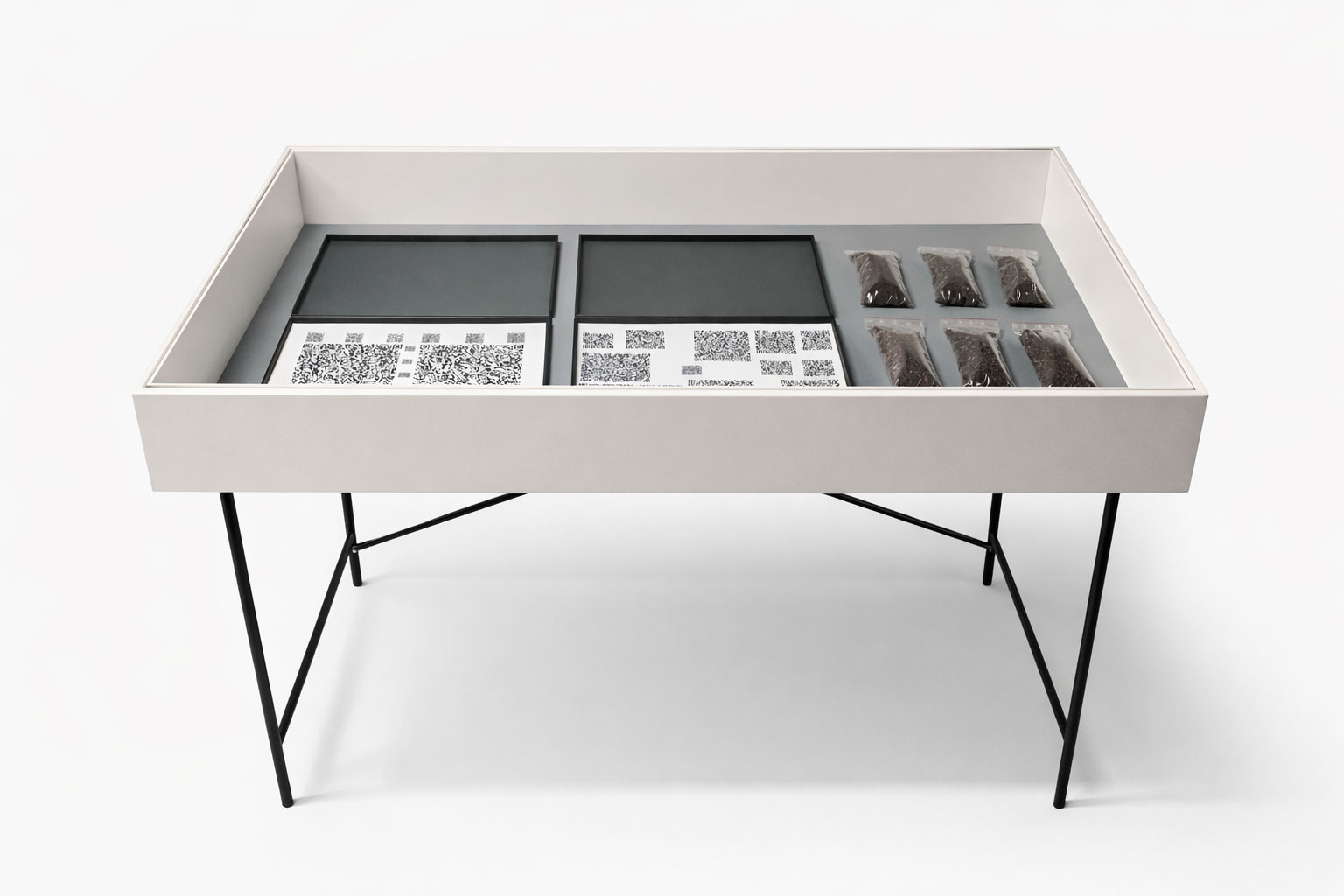
Installation view, Victor India Lima Echo Mike Foxtrot Lima Uniform Sierra Sierra Echo Romeo Mike Alpha Romeo Sierra Hotel Alpha
Lima Lima Mike Charlie Charlie Lima Uniform Hotel Alpha November,
Interactive installation, ZKM | Center for Art and Media Karlsruhe, 2010.
Bestiary for the Minds of the 21st Century: Genomic Opera, 2015
Chapter I
Compression as Method
Compression is commonly associated with digital technology. Images, sounds and texts are compressed to reduce their size while preserving their informational content.
Mercado extends this principle beyond technological systems and applies it directly to cultural structures.
In his work, compression functions as a methodological operation.
Rather than preserving cultural works in their original duration or scale, the artist applies radical reductions that reveal the structural frameworks underlying those works.
A musical composition lasting several hours becomes a single glyph.
A theatrical tragedy becomes a brief gesture.
A philosophical system becomes biological residue.
These transformations do not merely simplify cultural objects. They expose the minimal conditions under which those objects can still be recognized.
Compression becomes a form of analytical pressure applied to culture.
Chapter II
Logic as Compost
The Gödel Performances
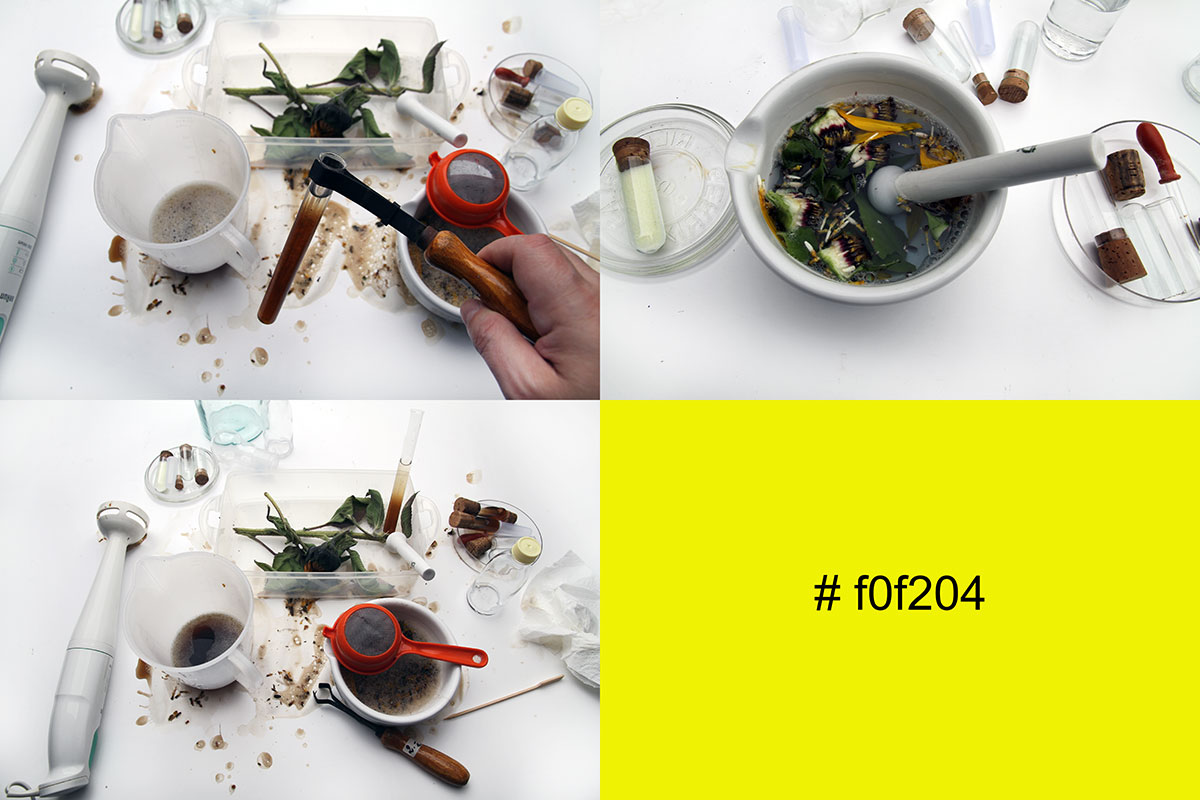
The incompleteness theorems formulated by Kurt Gödel revealed that every sufficiently complex logical system contains propositions that cannot be proven within the system itself.
No symbolic system can achieve total completeness.
Mercado translated this philosophical insight into performative experiments.
In these performances, printed versions of Gödel’s theorems were placed into environments inhabited by worms. The organisms gradually consumed the pages.
The logical structure of the theorem collapsed into a biological process.
The most abstract achievements of mathematical reasoning became organic residue.
This gesture introduced a radical form of cultural compression: the translation of symbolic knowledge into biological metabolism.
Logic became compost.
Chapter III
Music as Glyph
SUMMA – Notations
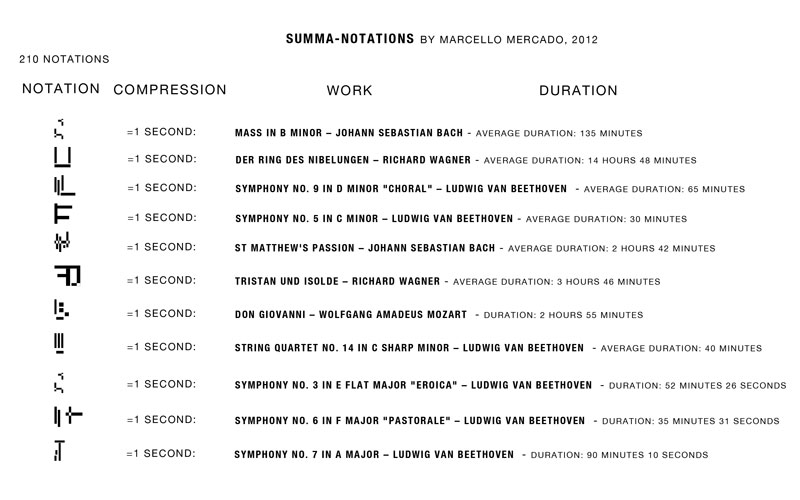
In SUMMA – Notations, Mercado turned toward musical compositions. Works by composers such as Johann Sebastian Bach and Richard Wagner—structures unfolding over extended durations—were translated into minimal visual glyphs. Each glyph functioned as a symbolic condensation of an entire composition.
The music itself was no longer audible. Instead it appeared as a compressed visual trace. The resulting archive of glyphs resembles a library of musical residues: fragments of cultural duration transformed into minimal signs.
Chapter IV
Theatre as Gesture
Searching for the Short Version of Hamlet
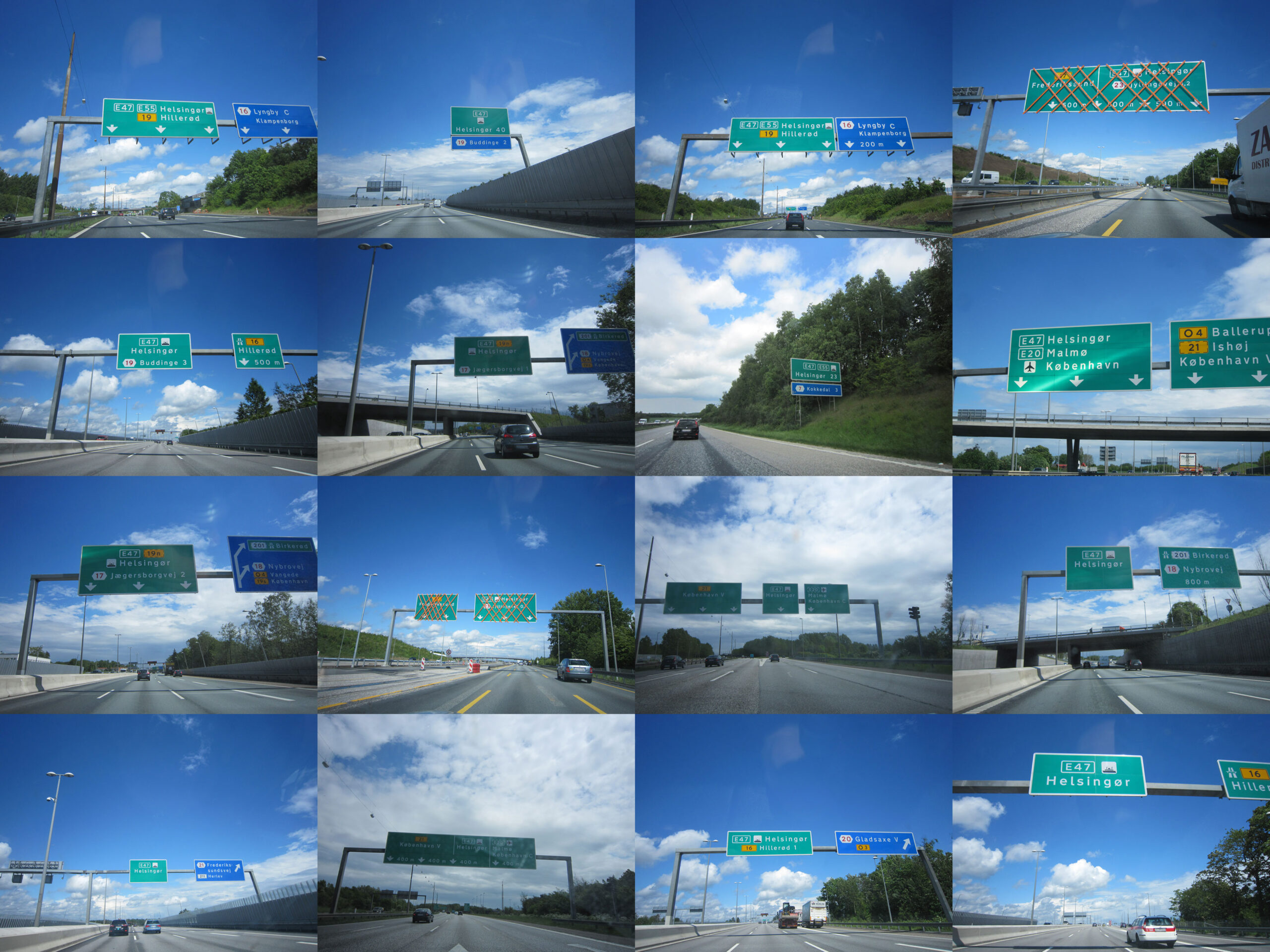
The performance Searching for the Short Version of Hamlet compresses the monumental tragedy written by William Shakespeare into a minimal performative event.
The artist traveled to Helsingør, the Danish location associated with the fictional castle of the play.
Upon arrival, he stepped briefly out of his car before immediately returning and leaving.
Within theatrical terminology, the entire dramatic structure of the play collapses into two actions:
entrance
exit
Everything else disappears.
The tragedy becomes a minimal gesture.
Chapter V
Theory as Algorithm
Das Kapital
In his long-term project Das Kapital, Mercado engages with the theoretical work of Karl Marx.
Rather than producing a conventional interpretation, the project transforms the structure of the book through algorithmic operations.
Chapters become computational procedures. Images and symbolic systems replace textual exposition.
The theoretical architecture of Marx’s work becomes a field of algorithmic transformations.
Theory becomes code.
Chapter VI
Culture as Data
Artificial Intelligence and the Computational Archive
The emergence of artificial intelligence introduces a new phase in the compression of cultural systems.
Machine learning models process enormous datasets composed of compressed representations of images, texts and sounds.
Cultural traditions become training data.
In this environment, artistic production increasingly operates within computational infrastructures where culture exists as statistical patterns.
Mercado’s earlier experiments—compressing music, theatre and theory—anticipate many of these transformations.
Chapter VII
Toward an Archaeology of Compressed Culture
Across these works, cultural compression emerges as both an artistic method and a philosophical inquiry.
The projects examine what remains of culture when its structures are pushed toward their limits.
Duration collapses.
Narrative dissolves.
Symbolic density becomes residue.
The resulting traces—glyphs, gestures, biological matter, algorithmic images—resemble fragments from an archive of compressed culture.
HOS Image: Waiting as an algorithmic form: The image as a promise, 2025
Appendix
Impossible Scores and Residual Archives
The works explored throughout this book suggest a final hypothesis.
When cultural structures undergo extreme compression, they begin to resemble scores for works that can no longer be performed.
The glyphs of SUMMA resemble musical scores whose sound has disappeared.
The Hamlet performance resembles a theatrical script reduced to a minimal action.
The Gödel experiments resemble philosophical texts translated into biological matter.
These works form an archive of cultural residues.
An archive composed not of complete works, but of their compressed remains.
Extended Note: Cultural Compression and Media Theory
Cultural Compression and the Transformation of Cultural Systems
The concept of Cultural Compression emerges from a long trajectory of artistic experiments that explore the limits of cultural structures under conditions of reduction, translation and systemic pressure.
Although these investigations developed independently within artistic practice, they resonate with broader theoretical questions that have become increasingly central in contemporary discussions about media, computation and archives.
Over the past decades, several thinkers have described how technological systems transform cultural production by translating complex phenomena into operational models.
The philosopher of media Vilém Flusser described technical images as structures generated through apparatuses that compress the world into programmable surfaces. For Flusser, images produced by technological systems do not merely represent reality but encode it into operational models.
Similarly, the media theorist Friedrich Kittler emphasized that modern media technologies convert cultural expressions—speech, music and writing—into discrete signals that can be stored, processed and transmitted through technical infrastructures.
Within this framework, cultural production becomes inseparable from the systems that encode it.
Human Genome re-Activation
on-line live Perfromance
by Marcello Mercado
Performing Arts
The transformations explored in Mercado’s works can be understood within this broader condition. By compressing cultural structures into minimal symbolic traces, the works reveal how cultural forms behave when subjected to processes similar to those used by technological systems.
A musical composition becomes a glyph.
A theatrical tragedy becomes a gesture.
A philosophical system becomes biological matter.
A theoretical text becomes an algorithm.
Each transformation exposes the minimal operational structure of a cultural system.
The emergence of artificial intelligence further intensifies this condition.
Contemporary AI models operate by processing enormous datasets composed of compressed representations of cultural material. Images, texts and sounds become statistical structures within machine learning systems.
In this environment, culture increasingly exists as data structures rather than continuous experiences.
Mercado’s works anticipate and critically reflect this transformation.
By compressing cultural objects beyond their original forms, the projects expose the thresholds at which cultural meaning begins to dissolve into operational structures.
The resulting traces—glyphs, gestures, algorithmic procedures and biological residues—resemble fragments from a future archive in which culture survives primarily as compressed information.
In this sense, the works do not simply represent cultural objects. They examine the conditions under which culture becomes compressible.
Marcello Mercado
Live streamings from Dolmens
DNA-performance-installation- soundart
(LIVE) 19/06/11 14:17 PM
Place: Flintinge, Denmark
Dolmen2: 54° 44´23.99” N 11° 47´23.36” E elev. 4m