Bestiary for the Minds of the 21st Century: Genomic Opera, 2015


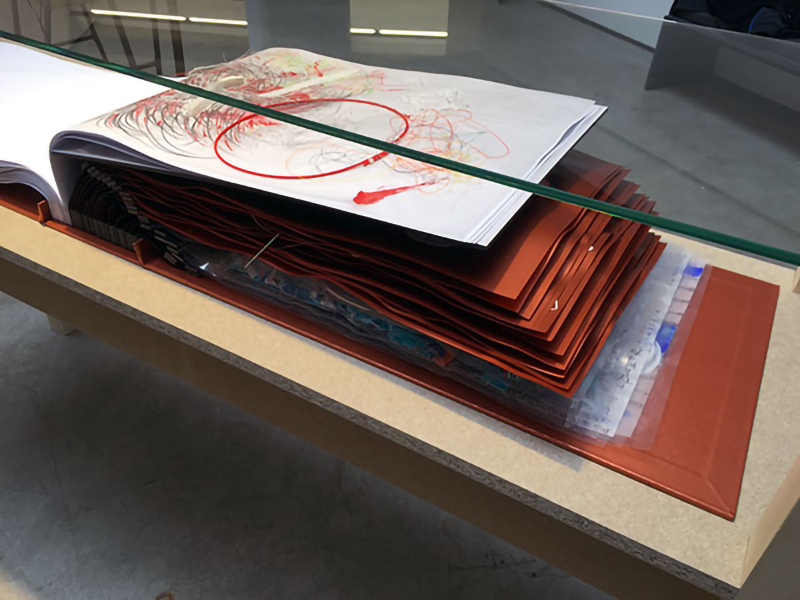
In Bestiary for the Minds of the 21st Century: Genomic Opera, the book is presented as a physical apparatus in which biological processes, algorithmic operations and sensory translations converge to form a tangible sequence that defies the neutrality of the archive.

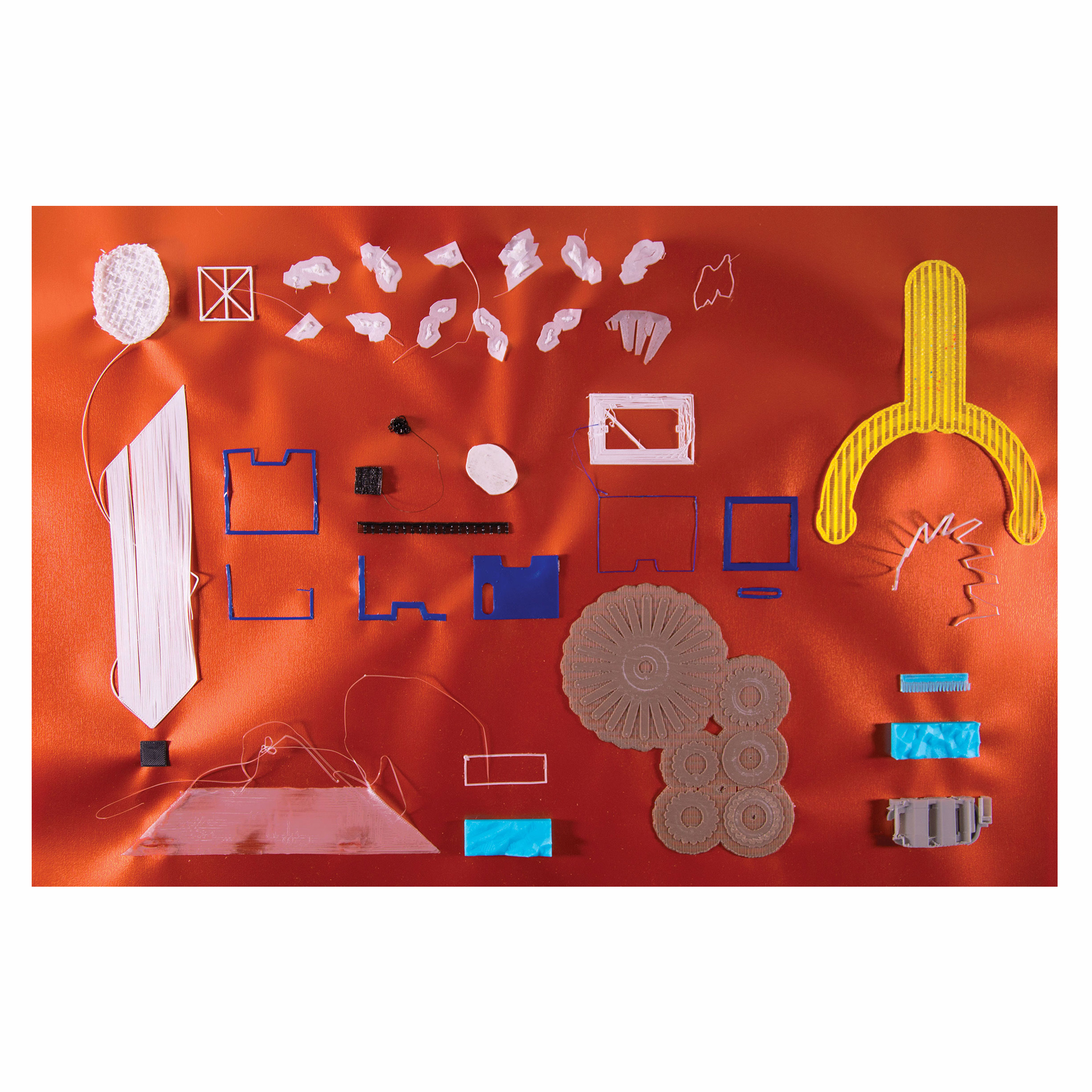
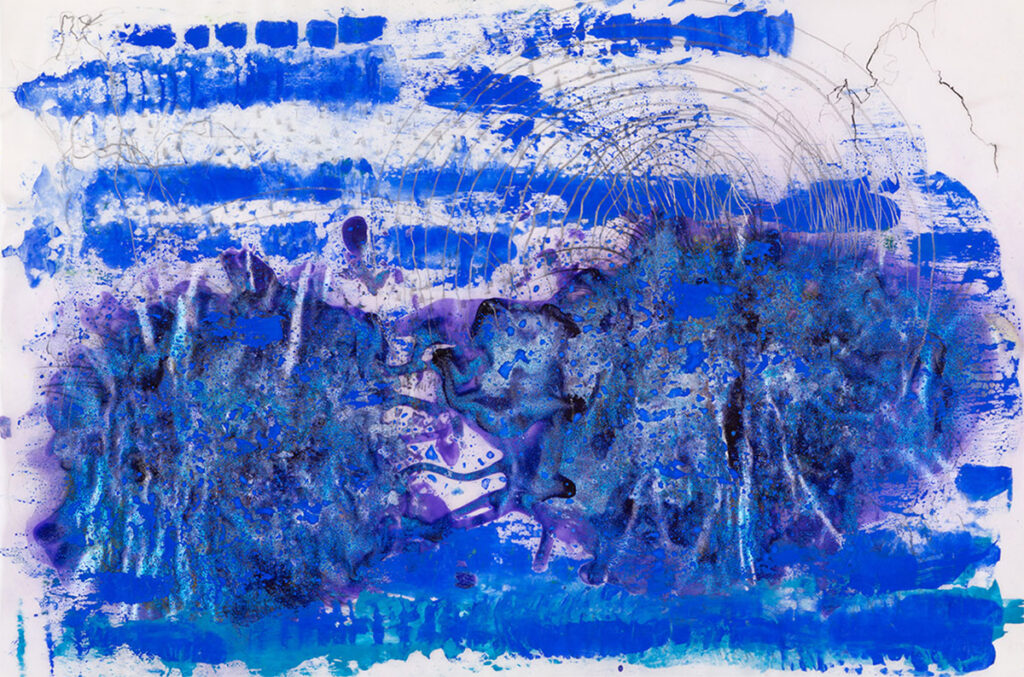
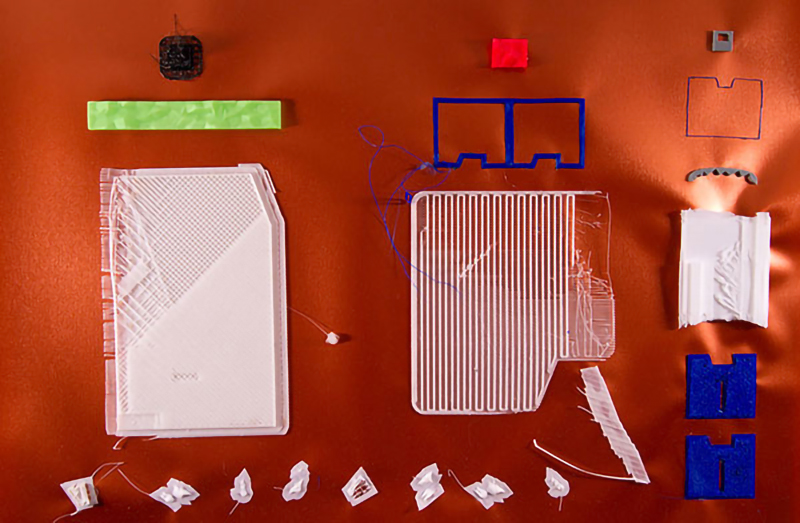
Each page acts as a threshold between systems of inscription. Genetic sequences are transformed into sound, which is then converted into volume. This volume is fixed in 3D-printed surfaces that adopt the function of musical notation yet are not subject to historical scoring conventions. The book does not merely represent the opera; it embodies it. Appearing as an active archive, it is a stratified body of errors, residues, superimposed layers and unstable materialities.

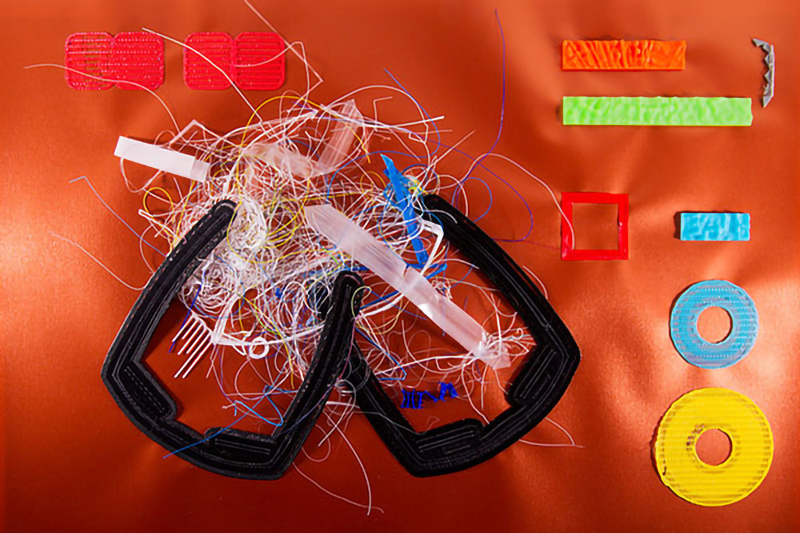
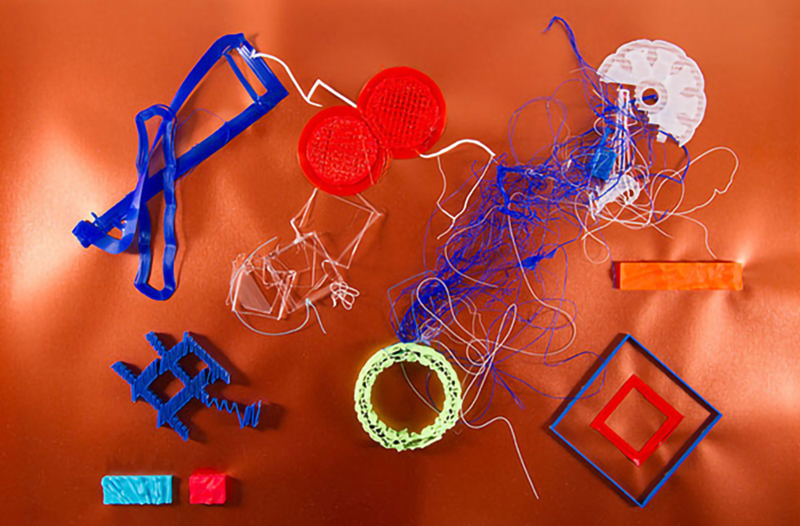
Industrial plastics, bioplastics, printing residue, deformations and structural collapse are not collateral effects of the technical process, but constitutive elements of its aesthetic logic. The book documents a production process in which translation between media — genome, audio, object and image — is never clean or transparent. Each conversion introduces noise, failures and deviations — a poetics of friction that shifts the notion of the archive from conservation to mutation.

The pages function as operative plates — surfaces to be observed, touched, rubbed and activated. By integrating three-dimensional objects attached to printed staves, the book proposes a latent choreography between the hand and the ear, and between gesture and vibration. Reading ceases to be exclusively optical and becomes corporeal. Here, the score is not merely interpreted from afar; rather, it is performed through contact, thereby transforming the readerviewer into a temporary performer within the system.

The ‘bestial’ nature of the book is not related to figurative iconography, but rather to a system of proliferation consisting of accumulations of forms, crossed genealogies and abstract species generated from biological data and technical mediation. The bestiary does not classify; it overflows. Each double-page spread suggests an unstable ecosystem in which genomic residues, algorithmic structures and manual decisions intertwine without fixed hierarchies.

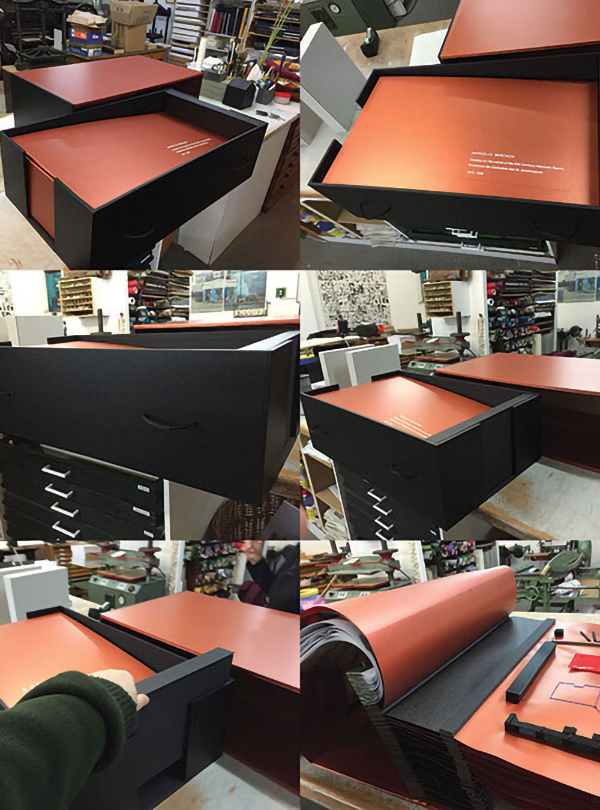
As an object, the book has sculptural dimensions. Its size, weight and thickness distinguish it from traditional portable books, necessitating a spatial and physical relationship with the body. Opening the book becomes a performance, and handling it becomes an event. The book exists simultaneously as an archive, a score, a sculpture and a sound-producing machine.

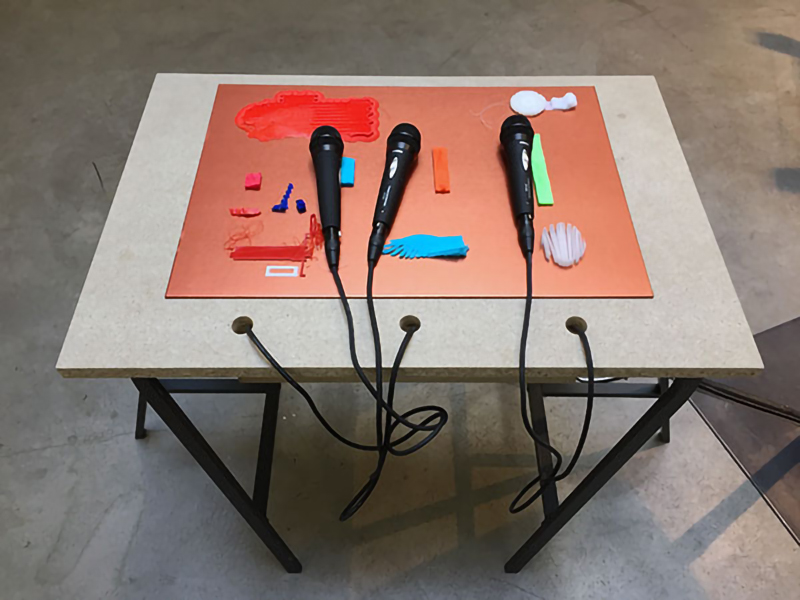
Within the broader installation, it operates as an operative reservoir a material bank of inscriptions that can be continuously reactivated through microphones, sensors and real-time visualisations. Rather than establishing a definitive version of the work, the book introduces an open temporality in which each interaction generates new layers of information while eroding previous ones.

Rather than stabilising life as data, Genomic Opera — in its book form — insists on its turbulent condition. Genetics appear not as sovereign code, but as matter subject to imperfect translations, technical manipulation and corporeal encounters. The archive no longer merely preserves; it behaves.

Thus, the book becomes a platform for post-anthropocentric experimentation, with organisms, machines and humans all participating in the same economy of sensible production. There is no single authorial centre, only a distributed network of agencies comprising molecular sequences, 3D printers, piezoelectric microphones and visitors’ hands.

This book is more than just a visual compendium; it puts forward a radical redefinition of the artist’s book as a synesthetic interface. It is a space in which information, the body and matter intertwine within an unstable continuum. Here, opera ceases to be a spectacle and becomes an open system of resonances.

The complete project, including extended documentation, conceptual texts, images and audiovisual materials, is available on the artist’s digital platform.:

:


Bestiary for the Minds of the 21st Century: Genomic Opera


Marcello Mercado
Bestiary for the Minds of the 21st Century: Genomic Opera, 2015
artist’s book (within a multi-channel installation)
data mining and 3D-printed genomic notation
ABS plastic and polylactic acid (PLA, bioplastic) on polymethyl methacrylate (PMMA)
copper-coloured 3D-printing errors (glitches) and fabrication remains
3D objects generated from genomes of mammals, insects, fungi and bacteria
90 pages
40 × 60 × 30 cm
 

Marcello Mercado
Bestiary for the Minds of the 21st Century: Genomic Opera, 2015
artist’s book (within a multi-channel installation)
data mining and 3D-printed genomic notation
ABS plastic and polylactic acid (PLA, bioplastic) on polymethyl methacrylate (PMMA)
copper-coloured 3D-printing errors (glitches) and fabrication remains
3D objects generated from genomes of mammals, insects, fungi and bacteria
90 pages
40 × 60 × 30 cm
Marcello Mercado
Bestiary for the Minds of the 21st Century: Genomic Opera, 2015
artist’s book (within a multi-channel installation)
data mining and 3D-printed genomic notation
ABS plastic and polylactic acid (PLA, bioplastic) on polymethyl methacrylate (PMMA)
copper-coloured 3D-printing errors (glitches) and fabrication remains
3D objects generated from genomes of mammals, insects, fungi and bacteria
90 pages
40 × 60 × 30 cm
Marcello Mercado
Bestiary for the Minds of the 21st Century: Genomic Opera, 2015
artist’s book (within a multi-channel installation)
data mining and 3D-printed genomic notation
ABS plastic and polylactic acid (PLA, bioplastic) on polymethyl methacrylate (PMMA)
copper-coloured 3D-printing errors (glitches) and fabrication remains
3D objects generated from genomes of mammals, insects, fungi and bacteria
90 pages
40 × 60 × 30 cm
Marcello Mercado
Bestiary for the Minds of the 21st Century: Genomic Opera, 2015
artist’s book (within a multi-channel installation)
data mining and 3D-printed genomic notation
ABS plastic and polylactic acid (PLA, bioplastic) on polymethyl methacrylate (PMMA)
copper-coloured 3D-printing errors (glitches) and fabrication remains
3D objects generated from genomes of mammals, insects, fungi and bacteria
90 pages
40 × 60 × 30 cm
Marcello Mercado
Bestiary for the Minds of the 21st Century: Genomic Opera, 2015
artist’s book (within a multi-channel installation)
data mining and 3D-printed genomic notation
ABS plastic and polylactic acid (PLA, bioplastic) on polymethyl methacrylate (PMMA)
copper-coloured 3D-printing errors (glitches) and fabrication remains
3D objects generated from genomes of mammals, insects, fungi and bacteria
90 pages
40 × 60 × 30 cm
Marcello Mercado
Bestiary for the Minds of the 21st Century: Genomic Opera, 2015
artist’s book (within a multi-channel installation)
data mining and 3D-printed genomic notation
ABS plastic and polylactic acid (PLA, bioplastic) on polymethyl methacrylate (PMMA)
copper-coloured 3D-printing errors (glitches) and fabrication remains
3D objects generated from genomes of mammals, insects, fungi and bacteria
90 pages
40 × 60 × 30 cm


In Bestiarium für die Köpfe des 21. Jahrhunderts: Genomische Oper präsentiert sich das Buch als materielles Dispositiv, in dem biologische Prozesse, algorithmische Operationen und sensorische Übersetzungen zu einer handhabbaren, gewichtigen und taktilen Sequenz verdichtet werden, die sich der Neutralität des Archivs widersetzt.

Jede Seite fungiert als Schwelle zwischen Systemen der Einschreibung: genetische Sequenzen werden in Klang transformiert, Klang in Volumen überführt, Volumen in 3D-gedruckten Oberflächen fixiert, die die Funktion musikalischer Notation annehmen, ohne sich den historischen Regimen der Partitur zu unterwerfen. Das Buch repräsentiert die Oper nicht; es verkörpert sie. Es erscheint als aktives Archiv, als geschichteter Körper aus Fehlern, Rückständen, Überlagerungen und instabilen Materialitäten.

Der Einsatz industrieller Kunststoffe und Biokunststoffe, Druckreste, Deformationen und strukturelle Kollapsmomente sind keine Nebeneffekte des technischen Prozesses, sondern konstitutive Elemente seiner ästhetischen Logik. Das Buch dokumentiert ein Produktionsregime, in dem Übersetzungen zwischen Medien—Genom, Audio, Objekt, Bild—niemals sauber oder transparent sind. Jede Konversion bringt Rauschen, Störungen und Abweichungen hervor: eine Poetik der Reibung, die den Archivbegriff von der Bewahrung zur Mutation verschiebt.

Die Seiten fungieren als operative Platten: Oberflächen, die betrachtet, berührt, gerieben und aktiviert werden können. Durch die Integration dreidimensionaler Objekte auf gedruckten Notensystemen schlägt das Buch eine latente Choreografie zwischen Hand und Ohr, zwischen Geste und Vibration vor. Lesen ist hier kein rein optischer Vorgang mehr, sondern wird zu einer körperlichen Praxis. Die Partitur wird nicht aus Distanz interpretiert; sie wird durch Kontakt ausgeführt und macht den Leser-Betrachter zum vorläufigen Interpreten des Systems.

Der „bestiale“ Charakter des Buches verweist nicht auf figurative Ikonografie, sondern auf ein Regime der Proliferation: Akkumulationen von Formen, gekreuzte Genealogien, abstrakte Spezies, die aus biologischen Daten und technischer Vermittlung hervorgehen. Das Bestiarium klassifiziert nicht; es überschreitet. Jede Doppelseite evoziert ein instabiles Ökosystem, in dem genomische Rückstände, algorithmische Strukturen und manuelle Entscheidungen ohne feste Hierarchien ineinandergreifen.

Als Objekt nimmt der Band skulpturale Dimensionen an. Maßstab, Gewicht und Volumen setzen ihn in Spannung zur Tradition des portablen Buches und erzwingen eine räumliche und körperliche Beziehung. Sein Öffnen wird performativ, seine Handhabung zum Ereignis. Das Buch existiert zugleich als Archiv, Partitur, Skulptur und Klangmaschine.

Im Kontext der größeren Installation fungiert es als operatives Reservoir: als materieller Speicher von Einschreibungen, die durch Mikrofone, Sensoren und Echtzeit-Visualisierungen fortwährend reaktiviert werden können. Anstatt eine definitive Version des Werks zu fixieren, etabliert es eine offene Zeitlichkeit, in der jede Interaktion neue Schichten erzeugt und frühere zugleich erodiert.

Anstatt Leben als Daten zu stabilisieren, insistiert Genomic Opera—in seiner Buchform—auf dessen turbulenter Verfassung. Genetik erscheint hier nicht als souveräner Code, sondern als Materie, die unvollkommenen Übersetzungen, technischen Eingriffen und körperlichen Begegnungen unterworfen ist. Das Archiv bewahrt nicht mehr; es verhält sich.

So wird das Buch zu einer Plattform post-anthropozentrischer Experimentation, in der Organismen, Maschinen und Menschen an derselben Ökonomie sensibler Produktion beteiligt sind. Es gibt kein singuläres autoriales Zentrum, sondern ein verteiltes Netzwerk von Handlungsmächten zwischen molekularen Sequenzen, 3D-Druckern, piezoelektrischen Mikrofonen und den Händen der Besucher.

Mehr als ein visuelles Kompendium schlägt der Band eine radikale Neudefinition des Künstlerbuches als synästhetische Schnittstelle vor: einen Raum, in dem Information, Körper und Materie in einem instabilen Kontinuum verschränkt sind und in dem die Oper aufhört, Spektakel zu sein, um zu einem offenen Resonanzsystem zu werden.

Das vollständige Projekt—einschließlich erweiterter Dokumentation, konzeptueller Texte, Bildmaterial und audiovisueller Inhalte—ist auf der digitalen Plattform des Künstlers zugänglich:

Bestiary for the Minds of the 21st Century: Genomic Opera


En Bestiary for the Minds of the 21st Century: Genomic Opera, el libro se presenta como un dispositivo material en el que procesos biológicos, operaciones algorítmicas y traducciones sensoriales se condensan en una secuencia manipulable, pesada y táctil, resistente a la neutralidad del archivo.

Cada página opera como un umbral entre sistemas de inscripción: secuencias genéticas transformadas en sonido, sonido convertido en volumen, volumen fijado en superficies impresas en 3D que adoptan la función de notaciones musicales sin someterse a los regímenes históricos de la partitura. El libro no representa la ópera: la encarna. Aparece como un archivo activo, un cuerpo estratificado de errores, residuos, capas superpuestas y materialidades inestables.

El uso de plásticos industriales y bioplásticos, los restos de impresión, las deformaciones y los colapsos estructurales no son efectos colaterales del proceso técnico, sino elementos constitutivos de su lógica estética. El libro registra un régimen de producción en el que la traducción entre medios —genoma, audio, objeto, imagen— nunca es limpia ni transparente. Cada conversión introduce ruido, fallas y desviaciones: una poética de la fricción que desplaza la noción de archivo desde la conservación hacia la mutación.

Las páginas funcionan como placas operativas: superficies para ser observadas, tocadas, frotadas y activadas. Al integrar objetos tridimensionales adheridos a pentagramas impresos, el libro propone una coreografía latente entre mano y oído, entre gesto y vibración. La lectura deja de ser exclusivamente óptica y se transforma en un acto corporal. Aquí, la partitura no se interpreta desde la distancia; se ejecuta mediante el contacto, convirtiendo al lector-espectador en intérprete provisional del sistema.

El carácter “bestial” del libro no remite a una iconografía figurativa, sino a un régimen de proliferación: acumulaciones de formas, genealogías cruzadas, especies abstractas generadas a partir de datos biológicos y mediaciones técnicas. El bestiario no clasifica; desborda. Cada doble página sugiere un ecosistema inestable en el que restos genómicos, estructuras algorítmicas y decisiones manuales se entrelazan sin jerarquías fijas.

Como objeto, el volumen asume dimensiones escultóricas. Su escala, peso y espesor lo sitúan en tensión con la tradición del libro portátil, exigiendo una relación espacial y física con el cuerpo. Abrirlo se vuelve performativo; manipularlo, un acontecimiento. El libro existe simultáneamente como archivo, partitura, escultura y máquina de producción sonora.

En el contexto de la instalación mayor, este libro opera como un reservorio operativo: un banco material de inscripciones que pueden reactivarse continuamente mediante micrófonos, sensores y visualizaciones en tiempo real. Lejos de fijar una versión definitiva de la obra, introduce una temporalidad abierta en la que cada interacción genera nuevas capas de información y erosiona las anteriores.

En lugar de estabilizar la vida como dato, Genomic Opera —en su forma de libro— insiste en su carácter turbulento. La genética aparece no como código soberano sino como materia sometida a traducciones imperfectas, manipulaciones técnicas y encuentros corporales. El archivo ya no conserva: se comporta.

El libro se convierte así en una plataforma de experimentación post-antropocéntrica, en la que organismos, máquinas y humanos participan de una misma economía de producción sensible. No existe un centro autoral único, sino una red distribuida de agencias entre secuencias moleculares, impresoras 3D, micrófonos piezoeléctricos y las manos de los visitantes.

Más que un compendio visual, el volumen propone una redefinición radical del libro de artista como interfaz sinestésica: un espacio donde información, cuerpo y materia se entrelazan en un continuo inestable, y donde la ópera deja de ser espectáculo para transformarse en un sistema abierto de resonancias.

El proyecto completo —incluyendo documentación ampliada, textos conceptuales, imágenes y materiales audiovisuales— se encuentra disponible en la plataforma digital del artista:

Bestiary for the Minds of the 21st Century: Genomic Opera