• Zemos98: 9° Edición: Fuera de control

    Zemos98: 9° Edición: Fuera de control

    19.03.2007 – 25.03.2007


    Zemos98: 9° Edición: Fuera de control


    Catalogue [+]


    Facultad de Comunicación_Américo Vespucio s/n. Isla de La Cartuja.

    Teatro Lope de Vega_Avda. de María Luisa, s/n.

    caS Centro de las artes de Sevilla. SEDE OFICIAL_Monasterio de San Clemente. Torneo, 18

    Endanza – Lugar de Creación_San Luis, 40.

    C.S.O.A. Casas Viejas_Antonia Saenz 12, junto plaza del Pumarejo

    OBBIO SALA CLUB_Trastamara, 29.

    Teatro Alameda_Crédito, 11

    Fundación Tres Culturas – Pabellón Hassan II_Max Planck, 2. Isla de La Cartuja

    Universidad Internacional de Andalucía_Américo Vespucio, 2. Isla de la Cartuja

    C. Andaluz de Arte Contemporáneo_C. de los Descubrimientos, s/n. I. de la Cartuja.


    Sevilla

    España


    Marcello Mercado

    The Capital -version.07: Moral and economic division


    sala endanza día 2


  • El lienzo es la Pantalla – The canvas is the screen – Museo Nacional Centro de Arte Reina Sofia

    El lienzo es la Pantalla – The canvas is the screen – Museo Nacional Centro de Arte Reina Sofia

    22.02.200728.03.2007


    The canvas is the screen


    El lienzo es la Pantalla 

    (pdf)


    ISSUE


    Curated by Berta Sichel and Céline Browez

    El lienzo es la pantalla (del 14 de diciembre a mediados de enero de 2008). Este ciclo ha sido producido por el Museo Nacional Centro de Arte Reina Sofía (MNCARS), y reúne trabajos que relacionan la imagen en movimiento con un medio artístico clave: la pintura. Todos ellos se caracterizan por evocar las cualidades formales y preocupaciones conceptuales de la pintura, así como su historia.


    Así, a partir de una amplia programación, se pasarán vídeos de Julien Devaux, Jos Stelling, Yu-Sheng Ho, Pieter-Rim de Kroon, Barbara F. Freed, Jean-Charles Fitoussi, Vincent  Monnikendam, Malcolm Le Grice, Ian Helliwell, Jean-Luc Godard y Anne-Marie Miéville, Joan Wallace, Alibhe Ni Bhriain, Jacco Olivier, Malcolm Le Grice, Ellen Harvey, Magdalena Fernández, Takehito Koganezawa y Marcello Mercado.


    Museo Nacional Centro de Arte Reina Sofia

    Calle Santa Isabel, 52
    28012 Madrid

    Spain


  • FILE FESTIVAL 2007

    FILE FESTIVAL 2007


    05.02.2007 – 31.03.2007


    FILE FESTIVAL 2007


    Marcello Mercado

    ‘FFFF FFFS FFSS SSSS, The pluripotent and the eleven HESC»

    It is an electronic experimental opera. It is inspired in fluorescent lights, data sources programs and lightly in the retracted article about clonation: «Patient-Specific Embryonic Stem Cells Derived from Human SCNT Blastocysts».


    FILE – Electronic Language International Festival is opening registrations for its eighth edition, that will be held at Sesi’s Art Gallery, in Sao Paulo, Brazil, in the period from August 26th to September 16th, 2007. Subscriptions are open from February 5th to March 31st, 2007. Submissions are free and open to professionals, researchers and students of the electronic language.

    In the last seven years, FILE has shown what’s been happening in the global networks related to digital and electronic arts, becoming a reference for studies and research on new media. It has exhibited web art, net art, artificial life, hypertext, computer animation, real time teleconference, virtual reality, soft art, games, interactive movies, e-videos, digital panoramas and electronic art installations and robotics, through interactive and immersive rooms.


    FILE SYMPOSIUM has bec ome a meeting point in the city of São Paulo, proposing discussions and tackling the electronic-digital culture in its relations to art, science and technologies.


    FILE HIPERSÔNICA, the festival’s sonorous branch, is on it’s 5th edition and intends to elaborate connections between the world of images, the world of sonorities and the world of texts. Sound installations and real time performances will be presented by a number of groups and collectives, comprising both erudite and pop electronic music, but also electronic compositions, sound poetry, radio art, video music and sonic landscapes, as well as Djs and VJs presenting their sets through specific apparatus and installations with experimental and immersive projections.


  • Materials / Energy, 2006

    Materials / Energy, 2006


    Marcello Mercado

    Materials / Energy

    Single-channel video installation

    20 min. 49”, black and white, stereo,

    2006


    In this piece, Marcello Mercado presents a gesture that encapsulates one of the most significant shifts in contemporary art at the beginning of the 21st century: the transition from material objects to digital flows. Against a backdrop of restless, abstract stains that appear to be residues of data in combustion, a narrative unfolds in the form of subtitles that retrace the historical materials with which artists have worked — pigments, oil paint, video, and installation — until reaching a breaking point where materials are no longer named. From that point forward, only the numerical dimension remains: the sizes of the works. It’s as if art had mutated into pure codification of scale, into information stripped of matter.


    Created in 2006, the piece is situated at a pivotal moment. For a significant part of the international art scene, experimentation with video, interactive installations, and digital media had already become common practice. However, for broader audiences, the disappearance of the traditional artistic object still seemed disruptive. Materials/Energy does more than document this transformation; it dramatizes it, turning it into a historical narrative and an allegory of an irreversible transition.


    The soundtrack consists of a metronome that sets the work’s tempo, while a constant electric noise sustains the atmosphere. The tension between measure and excess, between rhythmic control and sonic overflow, alludes to the condition of contemporary artistic practice itself: an inventive drive moving away from familiar frameworks toward unstable, experimental territories open to uncertainty.


    The dematerialization of art, which began in the 1960s, finds a radicalization in the digital realm. Here, the work dispenses not only with a stable object, but also with physical form, becoming pure, fluctuating information.


    Audiovisual media has expanded as a legitimate field of artistic experimentation, traversing the transition from analog video installation to digital images with high contrast and abstract movement.


    There is a historical awareness of materials that are no longer considered neutral technical resources, but rather cultural archives that narrate the evolution of art itself.


    On the surface, Materials/Energy is a precise visual and sonic exercise. Conceptually, it operates as a narrative of genealogies and ruptures, rewriting the history of art as a sequence of material disappearances. On a deeper level, the work interrogates the condition of the contemporary artist who is compelled to innovate in a terrain where traditional parameters are eroding and the digital emerges not merely as a medium, but as a new ontology of creation.


    The work anticipates a present where artistic practices move between the tangible and the immaterial, between memory and speculation. Here, the disappearance of the material object is not presented as a gesture of loss, but rather as an open field of experimentation and an invitation to rethink art as energy in transit rather than the accumulation of objects.


    Marcello Mercado

    Materiales/Energía

    Videoinstalación monocanal,

    20 min. 49″, blanco y negro, estéreo,

    2006


    En Materiales/Energía, Marcello Mercado presenta un gesto que condensa uno de los desplazamientos más significativos del arte contemporáneo de principios del siglo XXI: la transición del objeto material al flujo digital. Sobre un fondo de manchas abstractas que se mueven inquieto, como residuos de datos en combustión, aparece un relato en forma de subtítulos que recorre los materiales históricos con los que los artistas han trabajado —pigmentos, óleo, vídeo, instalación— hasta llegar a un punto de inflexión en el que los materiales ya no se nombran.


    A partir de ahí, solo queda la dimensión numérica: los tamaños de las obras, como si el arte hubiera mutado a pura codificación de escala, a información desprovista de materia. La pieza, realizada en 2006, se sitúa en un momento clave. Para una parte significativa de la escena internacional, los experimentos con el vídeo, la instalación interactiva y los medios digitales ya formaban parte de su práctica cotidiana. Sin embargo, para el público en general, la idea de la desaparición del objeto artístico tradicional aún se presentaba como una irrupción. Materiales/Energía no solo documenta esta transformación, sino que también la dramatiza y la convierte en un relato histórico y en una alegoría de un tránsito irreversible.


    La banda sonora, compuesta por un cronómetro que marca la temporalidad de la obra, se ve sostenida por un ruido constante y eléctrico que crea la atmósfera. La tensión entre medida y exceso, entre control rítmico y desborde sonoro, remite a la propia condición de la práctica artística contemporánea: una pulsión inventiva que se desplaza de los marcos conocidos hacia territorios inestables, experimentales y abiertos a la incertidumbre.


    La obra entabla un diálogo con varios procesos en curso: la desmaterialización del arte, iniciada en la década de los sesenta, que aquí alcanza su radicalización en el campo digital, donde la obra no solo prescinde de un objeto estable, sino que se convierte en pura información fluctuante. La expansión de los medios audiovisuales como territorio legítimo de experimentación artística, atravesando la transición de la videoinstalación analógica a la imagen digital de alto contraste y movimiento abstracto. La conciencia histórica de los materiales, ya no como recursos técnicos neutrales, sino como archivos culturales que narran la evolución del arte.


    Materiales/Energía, en su superficie, se ofrece como un ejercicio visual y sonoro preciso. A nivel conceptual, funciona como un relato de genealogías y rupturas: la historia del arte reescrita como una secuencia de desapariciones materiales. Y, en una dimensión más profunda, la obra cuestiona la propia condición del artista contemporáneo, obligado a innovar en un terreno donde los parámetros tradicionales se erosionan y lo digital no surge como un simple medio, sino como una nueva ontología de la creación.


    La obra anticipa la lógica de un presente en el que las prácticas artísticas se mueven entre lo tangible y lo inmaterial, entre la memoria de los materiales históricos y la especulación sobre lo que está por venir. La desaparición del objeto material no es aquí un gesto de pérdida, sino un campo abierto a la experimentación, una invitación a pensar el arte no como acumulación de objetos, sino como energía en tránsito.


    Marcello Mercado

    Materialien/Energie

    Einkanal-Videoinstallation

    20 min 49″, s/w, Stereo, 2006


    In „Materialien/Energie” verdichtet Marcello Mercado eine der bedeutendsten Verschiebungen in der zeitgenössischen Kunst zu Beginn des 21. Jahrhunderts: den Übergang vom materiellen Objekt zum digitalen Fluss. Vor einem Hintergrund abstrakter, unruhig bewegter Flecken, die wie Überreste brennender Daten wirken, entfaltet sich eine Erzählung in Form von Untertiteln. Diese zeichnen die historischen Materialien nach, mit denen Künstler gearbeitet haben Pigmente, Öl, Video, Installation –, bis zu einem Bruchpunkt, an dem keine Materialien mehr benannt werden. Ab diesem Punkt bleibt nur die numerische Dimension: die Größen der Werke, als ob die Kunst in reine Maß-Codierung, in Information, der jede Materie entzogen ist, mutiert wäre.


    Das im Jahr 2006 entstandene Werk ist in einem entscheidenden Moment verortet. Für einen wesentlichen Teil der internationalen Szene gehörten Experimente mit Video, interaktiver Installation und digitalen Medien bereits zur alltäglichen Praxis. Für breitere Öffentlichkeiten erschien die Vorstellung vom Verschwinden des traditionellen Kunstobjekts jedoch noch als Zäsur. Materialien/Energie dokumentiert diesen Wandel jedoch nicht, sondern dramatisiert ihn und verwandelt ihn in eine historische Erzählung sowie eine Allegorie eines irreversiblen Übergangs.


    Die Tonspur besteht aus einem Metronom, das die Zeitlichkeit des Werkes markiert, während ein konstantes elektrisches Rauschen die Atmosphäre trägt. Die Spannung zwischen Maß und Exzess, zwischen rhythmischer Kontrolle und klanglicher Überladung verweist auf die Bedingungen zeitgenössischer künstlerischer Praxis: ein erfinderischer Impuls, der sich aus vertrauten Rahmen löst und sich in instabile, experimentelle und von Unsicherheit geprägte Territorien bewegt.


    Die Entmaterialisierung der Kunst, die in den 1960er Jahren begann, erfährt hier im digitalen Feld eine Radikalisierung, bei der das Werk nicht nur auf ein stabiles Objekt verzichtet, sondern sich in reine, fluktuierende Information verwandelt.


    Zum anderen die Ausweitung audiovisueller Medien als legitimes Feld künstlerischer Experimente, die den Übergang von der analogen Videoinstallation zum digitalen Bild mit hohem Kontrast und abstrakter Bewegung durchlaufen.


    Das historische Bewusstsein der Materialien, die nicht länger als neutrale technische Mittel erscheinen, sondern als kulturelle Archive, die die Entwicklung der Kunst selbst erzählen.


    An der Oberfläche präsentiert sich Materialien/Energie als präzise visuelle und klangliche Übung. Auf konzeptueller Ebene funktioniert sie als Erzählung von Genealogien und Brüchen, als eine umgeschriebene Kunstgeschichte, die sich als Abfolge materieller Verschwindungen präsentiert. In einer weiteren Dimension hinterfragt das Werk die Bedingungen des zeitgenössischen Künstlers, der in einem Terrain erfinden muss, in dem traditionelle Parameter erodieren und das Digitale nicht nur als Medium, sondern als neue Ontologie der Schöpfung hervortritt.


    Die Arbeit antizipiert die Logik einer Gegenwart, in der sich künstlerische Praktiken zwischen dem Greifbaren und dem Immateriellen bewegen, zwischen der Erinnerung an historische Materialien und der Spekulation über das Kommende. Das Verschwinden des materiellen Objekts erscheint hier nicht als Geste des Verlusts, sondern als Feld der Offenheit für Experimente, als Einladung, Kunst nicht als Anhäufung von Objekten, sondern als Energie im Transit zu denken.


  • FILE FESTIVAL  2006

    FILE FESTIVAL 2006

    14.08.2006 – 03.09.2006


    FESTIVAL INTERNACIONAL DE LINGUAGEM ELETRÔNICA

    ELETRONIC LANGUAGE INTERNATIONAL FESTIVAL


    Catalogue Festival (pdf)


    Continuing our proposition of disseminating high-level, cutting-edge culture to a wide public, SESI Art Gallery promotes, starting from August 14, 2006, a new edi- tion of FILE International Festival of Electronic Language – http://www.file.org.br. In its seventh edition, FILE may be considered one of the main international events of electronic art in the world, and certainly the major show of its sort in Brazil. FILE 2006 accomplishes its exposi- tory version with a great diversity of interactive works which represent the latest forms of aesthetic expression in contemporary digital culture. The festival brings seve- ral modalities of digital art, as web-film, web-art, net-art, virtual reality, artificial life and intelligence, robotics, per- formances, interactive installations.


    SESI is highly concerned with motivating the national production of digital culture, and in providing spaces for the presentation of the new technological art forms, by Brazilian and international artists.


    The realization of FILE 2006 is a further example of cul- tural actions promoted by the institutions maintained and managed by the industry entities of the state of São Paulo. With initiatives around the theme of education and sociocultural development, we try to prioritize the exerci- se of citizenship and to make it effective in our Country. At this moment, we believe that sponsoring and accom- plishing projects that comprehend the digital art universe is to be in tune with contemporaneity.


    Paulo Skaf

    Chairman, Federation of Industries of the State of São Paulo – FIESP, Roberto Simonsen Institute, SESI (SP) and SENAI (SP)


    Galeria de Arte do SESI

    São Paulo • Brasil


  • Georges Abstraction

    Georges Abstraction

    16.05.2006 – 31.05.2006


    Georges Abstraction (pdf)
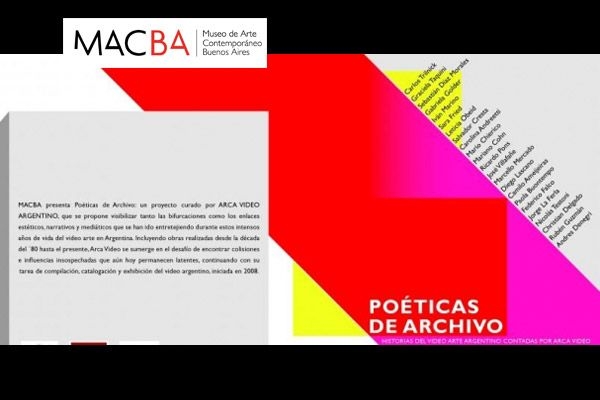
    Centre Pompidou.

    Paris, France


    curated by Bureau des Videos


    MARCELLO MERCADO
    “SERIES OF PERIODICAL BILINEAR SURFACES”, 2006, 27 MIN. 16 SEC. COURTESY DE L’ARTISTE Né en Argentine en 1963, vit et et travaille à Cologne


    MARIO GARCIA TORRES
    “ABANDONNED AND FORGOTTEN LAND WORKS THAT ARE NOT NECESSARILY MEANT TO BE SEEN AS ART”, 2004, 8 MIN. COURTESY GALERIE JAN MOT, BRUXELLES Né à Mexico en 1975, vit et travaille à Los Angeles


    CHRISTOPHE BRUNNQUELL
    “MAXIMUMFASHION”, 2006, 1 MIN. 15 SEC. COURTESY DE L’ARTISTE Né à Paris en 1969, vit et travaille à Paris


    «L´oeuvre de Marcello Mercado explore en profondeur les
    sources technologiques dont elle tire son origine. Cette
    “broderie” conçue à l’aide d’appareils audiovisuels
    a donné à Marcello Mercado la possibilité de forger
    ses propres incises technographiques à partir de l’utilisation
    du cinéma, de la vidéo et du numérique. En s´appropriant
    différentes technologies, il amoindrit l’inévitable déter-
    minisme imposé par la technique. (…)
    Dans ses vidéos, l’essentiel des manipulations numériques
    interminables repose sur le fait que, dans une perspective
    intransigeante et expérimentale, seul un long processus
    de manipulation digitale détermine la forme finale de
    l´oeuvre, qui n´est jamais définitive pour Mercado. De là
    naît un nouveau processus d´écriture avec des machines
    numériques, sans montage ni production. (…) Ce travail
    marque le début de la recherche de nouveaux langages,
    basés sur des textures purement numériques, ainsi que sur
    les façons de mettreen scène les mécanismes rhétoriques
    de l´horreur par la manipulation d’images électroniques
    non-figuratives.»

    Jorge La Ferla


  • La Cúpula Galería de Arte / medialab

    La Cúpula Galería de Arte / medialab


    14.05.2016


    SUMMA – Notations 2012 – 2016
    Muestra de Marcello Mercado


    La Cúpula Galería de Arte / medialab


    20hs Vernissage
    Dj Set Ed_ Krumpholz
    22hs Live Streaming
    Living Leaving: Máximo Endrek e Invitados


  • Sound Transit – Broadcast on 23rd April 2006 (FBi, Sydney)

    Sound Transit – Broadcast on 23rd April 2006 (FBi, Sydney)


    Sound Transit – Broadcast on 23rd April 2006 (FBi, Sydney)


    23.04.2006


    This week on SNATM, join us on a tramp through the creative commons of phonography as we traverse the diverse sounds of six continents on an ever-changing aural exhibition of free recordings contributed to the wonderful «sound transit» website. Compiled by Nick Mariette using original field recordings downloaded from SoundTransit, which are licensed under a Creative Commons Attribution 2.0 license.


    Field recordings used were by: Derek Holzer, Aaron Ximm, John Grzinich, Maxim Shentelev, Planktone (aka Ward Weis), Jarra Schirris, Anna Friz, Marcello Mercado, Cedric Peyronnet, Rob Curgenven, Dallas Simpson, James Dunn, Takasaki Ryosuke, Keith de Mendonca, John Hopkins, Nick Mariette, Sean ONeill, Justin Hardison, Alessandro Bosetti, Toby Sinkinson.telev, Planktone (aka Ward Weis), Jarra Schirris, Anna Friz, Marcello Mercado, Cedric Peyronnet, Rob Curgenven, Dallas Simpson, James Dunn, Takasaki Ryosuke, Keith de Mendonca, John Hopkins, Nick Mariette, Sean ONeill, Justin Hardison, Alessandro Bosetti, Toby Sinkinson.


    Part1 – human
    Part2 – industrial
    Part3 – nature


    About The Physics Room

    The Physics Room is a contemporary art space dedicated to developing and promoting contemporary art and critical discourse in Aotearoa New Zealand.

    Based in central Ōtautahi Christchurch since 1996, we assist art practitioners with resources and opportunities to enable professional and creative development, and work to support the acknowledgement and understanding of contemporary art among New Zealanders. Our goal is to actively seek links between the arts and other areas of cultural production and to involve art as a contributing voice in wider intellectual, social and political debate.


  • CeC & CaC 2006:  The first Carnival of e-Creativity & Change

    CeC & CaC 2006: The first Carnival of e-Creativity & Change

    27.01.2006 -29.01.2006


    CeC & CaC 2006: The first Carnival of e-Creativity & Change


    CeC & CaC 2006,  The first Carnival of e-Creativity & Change-agents Conclave, was played out January 27-28-29, in 2006 (a Friday-Saturday-Sunday),  in partnership with – and in – India international Centre, New Delhi, as a modest first iteration of a series of public incidents that were variously played out annually over the next 10 years, till 2016,
    The stated intent of this first iteration was to deploy an exploratory and widely-inclusive canvas of participation & content from around India and the world, addressing the Creative Empowerment of Individuals by the burgeoning spread of Technology across multiple streams of Creative Human Endeavour.


  • Videomadeja 2005

    Videomadeja 2005


    14.12.2005


    Videomadeja 2005


    Marcello Mercado: the chemical and physical perception in the eye of the cat in the moment of the cut

    Marcello Mercado: Das Kapital version.07


    Soundtransit


    Museum of Contemporary Art of Vojvodina
    Dunavska 37, Novi Sad,

    Serbia