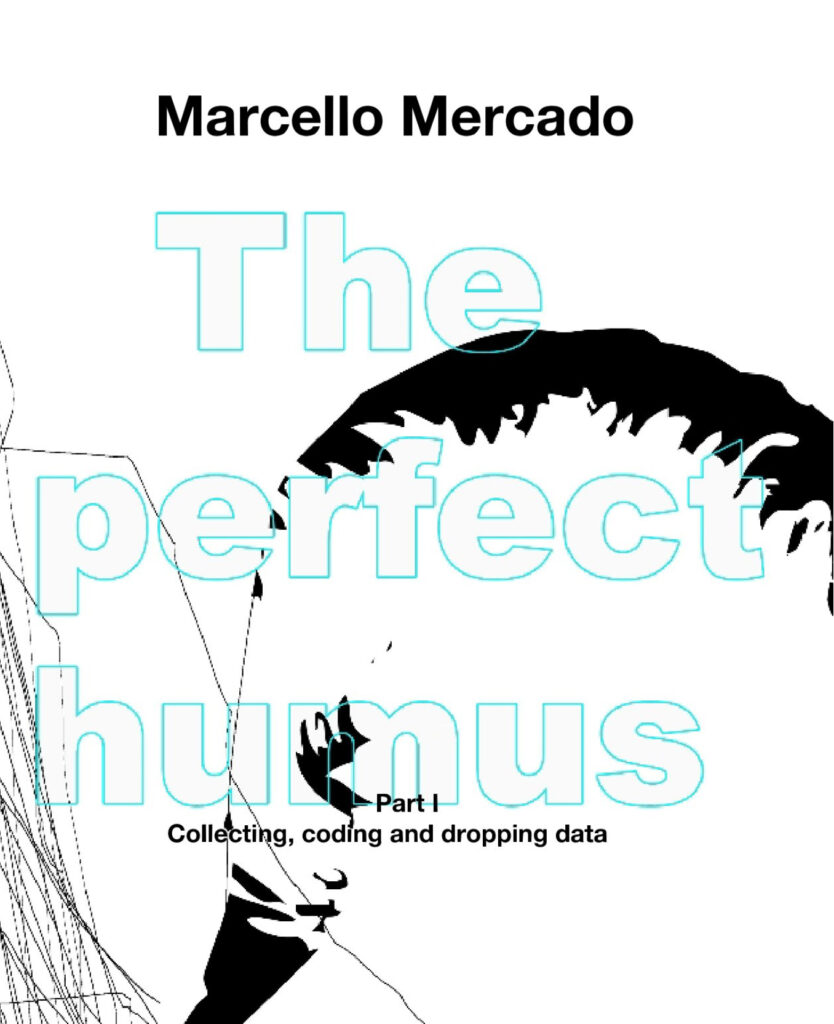
• The Perfect Humus. Part I, 2012, Book

    The Perfect Humus. Part I, 2012, Book


    The Perfect Humus. Part I: Collecting, Coding and Dropping Data, 2012

    About the Book

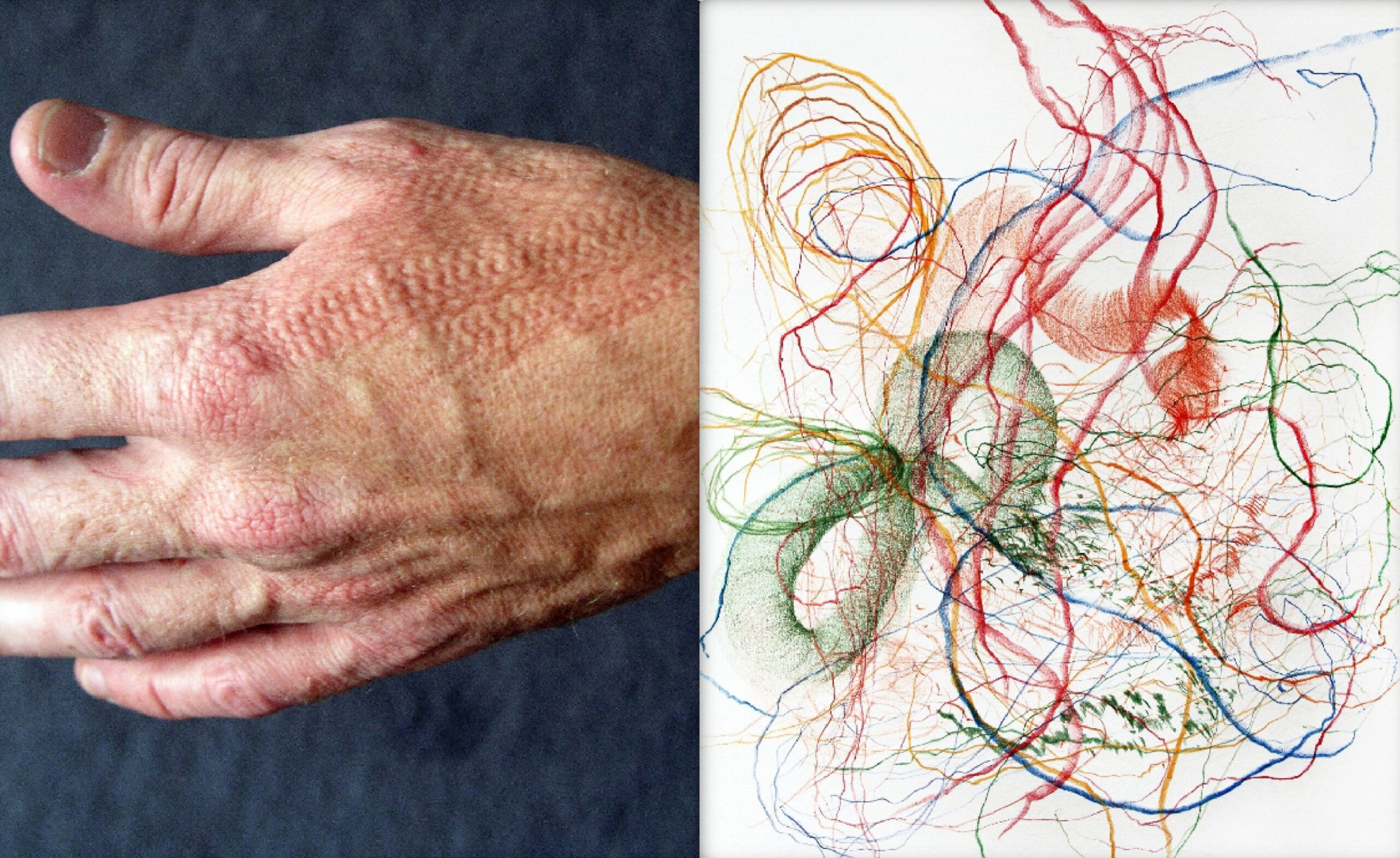
    The Perfect Humus. Part I: Collecting, Coding and Dropping Data (2012) brings together photography, drawing, performance and video stills as components of a single operational field rather than as autonomous media. The book functions as an archive in motion: a space where the body, matter and data circulate, accumulate and decay.

    Across its pages, Mercado treats the body not as a representational subject but as a site of inscription—marked, fragmented and translated through gestures of collection and displacement. Hands, organic residues, graphic traces and algorithmic notations coexist without hierarchy, forming a system in which biological processes and technical procedures are inseparable.

    The notion of humus operates here not as metaphor but as method: a layered condition where information, material and action are continuously decomposed and recomposed. Data is not stabilized or preserved; it is dropped, redistributed and allowed to lose coherence. What remains is not evidence, but residue—an active remainder that resists closure.

    Rather than documenting actions or performances, the book assembles their aftereffects. It proposes an understanding of the archive as a metabolic structure: one that processes time, matter and memory through cycles of erosion, transfer and transformation. In this sense, The Perfect Humus establishes a foundational matrix for Mercado’s later investigations into translation systems, algorithmic bodies and non-linear archives.

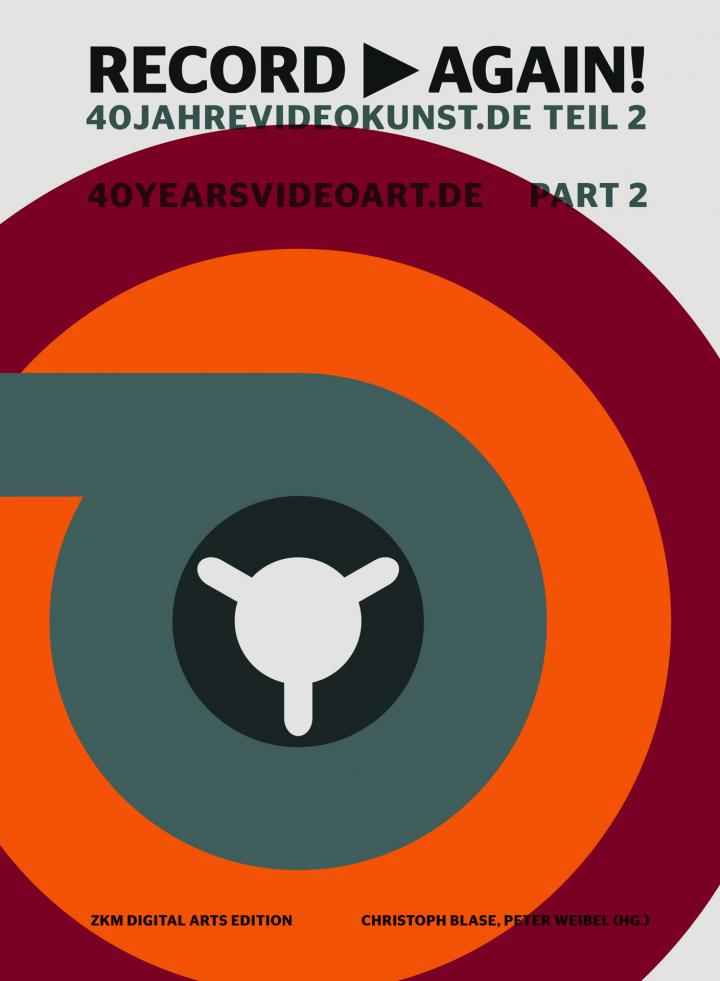
  • RECORD>AGAIN! 40YEARSVIDEOART.DE – Part 2

    RECORD>AGAIN! 40YEARSVIDEOART.DE – Part 2

    02.02.2012 – 04.03.2012


    RECORD>AGAIN! 40YEARSVIDEOART.DE – Part 2


    Duncan of Jordanstone College of Art & Design

    University of Dundee, Nethergate, Dundee, DD1 4HN


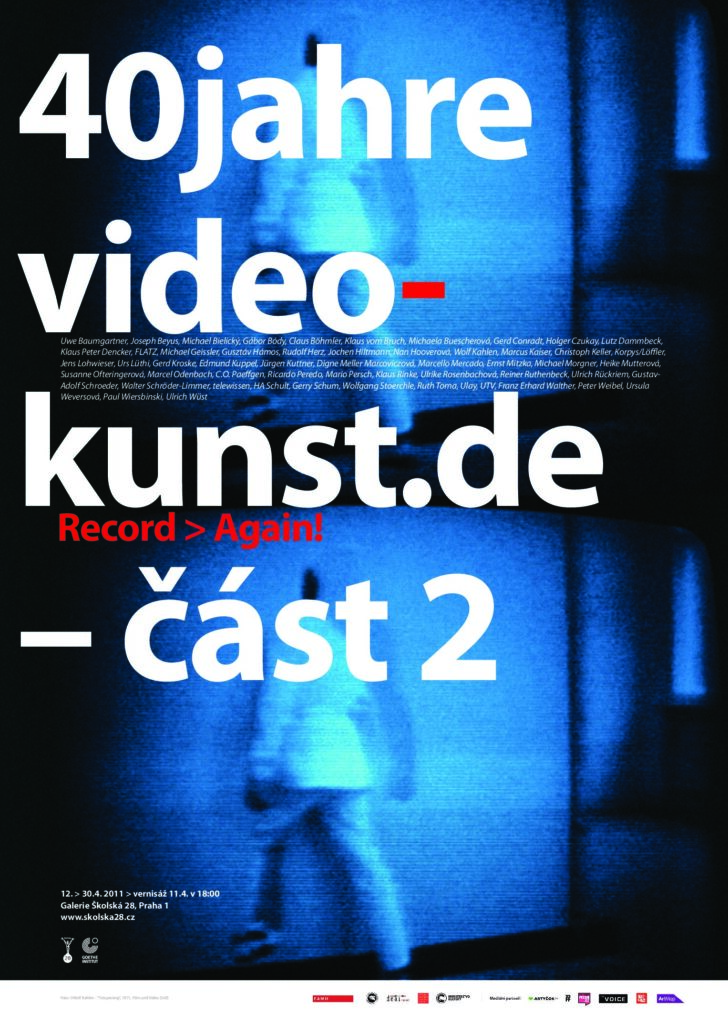
    RECORD>AGAIN! 40yearsvideoart.de – Part 2 is the second phase of a remarkable project 40jahrevideokunst.de, initiated by the German Federal Cultural Foundation in 2006. Under the direction of ZKM Karlsruhe (Centre for Art & Media Technology), five leading German museums have worked in collaboration for the realisation of the project, which aims to preserve, restore and disseminate one of the most influential art forms of the 20th century; Video Art.

    Including many works that have not been seen for decades, the exhibition features over 40 outstanding video pieces made between 1968 and 2008. Highlights include a rare work by Ulrike Rosenbach with her partner at the time, Klaus vom Bruch, the boxing match from 1972 that Joseph Beuys participated in at the documenta 5, and the first video synthesizer collages by Walter Schröder-Limmer.


    The exhibition focuses exclusively on the medium of video and the core mission of the project, which is preservation, not canonisation. Many works from the history of video were considered untraceable, lost or no longer playable. The project’s main concern is to save these works from deteriorating while at the same time reconstructing the history of the video movement as a whole.


  • 10º BIENAL DE VIDEO Y ARTES MEDIALES – Chile – 2012

    10º BIENAL DE VIDEO Y ARTES MEDIALES – Chile – 2012

    10.01.2012 – 22.01.2012


    10º BIENAL DE VIDEO Y ARTES MEDIALES – Chile – 2012


    https://issuu.com/bienal_bam/docs/catalogo10bvam


  • Record Again!  40 años de video arte alemán

    Record Again!  40 años de video arte alemán


    01.01.2012 – 05.02.2012


    Museo de Arte Raúl Anguiano


    [+]

    Joseph Beuys, Michael Bielicky, Claus Böhmler, Bazon Brock, Gerd Conradt / Michaela Büscher, Holger Czukay, Lutz Dammbeck, Flatz, Jochen Hiltmann, Wolf Kahlen, Digne Meller Marcovicz, Michael Morgner, Heike Mutter, Marcel Odenbach / Gabor Body, Marcello Mercado, A. R. Penck, Klaus Rinke, Dieter Roth, Reiner Ruthenbeck, Ulrich Rückriem, Walter Schröder- Limmer, Herbert Schuhmacher, HA Schult, Gerry Schum, Wolfgang Stoerchle, Ursula Wevers, Paul Wiersbinski, Douglas Gordon


    Museo de Arte Raúl Anguiano (MURA)
    Av. Mariano Otero No. 375, Col. Moderna
    Guadalajara, JAL
    Mexico

  • Marcello Mercado: New Subdivisions

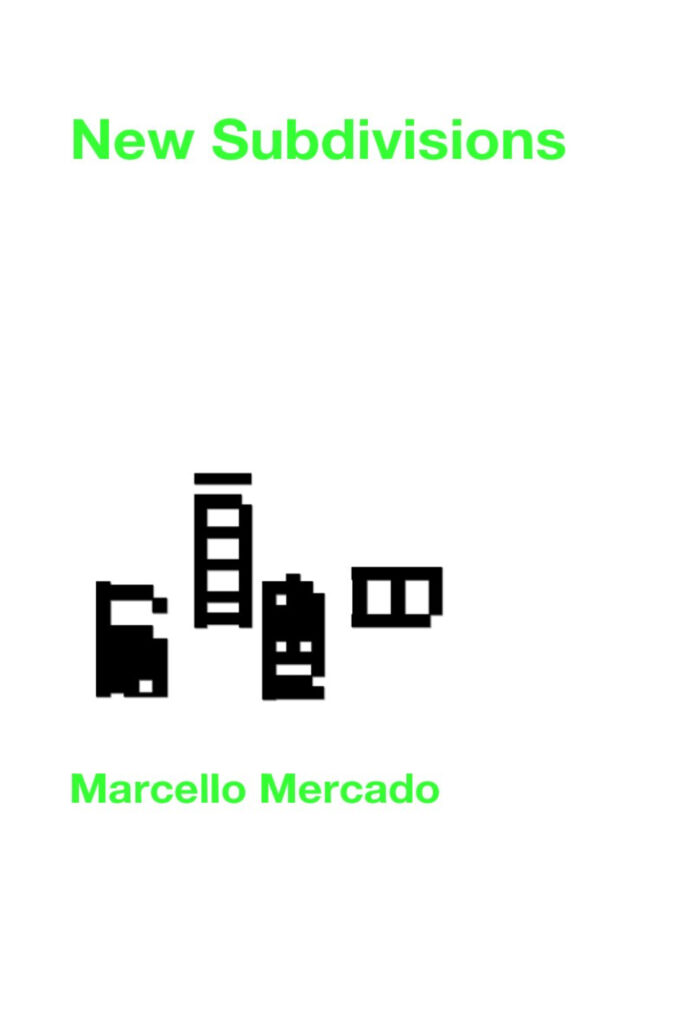
    Marcello Mercado: New Subdivisions


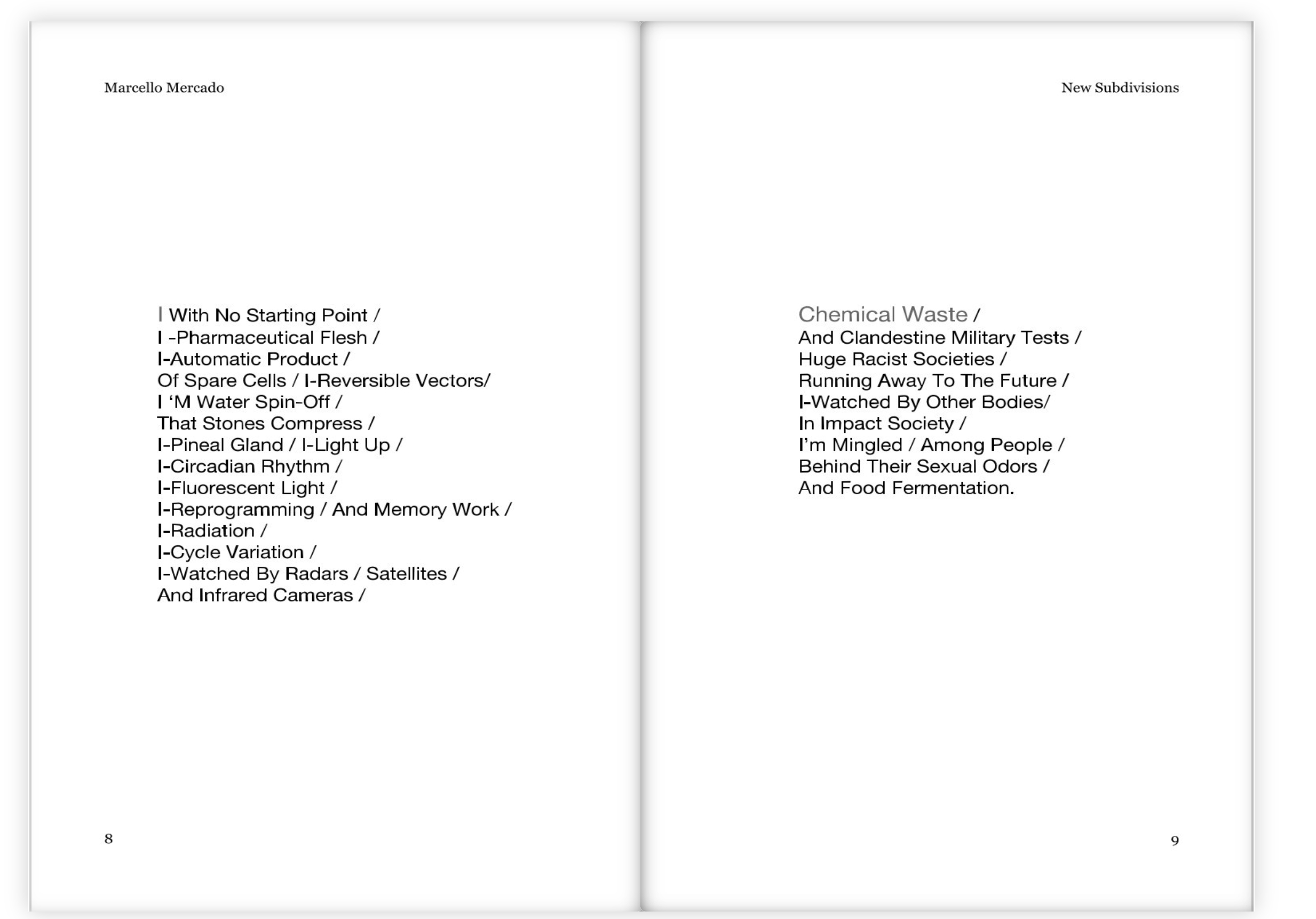
    New Subdivisions (2011), 13 × 20 cm, 60 pages


    About the Book

    New Subdivisions (2011) marks a decisive moment in Marcello Mercado’s practice, where language becomes a primary material subjected to processes of fragmentation, surveillance and systemic pressure. Written as experimental poetry, the book operates less as a literary object than as a textual infrastructure—one that absorbs vocabularies drawn from biology, technology, military systems, pharmacology and social control.

    The text unfolds without narrative progression or stable point of origin. Instead, it accumulates statements, interruptions and signals, producing a linguistic field governed by repetition, division and displacement. The recurrent use of the first person does not articulate subjectivity but exposes it as a monitored, regulated and continuously reprogrammed entity.

    In retrospect, New Subdivisions anticipates Mercado’s later investigations into coding, residue, algorithmic mediation and the body as archive. Here, language already functions as a system under stress: watched, irradiated, measured and subdivided by external forces. The book can be read as an early model of the artist’s broader practice, where meaning is not expressed but processed, compressed and left deliberately unresolved.

    Positioned between poetry, conceptual writing and media archaeology, New Subdivisions proposes text as a site of operation—an unstable interface where biological rhythms, technical infrastructures and political anxieties intersect.


  • Universes in Universe: Panoramas del Sur

    Universes in Universe: Panoramas del Sur

    11.12.2011


    Universes in Universe: Panoramas del Sur


    Transferring, storing, sharing, and hybriding: the perfect humus. 2010
    Video, 16’23»


    Information culled from digital archives, the human genome, satellite feeds, and data banks comprise the cultural fertilizer that this work proposes. It questions the meaning of and the connections between information stored in all available media.


  • RECORD > AGAIN! 40jahrevideokunst.de

    RECORD > AGAIN! 40jahrevideokunst.de


    06.12.2011 – 04.01.2011


    RECORD > AGAIN! 40jahrevideokunst.de


    Galerie Akademia, Nationale Kunstakademie Sofía
    Goethe-Institut Bulgarien
    Sofía, Bulgarien


  • Provocación del blanco – Museo de Arte Moderno de Buenos Aires

    Provocación del blanco – Museo de Arte Moderno de Buenos Aires

    24.11.2011 – 30.03.2012


    Provocación del blanco


    Museo de Arte Mo‬derno de Buenos Aires‬‬

    Avenida San Juan 350, 
    1147 Ciudad De Buenos Aires, 
    Argentina


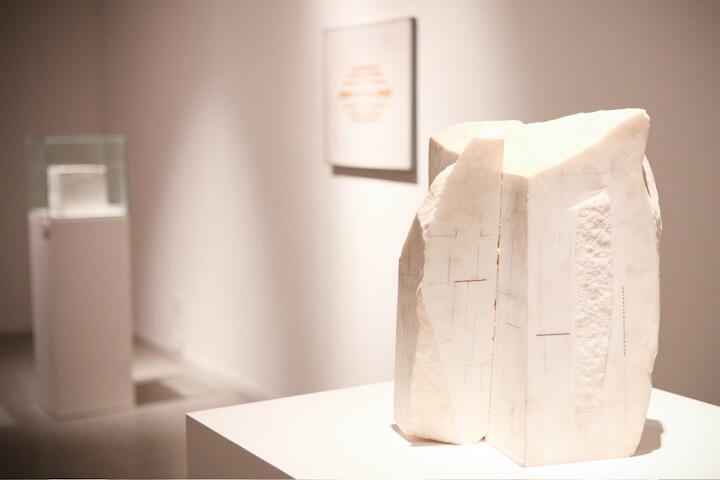
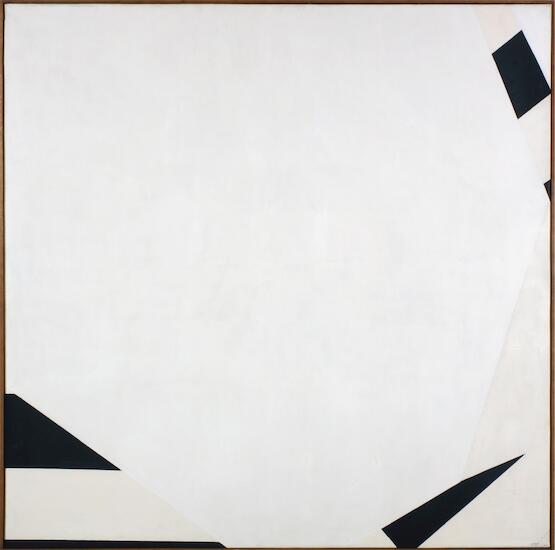
    White as space between signs, white as silence, white as utopia and white as provocation. Provocation of white brings together a set of works belonging to the MAMbA heritage that account for the various expressions of contemporary art. The non-linear passage of time is a provocative pretext to stimulate the viewer to combine other routes. Through the confrontation not only of the various artists but also of the different generations represented here, the works that make up the invaluable collection of the museum are once again exposed. The white color stands out for being the one that has the greatest sensitivity to light, constituting itself as a metaphor for the absolute, for innocence and even for mourning. The artists that make up this exhibition have chosen it totally, some in a complete white on white, or others partially, thus changing its chromatic potentialities. The Museum of Modern Art exhibits a new rereading of its heritage taking as its premise the provocation that various artists implemented by choosing white as their language: Picasso, Porter, Siquier, Kuitca, Le Parc, de la Vega, Iommi, Bedel, Ferrari, among others. others.


    «El blanco como espacio entre signos, el blanco como silencio, el blanco 
    como utopía y el blanco como provocación. El transcurso no lineal del tiempo 
    es un pretexto provocativo para estimular al espectador a conjugar otros 
    recorridos. Mediante la confrontación no solo de los diversos artistas sino 
    también de las diferentes generaciones aquí representadas, quedan expuestas 
    una vez más las obras que integran la invaluable colección del museo.»
     
    «Los artistas, como exploradores, se aventuran a plasmar en el blanco sus
    vivencias y, a menudo, sus utopías realizadas o disueltas en el mismo blanco.
    Como mudos y elocuentes espacios entre signos, los blancos generan formas
    recortadas, escritos y sombras reflejadas. Jugar con el blanco desde las
    distintas disciplinas artísticas es saber manejar los silencios, el vacío, a la
    vez que motivar un estímulo en el pensamiento»

    Curadora   Laura Buccellato


    “Una tela pintada de blanco será oscura para el espectador que no la haya comprendido”, sostuvo el creador del suprematismo, Kasimir Malevich. Es una de las tantas reflexiones que vincula el blanco con el arte, la cual es rememorada en la muestra Provocación del Blanco, en el Museo de Arte Moderno de Buenos Aires (Mamba).


    El atractivo título de la exposición genera una curiosidad que satisfacen las más de 40 obras pertenecientes al importante patrimonio de la institución. Se trata de un recorrido por diferentes propuestas de artistas argentinos de diversas generaciones, teniendo al blanco como hilo conductor.

    “Los artistas, como exploradores, se aventuran a plasmar en el blanco sus vivencias y, a menudo, sus utopías realizadas o disueltas en el mismo blanco”, expresa en el texto crítico de la muestra la directora del Mamba, Laura Buccellato. Y agrega: “Como mudos y elocuentes espacios entre signos, los blancos generan formas recortadas, escritos y sombras reflejadas”.
    Se exhibe una blanquísima instalación de pared de Analía Segal, realizada con azulejos de los cuales emergen formas que parecen orgánicas; el concretismo de Juan Melé en uno de sus relieves con esa sutil luminosidad amarilla, roja, azul, naranja, entre las formas geométricas blancas; la escultura en mármol blanco Madre Tierra, de Sesostris Vitullo, de la década del 40, del Monumento a Martín Fierro.
    Cada trabajo se encuentra próximo a otro con el que entabla algún diálogo, ya sea por cercanía o distancia en cuanto al estilo, material, soporte o época. A la vez, la muestra invita al espectador a realizar sus propios cruces y entablar otros diálogos posibles.
    El móvil de Julio Le Parc, de 1962, con su movimiento y efectos de luz, está cerca del relieve cinético Reflexión 47, de Luis Tomasello, de 1963, el cual presenta pequeños cubos blancos dispuestos geométricamente con sus también efectos luminosos. A su vez, esta última obra se ubica al lado de Cubo Blanco (Cerebro) de Eduardo Costa, de 1996/7, con toda su carga conceptual.

    Hay obras en las cuales el trazo negro del dibujo y sus diferentes intensidades entabla un contrapunto con el blanco, como en el dibujo de Ernesto Ballesteros, de 2001, en los dibujos animados de Aili Chen, entre otros.
    Encontramos, asimismo, una serie de aguafuertes y serigrafías de Liliana Porter, de la década del 70, que presentan un relieve dado por materiales como papel e hilo. La propuesta plástica juega con la realidad y la ilusión y desde una imagen por momentos muy poética como en Arruga y sombra derramada.


    La exposición se completa con los trabajos de Pablo Picasso, Analía Segal, Juan Melé, Sesostris Vitullo, Julio Le Parc, Luis Tomasello, Eduardo Costa, Ernesto Ballesteros, Aili Chen, Liliana Porter, Roberto Aizenberg, Carlos Alonso, Leo Battistelli, Jacques Bedel, Martín Blaszko, Amleto Bocci, Bibi Caderaro, Nicola Constantino, Pablo Siquier, Jorge de la Vega, Manuel Espinosa, Pablo Faludi, Enio Iommi,  León Ferrari, Alberto Gallino, Tomás Gonda, Miguel Harte, Kenneth Kemble, Gyula Kosice, Guillermo Kuitca, Ricardo Laham, Marcello Mercado, Osvaldo Monzo, Marie Orensanz, Margarita Paksa y Aldo Paparella.


    Keneth Kemble


  • Taller de Introducción al Bioarte


    Taller de Introducción al Bioarte


    20.11.2011 – 21-11-2011


    Taller de Introducción al Bioarte


    dictado por Marcello Mercado


    Espacio Fundación Telefónica

    Arenales 1540, Buenos Aires,
    Argentina


  • Galerie Školská 28: Record>Again! 40jahrevideokunst.de – část 2

    Galerie Školská 28: Record>Again! 40jahrevideokunst.de – část 2

    11.04.2011 – 22.04.2011


    Galerie Školská 28: Record>Again! 40jahrevideokunst.de – část 2


    Galerie Školská 28
    v ul. Školské 28, 110 00 Praha-1
    tel. +420 296 325 066, skolska28@skolska28.cz


    Výstavní projekt 40jahrevideokunst.de, který vznikl v koprodukci mezinárodního Centra pro umění a technologii v Karlsruhe (ZKM) a Goethe Institutu představil vznik a aktuální umění videa v Německu. První části výstavního projektu předcházela několikaletá intenzivní práce věnovaná restaurování původních pásek z šedesátých a sedmdesátých letech, jejichž osud byl ohrožen procesem stárnutí a rozpadu.


    Druhý díl projektu Record > Again! představuje výsledky výzkumu a přepisu historických materiálů na digitální formáty. Putovní výstava, doprovázená rozsáhlým katalogem a antologií DVD obsahuje soubor význačných prací, které vznikly za posledních 40 let na video scéně v Německu. Najdeme zde například dokument z proslulého boxerského zápasu Josepha Beuyse na výstavě Documenta V (1972), doposud zcela neznámé pásky Ulriky Rosenbachové a Klause vom Brucha, záznam guerrilové intervence Ulaye do sbírek berlínské Neue Nationalgalerie, nebo první vidodeopásky Michaela Bielického. Hlavní problém restaurátorů spočíval v různorodosti typů pásek a kazet, používaných hlavně do konce sedmdesátých let. Tyto formáty jsou dnes většinou zcela zapomenuty a navíc nebyly k dispozici žádné dobové přehrávací systémy. Dohledání, akvizice a oprava doposud funkčních přehrávacích soustav umožnila historikům umění, kurátorům a technickým pracovníkům ZKM nakonec převést většinu archivních videopásků na digitální formát a tak je uchovat pro budoucnost.

    11. 4. v 18:00 – Vernisáž za přítmonosti performera a fotografa Uwe Laysiepena (Ulay) zastoupeného v kolekci Record>Again!Doprovodné programy:

    12. 4. v 17:30 – Autorská přednáška Uwe Laysiepana na FAMU, Smetanovo náb. 2, místnost U1.

    22. 4. v 19:30 – Vybraná hesla z německého videoartu. Přednáška pedagoga FAMU, kurátora a historika umění Tomáše Pospiszyla.


    Zastoupení umělci: Uwe Baumgartner, Joseph Beyus, Michael Bielicky, Gábor Bódy, Claus Böhmler, Klaus vom Bruch, Michaela Buescher, Gerd Conradt, Holger Czukay, Lutz Dammbeck, Klaus Peter Dencker, FLATZ, Michael Geissler, Gusztáv Hámos, Rudolf Herz, Jochen Hiltmann, Nan Hoover, Wolf Kahlen, Marcus Keiser, Christoph Keller, Korpys/Löffler, Jens Lohwieser, Urs Lüthi, Gerd Kroske, Edmund Kuppel, Jürgen Kuttner, Digne Meller Marcovicz, Marcello Mercado, Ernst Mitzka, Michael Morgner, Heike Mutter, Susanne Ofteringer, Marcel Odenbach, C.O. Paeffgen, Ricardo Peredo, Mario Persch, Klaus Rink, Ulrike Rosenach, Reiner Ruthenbeck, Ulrich Rückriem, Gustav-Adolf Schroeder, Walter Schröder-Limmer, telewissen, HA Schult, Gerry Schum, Wolfgang Stoerchle, Ruth Toma, Ulay, UTV, Franz Erhard Walther, Peter Weibel, Ursula Wevers, Paul Wiersbinski, Ulrich Wüst.


    Umělecký ředitel projektu: Peter Weibel, manažer a kurátor: Christoph Blase. Připraveno ve spolupráci s Goethe Institut v Praze a Filmovou a televizní fakultou AMU.

    «40jahrevideokunst.de – část 2» je putovní výstava Goethe-Institutu, která vznikla na základě konceptu ZKM Karlsruhe.

    Vystavená díla:

    DVD 1

    Joseph Beyus – Boxkampf für direkte Demokratie durch Volksabstimmung / Boxerský zápas za přímou, plebiscitní demokracii
    1972, 9:30 min., 1/4-in páska, videomagnetofon Akai VT-110
    Záznam Beuysova „boxerského zápasu za přímou demokracii“ na documenta V. Kameraman Walter Cuntze.

    Michael Bielický / Ricardo Peredo – Die Fettecke / Mastný kout
    1986/1987, 39:24 min., U-matic (Low-Band)

    Claus Böhmler – Wir malen mit dem Rot des Kohls / Malujeme červenou ze zelí
    1974, 14:04 min.
    Digitálně rekonstruovaná verze ze dvou rozdílných nosičů: U-matic a 1-in pásky ve formátu IVC.

    Klaus vom Bruch – Die Entführung eines Kunsthändlers ist keine Utopie mehr / Únos obchodníka s uměním už není utopie
    1975, 6:46 min., U-matic (Low-Band)
    Jako reference při digitalizaci sloužil vlastní DV přepis Klause vom Brucha.

    Michaela Buescherová / Gerd Conradt – Gretchen Dutschke / Gretchen Dutschková
    1985/2008, 14:36 min., 1985: U-Matic (4:3) / 2008: DV-Cam (16:9)
    Kombinace historického a aktuálního materiálu vedla roku 2009 k vytvoření pětikanálové videoinstalace.

    Holger Czukay – Jahresrückblick 1982 und Cool in the Pool / Ročenka 1982 a Cool in the Pool
    1982/1972, 15:47 min., U-Matic (Low-Band) a VHS
    Původně po Jahresüberblick 1982 následovala profesionální verze Cool in the Pool, v této verzi použita starší varianta vytvořená pomocí amatérského VHS vybavení. Digitálně upraveno.


    DVD 2

    Lutz Dammbeck – Herakles
    1984, 10:28 min., VHS
    Záznam akce ve východoberlínském akčním prostoru Sredizkistraße, později kopie na formát DigiBeta, roku 2009 opatřeno novou zvukovou stopou.

    Klaus Peter Dencker – Starfighter – Geschichte eines Fronteinsatzes / Starfighter – Příběh bojového nasazení
    1970, 4:40 min.
    Profesionální televizní produkce, záznam na magnetickou pásku. Digitalizováno z kazety DigiBeta poskytnuté televizní stanicí. První vysílání na SWF3 v květnu 1971.

    FLATZ – Toni Tausendschön
    1981, 0:11 min., smyčka 5:06 min., U-Matic
    Sekvence pochází z nedochovaného 16mm filmového materiálu, který autor pro účely videoinstalace v roce 1981 převedl na video.

    Gusztáv Hámos – Seins Fiction II: Der Unbesiegbare / Seins Fiction II: Neporazitelný
    1983/1987, 25:06 min., kazeta BetacamSP

    Rudolf Herz / Ruth Toma – Das Haus der Kunst abtragen / Odstranit dům umění
    1980, 26:31 min., U-Matic
    Pro porovnání byla použita i kopie ve formátu VHS.

    Jochen Hiltmann – Für Künstler / Pro umělce
    1972, 13:31 min., U-Matic


    DVD 3

    Nan Hooverová – Movements in Light / Pohyby ve světle
    1975/76, 16:40 min., DigiBeta
    Pro porovnání byla použita i zkrácená verze ve formátu VHS.

    Wolf Kahlen – Achtung Aufnahme / Pozor, natáčí se
    1980/2001, 22:55 min.
    Původní záznam akce v délce 26:26 min. se nachází na 1/2-in pásce ve formátu Japan Standard 1. Roku 2001 zkombinoval Wolf Kahlen pro novou DVD verzi materiál z této pásky s vlastním doprovodným komentářem, fotografiemi a další dokumentací. Skladba tohoto DVD sloužila jako východisko pro vytvoření restaurované verze založené na novém přepisu původního videomateriálu.

    Marcus Kaiser / Korpys/Löffler / Christoph Keller / Jens Lohwieser – Sammelstelle für Alt-Fernsehgeräte / Sběrna starých televizorů
    1995, 7:52 min., Sony-Hi8 Metal-E

    Gerd Kroske / Ulrich Wüst / Uwe Baumgartner / Jürgen Kuttner / Mario Persch – Cassiber
    1988/1989, 28:18 min., U-Matic Fuji H5221 KCA-60

    Edmund Kuppel – filmen/filmer – In 4 Minuten um die Welt / Ve 4 minutách okolo světa
    1975, 5:09 min., 1/2-in páska Sony Video Tape V-60H, záznam na Sony Portapak AV-3240

    Urs Lüthi – Ohne Titel / Bez názvu
    1973, 3:05 min., 1/2-in páska Sony Video Tape V-30H


    DVD 4

    Digne Meller Marcoviczová – Über Wilhelm Reich – Viva Kleiner Mann / O Wilhelmu Reichovi – Ať žije malý muž
    1987, 90:32 min., BetacamSP


    DVD 5

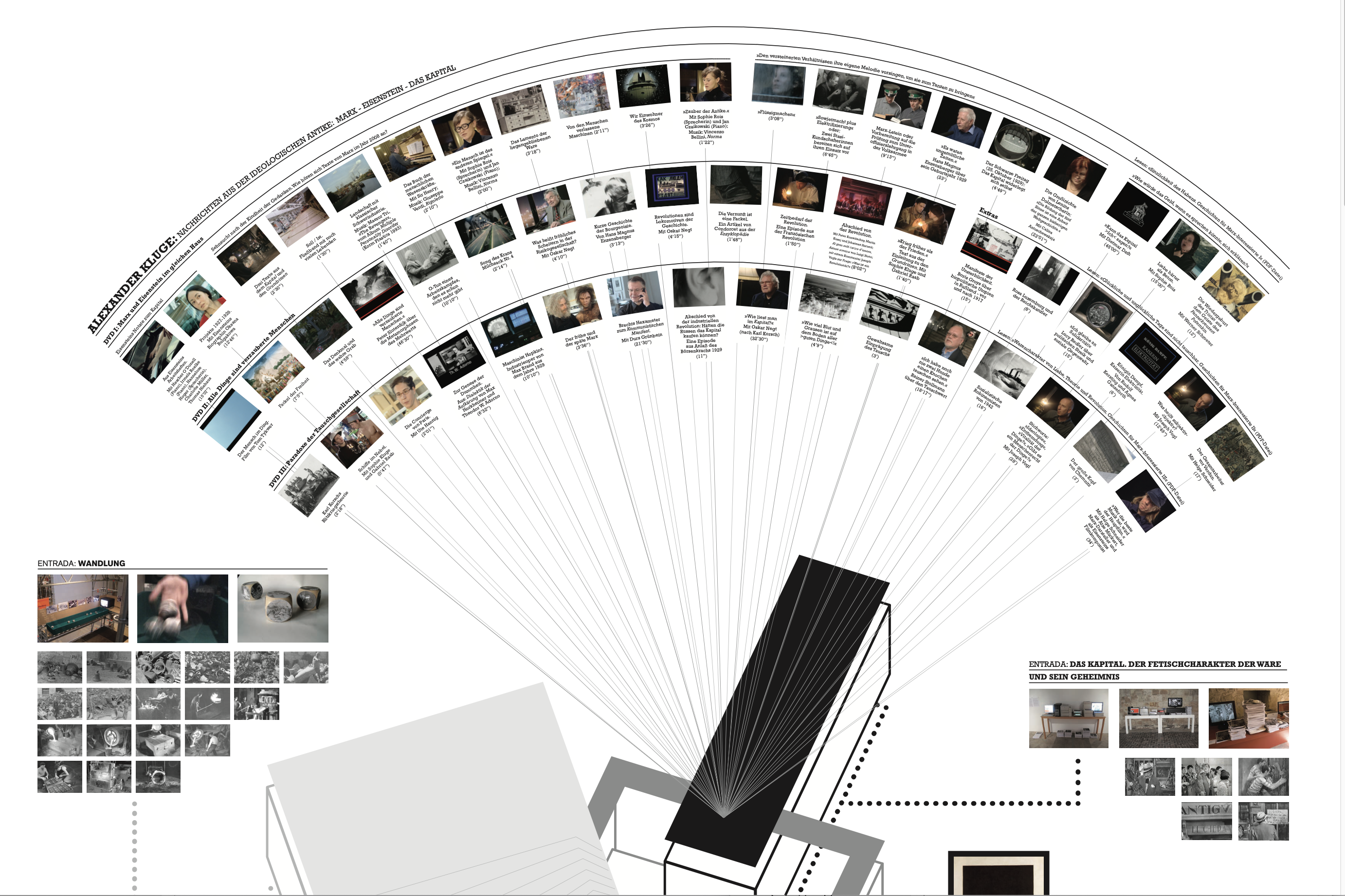
    Marcello Mercado – Das Kapital / Kapitál
    1999-2008, 60:00 min.
    Dílo existuje v různých a opětovně upravovaných DVD verzích i jako dvoukanálová instalace pro videoprojektory. Zde jde o jednokanálovou verzi určenou k prezentaci na obrazovce.

    Ernst Mitzka – Valeska Gert: Das Baby, der Tod / Valeska Gert: Dítě, smrt
    1969, 5:59 min.
    Záznam se nachází na dvou 1/2-in páskách, natáčení probíhalo současně pomocí dvou kamer a dvou videomagnetofonů. Záměrem autora bylo z různých verzí vybrat lepší variantu postavení kamery, nicméně k tomu došlo až v roce 2009 po digitalizaci pásek.

    Michael Morgner – M. überschreitet den See bei Gallenthin / M. Překračuje jezero u Gallenthinu
    1981, 14:37 min.
    Natáčeno paralelně na filmovou kameru Super-8 a videokameru Sony Portapak AV-3420. Dvě originální 1/2-in cívky jsou považovány za ztracené.

    Heike Mutterová – Ekstase 1 / Extáze 1
    1998, 7:00 min., BetacamSP


    DVD 6

    Michael Geissler – Nico, Nationalgalerie Berlin
    1974, 17:48 min., 1/2-in páska Scotch 3M

    Susanne Ofteringerová – Nico Icon
    1993, 25:49 min., BetacamSP

    Marcel Odenbach / Gábor Bódy – Gespräche zwischen Ost und West / Hovory mezi východem a západem
    1978, 3:40 min., 1/2-in páska, záznam na přenosný videorekordér National NV-3085

    C.O. Paeffgen – Erst das Hemd dann die Kunst / Nejdřív košile, pak umění
    1975, 9:59 min., U-Matic KC-10

    Klaus Rinke – Wasser holen, Wasser bringen, Wasser schütten / Shánění vody, nošení vody, vylévání vody
    1971, 6:02 min., U-Matic KCA 30, 1/2-in páska Sony-AV
    Digitalizace probíhala několikrát za použití rozdílných nastavení signálu, aby bylo pro jednotlivé sekvence dosaženo optimálních výsledků. Následně byly v programu Final Cut Pro sestaveny nejlepší varianty z obou zachovaných formátu.

    Ulrike Rosenbachová / Klaus vom Bruch – Good Luck for A Better Art
    1977, 5:12 min., U-Matic
    Videu předchází šestnáctisekundová upoutávka na alternativní televizi ATV.

    Ulrich Rückriem – 1. Teilungen, 2. Kreise, 3. Diagonalen / 1. Dělení, 2. Kruhy, 3. Diagonály
    1971, 20:40 min., U-Matic


    DVD 7

    HA Schult – Medienhaus Ruhr-Tour
    1978, 9:48 min., kazety Akai VT
    Výchozí materiál se nacházel na dvanácti kazetách v celkové délce téměř šest hodin.

    Gerry Schum – Interview, documenta V
    1972, 11:24 min., 1/4-in páska, videomagnetofon Akai VT-110
    Součást Audiovisueller Dokumentation der documenta V (Karl Oskar Blase). Kamera Walter Cuntze.

    Wolfgang Stoerchle – Untitled (Lamp Performance)
    1970, 2:14 min., 1/2-in páska Sony V-32, NTSC

    Wolfgang Stoerchle – Sue Turning
    1973, 12:00 min., 1/2-in páska Sony V-32, NTSC

    Ulay – namen, uiterlijkheden, personenruil / Jména, zevnějšky, výměna osob
    1975, 9:10 min., 1-in páska ve formátu IVC


    DVD 8

    UTV / Hans-Christian Dany / Stephan Dillemuth – Wochenschau I / Týdeník I
    1996/2009, 33:21 min.
    Původní UTV-Wochenschau byla distribuována na kazetě VHS v délce 3:09 hodin.

    Franz Erhard Walther – Demonstration Werksatz zur documenta
    1972, 23:54 min., 1/4-in páska, videomagnetofon Akai VT-110
    Součást Audiovisueller Dokumentation der documenta V (Karl Oskar Blase). Kamera Walter Cuntze.

    Peter Weibel – Publikum als Exponat / Veřejnost jako exponát
    1969, 17:00 min., 1-in páska, videomagnetofon Philips VPL 8-in. IC, kamera Philips EL 3402

    Ursula Weversová – Horizontales/Vertikales Springen / Horizontální/vertikální skoky
    1979, 12:29 min., U-Matic, určeno pro dva monitory

    Paul Wiersbinski – King Nothing
    2008, 6:47 min., Mini-DV
    Dílo existuje ve dvou verzích: jako jednokanálová a jako dvoukanálová verze, která běží na dvou obrazovkách umístěných uvnitř kinetické skulptury.
     

  • Errata #3, Cultura digital y creación

    Errata #3, Cultura digital y creación

    15.09.2011


    La Rebelión de los Neutrales. Hacklabs in Latinamerica


    Errata #3, Cultura digital y creación


    Editor internacional: Ricardo Domínguez. Editor nacional: César Felipe Londoño. Autores: ElectronicDisturbance Theater (Brett Stalbaum, Micha Cárdenas, Elle Mehrmand), Amy Sara Carroll (EE.UU.), Carlos Jiménez y Alejandro Duque (Colombia). Inserto audiovisual: Carlos Trilnick. Entrevista a Miguel Ángel Cárdenas por Sebastián López


    Page 224

    https://issuu.com/revistaerrata/docs/errata_3_cultura_digital_creaci_n