
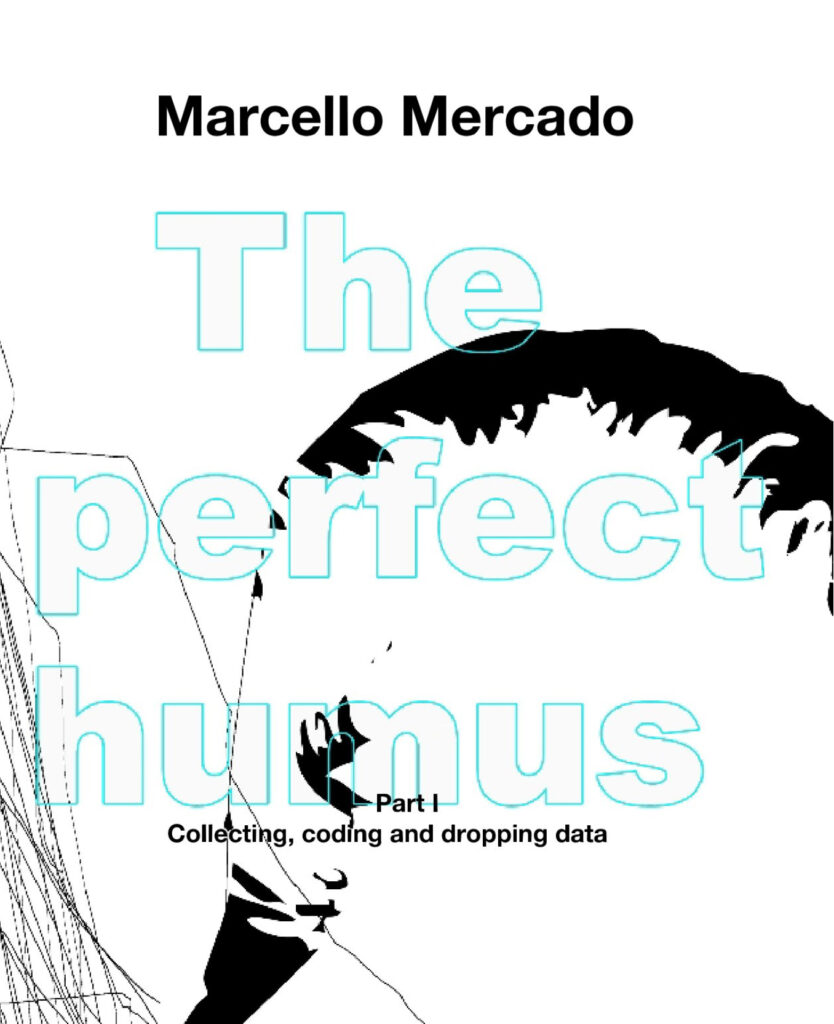
The Perfect Humus. Part I: Collecting, Coding and Dropping Data, 2012
About the Book
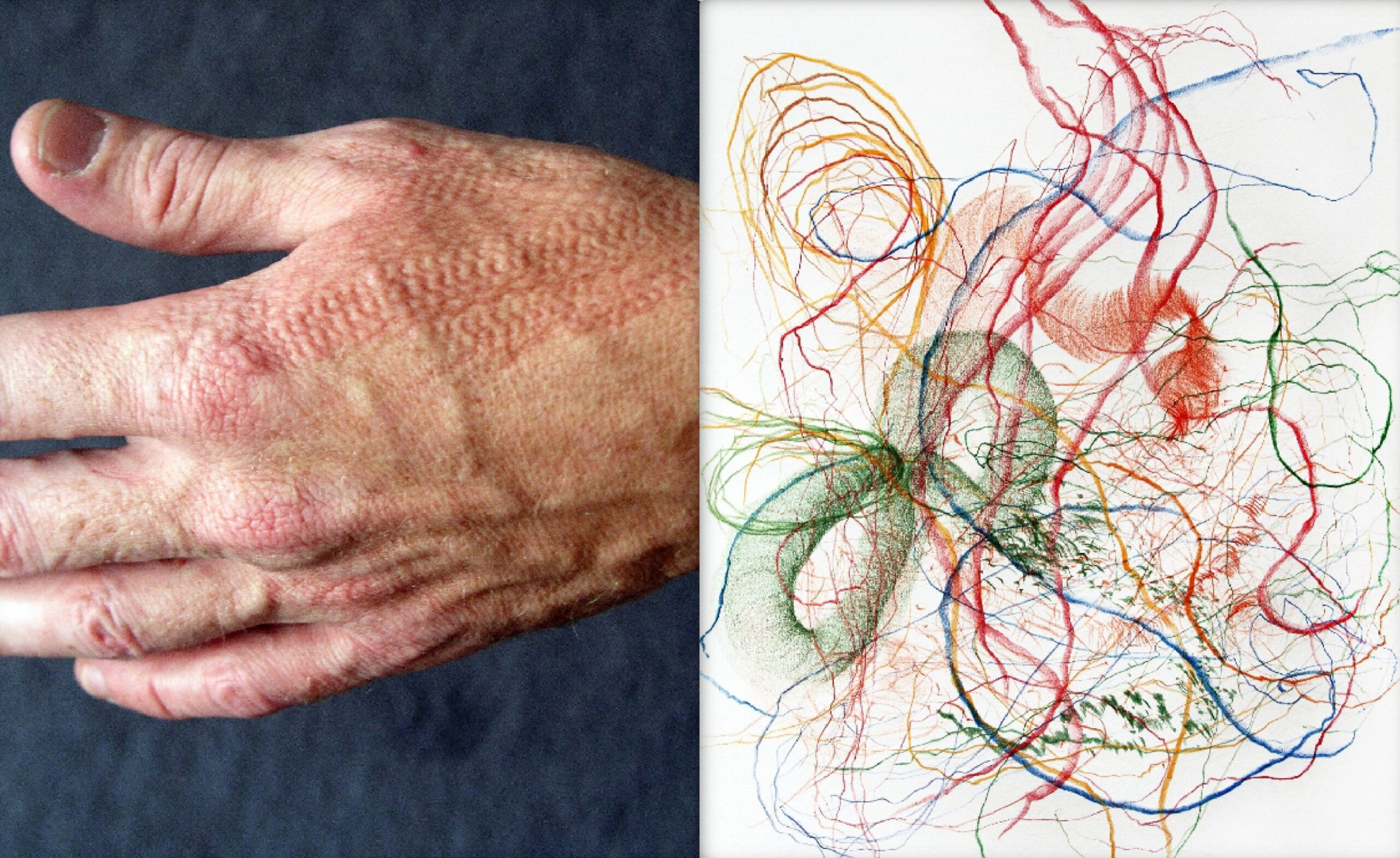
The Perfect Humus. Part I: Collecting, Coding and Dropping Data (2012) brings together photography, drawing, performance and video stills as components of a single operational field rather than as autonomous media. The book functions as an archive in motion: a space where the body, matter and data circulate, accumulate and decay.
Across its pages, Mercado treats the body not as a representational subject but as a site of inscription—marked, fragmented and translated through gestures of collection and displacement. Hands, organic residues, graphic traces and algorithmic notations coexist without hierarchy, forming a system in which biological processes and technical procedures are inseparable.
The notion of humus operates here not as metaphor but as method: a layered condition where information, material and action are continuously decomposed and recomposed. Data is not stabilized or preserved; it is dropped, redistributed and allowed to lose coherence. What remains is not evidence, but residue—an active remainder that resists closure.
Rather than documenting actions or performances, the book assembles their aftereffects. It proposes an understanding of the archive as a metabolic structure: one that processes time, matter and memory through cycles of erosion, transfer and transformation. In this sense, The Perfect Humus establishes a foundational matrix for Mercado’s later investigations into translation systems, algorithmic bodies and non-linear archives.