10.10.2015
Collection Nina Zaretskaya (TV Gallery)
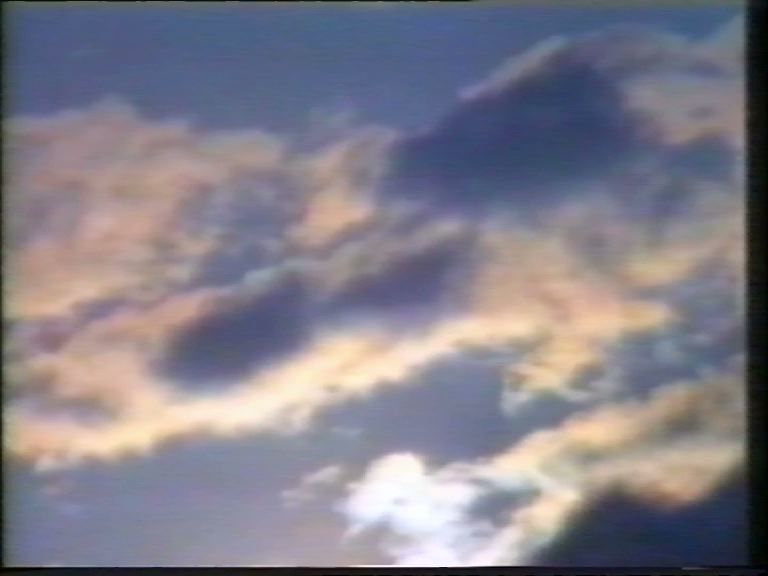
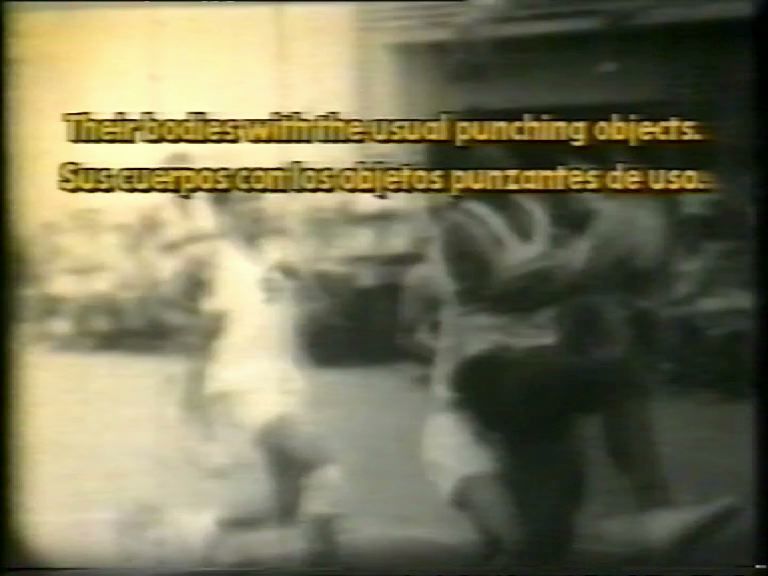
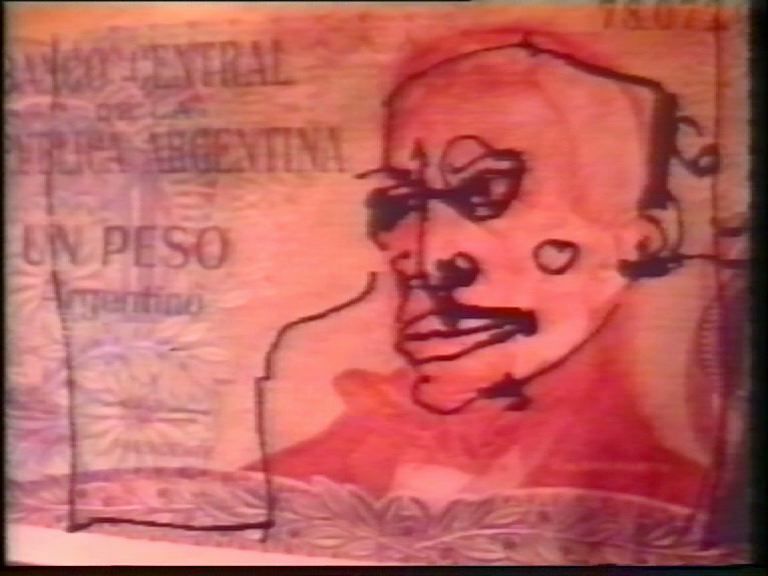
Marcello Mercado. Region del Tormento
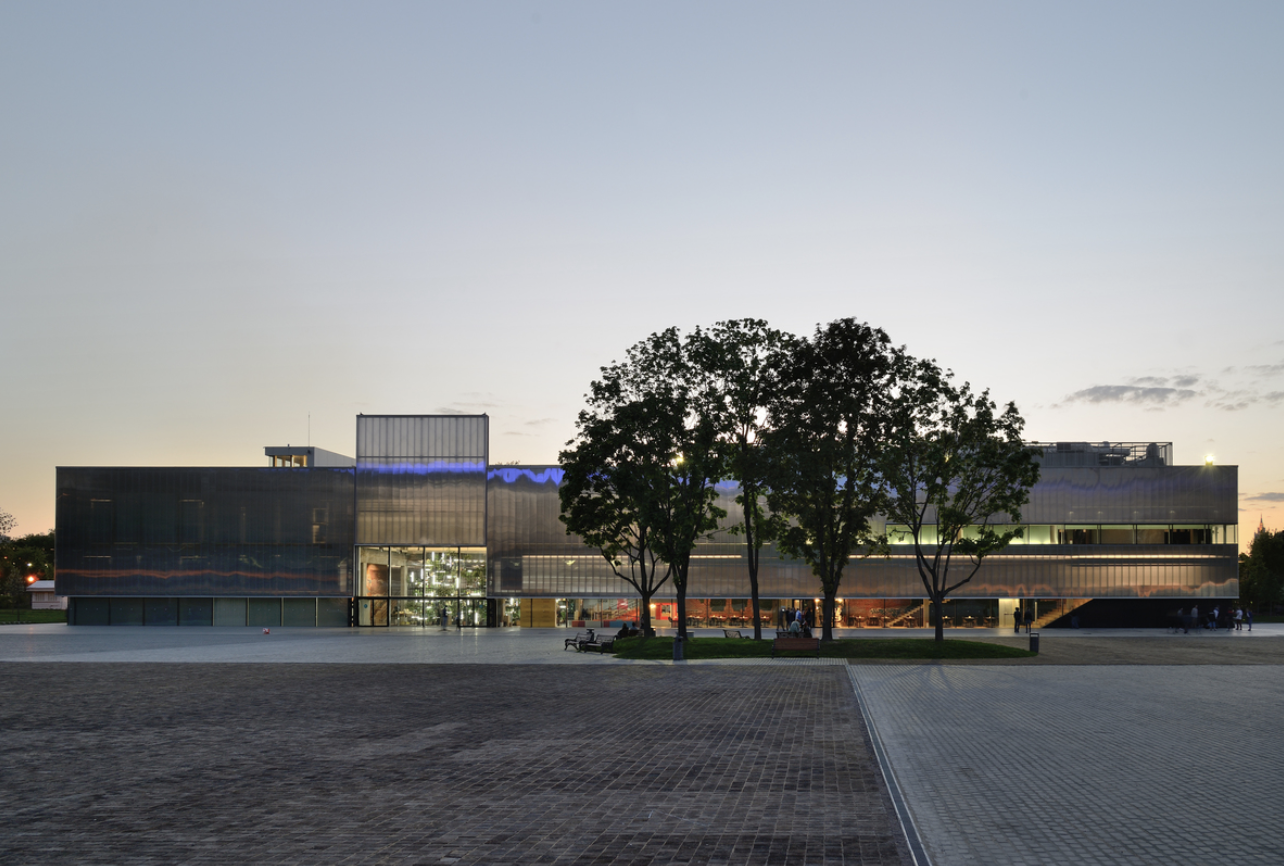
9/32 Krymsky Val st.,
119049 Moscow
Russia
119049 Moscow
Russia

10.10.2015
Collection Nina Zaretskaya (TV Gallery)
Marcello Mercado. Region del Tormento
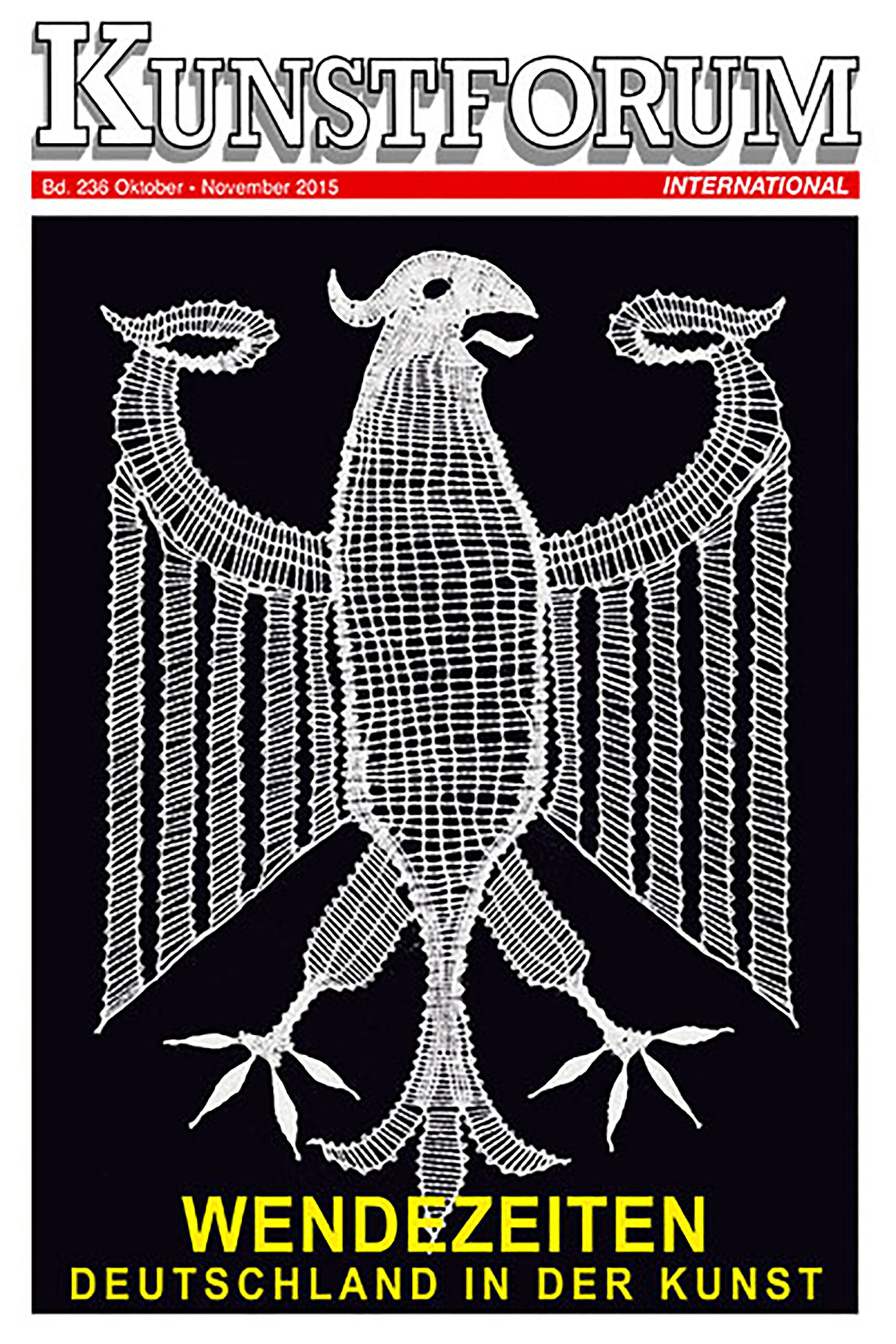
01.10.2015
„Nationen malen keine Bilder“, schrieb Werner Hofmann 1999 in seiner Streitschrift Wie deutsch ist die deutsche Kunst?. Mit der Praxis künstlerischen Arbeitens haben nationale Zuschreibungen wenig zu tun. Schließlich …
Nachrichten

Vom 19. November 2015 bis zum 10. Januar 2016 zeugt die Berliner Akademie der Künste die Ausstellung „Bodenlos – Vilém Flusser und die Künste“. Ausgangspunkt ist Flussers Behauptung: „Synthetische Bilder sind eine Antwort auf Auschwitz“. Für den Philosophen Vilém Flusser (1921-1991) war „Denken und Schreiben war ein permanentes Experiment des (Über-)Lebens in der Diaspora“.seit er vor den Nazis aus Prag nach Brasilien geflohen war, wo er dann dreißig Jahre lang lebte. „Nur in der Passage durch die radikale Abstraktion sei eine neue Konkretisierung und damit neues spannendes Leben vorstellbar: Damit beginne die Nachgeschichte. Offensiv nahm Flusser die Herausforderung an, die Künste noch einmal neu zu denken im Angesicht der Tatsache, dass unsere Existenz im Wesentlichen von Technik bestimmt wird. Die Methoden der Naturwissenschaft mit einer neuen Auffassung von Kultur zu verkoppeln ist das Anliegen seiner besonderen Anthropologie.“ Künstlerliste: Edmar de Almeida, Louis Bec, Harun Farocki, Alex Flemming, Joan Fontcuberta, Fred Forest, Herbert W. Franke, Andreas Henrich, Dieter Jung, Marcello Mercado, Achim Mohné/Uta Kopp, Anthony Moore, Matthias Müller, Andreas Müller-Pohle, Nam June Paik, The Quay Brothers, Mira Schendel, Lisa Schmitz, Ed Sommer, Pinar Yoldas und Niobe Xandó.

15.08.2015 – 18.10.2015
No Firm Ground : Vilém Flusser and the arts
Vilém Flusser (1920– 1991) is one of the outstanding art and media philosophers of the 20th century. Many of his texts foresaw the future of technology-based communication and networking. Today his works are inspiring; Flusser was convinced that changes in communication structures through codes and new media would ultimately affect all areas of society. He called for a fundamental study of technical images and the apparatuses which generate them. The exhibition “No Firm Ground – Vilém Flusser and the Arts” provided an additional, important aspect to the reception of Flusser’s writings: the close and multifaceted connection between his work and the art world. The ZKM in Karlruhe presented collages, drawings, video and audio works, early computer works and the philosopher’s personal items from the Vilém Flusser Archive in Berlin, along with contemporary works by international artists which make direct reference to Flusser’s work. Many prominent artists, such as Mira Schendel, Louis Bec and Fred Forest, had been close friends with Flusser, with whom they had carried out joint projects. In focussing on the arts, the exhibition presented Flusser’s works in an entirely new context. In this way, the project highlighted the connection between media and art theory from a Flusserian perspective. The exhibition wished to provide an important contribution to international study and research of Flusser’s works. During the exhibition, a scientific conference took place. Researchers developed a trilingual dictionary of terms from Flusser’s world of thought, the “Flusseriana”. The project has been organised in cooperation with the Academy of the Arts in Berlin, together with institutions in the Czech Republic and Brazil.
Artistic director: Siegfried Zielinski with Peter Weibel
Curators: Baruch Gottlieb with Siegfried Zielinski and Norval Baitello jr.
Artists: Louis Bec (FR), Michael Bielicky (CZ), Harun Farocki, Alex Flemming (BR), Samson Flexor (BR), Joan Fontcuberta (ES), Fred Forest (FR), Marcello Mercado (AR), Anthony Moore (GB), Andreas Müller-Pohle, Mira Schendel (IT/ BR) a.o.
Pages 14 – 15
30.07.2015 – 11.08.2015
PLAY Videoarte
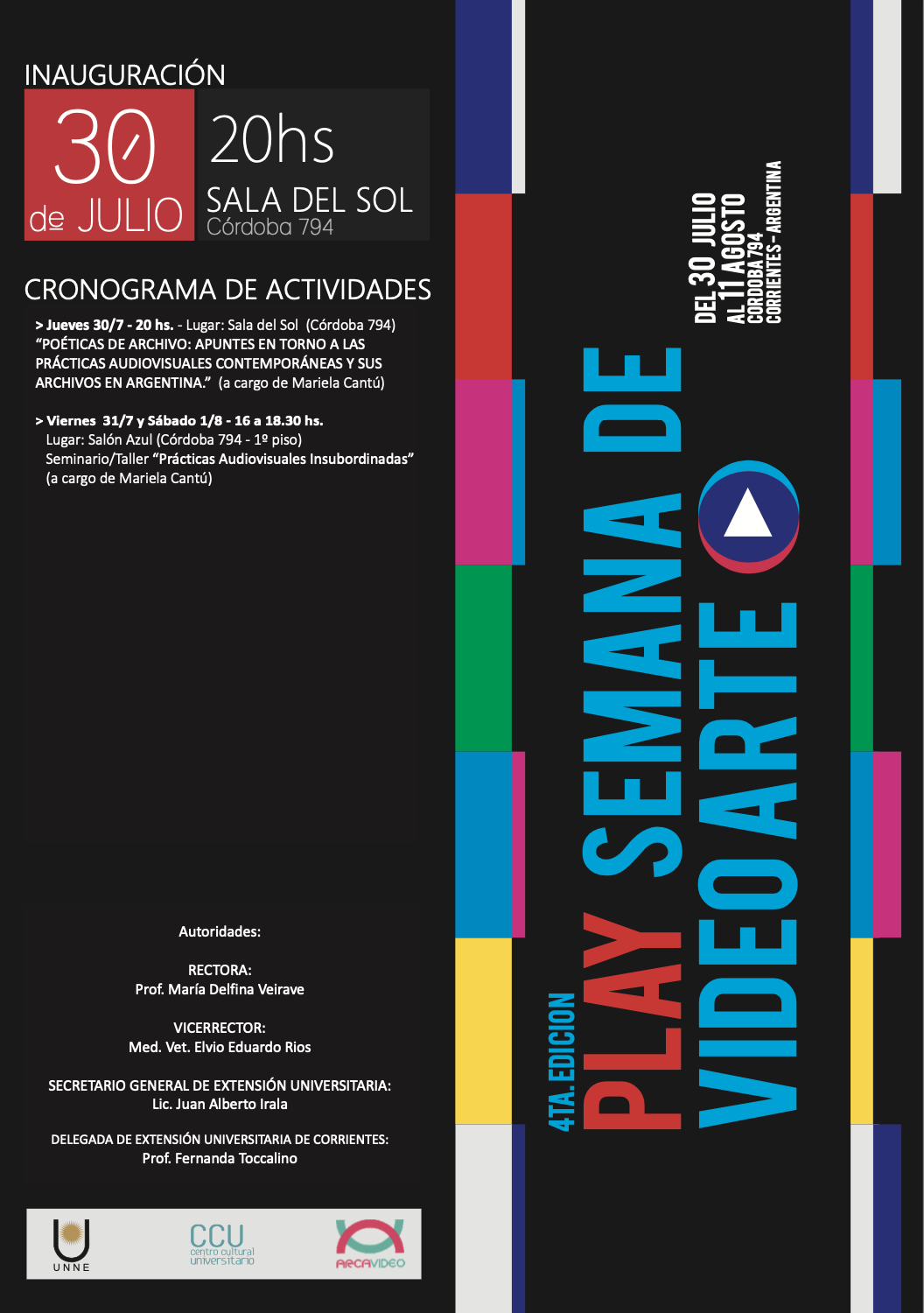
Jueves 30/7 – 20 hs. – Lugar: Sala del Sol (Córdoba 794) “POÉTICAS DE ARCHIVO: APUNTES EN TORNO A LAS PRÁCTICAS AUDIOVISUALES CONTEMPORÁNEAS Y SUS ARCHIVOS EN ARGENTINA.” (a cargo de Mariela Cantú)
Viernes 31/7 y Sábado 1/8 – 16 a 18.30 hs.
Lugar: Salón Azul (Córdoba 794 – 1o piso)
Seminario/Taller “Prácticas Audiovisuales Insubordinadas” (a cargo de Mariela Cantú)
PLAY- Semana de Videoarte- 4ta. edición expone cuatro propuestas que generan un diálogo entre la historia y el presente del videoarte. Las obras seleccionadas generan un paisaje polifónico donde habitan discursos que remiten al relato autobiográfico, a la crítica desde la ironía, a las experimentacionesvisualesysonoras, susrupturas/fisuras. Deestaforma, el video arte como campo expansible insiste en la contemporaneidad buscando ensanchar las fronteras de la imagen movimiento.
Contará en esta edición, con la proyección de los videos seleccionados de la Convocatoria pública internacional 2015 para artistas del videoarte cuyo jurado estuvo integrado por Albert Merino, Fabiana Gallegos y Maia Navas.
Por otro lado, se presentará una selección de videoarte argentino “Poéticas de Archivo” (a cargo del Colectivo ARCA VIDEOARTE ARGENTINO).
Además se exhibirán dos video-instalaciones de los artistas Máximo Gonzalez (Argentina) y Ramón Guimaraes (España).
Por último, se proyectará una selección de video-danza de alumnos de la lic. en Artes Combinadas (UNNE) a cargo de Mariana Jarovlasky .
Maia Navas Curadora
PROGRAMA 2
HACIA UNA POLÍTICA DE LA IMAGEN VIDEO
Los vínculos entre arte y política nunca han sido estables ni han encontrado simples definiciones, y el video no ha quedado fuera de este debate. Ya sea (ex) poniendo el cuerpo, el rostro o la voz delante de la cámara como actos de resistencia –tal es el caso de Había una casa o del ya célebre Granada-; discutiendo las instituciones y sus lógicas de poder a través de la alteración de los regímenes de la visualidad –usando la hibridez como procedimiento en La región del tormento o la estética del error y un aparente amateurismo en 20/12-; o cuestionando la noción estática de memoria mediante la subversión de las relaciones entre el pasado, el presente y las promesas de un futuro que nunca llegó –citando las apuestas de Chierico, Pons y Villafañe-, todos estos trabajos procuran situarse fuera de la historia oficial. Estableciendo Argentina como escenario de estos inciertos rumbos y teniendo como foco la representación del vestigio antes que la de los signos celebratorios de la nación (con la recurrente imagen de un puente sin terminar en REM (Hecho en Argentina) como metáfora de este concepto) estas obras consiguen, mediante estas transgresiones, que lo estético se vuelva inseparable de lo político.
Había una casa. Carolina Andreetti. 6.53, 2008.
Los dinosaurios. Mario Chierico. 6.30 min. 1996.
20/12. Mariano Cohn. 3.30 min, 2002.
REM (Hecho en Argentina). Ricardo Pons. 9.56 min, 2000. Elvira en el río Loro. José Villafañe. 9 min, 2009.
La región del tormento. Marcello Mercado. 8.40 min, 1992. Granada. Graciela Taquini. 6 min, 2005.

European Media Art Festival
Sich für den Job „Jesus“ bewerben
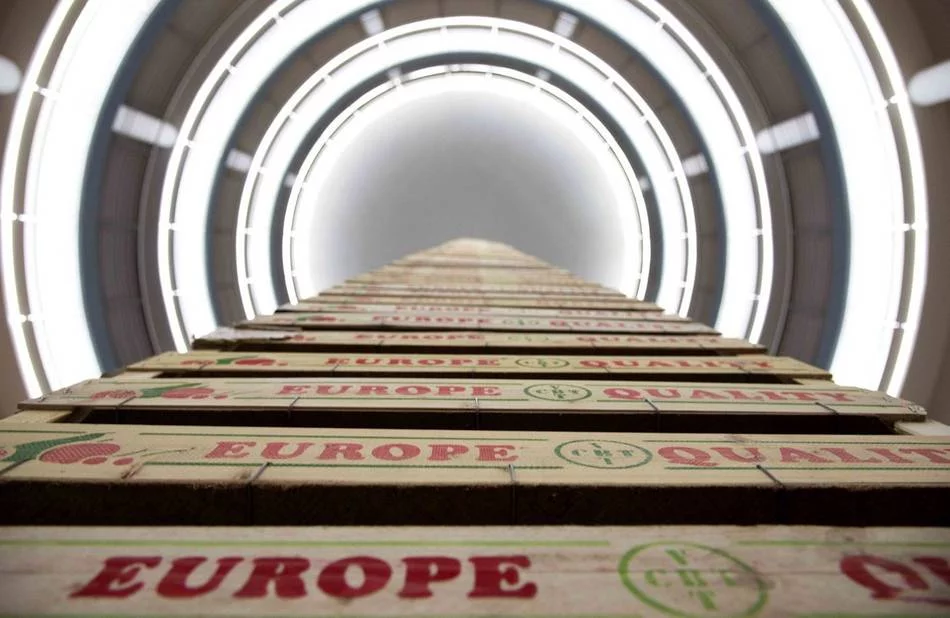
Das Motto des diesjährigen Medienkunstfestivals in Osnabrück lautet „Ironie in der Medienkunst“. Der Künstler George Kline appelliert an die EU-Bürger, die Festung Europa stärker zu überwachen, Christian Jankowsky lässt Bewerber als Jesus-Darsteller antreten.
13.05.2015 – 09.08.2015
Av. Costanera Norte
Rafael Obligado 6745.
(adyacente a Ciudad Universitaria)
Buenos Aires, Argentina.

12.05.2015
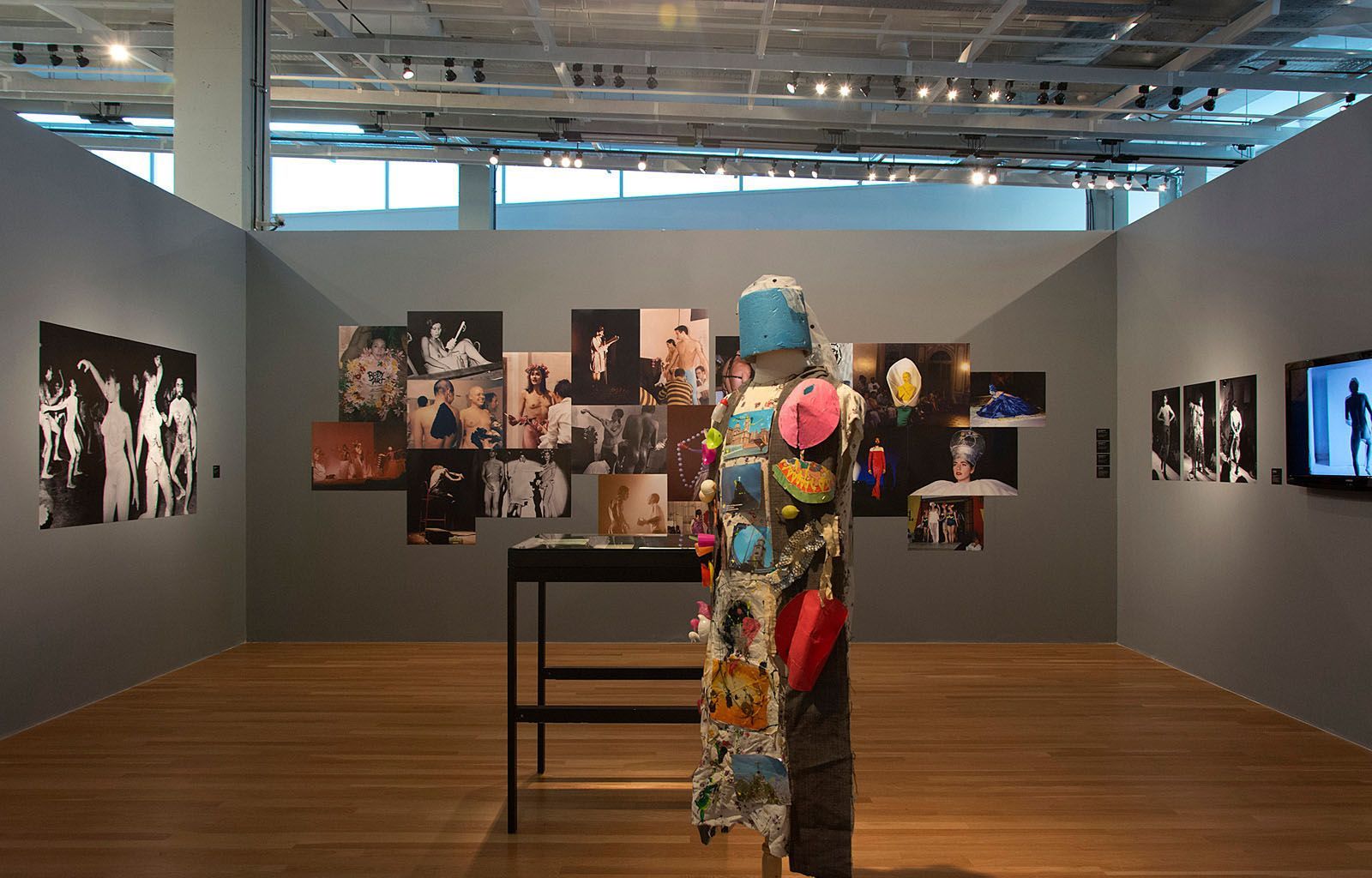
Marcello Mercado: Please Keep Distance / Bitte Abstand Halten
Marcello Mercado: Photography
My body reflected in countless transparent objects and their contents. It is an absent body, in spite of all the signs, alarm devices, commands and controls.

22.04.2015 – 22.05.2015
Addressing topics with irony, satire and humour is an artistic strategy frequently applied in the media arts, the spectrum of which is practically as broad as that of the fine arts. Irony doesn’t only serve to provide tongue-in-cheek entertainment, but also as a means of analysis and criticism. Playfully walking a line between sculpture, action and performance, artists use irony to express social criticism which places emphasis on economic and social circumstances.
To this end, they “seize on” material from the media, which they rearrange and subvert for their own purposes. With titbits taken from everyday life and consumer culture, the artists comment on the balance of power and the distribution of wealth in society. And now that new media has established itself firmly in the art world, this approach has increasingly become an artistic strategy. In their works, artists rely on the effectiveness of irony to illuminate the impact of media technologies on social interaction and personal identity. In this way, they frequently overstep boundaries, question values and break taboos.
The exhibition “Irony in Media Art” presented some 25 works by internationally renowned (media) artists such as Istvan Kantor and Paolo Cirio ─ accompanied by performances, talks, films, workshops and educational programmes. The exhibition was integrated into the programme of the European Media Art Festival in Osnabrück, one of the most important forums of international media art today.
Artistic director: Ralf Sausmikat, Hermann Nöring
Artists: Roee Rosen (ISR), Christian Falsnaes (DAN), Paolo Cirio (IT), Christian Jankowski, Phil Collins (GB), Istvan Kantor (CAN), Emily Vey Duke & Cooper Battersby (CAN), Annette Hollywood, Georg Klein, Meggie Schneider, Marcello Mercado (BRA/D), Bastian Hoffmann, Antonin DeBemels (BE), Ruben Aubrecht (AT/D).
Hasemauer 1
Osnabrück
Germany
Page 10
https://issuu.com/rundbrief_filmbuero/docs/117-online
https://issuu.com/emaf_osnabrueck/docs/emaf_issue__web
https://issuu.com/bvw_os/docs/kulturseiten_2015_1

PRÁCTICAS DIVERGENTES DE PRESERVACIÓN DEL ARTE DE LOS MEDIOS
Recordar y olvidar en la cultura digital (pdf)
Vanina Yael Hofman
Directores:
Dr. Pau Alsina
Dra. Natàlia Cantó Milà
Internet Interdisciplinary Institute (IN3) 07 UOC
Universitat Oberta de Catalunya (UOC)

Artists – Visions of death
Stan Brakhage
The Act of Seeing with One’s Own Eye
1971
Stan Brakhage_Lectures_revised (pdf)
Marcello Mercado
El Vacío – Empiness
1994
Marcello Mercado_Lecture_revised (pdf)
Derek Jarman
Blue
1993
Maya Deren
with synchronized Soundtrack by Teiji Ito (1959)
Stan Brakhage
The Garden of Earthly Delights
1981
Nagisa Oshima
Death by Hanging
1968
Guy Maddin
The Heart Of The World
2000
Dušan Makavejev
WR: Mysteries of the Organism
1971 (Fragment)
Benjamin Christensen
HAXAN Witchcraft Through the Ages
1922
E. Elias Merhige
Begotten
1991
15.11.2014 – 16.11.2014
In the framework of Science Days Ars Electronica Center focuses on specific core topics – this time the emphasis was placed on BioArt. BIO·FICTION screened all shortlisted films in the context of talks and lectures, guided tours and workshop around the topic. The programme gave insight into this young and exciting art form that deals with bacteria, tissue and tiny living organisms.
Ars Electronica
Ars-Eletronica-Straße 1
FILMS PRESENTED:
Electrostabilis Cardium – Agi Haines
Synbio Ads London – Benedikt Groß
Synbio Ads Mintel – Benedikt Groß
The Culturists – David Benqué
The Outline of Paradise – Ursula Damm
Black Gold – Tim Clark and Frank Kolkman
Quanticare – Amy Congdon, Jenny Lee, Ann-Kristen Abel
Aflatoxin Biosensor – Kristin Ari Dwijayanti Abel and Dimas Dwi
Exploring Indonesia – Adiguna Ari Dwijayanti
Consultation – Ping Lu
System Synthetics – Maurizio Montalti
Bacteria to the Future – Sam Ireland
Bacteria Compass – Howard Boland, C-LAB
Travelling Research Kit – The Extrapolation Factory
Protocell Technology – Shamees Aden, Sam J Bond
Preparing for Tomorrow – Nathan Burr
I Wanna Deliver a Dolphin – Ai Hasegawa
Bio Flaneur – Aleks Cicha
Living Food – Minsu Kim
Streichhölzer – David Hochgatterer
Alien Fanfare – Jonathan Monaghan
Bioplastic Fantastic – Johanna Schmeer
Uncolour Me Courious – Georgia Bondy
Synthetic Biology: A New Way in Evolution – Uwe Sleytr
Expanded Self – Sonja Bäumel
Decapoda Shock – Javier Chillon
I wish my life – Joachim Huveneers
Eugene – Catalina Hoyos-Restrepo
Vermin – Adi Gelbart
Talking Life – Bâr Tyrmi/Rafael Linares
Hybris – Arjan Brentjes
The Arsehole Gene – Eric Romero
Macrostructure – Eric Schockmel
Bioluminescent Streetlamps – Steven van Eekelen
Reinventing the Dodo – Steven van Eekelen
Copy & Clone – Louis Rigaud
Beastliness – Deborah Kelly
Cytoplasmic Playgrounds – Markos Kay
Pet Genesis – Amy May Chin, Ingrid Hulskamp, Pras Gu- naskera, Ting Chun Lin
Bio-Logic – Gunasekera, Maurizio Montalti Ting Lin, Amy Chin
KATERED – Howard Boland, C-LAB
Proteo – Johanna Hoffmann-Dietrich
Life Spectrum – Paloma Dawkins
Quasi Objects Cinematic Environment #8 – Lorenzo Oggiano
Tracked down by our genes – Gilbert Charles
The Perfect Humus – Marcello Mercado
Stress-O-Stat – Howard Boland, C-LAB
Simply Complex – Duguid Cameron
East End Journey – Lindsay Goodall
Inorganica – Valerie Mellon
New Mumbai – Tobias Revell
Zero Park – Sascha Pohflepp
Public Misunderstanding of Science – Bruce Gilchrist
Daughter Cell – Kristina Korsholm
DIYSECT: Learning in Public – Mary Tsang, Benjamin Welmond
Soluble Structures – Yuki Yoshioka
History of the Automobile – Scott Dorsey
Puppet Earth – Laurens Roorda & Thijs Molenaar

