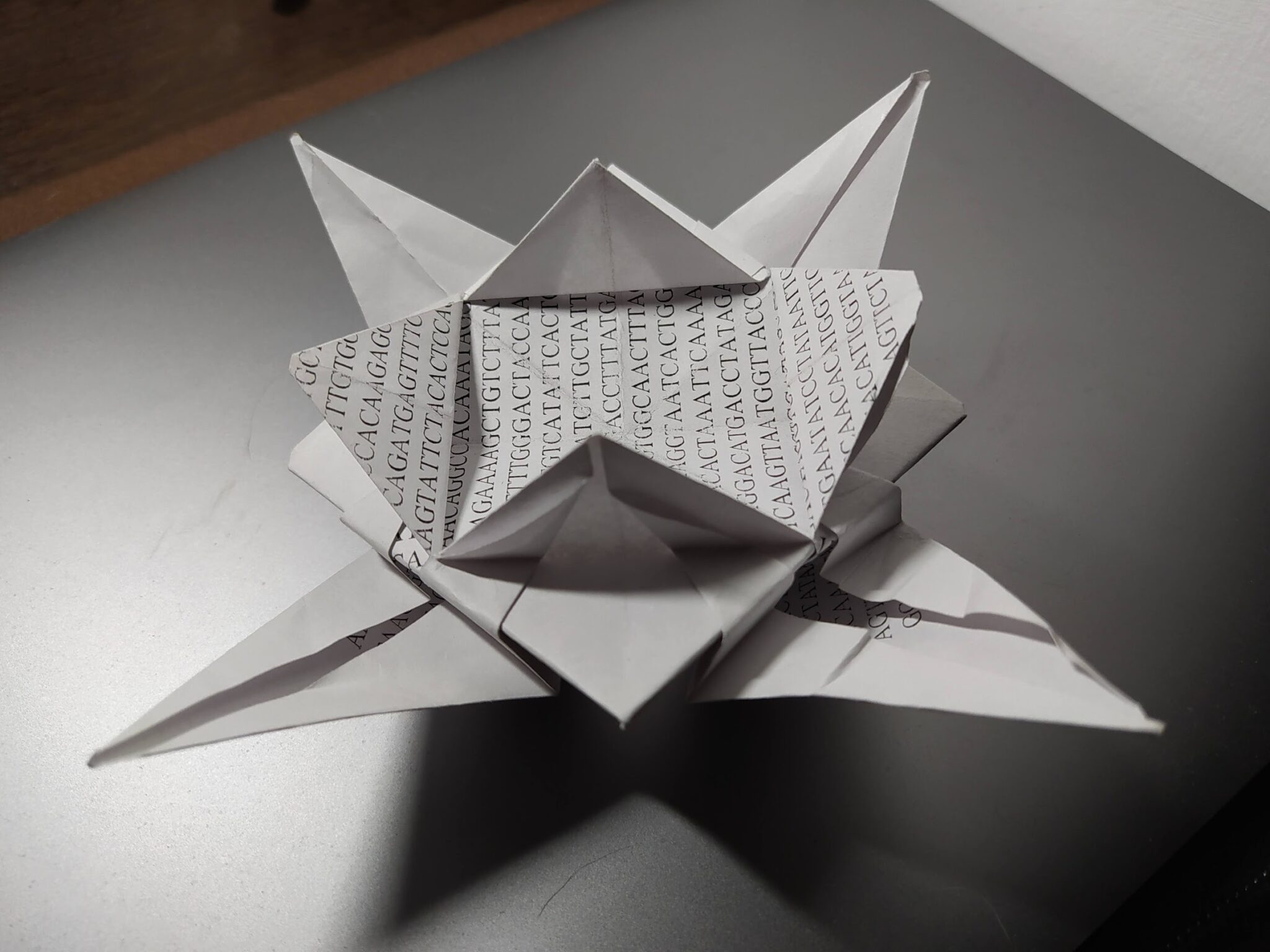
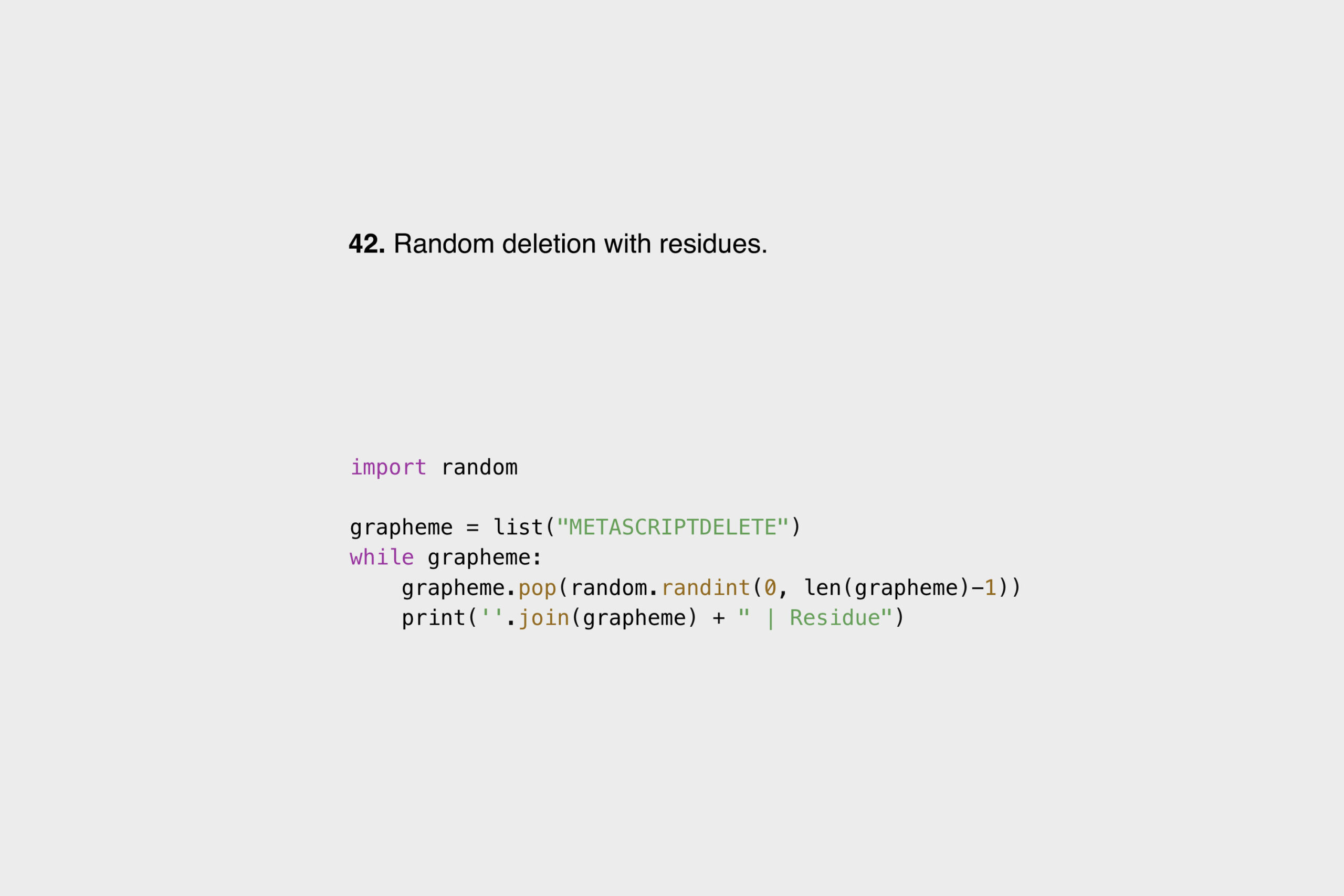
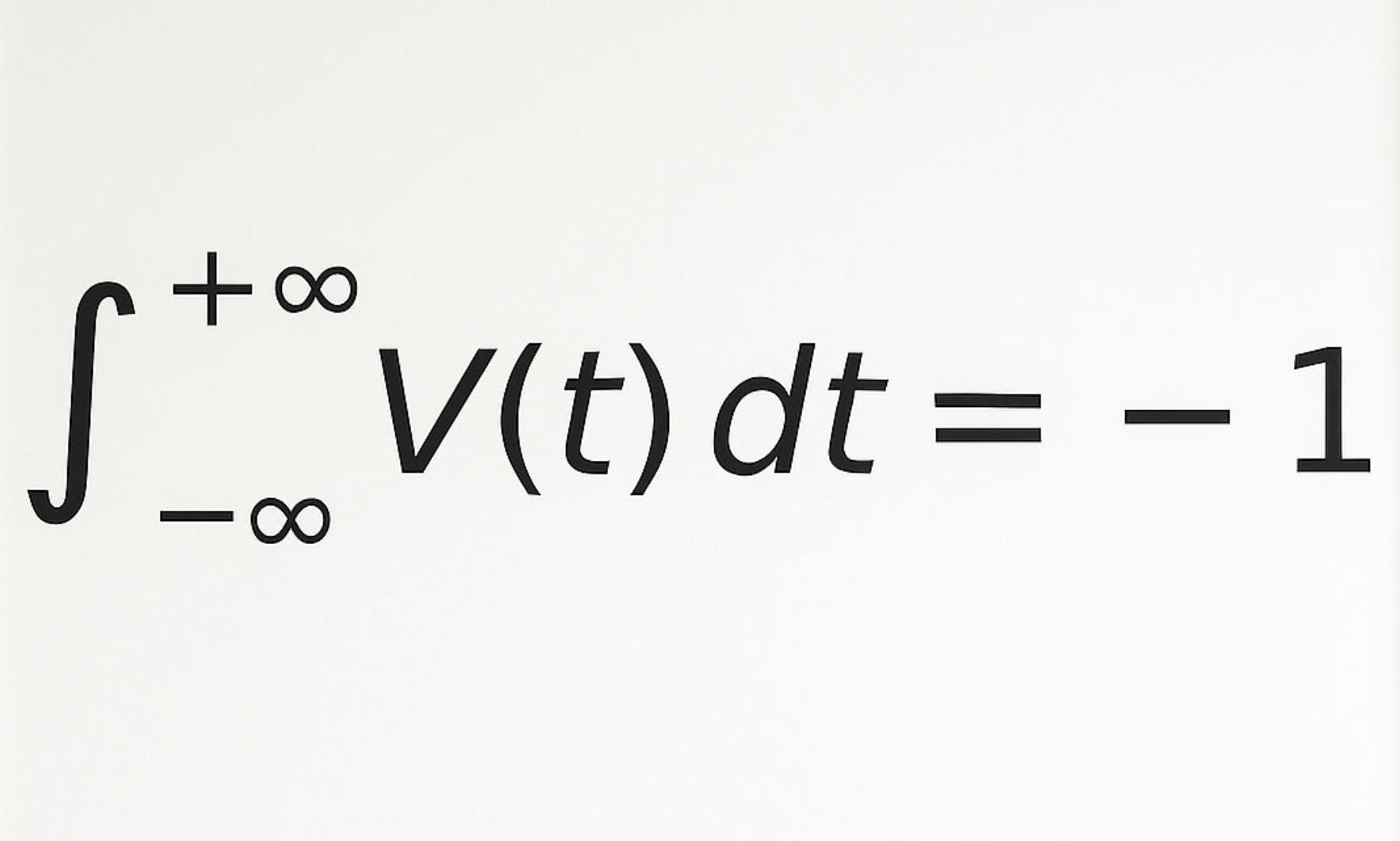
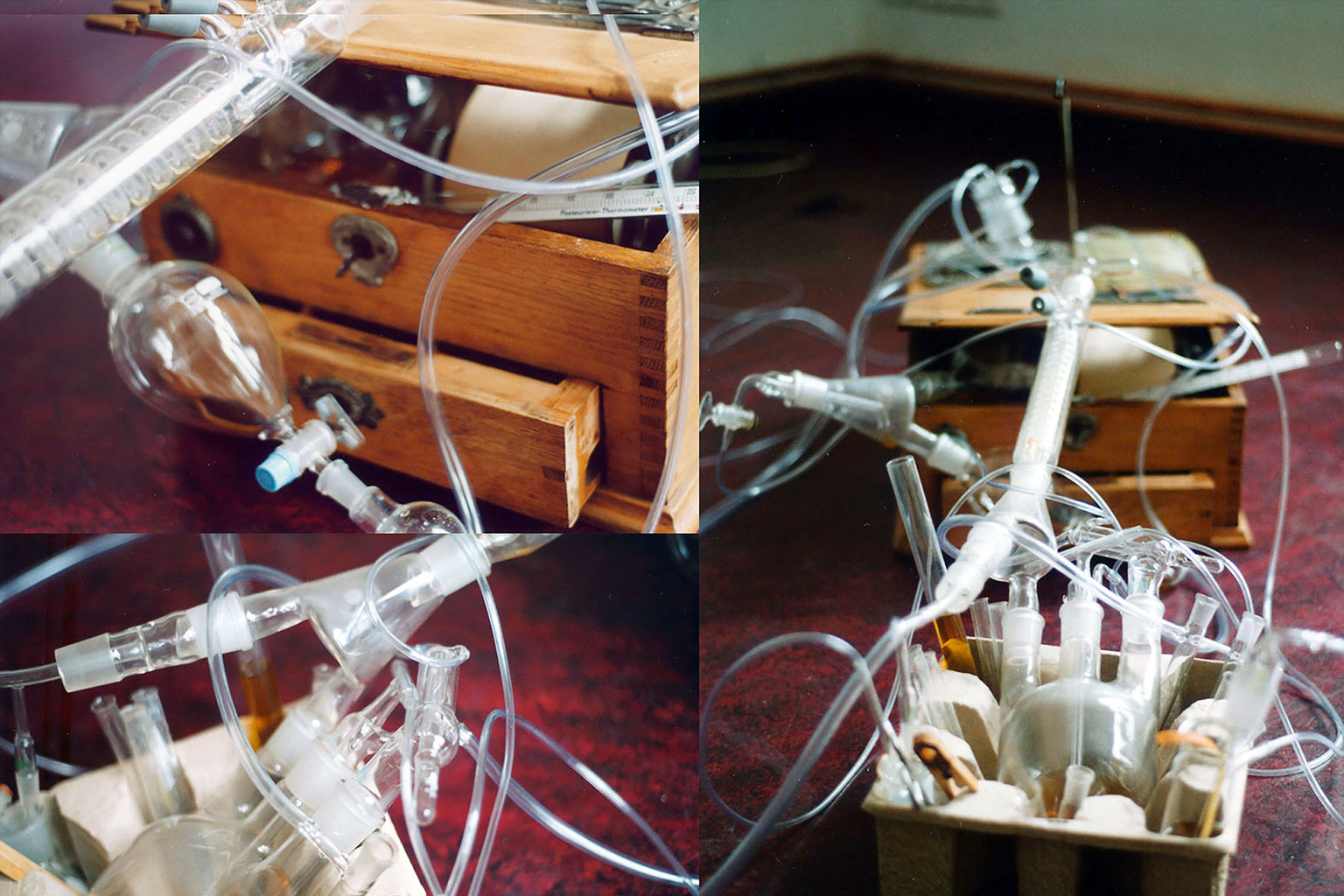
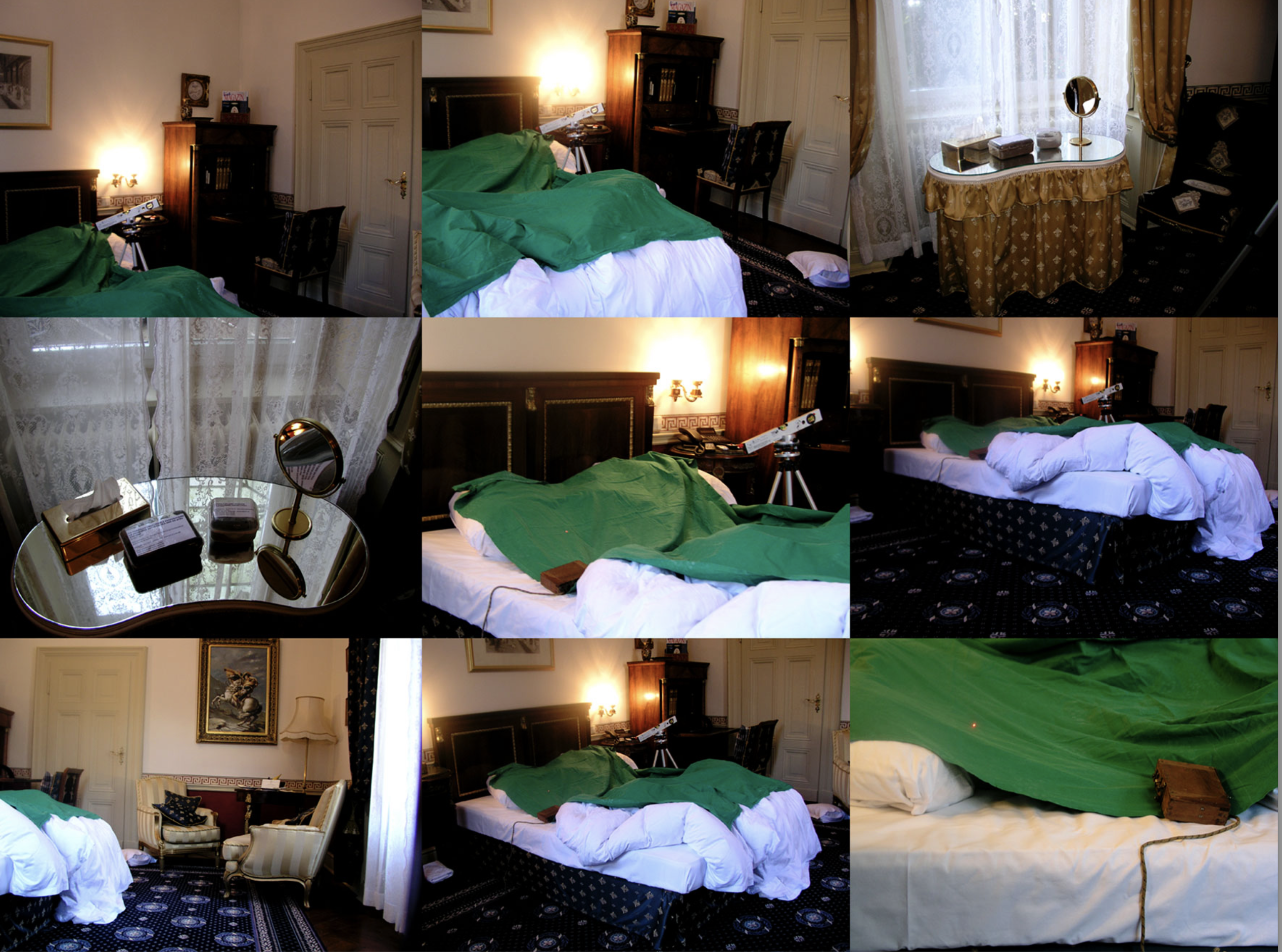
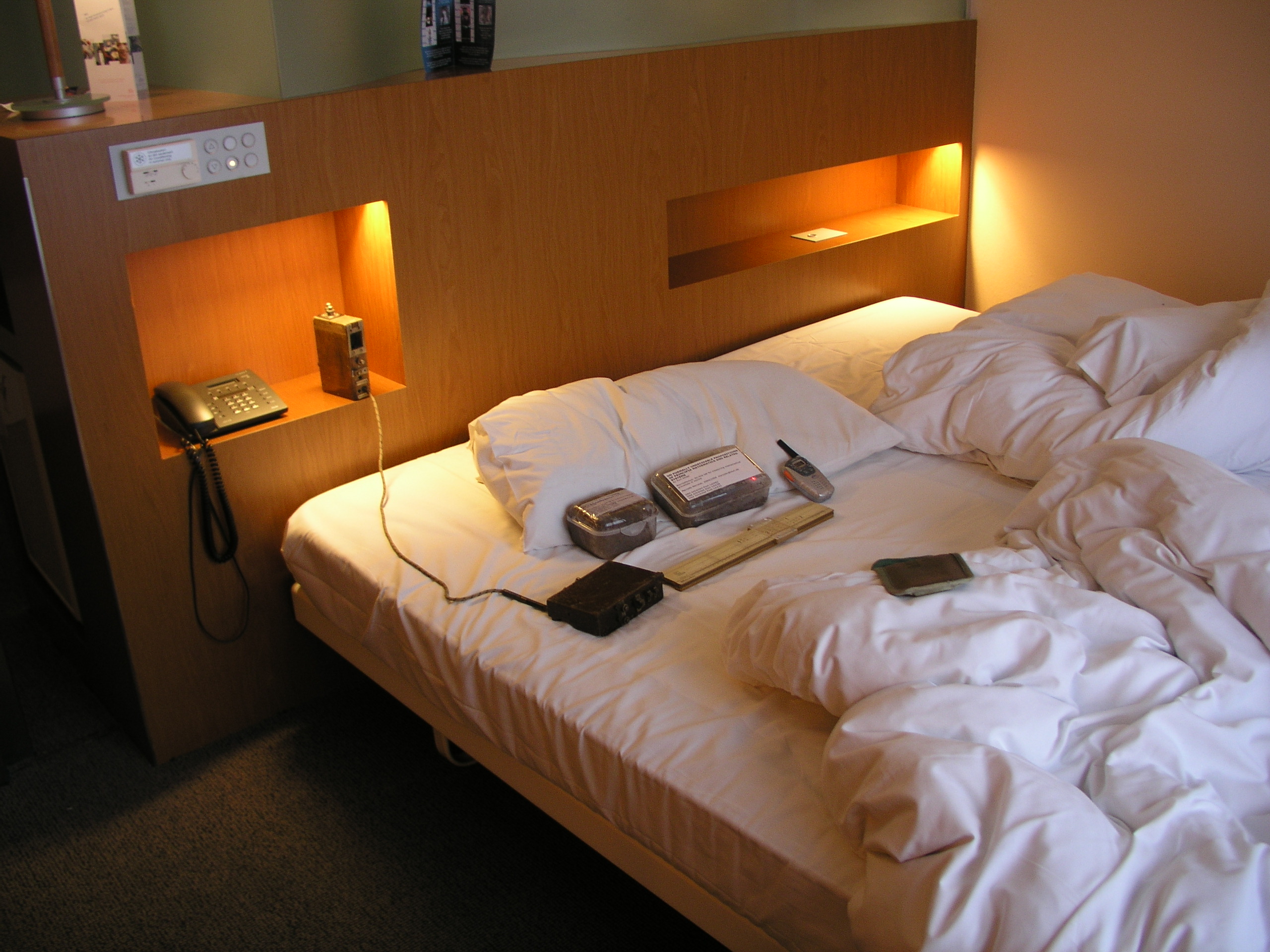
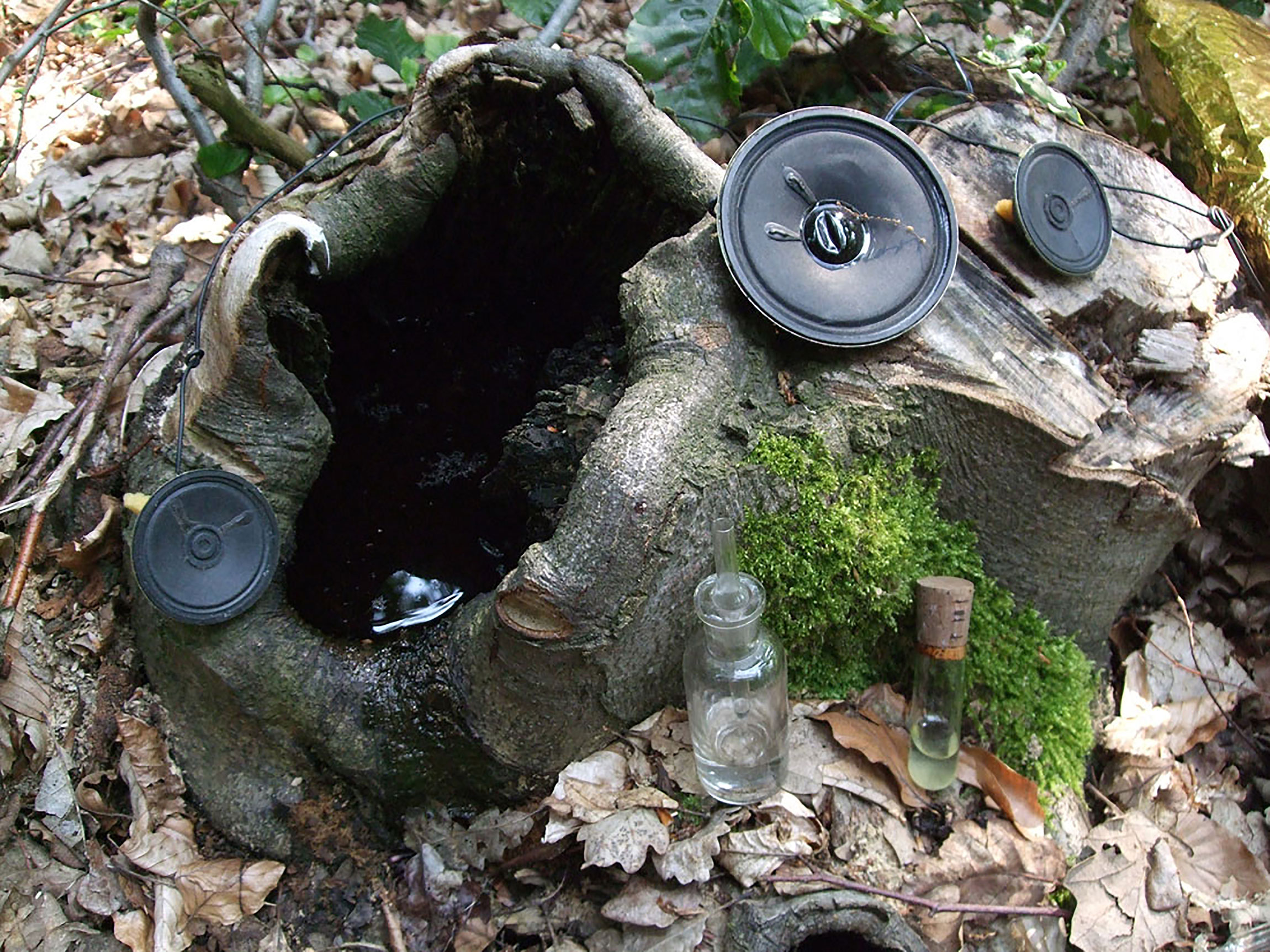
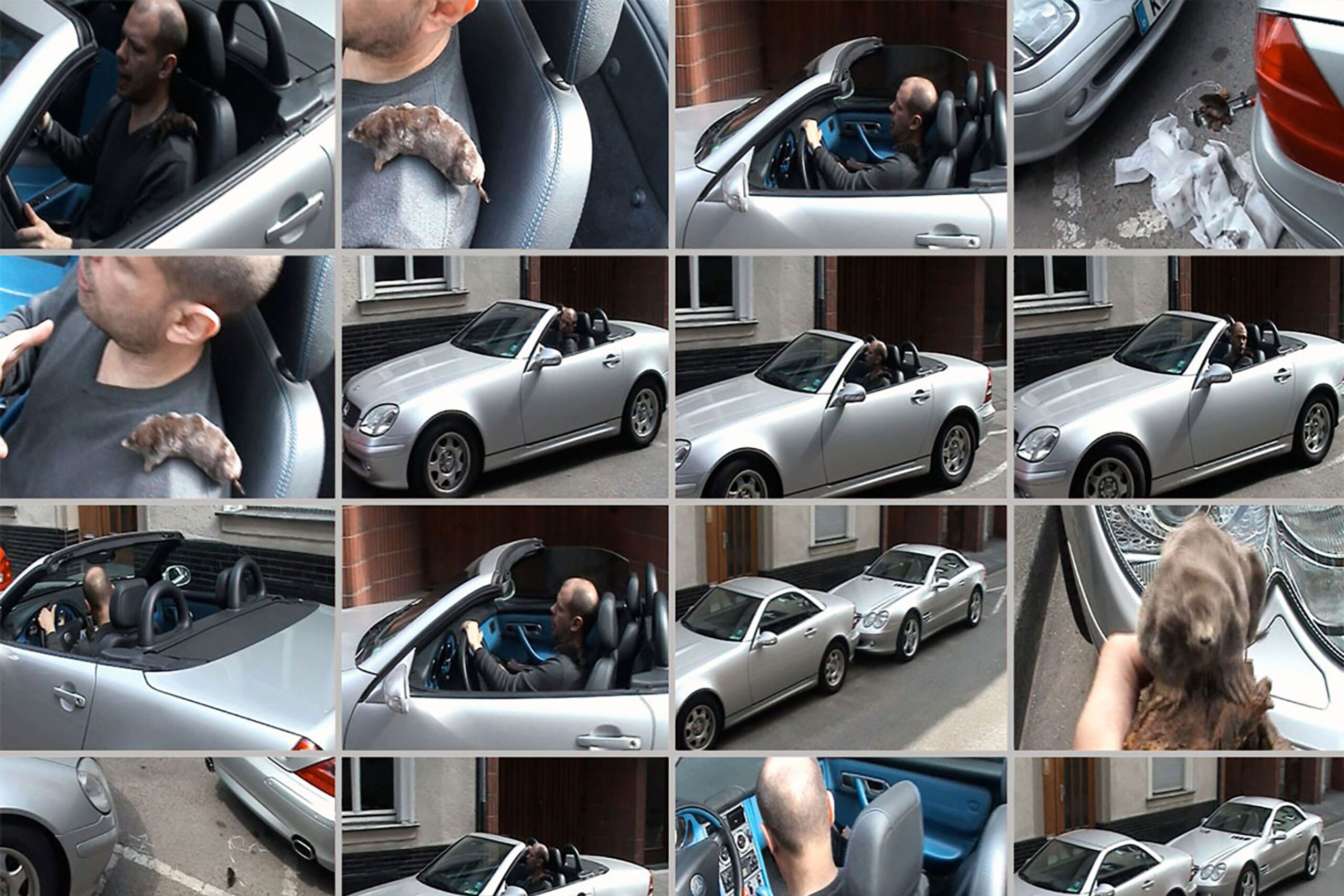
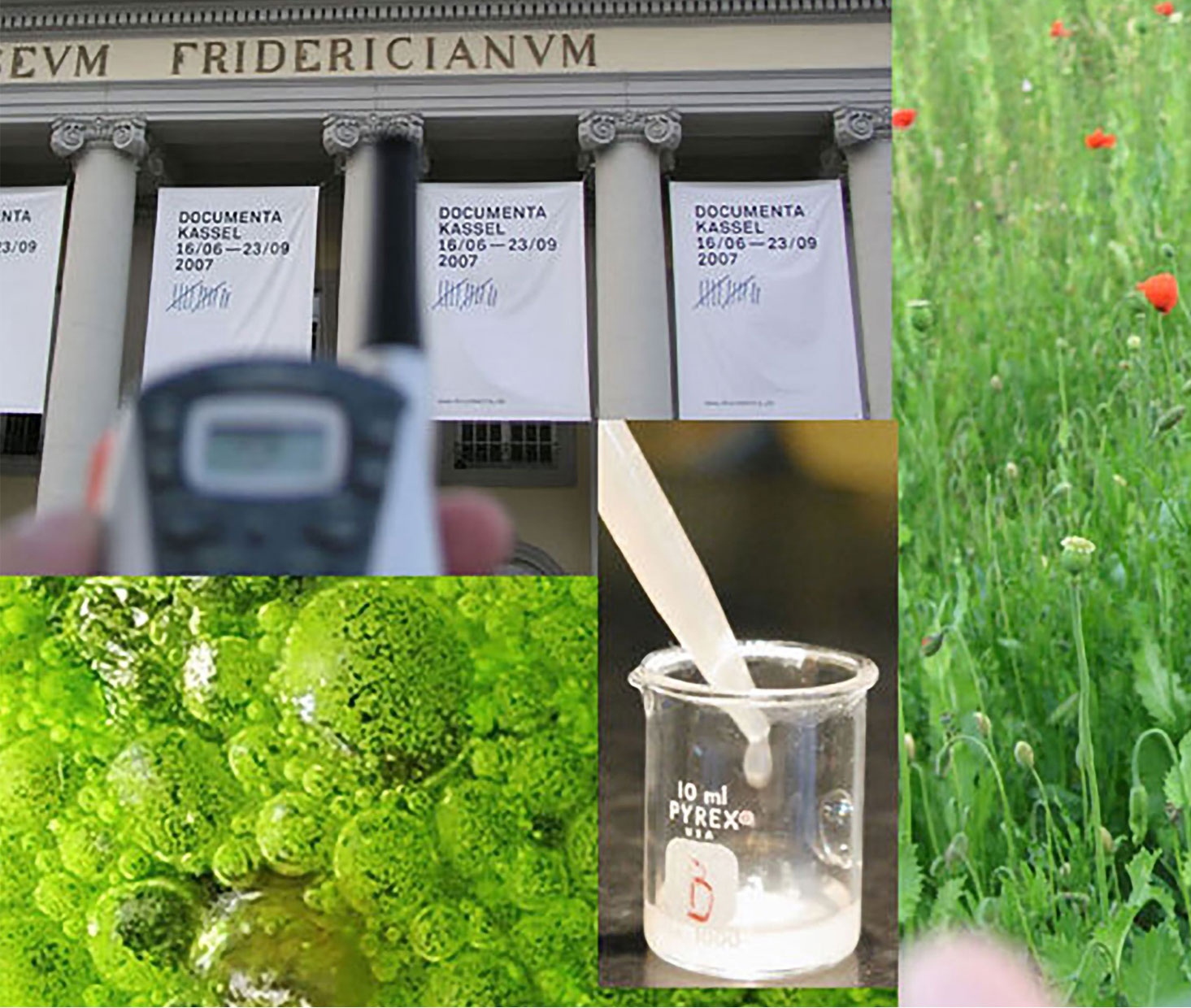
This one-hour performance took place in the Napoleon Suite of a hotel in Baden-Baden in 2009.The artist staged a clinical operation with two plastic containers, each containing compost, California red worms (Eisenia fetida), and a printed version of one of Gödel’s two incompleteness theorems.Each container was assigned a specific theorem – the first and second, respectively – creating an operational dissociation.
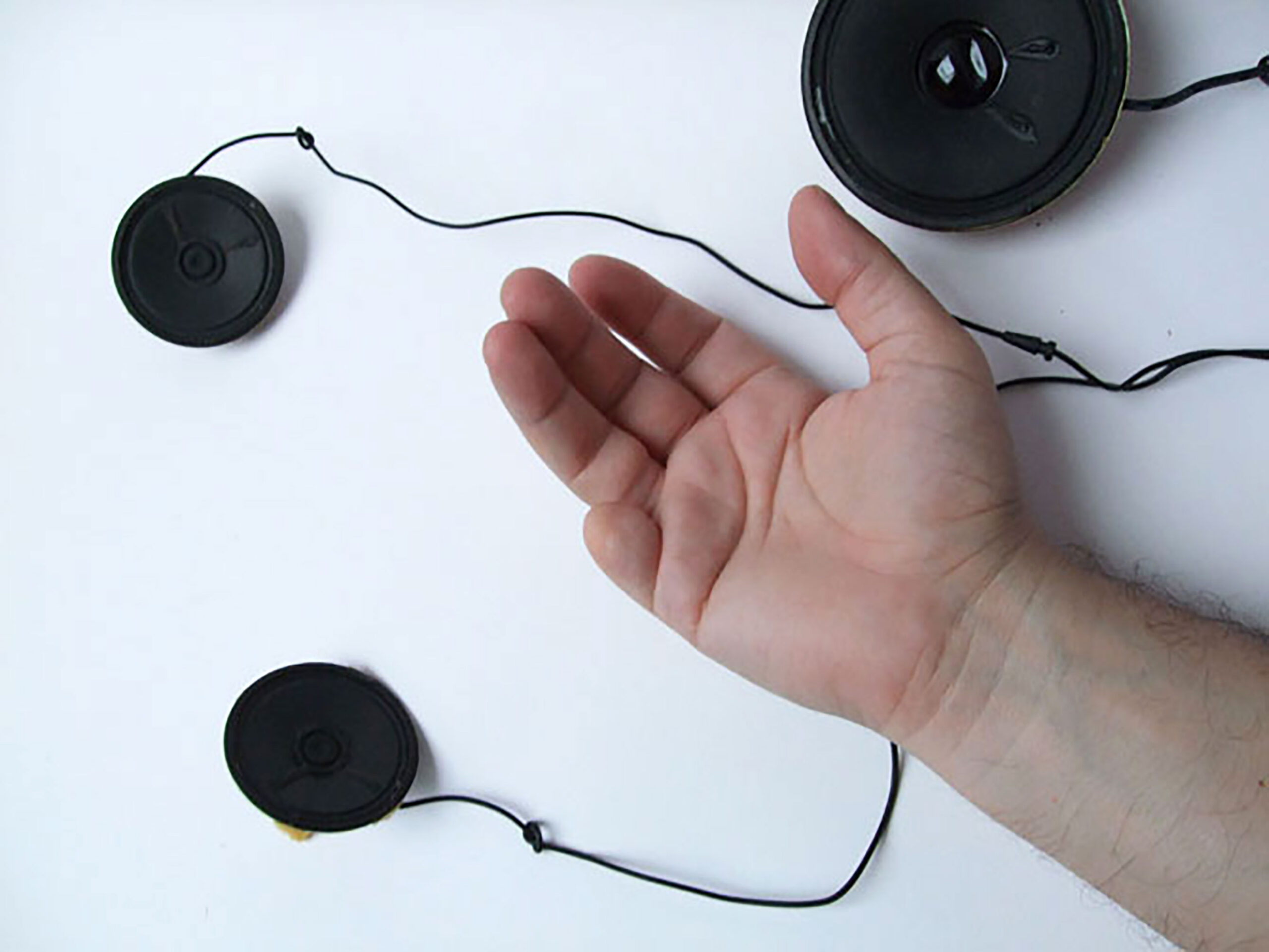
The performance followed a precise protocol.Both containers were placed on the bed of the suite, on a sterilized white surface.A laser device was positioned to intermittently activate beams directed at the compost masses.Throughout the one-hour duration, fragments of Gödel’s theoretical formulations – translated into sound – were transmitted to the containers via a CD player and a portable military radio system.No outside audience was present.No symbolic gestures were made.
The action was clinically closed.A sterilized green surgical drape was used to cover the entire scene at the end of the procedure.Nocommentarywasprovidedandnotextualexplanationwasprovidedatthesite.
ThisworkdoesnotintendtorepresentGödel’stheorems.It acts upon them.The performance subjects these theorems – considered fundamental limits of formal logic – to biological decomposition.The worms digest without interpretation.The artist does not take authorship of the decomposition, but becomes its procedural agent.The plastic containers function as epistemological cells: finite environments with a strictly defined purpose.
InlinewithGödel’sformulationofincompleteness – whereanyconsistentformalsystemcapableofexpressingbasicarithmeticisnecessarilyincomplete –performanceintroducesanirreversibleevent: Decomposition.Once subjected to decay, the logical integrity of the theorems is no longer preserved as a cognitive artifact, but as an organic residue.The separation of the two theorems into independent composts suggests a dissociation of limits: one of provability, the other of system self-validation.They are not opposed to each other, but parallel to each other and degraded separately.
Here, the clinical approach to logic resonates with contemporary curatorial frameworks.Anita Haldemann’s forensic treatment of conceptual drawing, Chus Martínez’s investigations into speculative epistemologies, and Sebastián Vidal Mackinson’s curatorial approaches to logic-based performativity all support readings that locate performance not in allegory but in direct, structured operation.
Durationplaysacriticalrole.The worms act slowly.The performance does not document transformation – it initiates it.The artist does not accelerate, complete, or alter the natural pace of the event.The decomposition remains partially invisible, imperceptible within the given time frame, yet fully initiated.Maria Lind’s writing on «compost politics« provides a lens for understanding slow, non-representational knowledge production.Similarly, Rosa Lleó’s interest in post-natural time and Catherine de Zegher’s focus on invisible spatial gestures enrich the reading of this temporal layer.
Light Intervention:A handheld laser traced subtle lines across the compost bins, activating the performative space as a site of speculative measurement-mapping invisibilities and referencing both data collection and epistemic limits.
The decomposition of the theorems into their own containers-each a closed system-materialized Gödel’s insight that no formal system can be both complete and consistent.The worms acted as biological agents enacting undecidability, devouring the internal limits of reason itself.
This work continues Mercado’s exploration of the body, language, and information as ephemeral substrates.Theperformancerecallsearlyinterventionsinconceptualandbody–basedpractices, whileestablishinganewdialoguewithstrandsofbioartthatexploreidentity, decay, andtechno–organicthresholds.
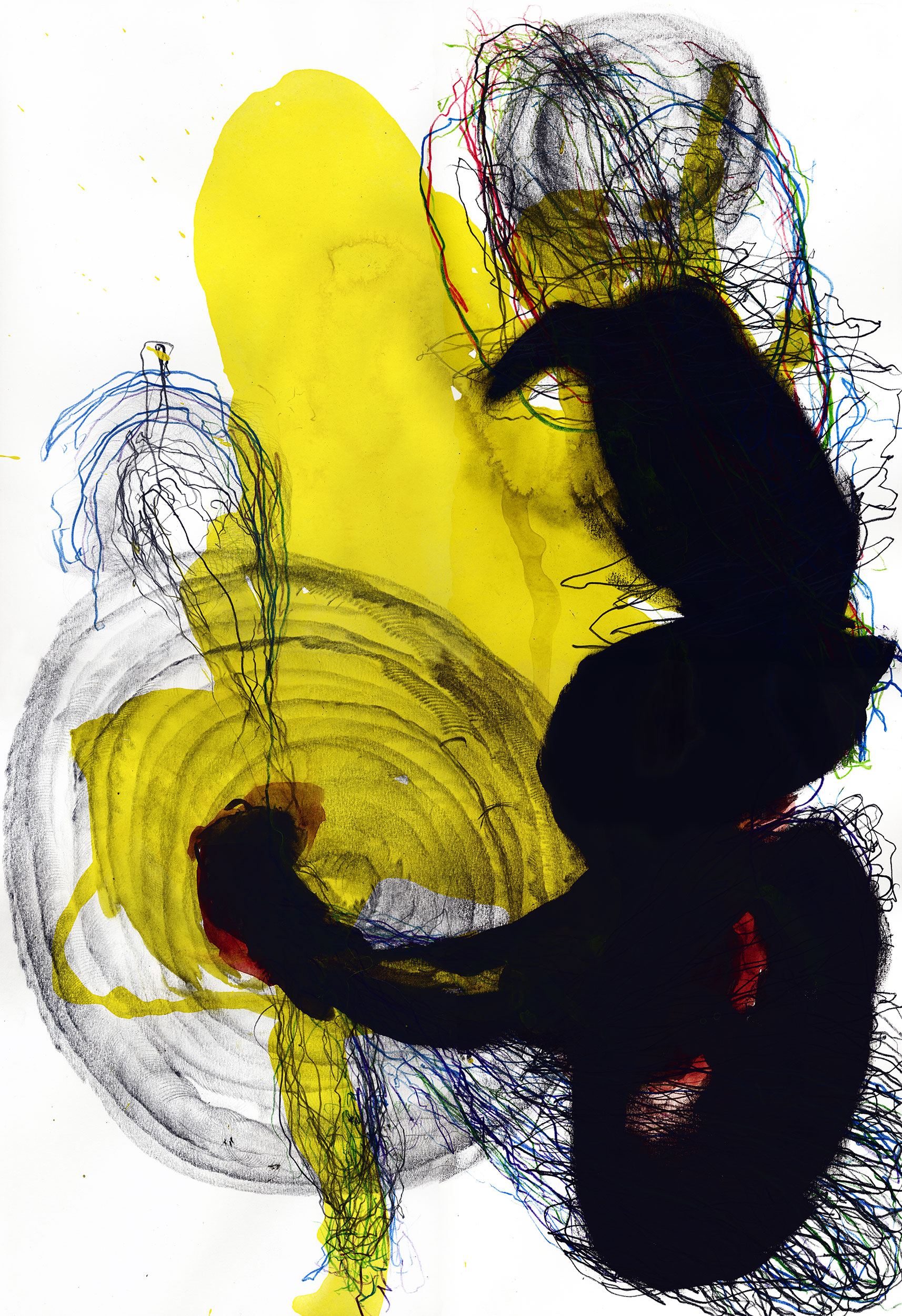
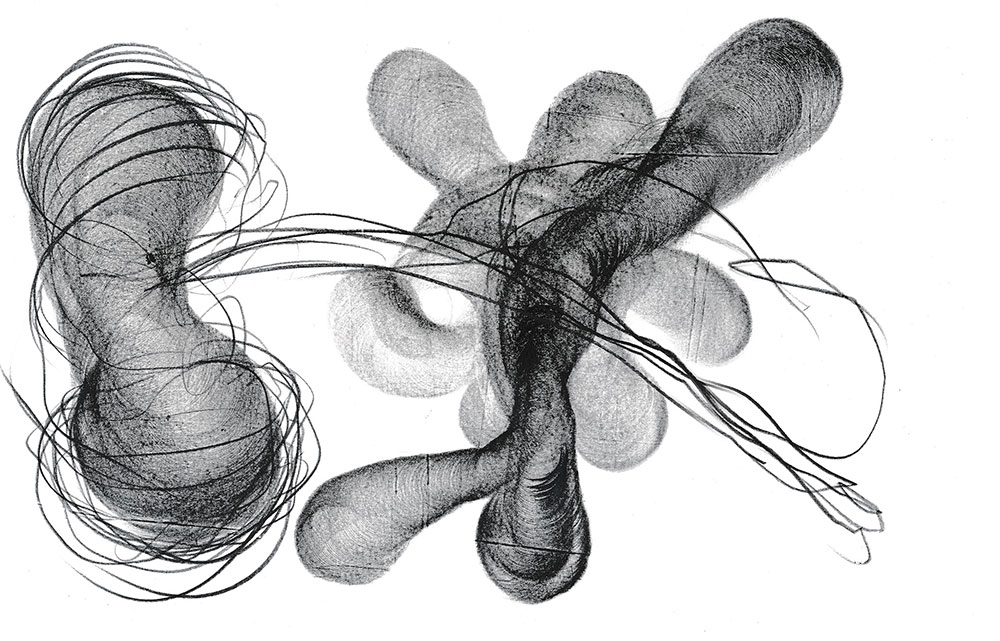
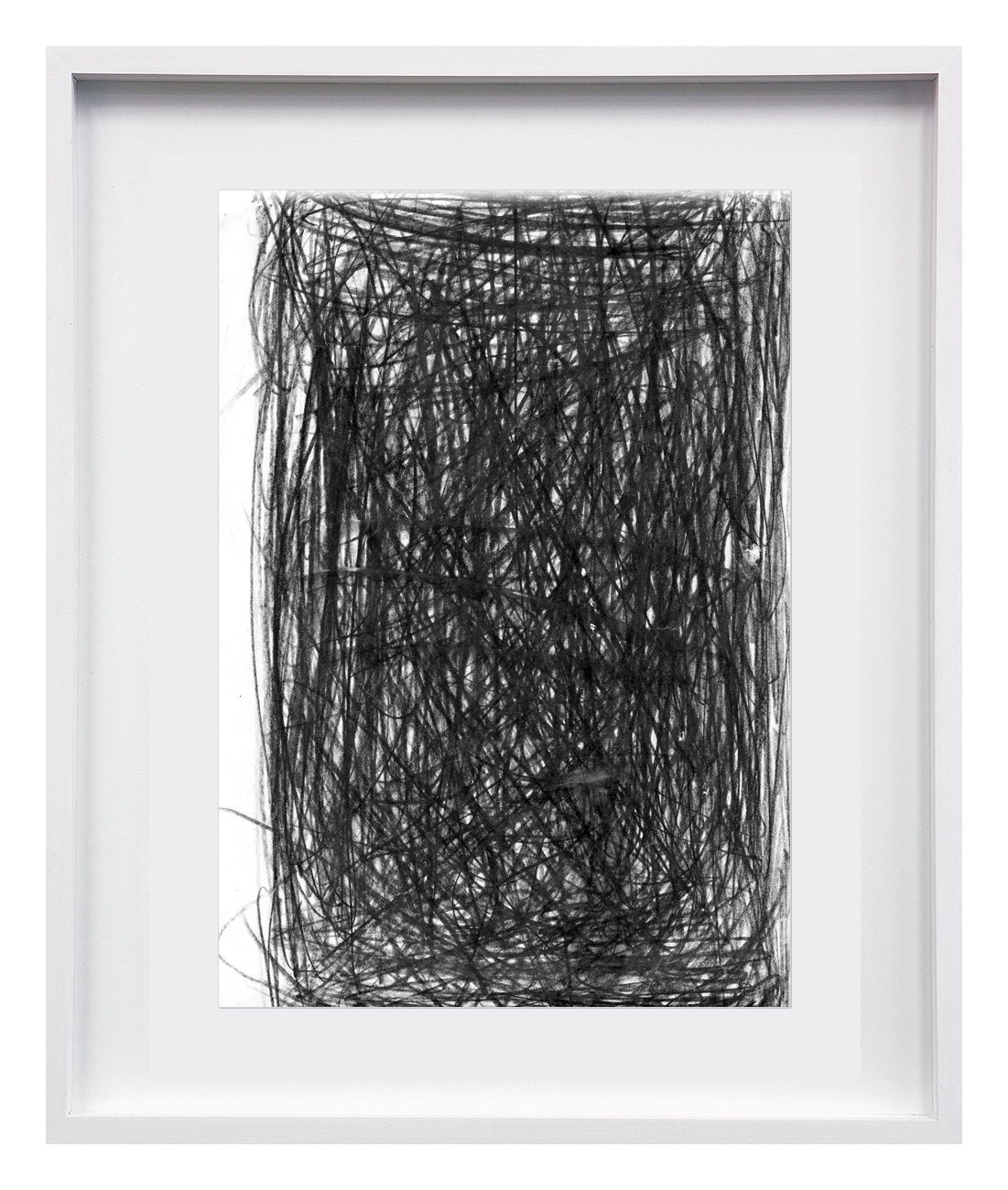
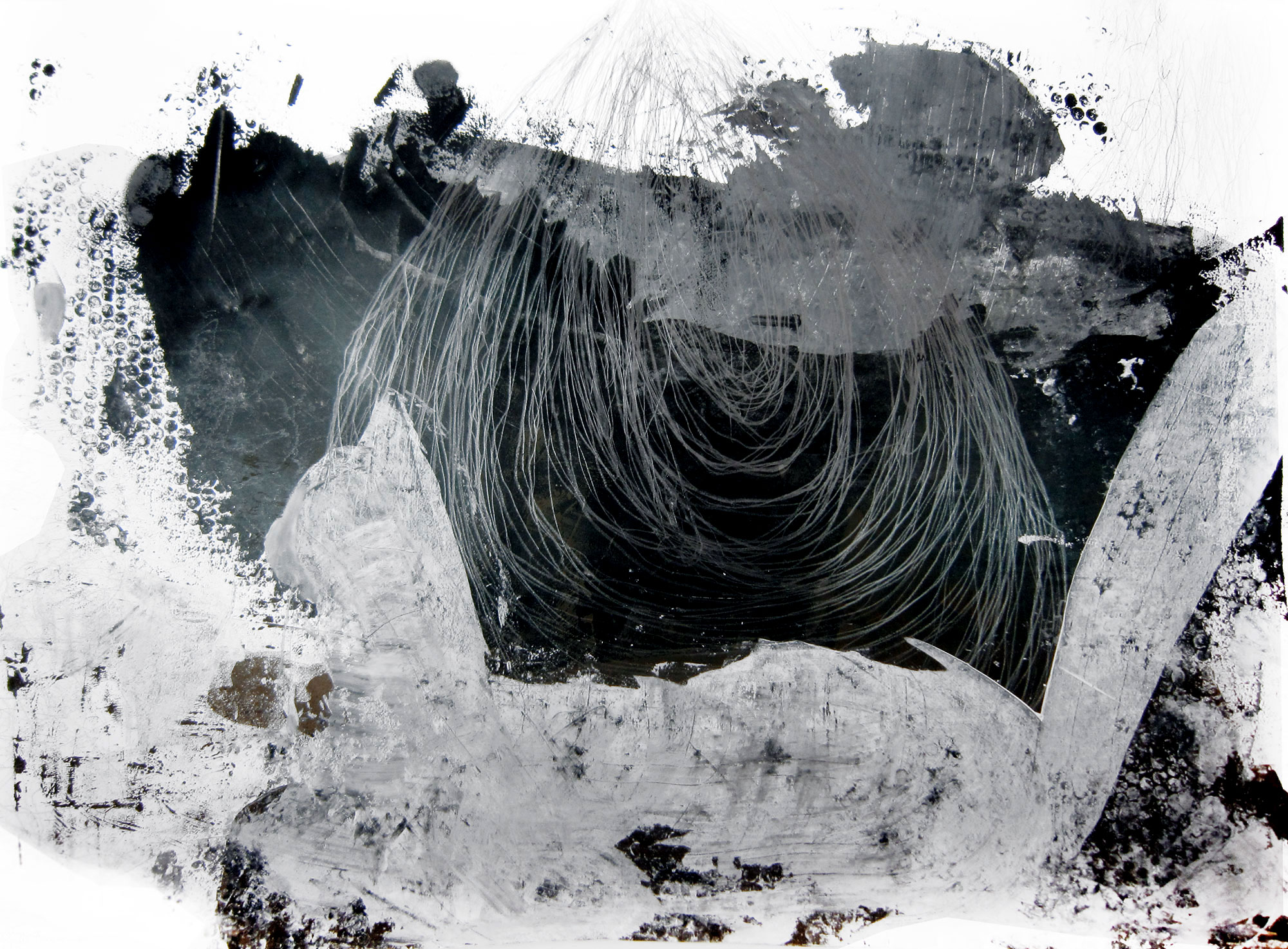
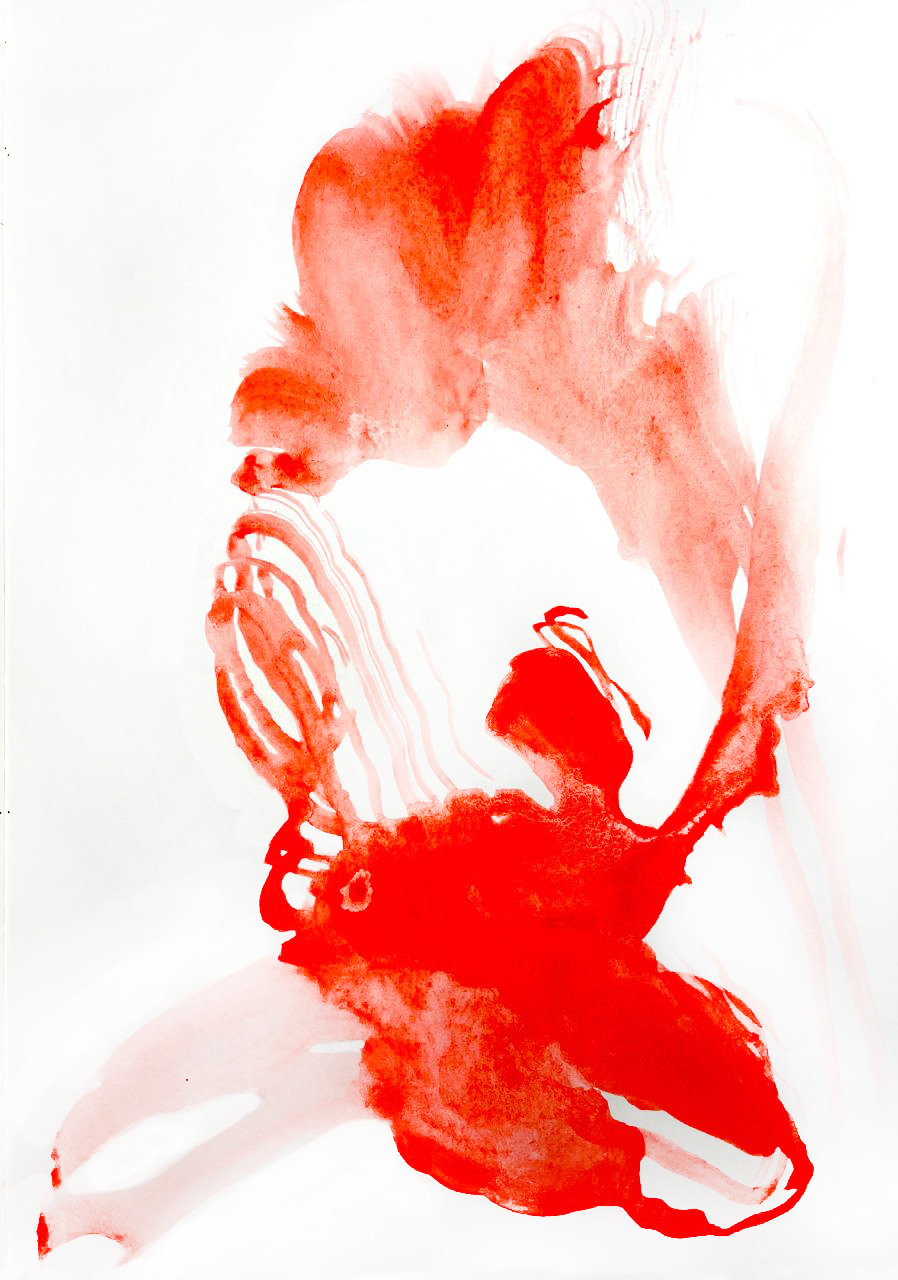
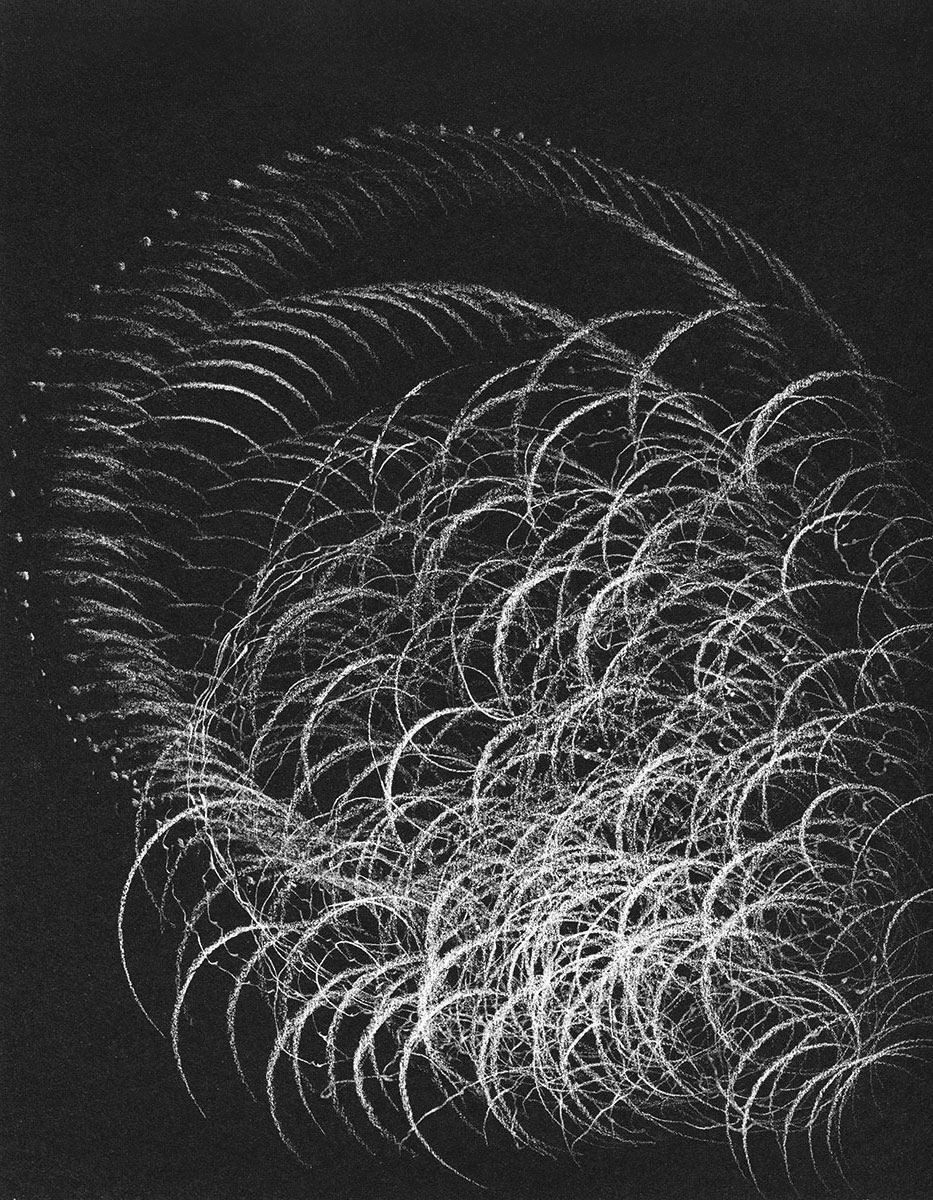
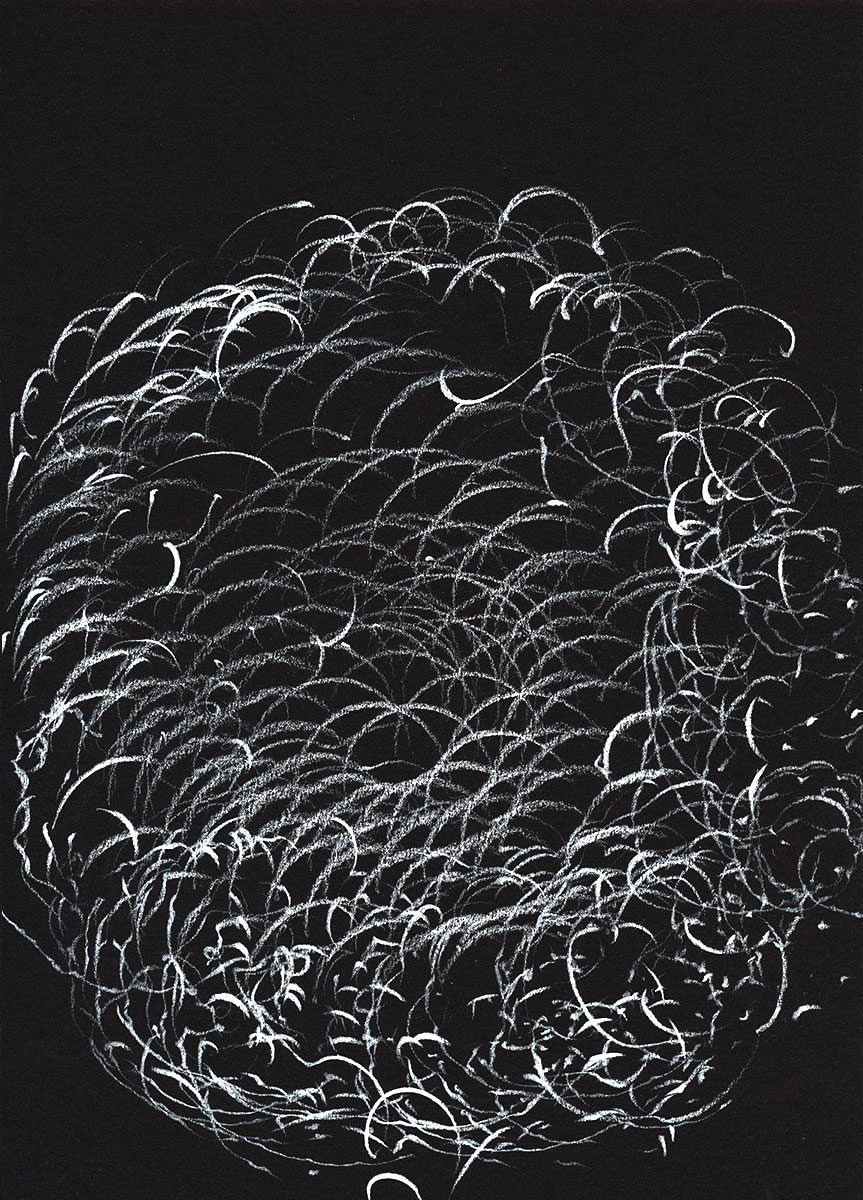
In den ausgewählten Zeichnungen von Marcello Mercado entfaltet sich eine systematische Auseinandersetzung mit dem Zeichnen als Ereignis und zugleich als Residuum. Weder illustrativ noch narrativ, offenbaren diese Arbeiten den Akt des Zeichnens als dynamische Spannung zwischen Präsenz und Verschwinden. Sie eröffnen einen Raum, in dem die Technik nicht nur Mittel zum Zweck ist, sondern ein eigenständiges Forschungsfeld, das subtil sowohl an historische grafische Traditionen als auch an die spekulative Dringlichkeit zeitgenössischer Ästhetik erinnert.
Jede Zeichnung wird zu einem Mikrokosmos von Absicht und Zufall, von Eingrenzung und Zerstreuung. Der Bleistift oszilliert zwischen rhythmischer Linearität und fragmentarischer Interferenz. Linien kreuzen sich mit scheinbar spontanen Gesten, die bei näherer Betrachtung eine kalkulierte Dissonanz offenbaren. Diese Dualität – Ordnung im Chaos – steht im Dialog mit den visuellen Codes algorithmischer Ästhetik.
Werke wie „Untitled 2022“ und „Untitled 2010“ zeigen Mercados technische Bandbreite: Die Gegenüberstellung feiner, fast kalligraphischer Linien mit breiten Acrylschichten suggeriert eine Choreographie zwischen Kontrolle und Hingabe. Diese vielschichtigen Gesten erzeugen visuelle Konfliktzonen, in denen sich das Bild nie ganz stabilisiert – es flimmert und verweigert sich der Vollendung. Dieses Konzept der Instabilität spiegelt Catherine de Zeghers These wider, dass die Linie eine flüchtige Gedankenspur ist, ein Überbleibsel physischer Absicht.
Formal erkunden die Zeichnungen Kompositionsstrategien, die sowohl an architektonische Skizzen als auch an neurographisches Mapping erinnern. Formen werden angedeutet, aber nicht bestätigt. „Die Serie M3 beispielsweise bewegt sich auf einer Ebene der Mehrdeutigkeit, auf der Figuration und Abstraktion aufeinanderprallen. Andeutungen organischer Formen tauchen auf, werden aber durch unregelmäßige Eingriffe wieder unterbrochen“.
Die Farbpalette ist oft begrenzt und bevorzugt monochrome oder zweifarbige Farbschemata mit plötzlichen Pigmentausbrüchen. Diese Beschränkung verstärkt die Materialsensibilität jedes einzelnen Strichs. In Werken wie „M3-17“ wird die Sparsamkeit der Mittel zur Stärke: Die wenigen vorhandenen Linien sind mit einer kinetischen Energie aufgeladen, die eine Bewegung über das Blatt hinaus suggeriert. Umgekehrt zeugt die Dichte von Zeichnungen wie «Mapping 2011» von einem fast skulpturalen Ansatz – Schicht für Schicht entsteht ein strukturiertes Bildfeld, das die Komplexität barocker Kompositionen widerspiegelt.
Thematisch changieren die Zeichnungen zwischen Diagramm und Traum. Sie widersetzen sich der traditionellen Erzählweise und setzen stattdessen auf eine poetische Sprache der Zeichen und Brüche. Mercados Verwendung von Schichtungen – sowohl buchstäblich als auch konzeptuell – erzeugt nicht nur räumliche, sondern auch zeitliche Tiefe. Jede Zeichnung wirkt wie ein Palimpsest, das Spuren früherer Gesten, Korrekturen und Auslöschungen enthält. Diese prozesshafte Sichtbarkeit lädt zum Vergleich mit der Tradition der analytischen Zeichnung ein, in der die Linie stets mit sich selbst verhandelt.
Materialmäßig wird die Kombination von Graphit, Tusche und Acryl zurückhaltend, aber präzise eingesetzt. Das Acryl dient nicht der malerischen Wirkung, sondern der Verschleierung oder Akzentuierung – es agiert als aktiver Teilnehmer am zeichnerischen Diskurs. Mal wird es zum Schleier, mal zum Bruch. Ein Wechselspiel zwischen Transparenz und Opazität, zwischen Linie und Fläche.
Stilistisch loten die Zeichnungen Minimalismus und Exzess aus. Die Serien M3-12 und M3-14 beispielsweise konstruieren komplexe Arrangements aus Wiederholung und Rauschen. Die Verwendung von sich wiederholenden linearen Mustern imitiert sowohl digitale Störungen als auch archaische Muster und lässt Zeitlichkeiten in einer einzigen Geste verschmelzen. Solche Arbeiten entsprechen Rosa Lleós Konzept des Kunstwerks als archäologisches Fragment der Gegenwart – vielschichtig, verschlüsselt, in Bewegung.
Aus kuratorischer Perspektive sind diese Arbeiten als Kontinuum zu lesen: nicht als Ansammlung einzelner Objekte, sondern als lebendiges System der Variation. Mercados Praxis, wie sie in diesem Werkkomplex zum Ausdruck kommt, beschäftigt sich intensiv mit zeitgenössischen Fragen der Kognition, der Repräsentation und des Scheiterns von Sprache. Sie bleibt aber auch im Konkreten verwurzelt: im Papier, im Zeichen, im Atem. Die Zeichnungen sind Akte des Widerstands gegen die Verflachung der Wahrnehmung, gegen die Verdichtung von Bedeutung. Wie Manuel Segade vielleicht sagen würde, sind diese Zeichnungen Körper an sich – porös, vielschichtig, verletzlich. Sie laden uns ein, sie nicht nur zu betrachten, sondern ihnen zu folgen, uns in ihren Falten zu verlieren. Sie vollziehen das, was José Luis Barrios die dekoloniale Praxis des Bildes nennt: Die Eindeutigkeit zu verneinen, die Vielfalt zu akzeptieren.
In diesem Sinne aktualisieren Marcello Mercados Arbeiten nicht nur die Sprache der Zeichnung, sondern richten sie neu aus. Indem er sich dem Moment, dem Zerbrechlichen, dem Ungewissen widmet, öffnet er Raum für neue Formen der Aufmerksamkeit und der Auseinandersetzung. Diese Zeichnungen sind keine Illustrationen des Denkens, sondern dessen Sedimente. Sie sind nicht Formen, sondern Schwellen. Sie sind nicht fertig – sie kommen an.
Fractured SyntaxPaintings at the Threshold of Code and Gesture
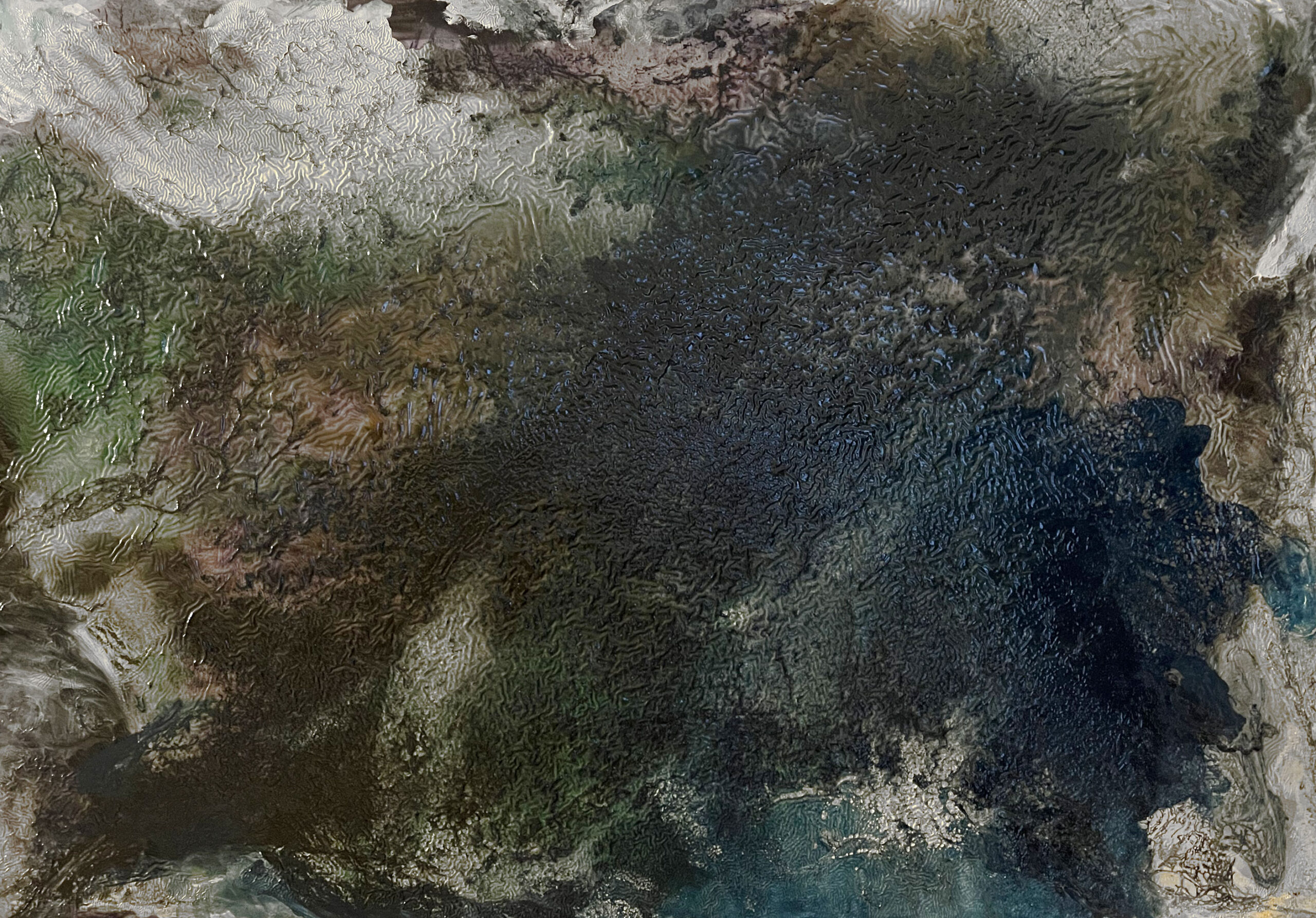
Marcello Mercado’s paintings invite us into a space where form resists containment. Their surfaces are layered, fractured and shifting – an architecture of marks that seems both deliberate and destabilised. These works do not seek resolution. They pulse with the residual charge of the digital age, yet remain grounded in the material intelligence of the painted surface.
In Mercado’s practice, painting is neither nostalgic nor oppositional. It is a porous, metabolizing field that absorbs algorithmic noise, compression artefacts and the ghost images of obsolete media. These remnants do not function as visual effects, but emerge as sedimented traces within a larger system of painterly thought. Each canvas becomes a palimpsest where code meets pigment, where digital ruins and analogue memory converge.
Mercado’s paintings explore the tension between drawing and its erasure. The line, often submerged or fragmented, functions less as a boundary than as a site of struggle – a trace that flickers between presence and disappearance. This gives the works a temporal quality: a sense that they are not static images but ongoing processes, archaeological in their accumulation and disruption.
The paintings articulate a fragile architecture of collapse. Fragmentation becomes a structure in itself, one that resists the legibility of traditional narrative or iconography. In their broken syntax, these works echo cultural memory – not through overt reference, but through rupture, discontinuity and the aesthetics of interruption. There is a haunting, almost sonic silence in these paintings: the silence of a meaning too fragile to cohere, too urgent to be ignored.
Marcello Mercado
DATA_Paintings
A text-based artwork on printed vinyl canvas
60cm x 50cm 23,6in x 19,6in
2025
Marcello Mercado
Untitled
mixed media on canvas
60cm x 80cm /each 23.6in x 31.4in, diptych
2023
Marcello Mercado
Untitled
oil on canvas
25cm x 25cm 9.8in x 9.8in
2015
Marcello Mercado
Untitled
oil on wood
35cm x 35cm 13.7in x 13.7in
2015
Marcello Mercado
Untitled 01, 02 and 03
mixed media on paper
20cm x 35cm each 7.8in x 13.7in
2015
Marcello Mercado
Untitled
oil on canvas
201 cm x 388 cm, 79.1 in x 152.7 in
2012
Marcello Mercado
Untitled
oil on canvas
30cm x 40cm 15,7in x 11.8in
2013
Marcello Mercado
Untitled
oil on canvas
80cm x 60cm 31.4in x 23.6in
2014
Marcello Mercado
Amazonas
mixed media on canvas
80cm x 60cm 31.4in x 23.6in
2019
Marcello Mercado
Untitled
oil on canvas
40cm x 30cm 11.8in x 15.7in
2015
Marcello Mercado
Untitled
oil on canvas
40cm x 30cm 11.8in x 15.7in
2015
Marcello Mercado
RY
oil on canvas
20cm x 20cm 7.8in x 7.8in
2010
Marcello Mercado
BL
oil on canvas
20cm x 20cm 7.8in x 7.8in
2010
Marcello Mercado
RB
oil on canvas
20cm x 20cm 7.8in x 7.8in
2010
Marcello Mercado
YV
oil on canvas
20cm x 20cm 7.8in x 7.8in
2010
Marcello Mercado
RB2
oil on canvas
20cm x 20cm 7.8in x 7.8in
2010
Marcello Mercado
Untitled
mixed media on wood
35cm x 35cm 13.7in x 13.7in
2014
Marcello Mercado
Gedesby
Acrylic on canvas
60cm x 80cm 23.6in x 31.4in
2019
Marcello Mercado
untitled
oil on canvas
30cm x 40cm 11,8in x 15,7in, Diptych
2023
Marcello Mercado
untitled
oil on canvas
100cm x 100cm 39,3in x 39,3in
2015
Marcello Mercado
Homeland light
mixed media on canvas
201 cm x 388 cm, 79.1 in x 152.7 in
2011
Marcello Mercado
Untitled
oil on canvas
30cm x 40cm 15,7in x 11.8in
2014
Marcello Mercado
untitled G3
acrylic and pencil on wood
42 cm x 60 cm 16.5 in x 4.2 in
2011
Marcello Mercado
untitled
mixed media on paper
29,7 cm x 42 cm 11.6 in x 16.5 in
2007
Marcello Mercado
untitled
mixed media on paper
29,7 cm x 42 cm 11.6 in x 16.5 in
2007
Marcello Mercado
untitled
mixed media on paper
29,7 cm x 42 cm 11.6 in x 16.5 in
2007
Marcello Mercado
Untitled, Serie x 9
oil on wood
42 cm x 60 cm 16.5 in x 4.2 in
2013
Marcello Mercado
Untitled
acrylic on paper
60 cm x 80 cm 23.6 in x 31.4in
2022
Marcello Mercado
Untitled
mixed media on paper
60cm x 80cm 23.6in x 31.4in
2005
Marcello Mercado
Untitled
mixed media on paper
60cm x 80cm 23.6in x 31.4in
2005
Marcello Mercado
Untitled
mixed media on canvas
250cm x 150cm 98,4in x 59in
2005
Marcello Mercado
Untitled
mixed media on canvas
25cm x 25cm 9.8in x 9.8in
2007
Marcello Mercado
Sturm
mixed media on canvas
30cm x 40cm 11.8in x 15,7in
2015
Marcello Mercado
BMW_MERCEDES_RED/BLUE
Enamel paint and oil on wood
42,5 cm x 42,5 cm 16,7 in x 16.7 in
2006
Marcello Mercado
Untitled
mixed media on canvas
40cm x 40cm 15,7in x 15,7in, Diptych
2005
Marcello Mercado
Untitled
mixed media on canvas
80cm x 60cm 31.4in x 23.6in
2013
Marcello Mercado
Untitled
mixed media on paper, Diptych
60cm x 80cm each, 23.6in x 31.4in
2011
Marcello Mercado
Untitled
acrylic and ink on paper
30cm x 20cm 11,8in x 7.8in
2005
Marcello Mercado
Untitled
mixed media on canvas
60cm x 80cm 23.6in x 31.4in
2014
Marcello Mercado
Untitled
acrylic and ink on paper
20cm x 30cm 7.8in x 11,8in
2005
Marcello Mercado
Untitled
mixed media on paper
40cm x 30cm 15.7in x 11.8in
2016
Marcello Mercado
Untitled
mixed media on paper
40cm x 30cm 15.7in x 11.8in
2016
Marcello Mercado
Untitled
mixed media on wood
30cm x 40cm 11.8in x 15.7in
2016
Marcello Mercado
BW
oil on canvas
20cm x 30cm 15,7in x 7.8in
2018
Marcello Mercado
ORG
oil on canvas
40cm x 30cm 15.7in x 11.8in
2016
Marcello Mercado
The man of Pekin
oil on canvas
40cm x 30cm 15.7in x 11.8in
2015
Marcello Mercado
Untitled 01 and 02
acrylic on paper
60cm x 50cm 23,6in x 19,6in
2020
Marcello Mercado
Rosenbaum
acrylic and ink on paper
30cm x 20cm 11,8in x 7.8in
2005
Marcello Mercado
Rosenbaum
acrylic and ink on paper
30cm x 20cm 11,8in x 7.8in
2005
Marcello Mercado
Rosenbaum
acrylic and ink on paper
30cm x 20cm 11,8in x 7.8in
2005
Marcello Mercado
Rosenbaum
acrylic and ink on paper
30cm x 20cm 11,8in x 7.8in
2005
Marcello Mercado
Rosenbaum
acrylic and ink on paper
30cm x 20cm 11,8in x 7.8in
2005
Marcello Mercado
Rosenbaum
acrylic and ink on paper
30cm x 20cm 11,8in x 7.8in
2005
Marcello Mercado
Rosenbaum
acrylic and ink on paper
30cm x 20cm 11,8in x 7.8in
2006
Marcello Mercado
Garten
acrylic on paper
80cm x 60cm 31.4in x 23.6in
2012
Marcello Mercado
Garten
acrylic on paper
80cm x 60cm 31.4in x 23.6in
2014
Marcello Mercado
Dead man with horse
oil on canvas
150cm x 150cm. 59in x 59in
2022
Marcello Mercado
Untitled
mixed media on canvas, Diptych
60cm x 80cm each 23.6in x 31.4in
2023
Marcello Mercado
untitled
acrylic on wood
42 cm x 60 cm 16.5 in x 4.2 in
2011
Marcello Mercado
Untitled
mixed media on canvas
60cm x 80cm 23.6in x 31.4in
2013
Marcello Mercado
GR
Acrylic on paper
20cm x 30cm 15,7in x 7.8in
2010
Marcello Mercado
untitled
Acrylic and wax on paper
20cm x 30cm 15,7in x 7.8in
2011
Marcello Mercado
untitled
Acrylic and wax on paper
20cm x 30cm 15,7in x 7.8in
2011
Marcello Mercado
untitled
Acrylic and wax on paper
20cm x 30cm 15,7in x 7.8in
2011
Marcello Mercado
untitled
Acrylic and wax on paper
20cm x 30cm 15,7in x 7.8in
2011
Marcello Mercado
untitled
mixed media on paper
30cm x 20cm 7.8in x 15,7in
2011
Marcello Mercado
BLR
acrylic on canvas
30cm x 40cm 11.8in x 15,7in
2020
Marcello Mercado
Head
oil on canvas
20cm x 30cm 15,7in x 7.8in
2016
Marcello Mercado
Head
oil on canvas
20cm x 30cm 15,7in x 7.8in
2023
Marcello Mercado
Head
oil on canvas
20cm x 30cm 15,7in x 7.8in
2023
Marcello Mercado
Head
oil on canvas
20cm x 30cm 15,7in x 7.8in
2023
Marcello Mercado
Head
oil on canvas
20cm x 30cm 15,7in x 7.8in
2023
Marcello Mercado
Head
oil on canvas
20cm x 30cm 15,7in x 7.8in
2023
Marcello Mercado
Head
oil on canvas
20cm x 30cm 15,7in x 7.8in
2023
Marcello Mercado
Head
oil on canvas
20cm x 30cm 15,7in x 7.8in
2023
Marcello Mercado
Head
oil on canvas
20cm x 30cm 15,7in x 7.8in
2023
Marcello Mercado
Head
oil on canvas
20cm x 30cm 15,7in x 7.8in
2023
Marcello Mercado
Head
oil on canvas
20cm x 30cm 15,7in x 7.8in
2023
Marcello Mercado
Head
acrylic on canvas
50cm x 60cm 19,6in x 23.6in
2010
Marcello Mercado
Untitled
mixed media on canvas
100cm x 100cm 39.3in x 39.3in
2022
Marcello Mercado
Untitled
acrylic on paper
60cm x 80cm each, 23.6in x 31.4in
2020
Marcello Mercado
Untitled
mixed media on paper, Poliptych
60cm x 80cm each, 23.6in x 31.4in
2010
Marcello Mercado
untitled
watercolour on paper
29,7 cm x 42 cm 116.9in x 16.5 in
2005
Marcello Mercado
untitled
watercolour on paper
29,7 cm x 42 cm 116.9in x 16.5 in
2005
Marcello Mercado
untitled
watercolour on paper
29,7 cm x 42 cm 116.9in x 16.5 in
2005
Marcello Mercado
untitled
watercolour on paper
29,7 cm x 42 cm 116.9in x 16.5 in
2005
Marcello Mercado
untitled
watercolour on paper
29,7 cm x 42 cm 116.9in x 16.5 in
2005
Marcello Mercado
untitled
watercolour on paper
29,7 cm x 42 cm 116.9in x 16.5 in
2015
Marcello Mercado
TERA
Marker on vinyl canvas
Variable size
2025
Fragments, Signals, Surfaces: On the Paintings of Marcello Mercado
Marcello Mercado’s recent paintings unfold across layered surfaces where fractured forms and biomorphic marks speak a hybrid language – technological and organic, intuitive and computational. These are not paintings that offer stable representation; rather, they resist closure. Each canvas functions as a thinking surface, charged with a strange temporal logic, alive with ghostly absences and uncertain presences.
There is a residue of the digital here: the trace of screens, compression artefacts, algorithmic failures. But these echoes are not decorative or illustrative. Instead, they are absorbed into the analogue flesh of the medium, becoming silent inscriptions of a world shaped by data and decay. The material presence of the painting retains these digital ghosts, as if matter could remember a code.
What emerges is a kind of synthetic realism – a pictorial zone shaped by the contamination of machine vision and emotional memory. These works do not long for the past, nor do they celebrate the future. They inhabit a suspended space where glitches become gestures and errors become structure.
The paintings function as silent scripts inscribed with the ruins of narrative, language and gesture. There is an implicit engagement with memory – not as something preserved, but as something constantly broken and reassembled. Form appears only to collapse, signs appear only to disappear. In this sense, the works become counter-archives: places where memory disorganises itself, riddled with noise and poetic dysfunction.
The drawing remains embedded in the process. Lines interrupt and dissolve; they are doubled, erased or buried under chromatic weight. These paintings function as palimpsests – revealing traces of thought and impulse within layers of erasure and distortion. The relationship between transparency and concealment gives the work a temporal quality, as if each canvas had been excavated rather than composed.
What ultimately defines this practice is its resilience. These are not paintings of ease or affirmation. They are documents of resistance – resistance to legibility, to linear meaning, to aesthetic comfort. In their refusal of resolution, they assert the mark as a site of tension, collapse and persistent becoming. They demand to be seen not as images but as surfaces of survival.
IntheselecteddrawingsbyMarcelloMercado, asystematicexplorationofdrawingasbotheventandresidueunfolds.Neither illustrating nor narrating, these works reveal the act of drawing as a dynamic tension between presence and disappearance.They open up a space in which technique is not merely a means to an end, but a field of inquiry in its own right – subtly invoking both historical graphic traditions and the speculative urgencies of contemporary aesthetics.
Each drawing becomes a microcosm of intention and chance, of containment and dispersal.The pencil oscillates between rhythmic linearity and fragmented interference.Lines intersect with seemingly spontaneous gestures that, upon closer inspection, reveal a calculated dissonance.This duality – order under chaos – dialogues with the visual codes of algorithmic aesthetics.
Works such as «Untitled 2022» and «Untitled 2010» showcase Mercado’s technical range: the juxtaposition of fine, almost calligraphic lines with broad acrylic overlays suggests a choreography between control and surrender.These layered gestures create zones of visual conflict where the image never fully stabilizes – it flickers, resisting completion.This notion of instability echoes Catherine de Zegher’s assertion of the line as an ephemeral trace of thought, a residue of bodily intention.
Formally, the drawings explore compositional strategies reminiscent of both architectural sketching and neurographic mapping.Shapes are suggested, not confirmed.«Series M3, for example, operates on a plane of ambiguity where figuration and abstraction collide.Suggestions of organic form emerge, only to be disrupted by erratic interventions.
The color palette is often limited, favoring monochrome or duotone schemes with sudden bursts of pigment.This limitation heightens the material sensitivity of each mark.In works such as «M3-17,» economy of means becomes a strength: the few lines present are charged with a kinetic energy that suggests movement beyond the page.Conversely, the density of drawings such as «Mapping 2011» speaks to an almost sculptural approach to drawing – layers upon layers form a textured visual field that resonates with the complexity of Baroque composition.
Thematically, the drawings oscillate between diagram and dream.They resist traditional narrative, opting instead for a poetic language of signs and disruptions.Mercado’s use of layering – both literal and conceptual – creates depth not only in space but also in time.Each drawing appears as a palimpsest, containing ghosts of previous gestures, corrections, and erasures.This processual visibility invites comparison with the tradition of analytical drawing, where the line is always in negotiation with itself.
Materially, the combination of graphite, ink and acrylic is used with restraint but precision.Acrylic is not used for painterly effect, but to obscure or accentuate – it behaves as an active participant in the graphic discourse.In some cases it becomes a veil, in others a break.This interplay between transparency and opacity, between line and surface.
Stylistically, the drawings explore both minimalism and excess.«Series M3-12 and Series M3-14, for example, construct complex arrangements out of repetition and noise.The use of repeated linear motifs mimics both digital glitches and archaic patterns, collapsing temporalities into a single gesture.SuchworksresonatewithRosaLleó’snotionoftheartworkasanarchaeologicalfragmentofthepresent–layered, coded, inmotion.
From a curatorial perspective, these works demand to be read as a continuum: not as a collection of discrete objects, but as a living system of variation.Mercado’s practice, as articulated in this body of work, is deeply engaged with contemporary concerns about cognition, representation, and the failures of language.But it also remains rooted in the tangible: in paper, in mark, in breath.The drawings are acts of resistance against the flattening of perception, against the compression of meaning.
As Manuel Segade might suggest, these drawings are bodies in and of themselves – porous, layered, vulnerable.They invite us not only to look, but to follow, to get lost in their folds.They enact what José Luis Barrios describes as a decolonial practice of the image: denying clarity, embracing multiplicity.
In this sense, Marcello Mercado’s work does not merely update the language of drawing – it reorients it.By attending to the minute, the fragile, the uncertain, he opens a space for new forms of attention and engagement.These drawings are not illustrations of thought, but its sediment.They are not forms but thresholds.Theyarenotfinished–theyarearriving.
Variations Van Gogh
multi-channel installation systems
7-channel video installation, drawings, books, photography, sound sculpture, DNA – objects
6 m x 2,50 m 236.2 in x 98.4 in
2012–2015 / ongoing (updated 2026)
Grant for Media Art 2013 of the Foundation of Lower Saxony at the Edith-Russ-Haus for Media Art, Oldenburg, Germany
The artwork is no longer the object. It persists as an archival structure under conditions of loss.
Sunflowers:Loss and Dispersal
Between 1888 and 1889, Vincent van Gogh painted a series of seven sunflowers in Arles.
Conceived as a set, these works rely on repetition and variation rather than singularity.
The series no longer exists in its entirety.
One of the paintings was destroyed during World War II.The remaining works are dispersed across multiple institutions and collections.
Their material conditions have diverged over time due to restoration, environmental exposure, and pigment instability, particularly within the yellow spectrum.
The series persists, but not as a unified object.
It now exists as a distributed configuration of paintings, reproductions, records, and transformations.Its continuity is now systemic rather than material.
The series‘ unity is not inherent.
Rather, itisreconstructedthroughoperations.
Sunflowers as a Persistence System
This project addresses painting not as an object, but as a system of persistence.
Vincent van Gogh’s Sunflowers no longer exist solely as material entities—pigment, canvas, andsurface—but as distributed formations sustained by a network of records, including photographic reproductions, exhibition histories, chemical analyses, digitizations, compressions, errors, and algorithmic translations.Their continuity is now guaranteed by circulation, not conservation.
The project shifts the problem of preservation from the artwork to its infrastructure.
Across its variations,the project establishes operational conditions that allow an image to persist without requiring fidelity to an original state.Each instance—be it a drawing, archive, dataset, compressed file, robotic trace, or installation—does not reproduce the image but rather reactivate it under specific constraints.The sunflower becomes a variable entity, a structure defined by chromatic distributions, repetition logics, degradation patterns, and margins of uncertainty.
Loss is not treated as damage to be repaired but as a structural parameter.
Degradation, compression, and distortion are integrated into the system as active components.The archive is no longer a stable repository of memory but rathera field of operations in which images are continuously reconfigured.What persists are the conditions that allow for its re-emergence, not the form itself.
Within this framework, authorship is displaced.
The project introduces algorithmic and semi-autonomous processes, such as robotic drawing systems, data selection protocols, and curatorial engines, that determine which elements are retained, which may vary, and how absence is managed.The artist’s role shifts from production to designingconditions.The role of the curator is redefined as an active agent within the system.
The sunflower is not reconstructed.Itisparameterized.
The project operates through a series of transformations:
1) Manual painting extended into serial variation.
2) Mechanical drawing enacted by semi-autonomousdevices.
3) Archival condensation into minimal digital formats.
4) Circulation through external platforms and networked visibility.
5) Mathematical abstraction of production and exchange.
6) Spatial distribution across multi-channel installation systems.
Each transformation produces a new state.None is definitive.
The inclusion of low-resolution images, compressed files, social media circulation, and secondary documentation functions not as commentary but as material.These elements constitute the work’s effective reality within contemporary image economies.The distinction between original and derivative collapses into a continuum of operational states.
Persistence replaces authenticity.
In this system, a painting survives not by remaining intact but by remaining active within a network of transformations.The work becomes a protocol, a set of conditions that can be executed across different media, scales, and temporalities.
The installation format extends this logic spatially.
Multiple unsynchronized channels distribute the work across a non-hierarchical field where no single image holds primacy.Rather than encountering a central object, the viewer navigates a system in which images appear as temporary stabilizations within a continuous flow of data.
Catastrophe—fire,disappearance, or material loss—is no longer an endpoint.
Rather, it becomes a transition within the system.
The destruction of an object does not terminate a work; rather, it redefines its mode ofexistence.What persists is not the painting itself, but rather its ability to be reinstantiated under changing conditions.
Variations Van Gogh (2014) is a multi-component installation comprising objects, books, and a seven-channel video and sound system.
It is presented on seven LCD flat panels mounted on shelves or projected asynchronously onto seven walls within a dark, carpeted space.The installation runs continuously in an eight-minute loop and is accompanied by amplified stereo sound.
Each channel operates independently, creating temporal differences between the imagesand sounds.Ratherthanpresentingaunifiedsequence, theinstallationpresentsadistributedfieldofsimultaneousprocesses
This project explores the operational transformation of archival systems within contemporary media environments.Rather than viewing the archive as a stable repository, it is approached as a process of continuous ingestion, transformation, and reconfiguration of information.
Instead of preserving discrete objects, the system processes visual, chromatic, and biological data across the following states: image, code, residue, and material substrate.These states are not hierarchical.They operate as interchangeable conditions within a distributed system.
The project establishes a medial circulation in which data is extracted, translated, degraded, and reintroduced into new material configurations.Information is not stabilized.It is continuously transformed.
Keywords:
Database, transduction, transformation, media processing, digital-organic systems, organic-digital systems, the image as an operational unit, recontextualization, performance, human-machine interaction, monitoring, projection, sound, acoustics, data processing, and preservation systems.
B.General Description:
This project investigates procedural strategies for continuing an image system associated with Vincent van Gogh’s sunflower paintings.
The project does not aim to reconstruct or document the paintings.Instead, it activates a set of technological processes that operate on their distributed traces.
These processes include:
– Data acquisition through aerial scanning and remote sensing systems
– Topological mapping and orthophotographic reconstruction
– DNA extraction and biologically mediated processes
– Google Earth as a spatial interface for data positioning
– Code as a structural writing system
– Three-dimensional sound environments
– 3D printing as material translation
– Robot-generated drawing and notation systems
Each process produces a transformation rather than a representation.The image is not preserved; it is reprocessed.
C.Archival variation:HexadecimalCompost
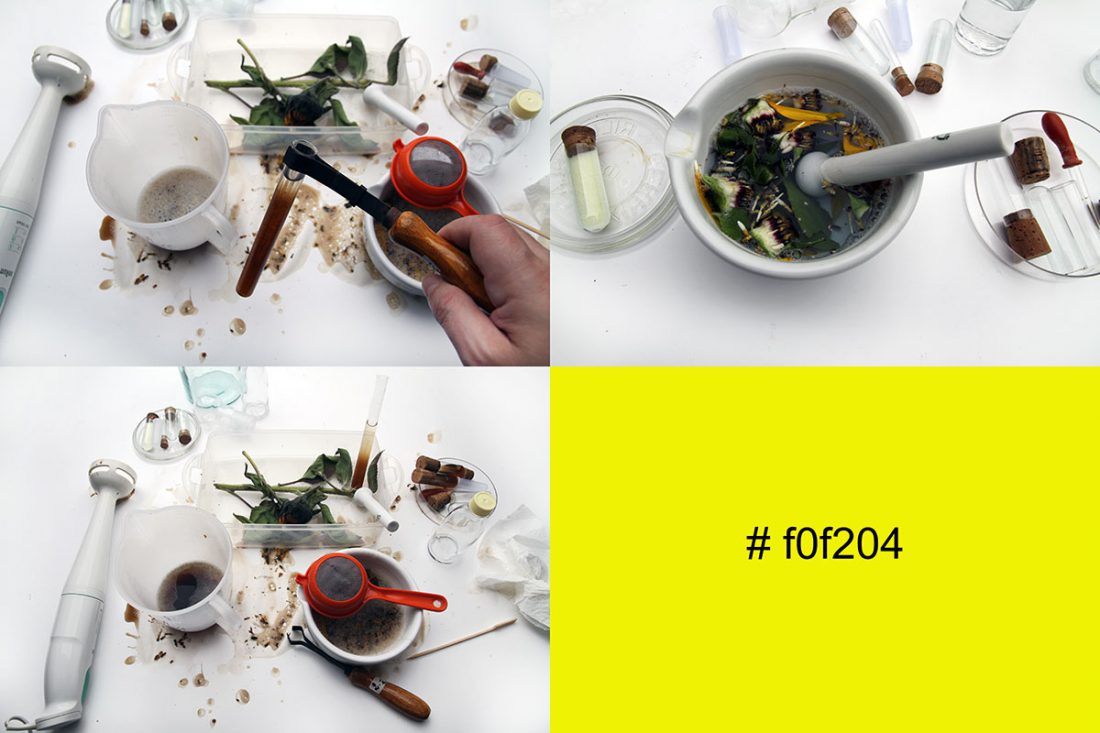
In one iteration of the project, the yellow tones in Van Gogh’s sunflower paintings are digitally sampled using a color extraction process.Each tonal value is then converted into a hexadecimal RGB code, transforming the pigment into numerical data.
Then, approximately 280 distinct values are printed, physically fragmented, and introduced into a composting system with Californian red worms.
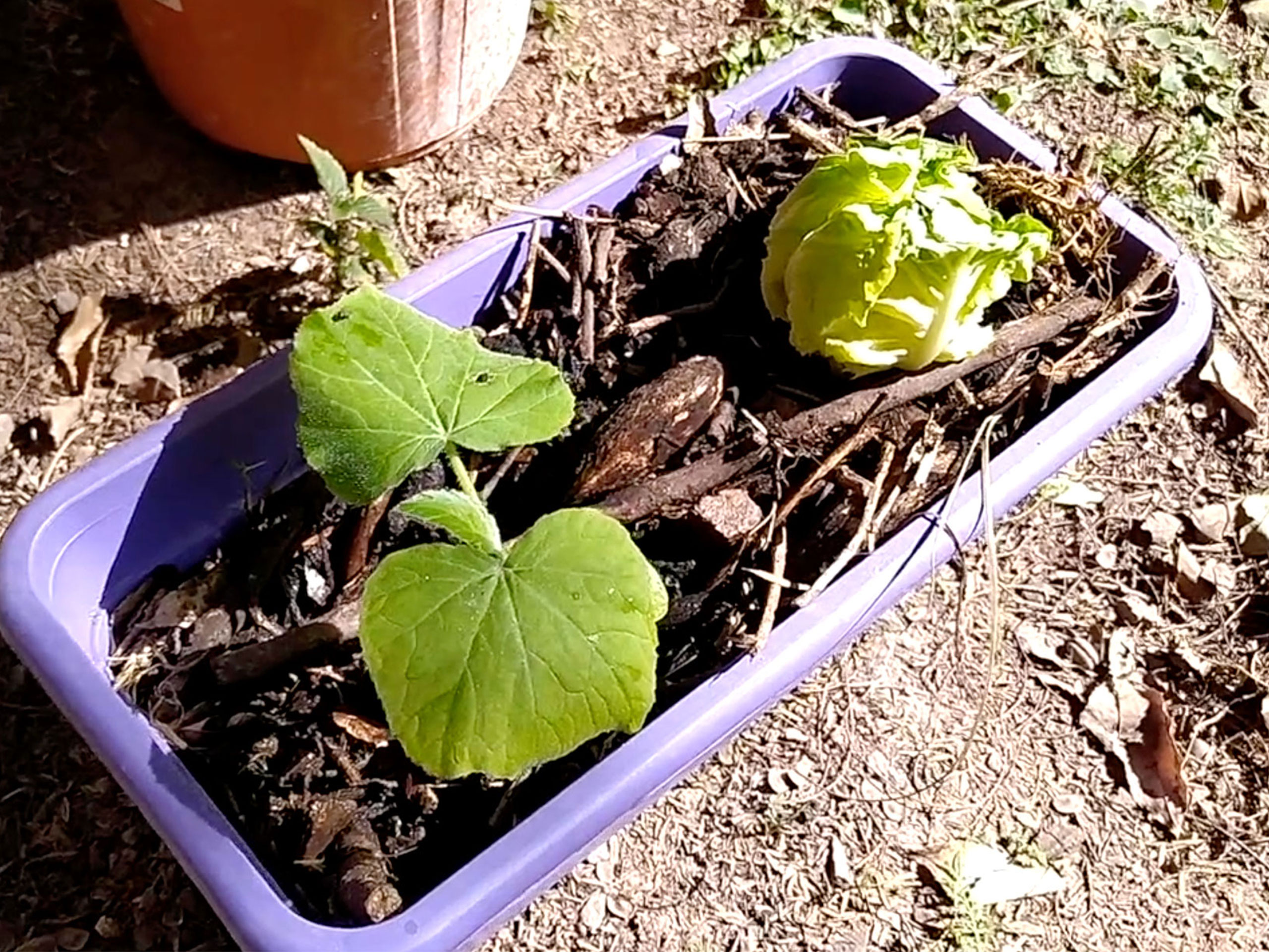
The resulting material, an accumulation of decomposed paper and organic residue, functions as a substrate for growing new sunflower plants.
This process creates a closed transformation cycle.
No stage restores the original image.Each stage produces a new condition.
D.Installation Scheme:
The installation is structured as a distributed system.
Seven asynchronous channels—screens or projections—are arranged without a central hierarchy.Each channel operates independently, creating temporal disjunctions between the visual and sonic elements.
Sound is spatialized and amplified, extending the system beyond the visual field.The environment is intentionally unstable and not synchronized.
The yellow tones from Van Gogh’s sunflower paintings are extracted using a digital color sampling process in Photoshop.Each chromatic instance is transcribed as a hexadecimal (RGB) value, thereby translating pigment into numerical data.These values are then printed, shredded, and introduced into a composting system mediated by Californian red worms.
The resulting material, an accumulation of decomposed paper and organic residue, functions as a substrate for planting new sunflower seeds.Thisestablishes a transformation sequence in which color becomes data, data becomes material, and material supports biological growth.
By converting pigment into code, code into fragmented matter, and matter into a biological substrate, the work operates on archival structures.Thepainting’shistoryisnotpreservedasastableform, butratherdecomposedandredistributedacrossmaterial, computational, andbiologicalstates.
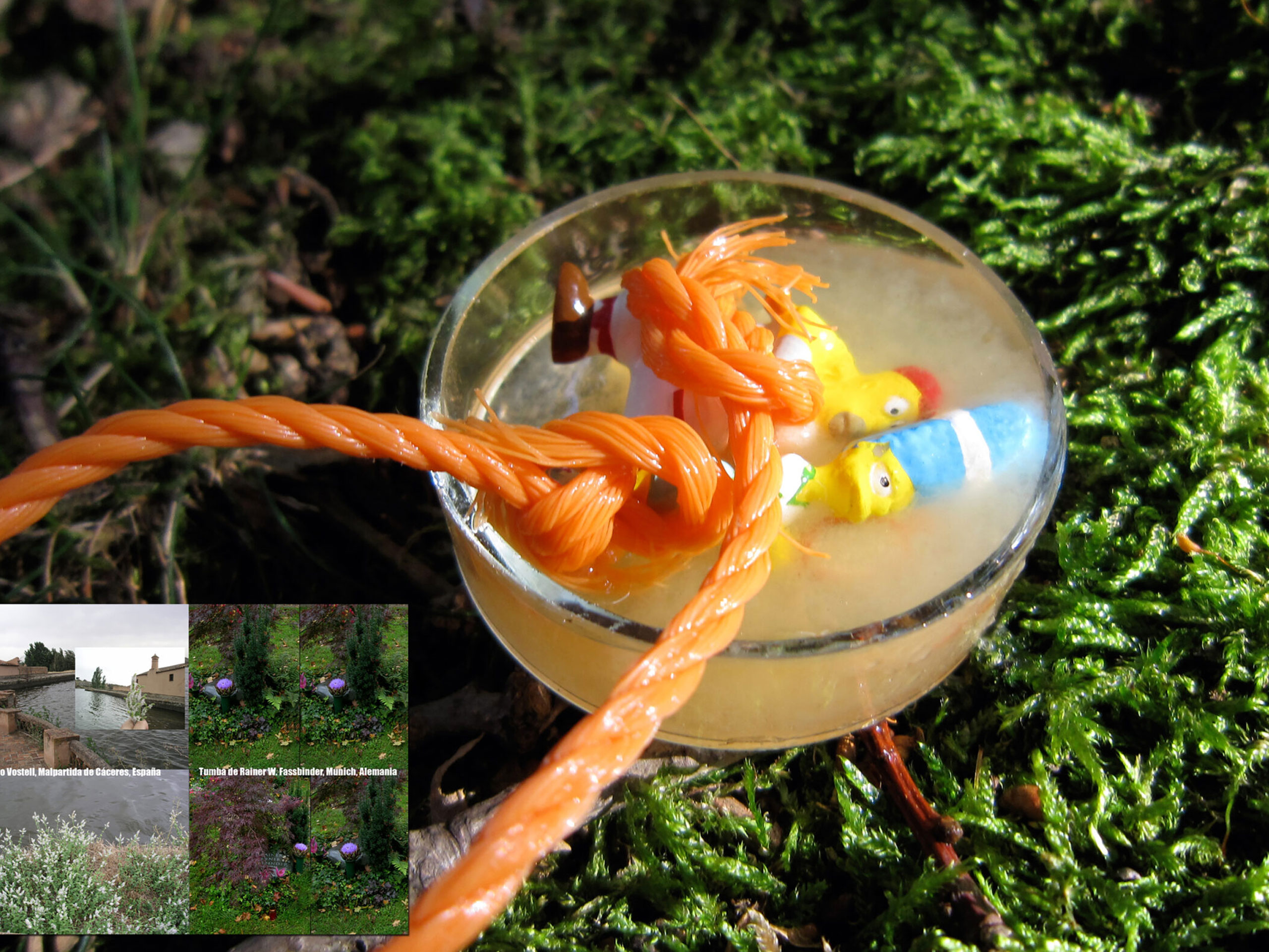
fig.01. Hexadecimal Compost: The Pipette, the Palette, and the Decomposition of Colour
fig.02. Hexadecimal codification of chromatic data (RGB values)
fig.03. The approximately 280 extracted yellow tones were materialized as printed swatches on paper,
subsequently shredded and subjected to a composting process mediated by worms.
fig.04. Hexadecimal compost
Fig. 05. Sunflower seeds, hexadecimal compost, and algorithmically reconstituted sunflowers
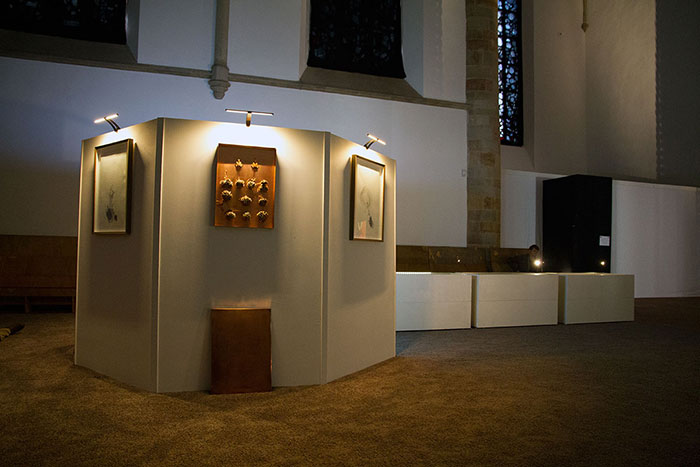
Fig. 06. Final installation: Object 1 — copper box 01 containing DNA preserved in test tubes and sunflower samples
Fig. 07. Final installation: Object 2 — copper box 02 containing six packets of hexadecimal compost
2. Archive Variation: Extraction of DNA (Deoxyribonucleic acid)
The DNA of the cultivated sunflowers was meticulously extracted through enzymatic protocols, each enzymatic sequence facilitating the dissolution of vegetal structures, allowing genetic material to be isolated and collected in test tubes—transforming the biological trace into an archival specimen at the intersection of organic life and media process.
fig.08. Extraction of sunflowers´DNA
3. Archive Variation: DNA Extraction (Deoxyribonucleic Acid) (DNA Performance)
The DNA of the cultivated sunflowers is extracted through enzymatic protocols. Each step facilitates the breakdown of plant tissue, allowing genetic material to be isolated and collected in test tubes.
The extracted DNA is preserved as a material record within the system, positioned between biological substrate and media process.
fig. 09. Biocuration: DNA Performance, Kassel, 2012 (basement, first floor, second floor)
4. Archival Variation: Satellite
The seven sunflower images are algorithmically transcribed into textual data and transmitted via satellite into outer space.
In this variation, the paintings are converted into text-based information and displaced from the pictorial domain to an orbital transmission system. The images are no longer maintained as visual entities; they are reformulated as data streams.
This operation establishes a condition in which archival material is processed through transmission rather than storage. The work does not preserve the image; it redistributes it across a non-terrestrial communication infrastructure.
The project references NASA’s OSIRIS-REx mission, which included a public call (#WeTheExplorers) inviting global participants to submit images and data to be embedded in a digital archive aboard the spacecraft. This context situates the work within existing frameworks of planetary-scale data circulation.
Within this variation, Van Gogh’s sunflower paintings are treated as elements of a speculative archive. Their visual form is converted into textual information and transmitted beyond Earth’s atmosphere, extending the system into a non-local domain.
fig. 09. Variation Satellite
fig. 10. Variation Satellite
fig. 11. Variation Satellite
fig. 12. Variation Satellite
fig. 13. Variation Satellite
fig. 14. Variation Satellite
fig. 15. Variation Satellite
fig. 16. Variation Satellite
5. Archive Variation: Searching the yellow colour
Data was acquired through aerial scanning, topological mapping, and orthophotography.
This project phase was carried out in collaboration with Skyvision Unmanned Aviation, which handled planning and logistics, and Azimuth Geodetic, which handled data post-processing.
Site:Soest, the Netherlands
Coordinates:52°9’14.63«N, 5°17’47.07«E
Hardware:Two drones (one hexacopter and one octocopter).
Software:GPS navigation systems, GIS software, Azimuth proprietary processing software, and Autodesk 3dsMax for 3D modeling and visualization.
In this variation, aerial data acquisition is used to identify and extract chromatic distributions associated with sunflower fields. The landscape is processed as a dataset, where color is not observed but measured, mapped, and translated into spatial and computational coordinates.
The resulting data does not reconstruct an image. It produces a topological model in which chromatic information is distributed across a mapped terrain.
fig. 17. This part of the project was realizefig.10.Soest, The Netherlands: Work zone
The objective of this variation was the conservation and storage—for future generations of artists—of the Dutch yellow tonalities as they might have been perceived by Van Gogh himself.
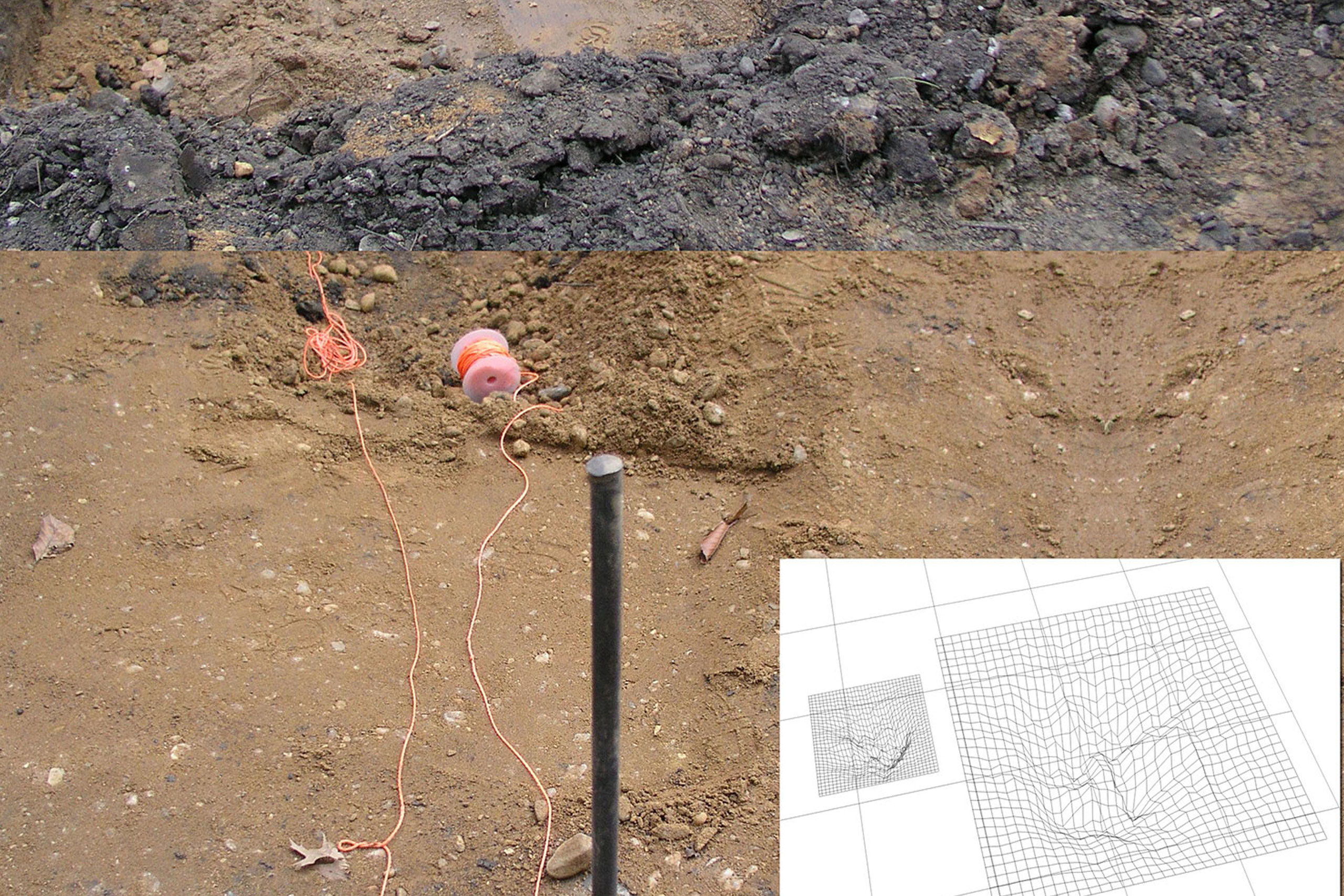
Two drones conducted aerial surveys over an area of approximately 20 hectares near Soest, The Netherlands, collecting nearly one terabyte of ortho-photographic data to construct a comprehensive 3D mapping project.
This endeavor was not solely concerned with capturing yellow hues; it encompassed a broader attention to color saturation, luminosity values, vibrational qualities, and chromatic contrasts within the total environment—trees, soil, water, reflective surfaces—situating Van Gogh’s palette in an ecological and atmospheric context.
The drones were programmed to associate specific altitudes with precise hexadecimal values corresponding to Van Gogh’s sunflower palette, effectively scanning and filtering the yellow tones vertically:
Example correlation:
10 cm → #8B8B00
20 cm → #EEEE00
30 cm → #FFD700
etc.
The fusion of ortho-photography and topographical mapping yielded a 3D archival model—a digital topography of yellow tonalities—serving as both an artistic artifact and a speculative repository.
The accompanying soundscape consisted of a synthetic voice systematically reciting the 280 hexadecimal codes derived from Van Gogh’s sunflowers, transforming numerical color data into an acoustic register.
Example:“Number sign eight B eight B zero zero” (where “number sign” denotes the symbol #, also known in German as Doppelkreuz or Raute).
The resulting digital model was preserved as a “Van Gogh Perceptive File”, an archival construct designed to be retrievable in scenarios of environmental degradation, climate change, planetary catastrophe, or profound alterations in the qualities of light itself—a poetic gesture toward future conditions of perception.
fig.18. Soest, The Netherlands: Work zone: Drones view
fig.19. 3D Model and mapping
fig.20. 3D Model and mapping
fig.21. 3D Model and mapping
fig.22. 3D Model and mapping
6. Archive Variation: Virtual tour of the cemetery of Auvers-sur-Oise, France (Google-Earth Interface-Performance)
Virtual navigation of the cemetery of Auvers-sur-Oise using the Google Earth interface.
Access is restricted.
A boundary condition is encountered.
The system produces anomalies:
– Incomplete visual data – Interface interruptions – Automated notifications (“user not updated”) – Repetition of the name “Van Gogh” across mapped locations
The image is not accessed directly. It is mediated through interface constraints and data gaps.
Sound is generated through the conversion of chromatic data into text and synthetic voice.
Archive Method: Interface traversal
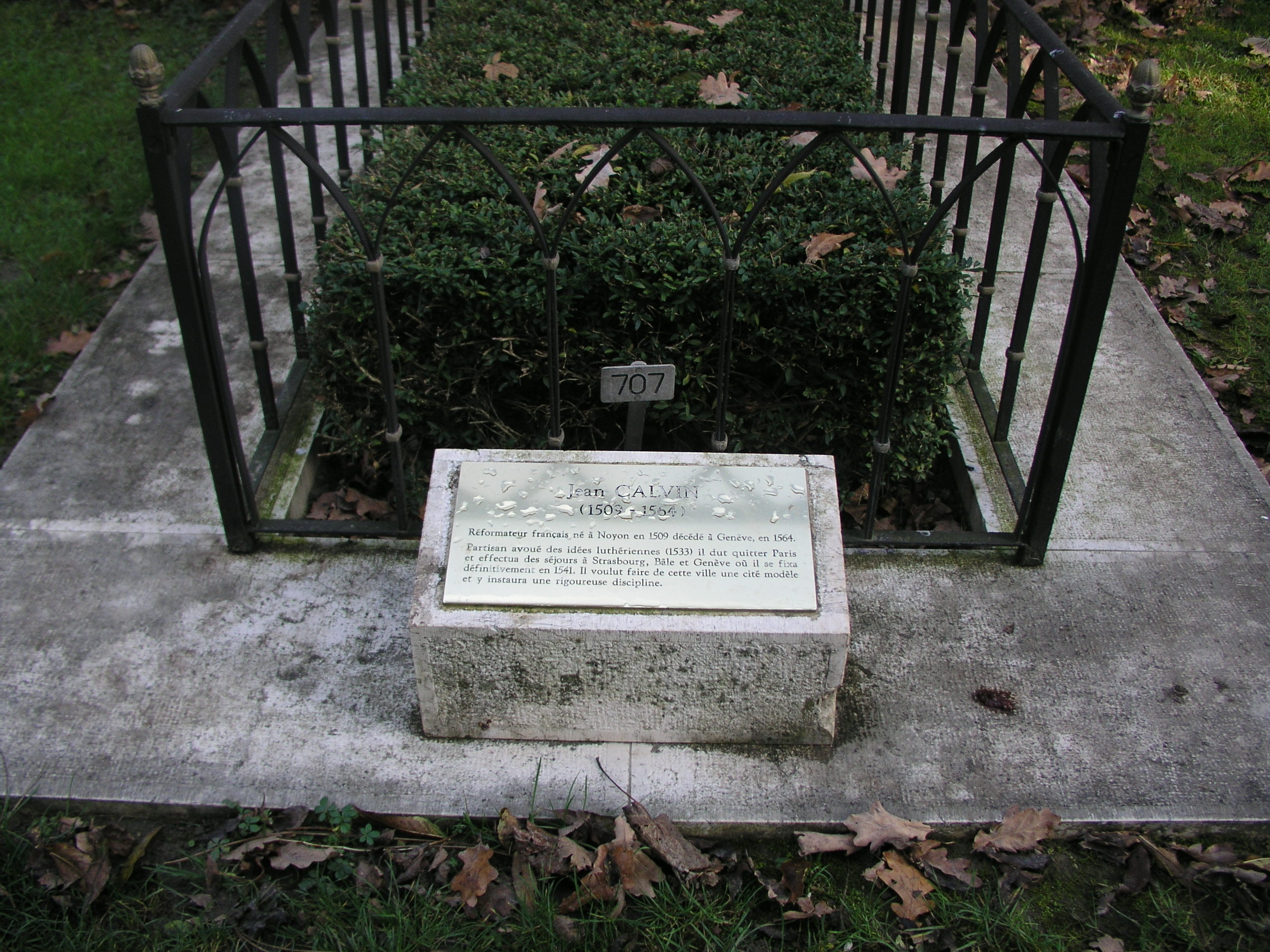
fig. 23,24, 25. Van Gogh’s grave. Auvers-sur-Oise, Francefig.19.Van Gogh’s grave. Auvers-sur-Oise, France
fig.20.Google street glitches
7. Archive Variation: Conversion to Sound and 3D Print
Seven images of Van Gogh’s Sunflowers are processed through sonogram software and converted into sound data.
Image → sound.
No visual output is maintained. The work operates as an acoustic archive.
Archive Method: Sonographic translation
fig.26. Software: Virtual ANS: A Software simulator of Synthesizer ANS
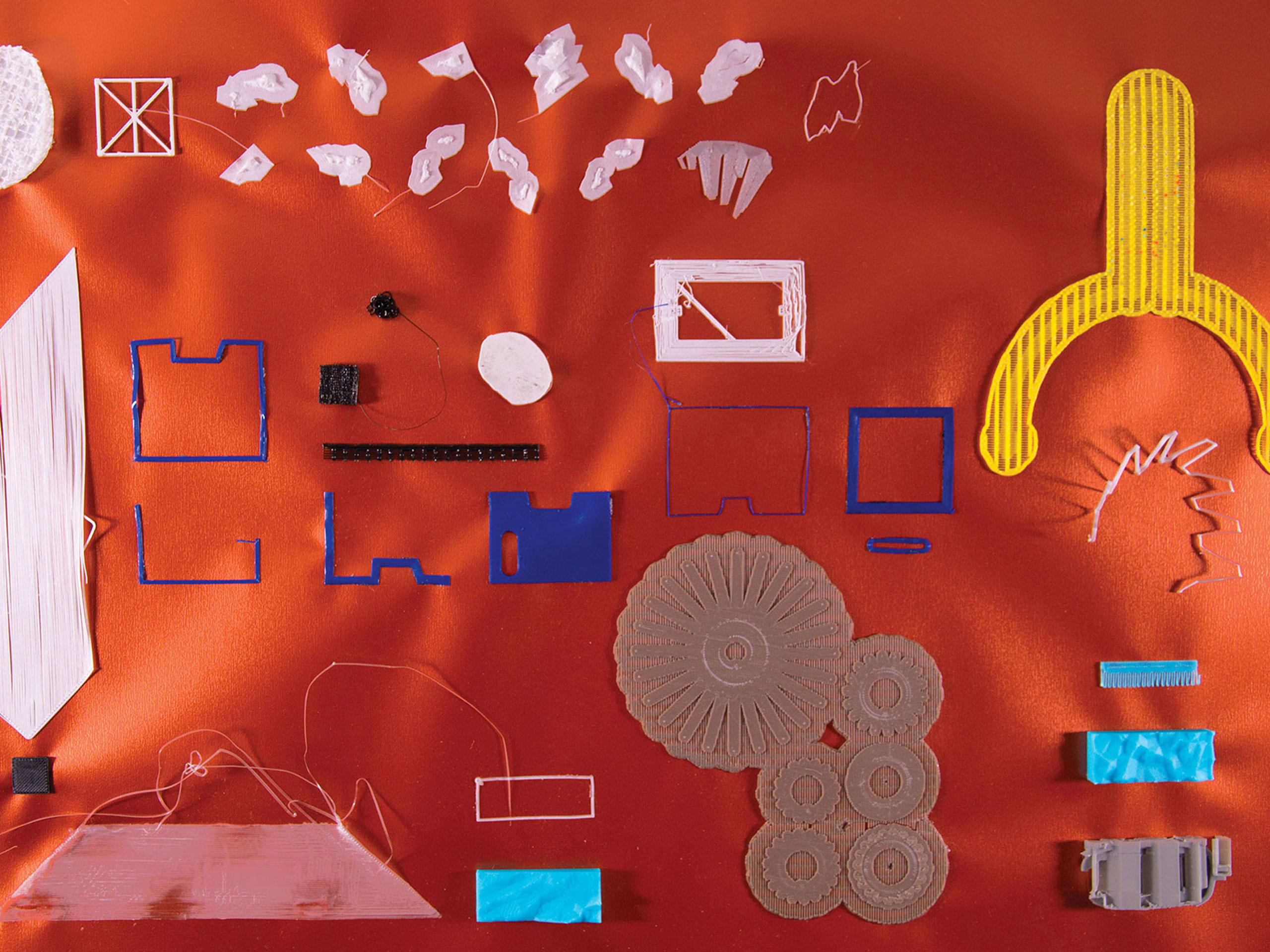
B. The seven sound archives were combined and transformed into a single 3D object in real time, translating sonic information into spatial form.
C. The resulting 3D object was materialized as a physical artifact, produced in plastic using 3D printing technology.
fig.27. 3D-Sound-Object printed on plastic
D.
Sunflowers images were transformed into sound and subsequently reconstituted as new images, completing a cycle of translation between visual and acoustic forms.
fig.28.Sunflowers images were transformed into sound and subsequently reconstituted as new images, completing a cycle of translation between visual and acoustic forms.
fig.29.Final installation: Object 3, a copper box containing a 3D sound object accompanied by three sound-glitch photographs.
8. Archive Variation: Notations
Musical notations generated by robots and inscribed onto staff paper.
Graphic scores produced through automated processes. Mechanical inscription replaces manual writing.
Title:The Variations Van Gogh Opera Publication:Van Gogh Variations: Compositions for Small Motors and Robots (2014) 82 pages, 20.5 × 25.5 cm, 500 g
Archive Method: Automated inscription
fig.30. “Van Gogh Variations: Compositions for small Motors and Robots”,
82 pages, 20,5 cm x 25,5 cm, 500g, 2014
fig.31.“Notations – Van Gogh Variations: Compositions for small Motors and Robots”, 2014
01.Das Gelb in der Ferne. Larghissimo (01. The yellow in the distance) 02.Ich sehe Zeichnungen. Andante (02. I see drawings) 03.Charles Bargue und Jean-Léon Gérôme Duett. Appassionato (03. Charles Bargue and Jean-Léon Gérôme Duet) 04.Arie der Besucher. Agitato (04. Aria of the visitor) 05.Vincent Monolog. Pesante (05. Vincent monologue) 06.Abschied von Arles. Lacrimoso (06.Farewell to Arles) 07.Todesmotiv. Lento (07.Death motif) 08.Finalterzett. Trionfante (08.Final trio) 09. Archive Variation: Language – Code
9. Archive Variation: Language – Code
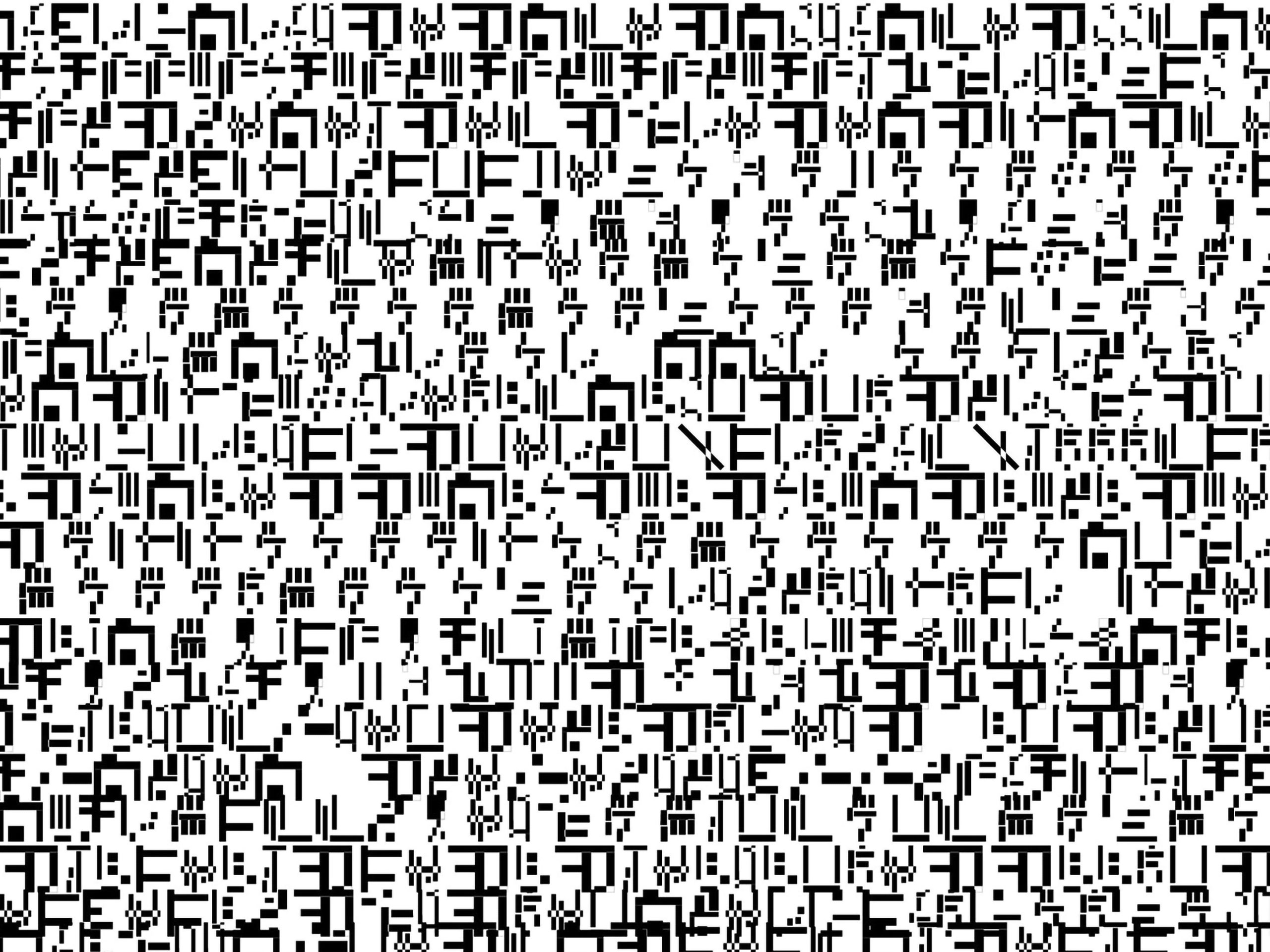
The seven Sunflowers paintings are transformed into text and translated into an invented language.
Alphabetic conventions are suspended. The system operates outside standard encoding structures.
The output is not readable. It persists as a residual code state.
Archive Method: Non-standard encoding
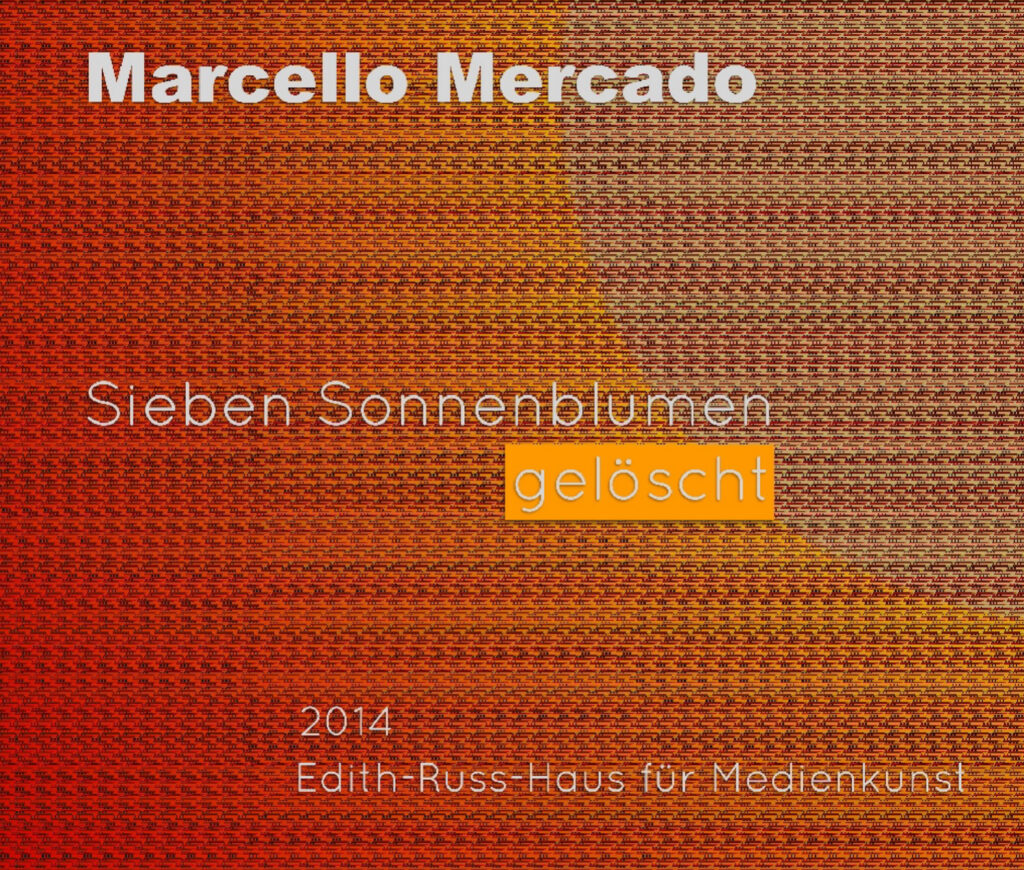
fig.32, 33. “Seven sunflowers deleted”, 60 pages, 25,5 cm x 20,5 cm, 500g, 2014
10. Archive Variation: Van Gogh’s Sunflowers – 115 Variations
Book containing 115 hand-painted variations in acrylic, ink, and oil, derived from the seven Sunflowers paintings.
No stable image is maintained. The sequence accumulates through repetition.
Archive Method: Scriptorium
fig.34.“Van Gogh´sunflowers: 115 Variations”, hand painted, 115 pages, 54 cm x 39 cm x 3 cm (1,08 m open), 900g,
unique item, acrylic, oil, ink, pigment and paint on paper, On the reverse signed and dated , 2014
fig.35.“Van Gogh´sunflowers: 115 Variations”, hand painted, 115 pages, 54 cm x 39 cm x 3 cm (1,08 m open), 900g,
unique item, acrylic, oil, ink, pigment and paint on paper, On the reverse signed and dated , 2014
fig.36.“Van Gogh´sunflowers: 115 Variations”, hand painted, 115 pages, 54 cm x 39 cm x 3 cm (1,08 m open), 900g,
unique item, acrylic, oil, ink, pigment and paint on paper, On the reverse signed and dated , 2014
fig.37.“Van Gogh´sunflowers: 115 Variations”, hand painted, 115 pages, 54 cm x 39 cm x 3 cm (1,08 m open), 900g,
unique item, acrylic, oil, ink, pigment and paint on paper, On the reverse signed and dated , 2014
fig.38.“Van Gogh´sunflowers: 115 Variations”, hand painted, 115 pages, 54 cm x 39 cm x 3 cm (1,08 m open), 900g,
unique item, acrylic, oil, ink, pigment and paint on paper, On the reverse signed and dated , 2014
11. Archive Variation: Drawings
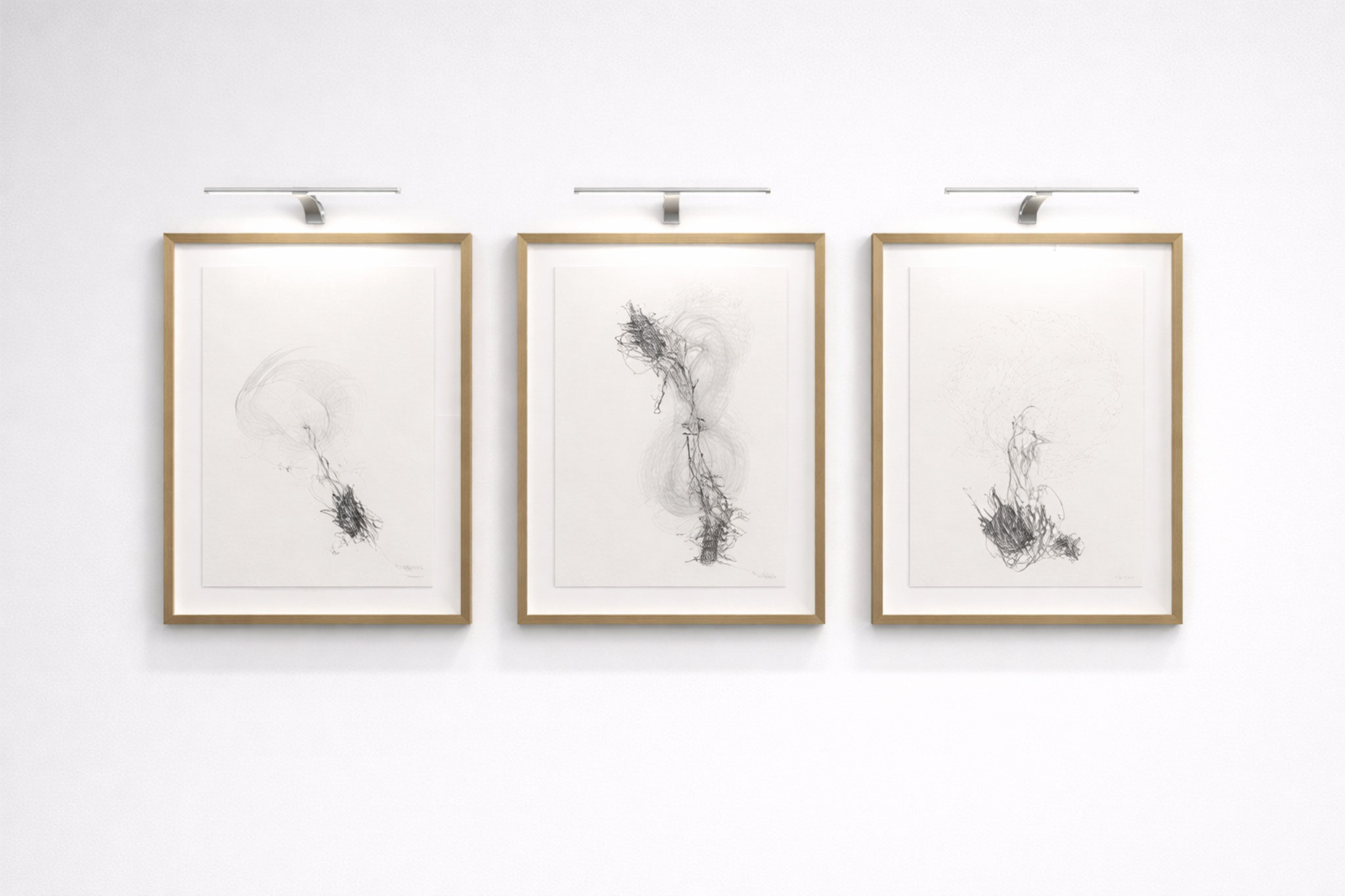
Three sunflowers are drawn by six robots using small motors.
The process is semi-autonomous.
No stable form is maintained.
The drawing operates as a trace generated by mechanical repetition.
Archive Method: Semi-autonomous robotic drawing
fig.39.Sunflower 01 behind glass with 2 cm wide wooden frame, 75 cm x 65.5 cm x 4 cm, pencil on paper,
unique item, signed and dated on the front, 2014
fig.40.Sunflower 02 behind glass with 2 cm wide wooden frame, 75 cm x 65.5 cm x 4 cm, pencil on paper,
unique item, signed and dated on the front, 2014
fig.41.Sunflower 03 behind glass with 2 cm wide wooden frame, 75 cm x 65.5 cm x 4 cm, pencil on paper,
unique item, signed and dated on the front, 2014
fig.42. Final Installation: 3 Sunflowers: Drawings
12. Archive Variation: Diary
A book recording the project process and its variations.
The sequence is not stabilized. The archive remains open.
Archive Method: Process log
fig.43.“Variations Van Gogh : Diary”, 34 pages, 12 cm x 16 cm x 0,8 cm (20 cm open), 150g,
unique item, On the reverse signed and dated , 2014
13. Meeting Variation
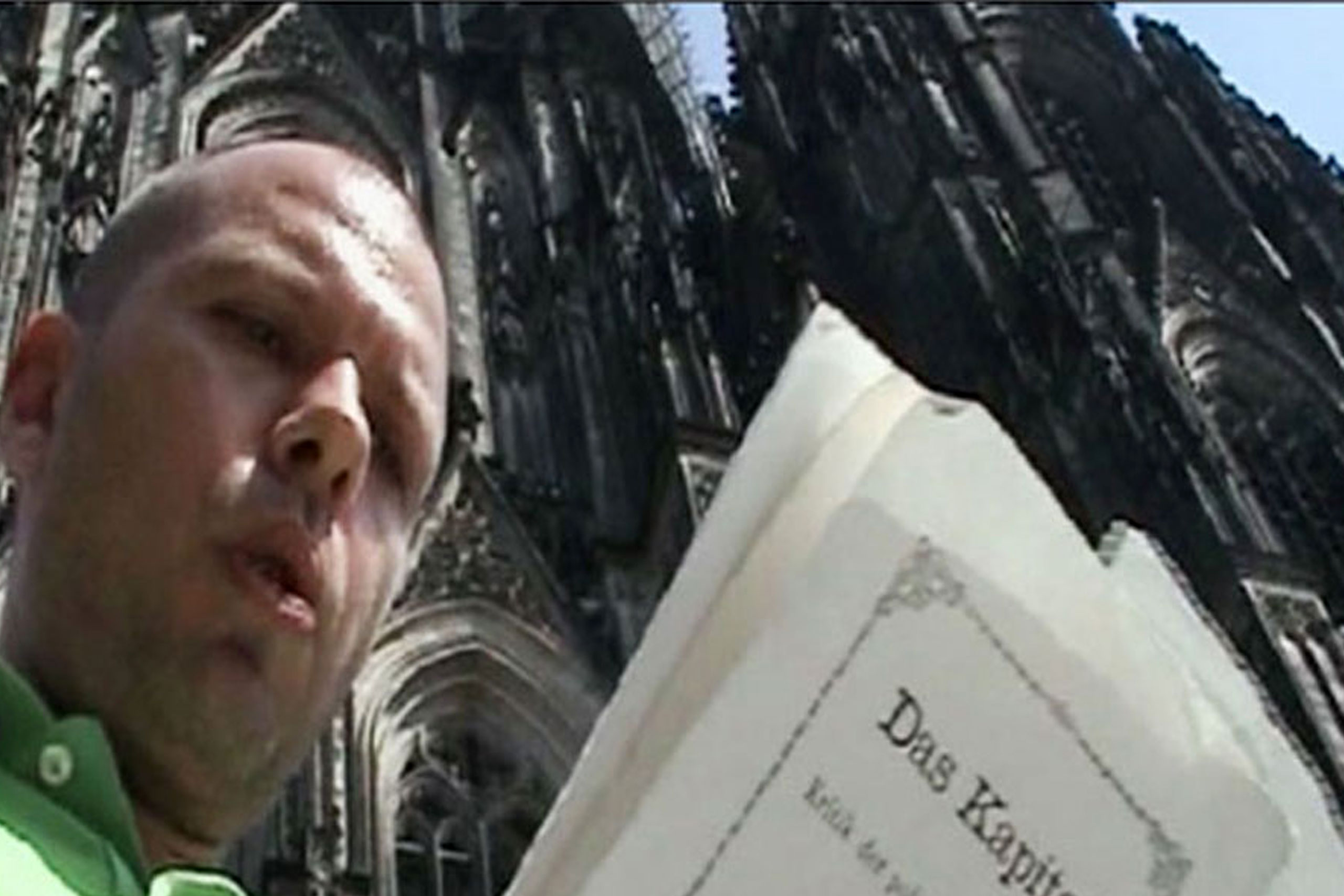
In 1995, Theo van Gogh and Marcello Mercado were both included in the program of the FIPA Festival (Festival International de Programmes Audiovisuels) in Nice, France. Theo van Gogh presented De Wanhoop van de Sirene; Mercado presented La región del tormento. A brief encounter took place.
This variation introduces a discontinuous relation between the name “Van Gogh” and the project. The connection is not genealogical. It is nominal, temporal, and contingent.
The event remains as a minimal record within the system.
fig.44. Meeting Variation
fig.45. Meeting Variation
fig.46. Meeting Variation
fig.47. Meeting Variation
14. Facebook Likes Variation
In recent years, I have “liked” paintings by Lieuwe van Gogh on Facebook. Lieuwe is the great-great-grandson of Theo van Gogh, Vincent’s younger brother.
The action is minimal. It does not produce an image or a material transformation. It registers a trace within a platform-based system.
The relation is mediated by naming and interface.
The work circulates as visibility
fig.48. Facebook Variation
15. PDF Variation
Creation of a PDF document compiling the curriculum vitae of Vincent van Gogh.
File size: 61 KB.
The work is reduced to a minimal digital record.
The archive is defined by its weight.
fig.49. PDF Variation
16. Formula Van Gogh Variation
800+ paintings
1 sale
Production ≠ transaction
The archive exceeds the economy.
Archive Method: Economic discontinuity
Van Gogh’s anomaly—big production, minimal transactions—makes him uniquely suited to symbolize a “failure archive”: an accumulation of cultural output that exists almost entirely outside the artist’s lifetime economy, yet inside the collective imagination.
I visited the Pinakothek der Moderne in Munich and stood before Vincent van Gogh’s Sunflowers (Vase with Fifteen Sunflowers) (1888), temporarily on display from the collection of the Neue Pinakothek.
The encounter does not produce a new image. It establishes a reference point within the system.
Sunflower Preservation Protocol v1.0
# Input: distributed records of the painting
# (images, scans, color samples, descriptions, reproductions)
# Rule:
# The output is not a reconstruction.
# It is a valid continuation of the work.
fig.51.Photograph taken at the Pinakothek der Moderne (temporary display, collection of the Neue Pinakothek): Sunflowers (Vase with Fifteen Sunflowers), Vincent van Gogh, 1888.
D. Installation Scheme
Variations Van Gogh (2014) 7-channel video and sound installation, color Duration: 8 minutes (loop)
Display options:
– Seven LCD flat panels mounted on a shelf – or projected onto seven walls in a dark, carpeted room
Channels are unsynchronized. Amplified stereo sound. Continuous loop.
A. Installation Scheme – Version 01
7-channel video installation (screens or monitors)
– 7 LED monitors, Full HD, 16:9, 46″ – 7 headphones – 7 DVD players or equivalent playback devices
Single-channel video installation with immersive sound
2023
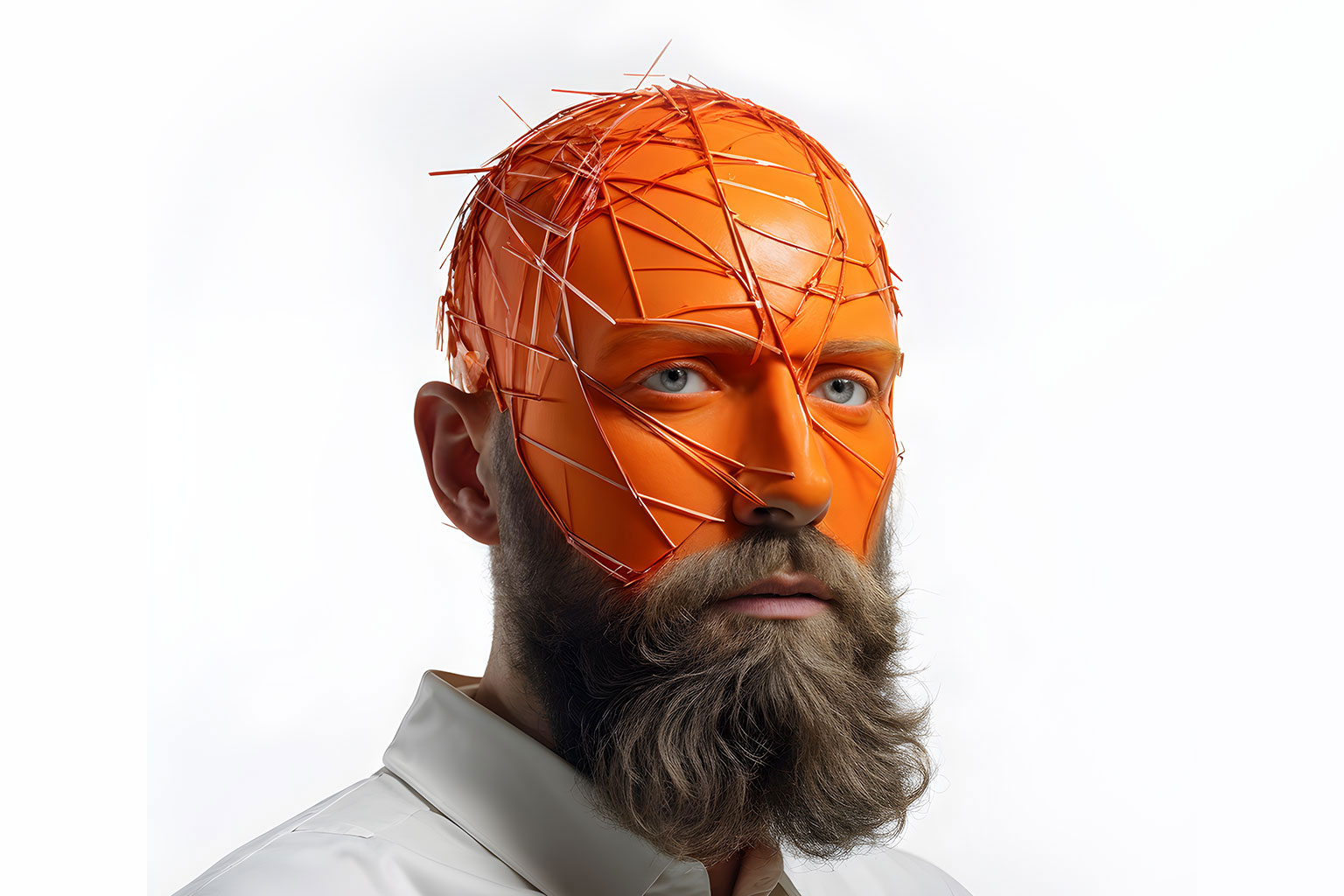
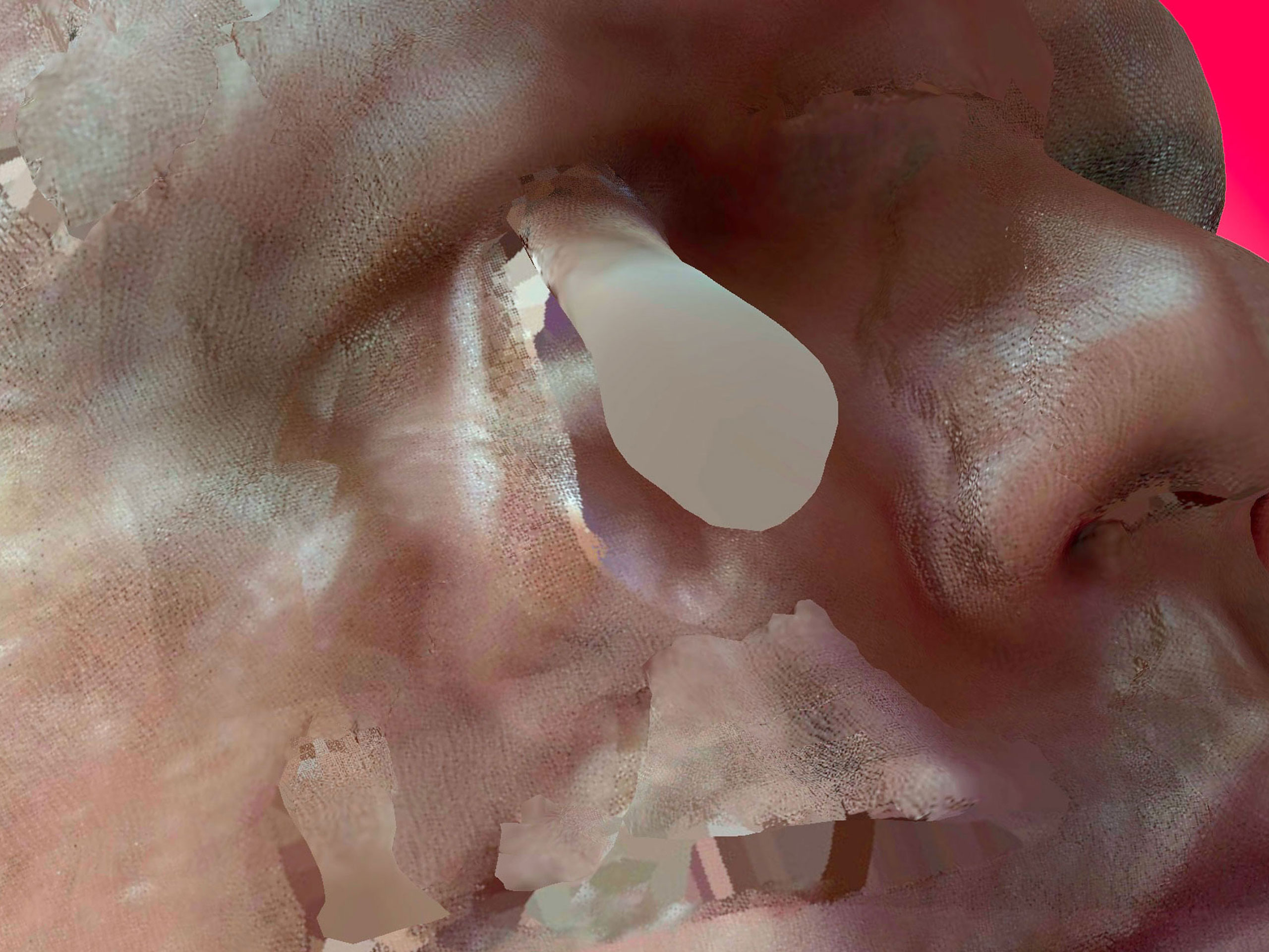
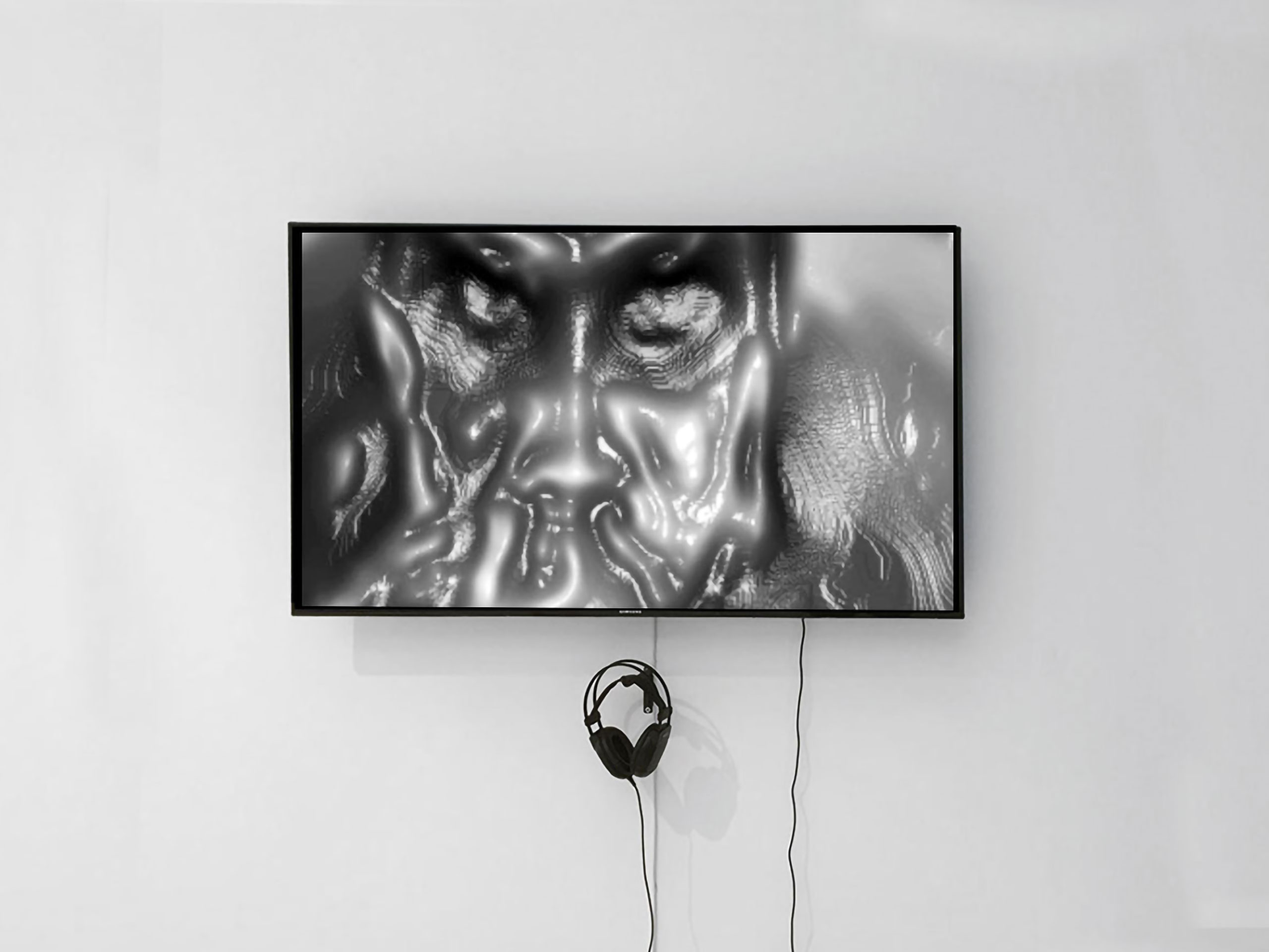
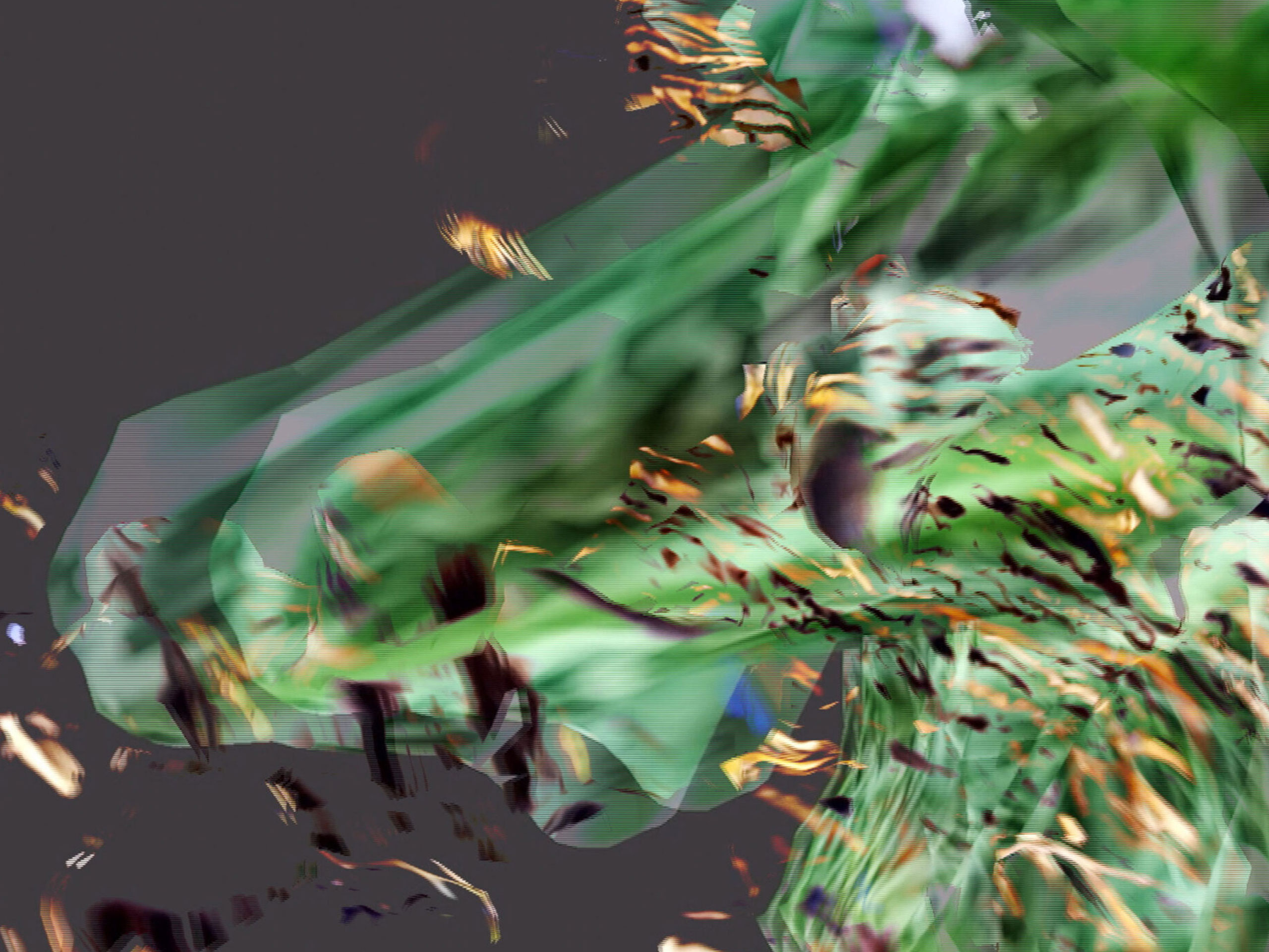
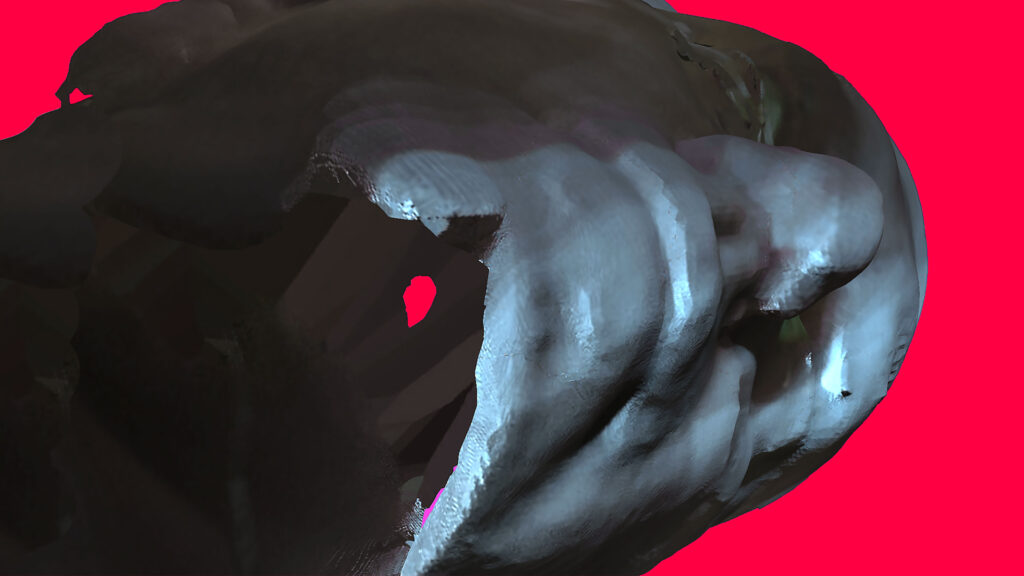
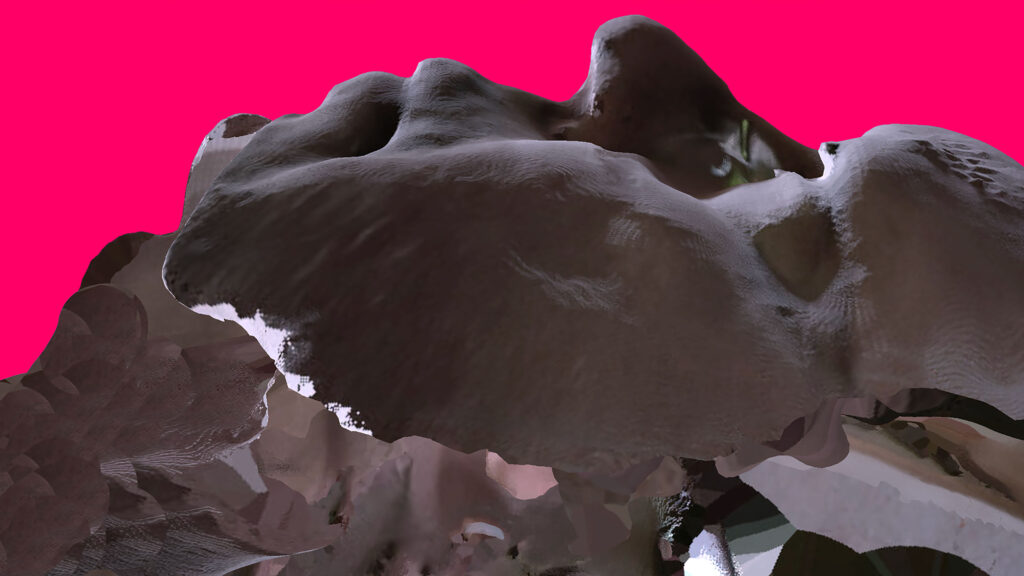
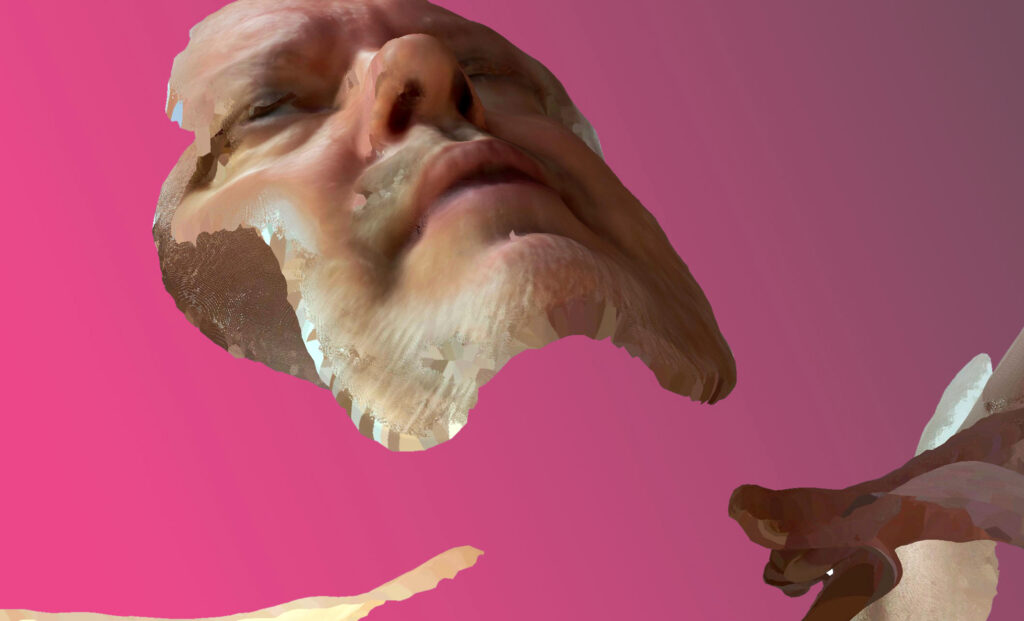
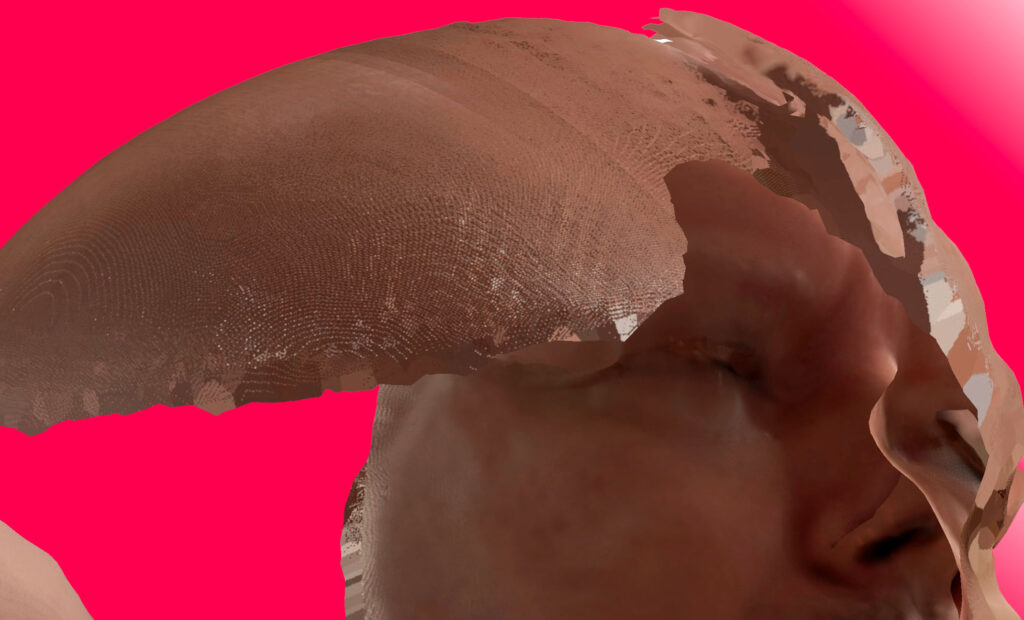
In Listening to Chromosome 17, Marcello Mercado explores the changing landscape of self-portraiture in the context of contemporary technologies.Over the course of three months, the artist conducted sound sessions in which fragments of his own chromosome 17 were translated by artificial intelligence into synthetic audio.At the same time, he used a series of mobile 3D scanning applications to scan his own head, producing fragmented, glitchy, and often inaccurate models.
These visual inconsistencies, combined with AI-generated imagery, culminate in a composite portrait that resists coherence.The resulting installation unfolds as an unstable dialogue between organic material and artificial interpretation – between the body and its machine-read counterpart.
Mercado’s work draws on the principles of bioart and performative installation, using his own genetic data as both subject and medium.The project addresses issues of identity, perception, and the performativity of technological systems, examining how algorithmic processes attempt – and ultimately fail – to stabilize or fully capture the human.
Rather than celebrating the precision of these technologies, the work foregrounds their flaws, highlighting the fractures in our digital doubles.ListeningtoChromosome17islessaself–portraitthananevolvingindexofattempts: generative, broken, approximate.In this speculative interface between genome and image, sound and data, Mercado stages a meditation on disappearance, duplication, and the uneasy proximity of flesh and code.
Marcello Mercado, Self-portrait 01, 3D scanner, 2023
Marcello Mercado, Self-portrait 02, 3D scanner, 2023
Marcello Mercado, Self-portrait 03, 3D scanner, 2023
Marcello Mercado, Self-portrait 04, 3D scanner, 2023