Das Kapital / Napster Search, 1999

Marcello Mercado

Das Kapital / Napster / September 1999


This is one of the few surviving screenshots from a search for «Kapital« on Napster. The work no longer exists. Nor does the network that produced it.


In September 1999, as part of my Das Kapital project, I searched for «Kapital» on Napster. The action was minimal: a search. The result was the work itself.

Instead of returning Das Kapital, Napster produced a list of MP3 files with partial titles, typos, song titles, fragments, and unrelated associations: «Kapital of House,» «Kapital Sessions,» «Kapital Vino Su Mine,» and «Kapital.mp3.» Marx reappeared, transformed into digital noise and file-sharing culture.

The work consisted of observing how the network reorganized the word «Kapital,» not downloading the files. Political economy became metadata. Theory became a search result. The peer-to-peer network produced its own unconscious interpretation of Marx’s work.

Today, the work survives only as this screenshot. With Napster gone, the image has become an archaeological document of the early Internet, capturing a moment when file sharing, misunderstanding, circulation, and memory converged in a single search window.


In 2026, I repeated the same search.

The word «Kapital« was entered into contemporary systems that now return interpretations, rankings, and commercial categories rather than files.

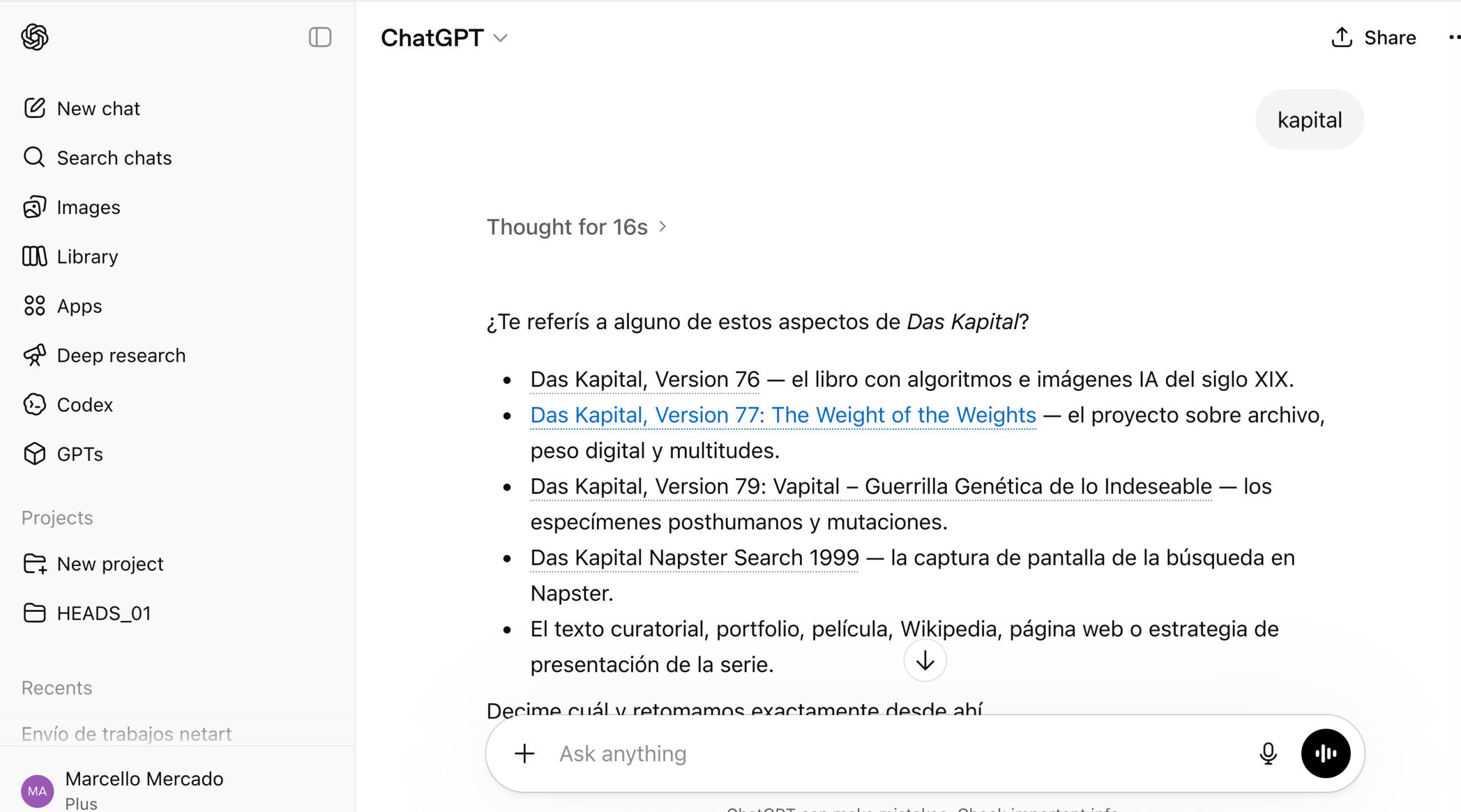
ChatGPT did not produce a search result. Instead, it attempted to identify the correct version of Das Kapital among the many projects, books, and works already associated with my archive. The platform transformed the word into a personalized memory system. «Kapital« no longer referred to an unknown object circulating through the network but to an already classified, individualized archive.

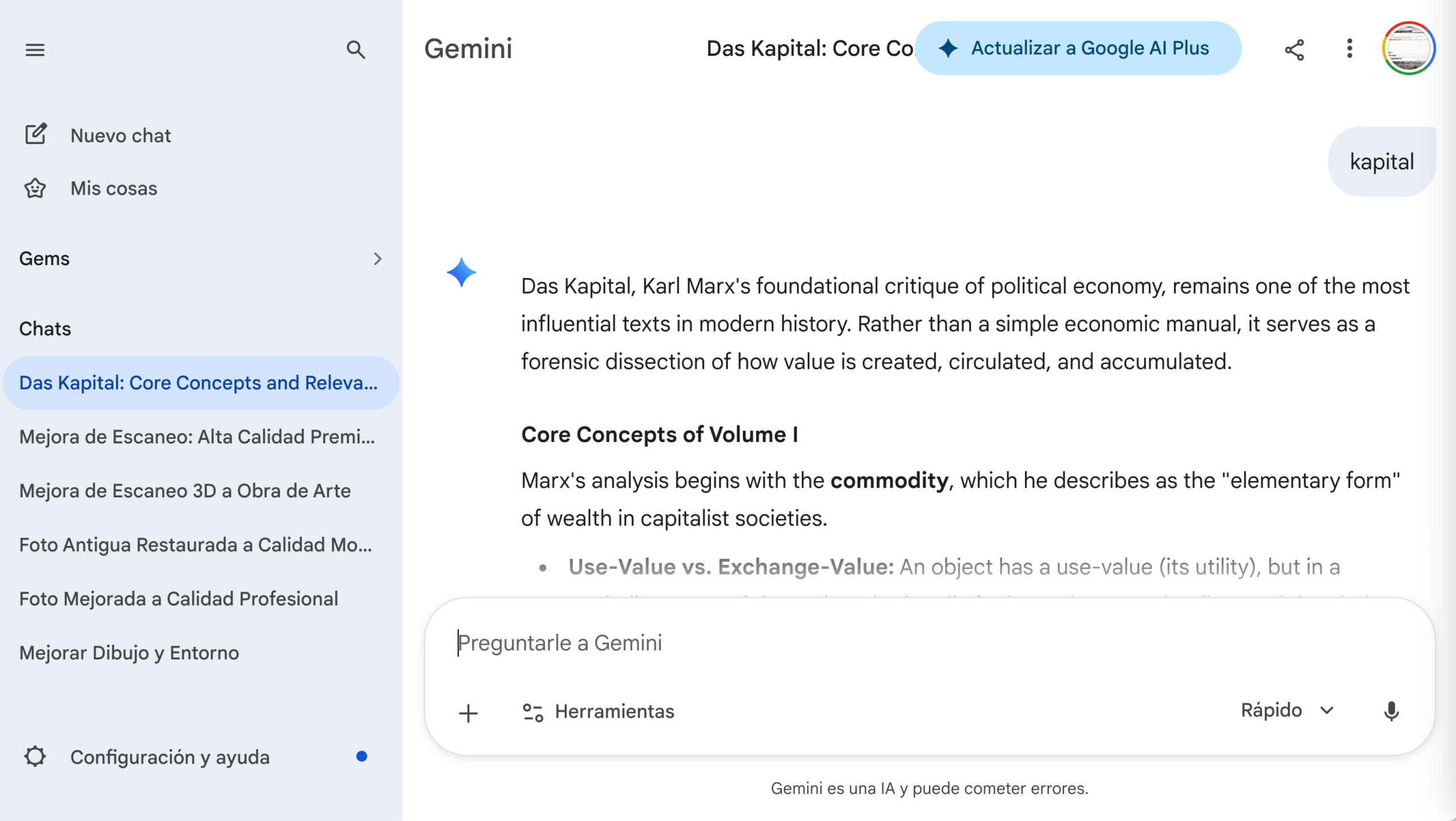
Gemini returned Karl Marx. It stabilized the term immediately through institutional language, educational structure, and conceptual hierarchy. «Kapital» became a canonical text, reduced to «core concepts» and summarized through the logic of explanation.

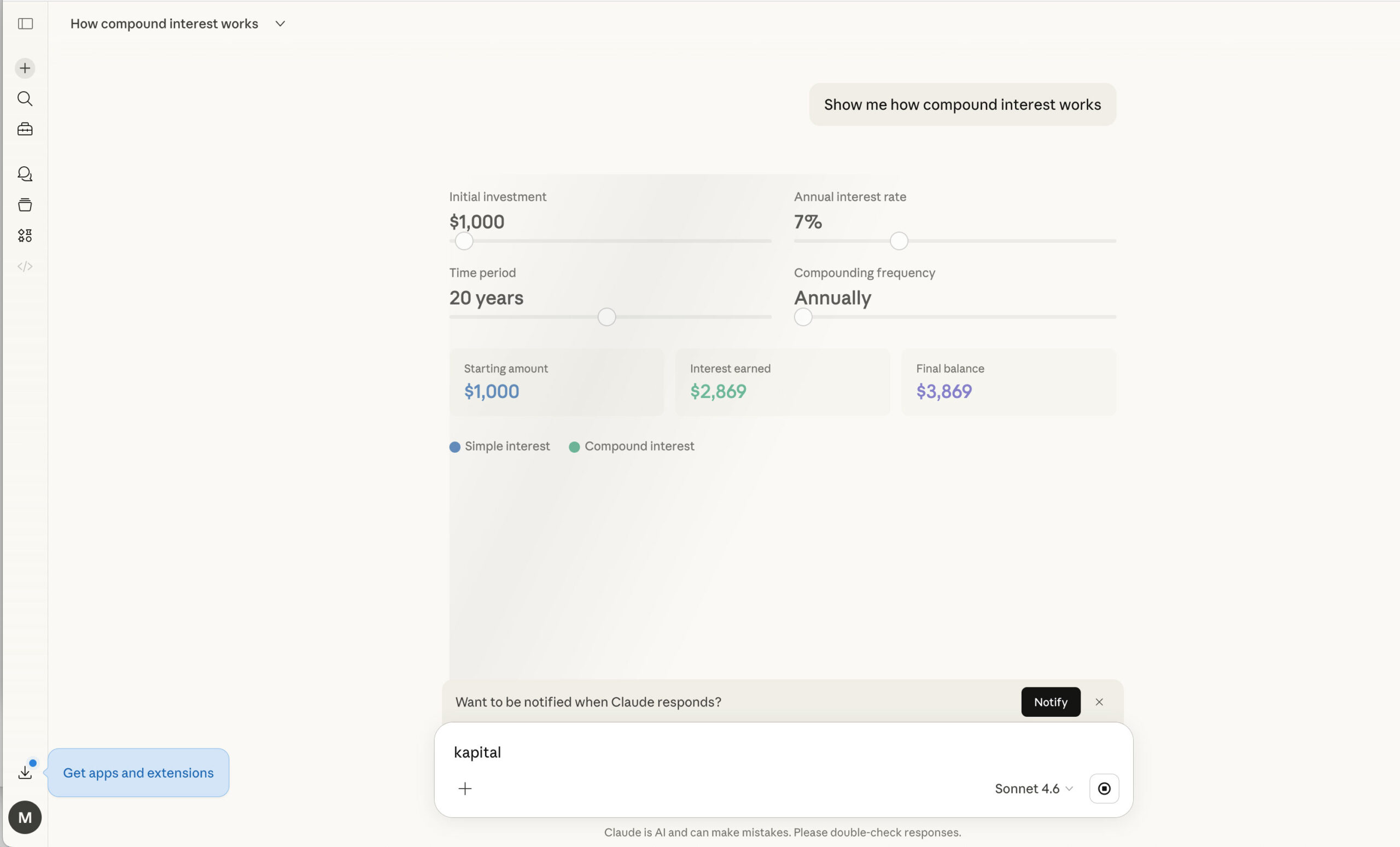
Claude did not answer. The system was occupied with another task, leaving the word waiting inside an interface about compound interest. «Kapital« appeared as an interruption, inserted into a platform already structured around finance, productivity, and calculation.

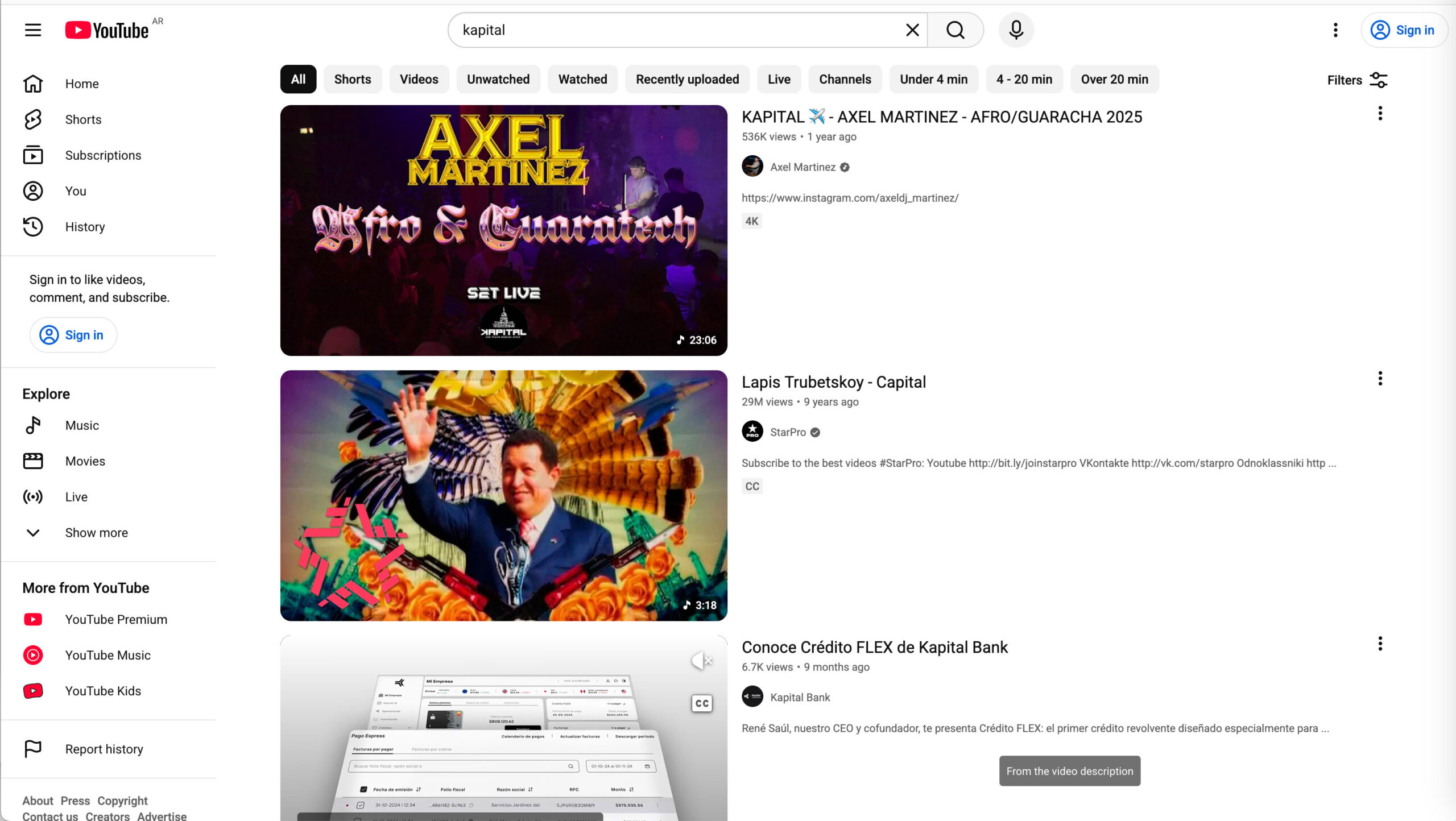
YouTube transformed the word into a recommendation and a spectacle. The first results were not Marx, but rather music, guaracha, Latin American finance, bank advertisements, and political montages. «Kapital« survived as entertainment, algorithmically reordered according to visibility, clicks, and monetization.

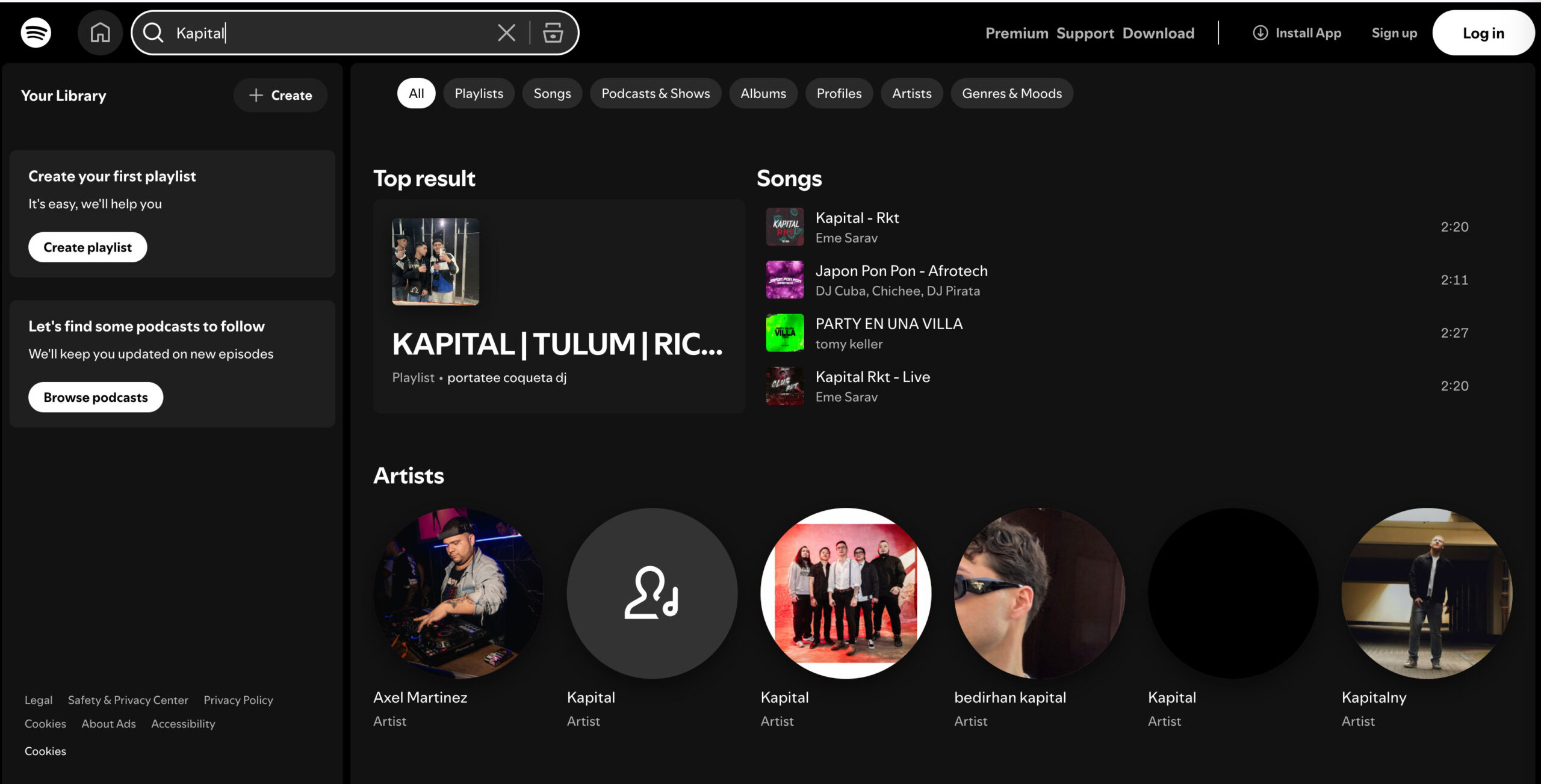
Spotify returned playlists, DJs, profiles, and tracks. The word no longer designated a theory or a book. Instead, it functioned as a musical label, a searchable brand, and a sequence of sonic commodities.

In 1999, Napster fragmented the word into unstable and absurd file names:

kapital of house
Kapital Sessions
kapital vino su mine
Kapital.mp3

The disorder remained visible. The network exposed its own errors, misunderstandings, and accidental associations.

By 2026, the errors were no longer visible. Platforms now classify, personalize, and predict. The instability has not disappeared; it has merely been hidden behind smooth interfaces and controlled results.

Napster was not a better internet. But its failures were visible.

Contemporary platforms conceal them.

The 1999 screenshot survives as the remains of a disappeared protocol.

2026 searches reveal the systems that replaced it.:

Spotify search: The concept survived only as a musical label.
youtube search: The term was reorganized as spectacle and advertising.
Claude AI search: The search remained unanswered.
 

Gemini AI search: The word was stabilized into a canonical summary.
ChatGPT search: The platform returned my own archive.