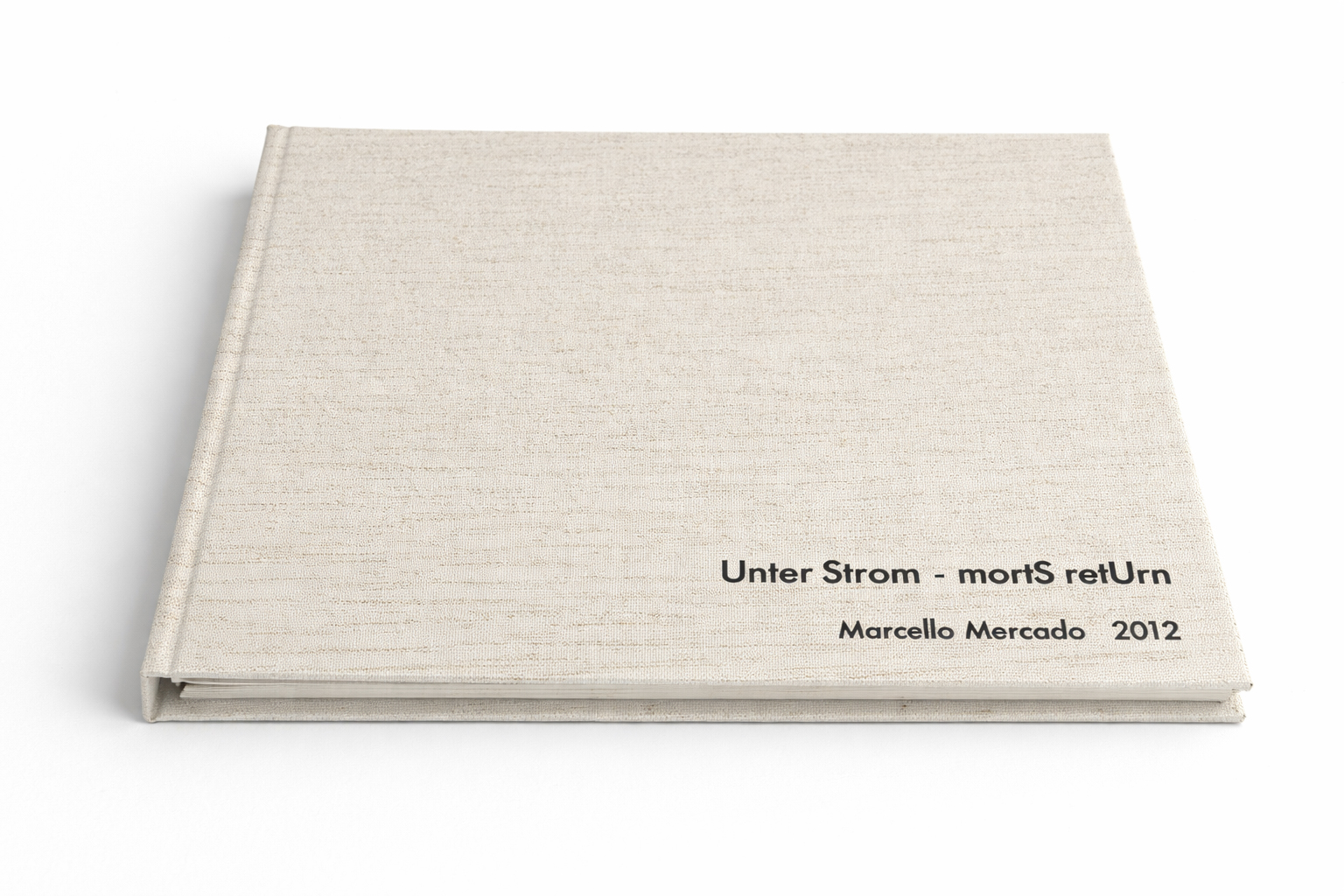

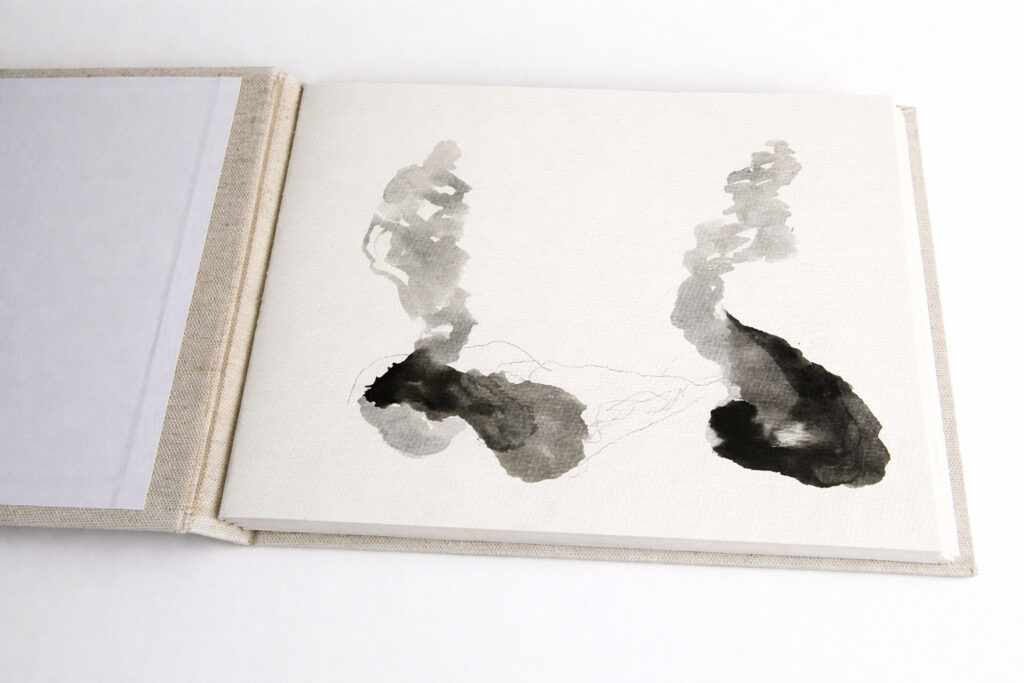
Marcello Mercado, Unter Strom – mortS retUrn, 2012, artist’s book, drawing and painting on paper, cloth-bound cover
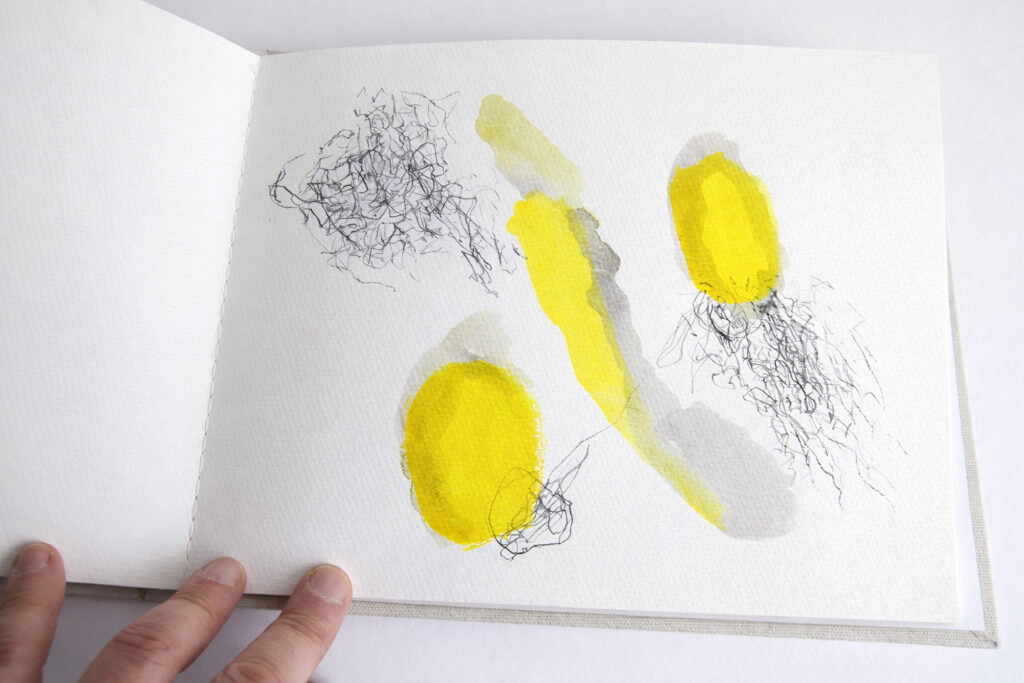
Marcello Mercado, Unter Strom – mortS retUrn, 2012, artist’s book, drawing and painting on paper, cloth-bound cover
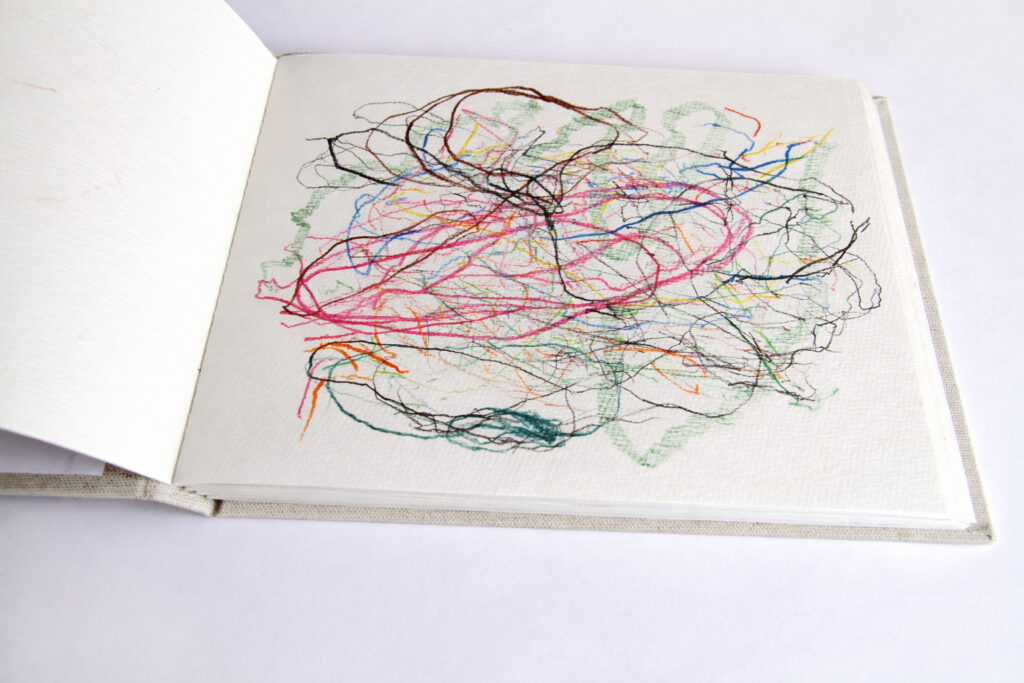
Marcello Mercado, Unter Strom – mortS retUrn, 2012, artist’s book, drawing and painting on paper, cloth-bound cover
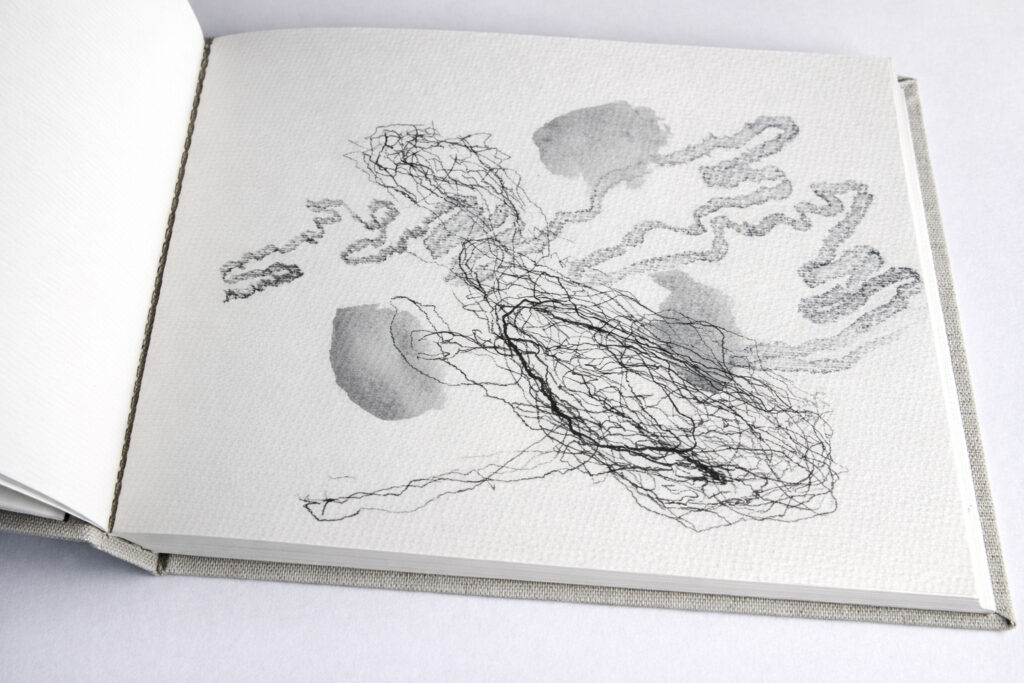
Marcello Mercado, Unter Strom – mortS retUrn, 2012, artist’s book, drawing and painting on paper, cloth-bound cover
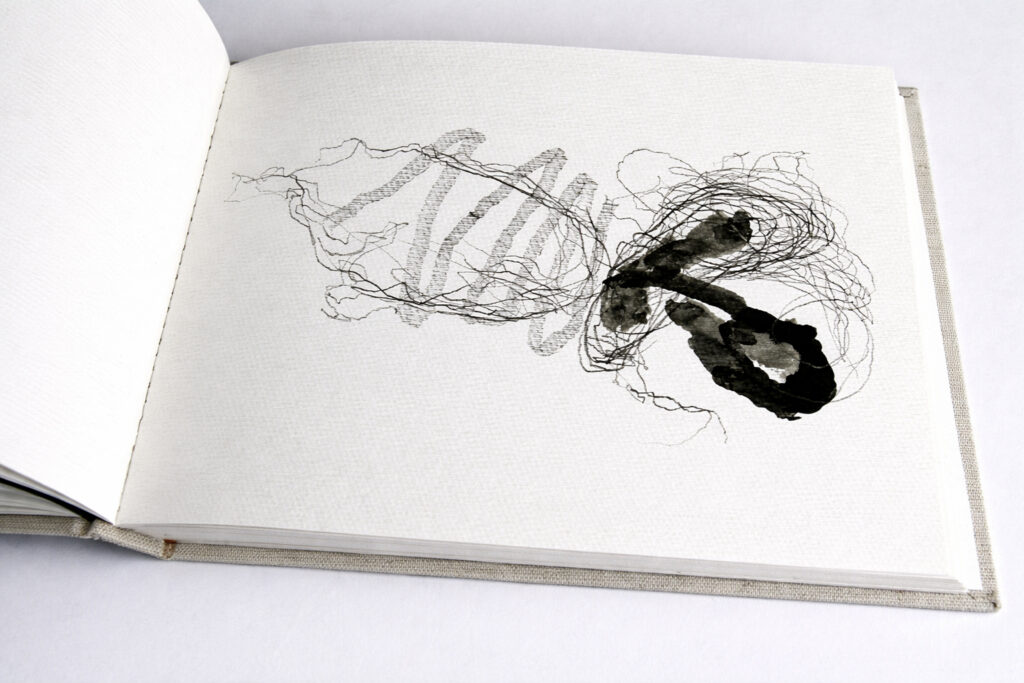
Marcello Mercado, Unter Strom – mortS retUrn, 2012, artist’s book, drawing and painting on paper, cloth-bound cover
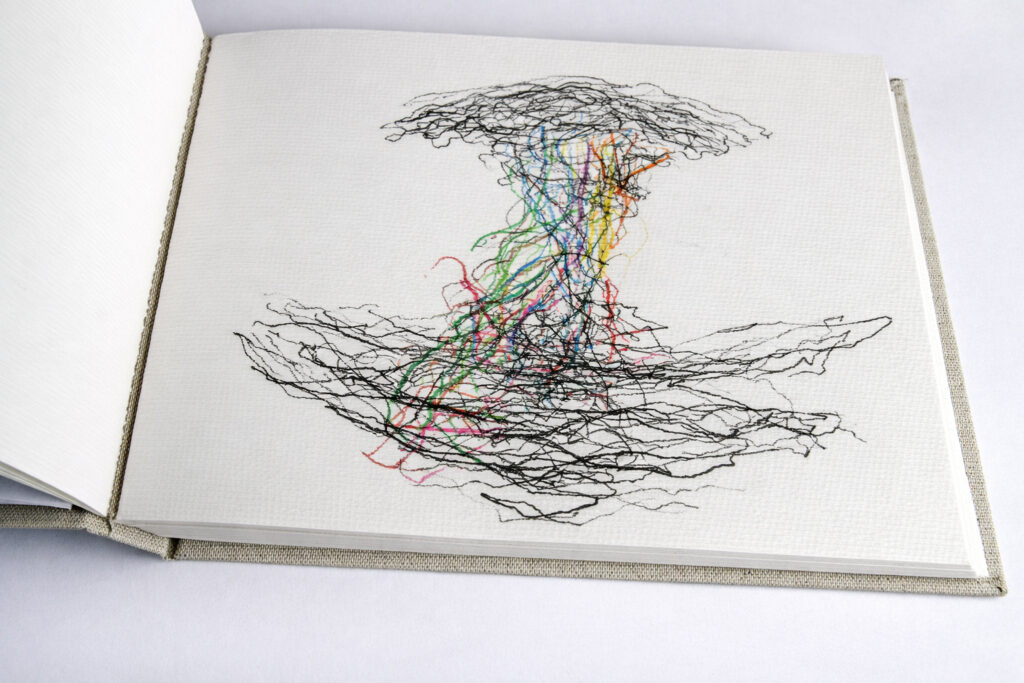
Marcello Mercado, Unter Strom – mortS retUrn, 2012, artist’s book, drawing and painting on paper, cloth-bound cover
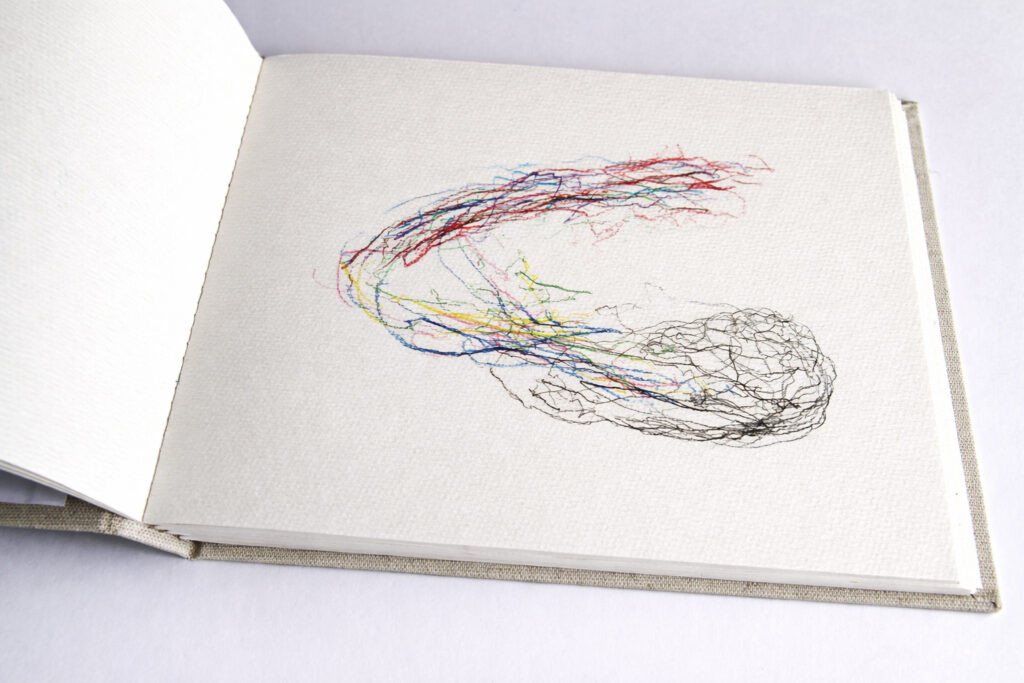
Marcello Mercado, Unter Strom – mortS retUrn, 2012, artist’s book, drawing and painting on paper, cloth-bound cover
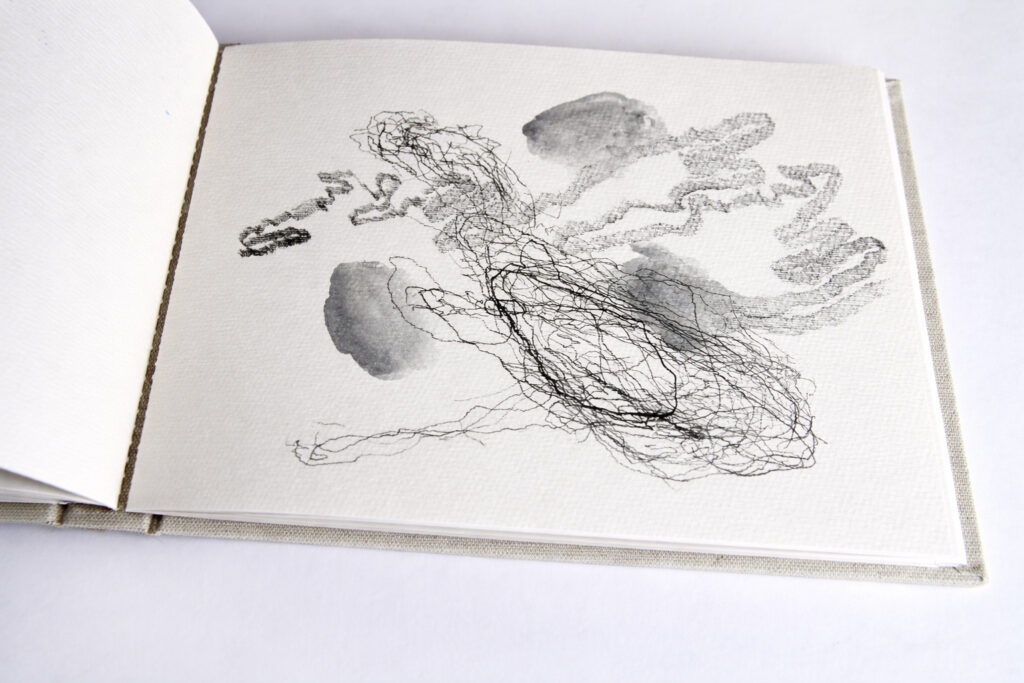
Marcello Mercado, Unter Strom – mortS retUrn, 2012, artist’s book, drawing and painting on paper, cloth-bound cover
Unter Strom – mortS retUrn, 2012
In Unter Strom – mortS retUrn begreift Marcello Mercado das Künstlerbuch als ein Instrument der Intensivierung. Jede Seite fungiert als energetisches Feld, in dem wässrige Flecken, chromatische Filamente und Verdichtungen schwarzer Linien sich zu vorläufigen Zuständen formieren, anstatt abgeschlossene Kompositionen zu bilden. Zeichnung und Malerei verschränken sich, bis Hierarchien verschwinden: Die Linie grenzt nicht ab, die Farbe füllt nicht aus; beide wirken als Kräfte, die die Oberfläche durchqueren, sie sättigen oder unterwandern.
Der Titel—mit seiner typografischen Inversion und der impliziten Bewegung zwischen Entladung und Rückkehr—verweist auf eine Ökonomie von Energien statt auf eine erzählerische Entwicklung. Die Bilder registrieren Strömungen, Entladungen, Verdichtungszentren und Spuren von Einschlägen. Manche Seiten konzentrieren sich auf dichte, beinahe organische Flecken; andere entfalten vielfarbige Bahnen, die sich durch verfilzte Graphitzonen schneiden. Wiederholung erzeugt hier keine Stabilität, sondern Variation: Jeder neue Zustand reorganisiert den vorherigen.
Die Abfolge der Seiten etabliert eine innere Zeitlichkeit. Statt einer Sammlung autonomer Zeichnungen verhält sich der Band wie ein Archiv von Prozessen—Wachstum, Zerstreuung, Kollaps, Rekombination. Die Formen oszillieren zwischen dem Mikroskopischen und dem Geologischen, zwischen Körperhaftem und Abstraktem, ohne sich auf eine lesbare Maßstäblichkeit festzulegen. Diese Ambivalenz verhindert illustrative Lektüren und lenkt den Blick auf die materiellen Bedingungen der Einschreibung.
Aus einer zeitgenössischen Perspektive auf das Zeichnen positioniert sich Unter Strom – mortS retUrn innerhalb prozessualer Praktiken, die das Blatt nicht als Ort der Repräsentation, sondern als operativen Raum verstehen. Die Geste dient nicht der psychologischen Expression, sondern erprobt die Fähigkeit des Trägers, Druck, Schichtung und Übermaß aufzunehmen. Das Buch wird so zu einem grafischen Labor, in dem das Bild stets vorläufig bleibt—Resultat von Kräften, die sich einer Stabilisierung entziehen.
Hier fungieren Zeichnung und Malerei als unvollkommene Messinstrumente. Sie ordnen die Welt nicht und beschreiben sie nicht; sie registrieren ihre Turbulenz.
Unter Strom – mortS retUrn, 2012
En Unter Strom – mortS retUrn, Marcello Mercado concibe el libro de artista como un dispositivo de intensificación. Cada página funciona como un campo energético en el que manchas acuosas, filamentos cromáticos y acumulaciones de líneas negras se organizan en estados transitorios más que en composiciones cerradas. El dibujo y la pintura se entrelazan hasta perder jerarquías: el trazo no delimita, el color no rellena; ambos actúan como agentes que atraviesan la superficie, la saturan o la erosionan.
El título —con su inversión tipográfica y su doble temporalidad implícita entre descarga y retorno— remite a una economía de fuerzas antes que a una narrativa. Las imágenes registran flujos, descargas, núcleos de condensación, residuos de impactos. Algunas páginas se estructuran alrededor de manchas densas, casi orgánicas; otras despliegan haces multicolores que atraviesan zonas de grafito enmarañado. La repetición no produce estabilidad, sino variación: cada nuevo estado reconfigura el anterior.
La secuencia del libro introduce una temporalidad interna. Más que una colección de dibujos autónomos, el volumen se comporta como un archivo de procesos: crecimiento, dispersión, colapso, recomposición. Las formas oscilan entre lo microscópico y lo geológico, entre lo corporal y lo abstracto, sin fijarse en una escala reconocible. Esta ambigüedad impide una lectura ilustrativa y desplaza la atención hacia la materialidad misma de la inscripción.
Desde una perspectiva contemporánea del dibujo, Unter Strom – mortS retUrn se inscribe en una línea procesual que entiende la hoja como un espacio operativo más que representacional. El gesto no persigue expresar un estado psicológico sino poner a prueba la capacidad del soporte para absorber presión, superposición y exceso. El libro se convierte así en un laboratorio gráfico donde la imagen permanece provisional, resultado de fuerzas que no se estabilizan.
Aquí el dibujo y la pintura operan como instrumentos de medición imperfectos. No ordenan el mundo ni lo describen; registran su turbulencia.