Field of Heaven – Flatten, 2017
(field research conducted in 2016)
Site-responsive sound installation generated from oxidized meteorite residue
Field of Heaven – Flatten is a site-responsive sound installation generated from oxidized meteorite residue collected in Campo del Cielo, northern Argentina, shortly after the excavation of the Gancedo meteorite in 2016.
Rather than intervening in the extraterrestrial body itself — whose preservation is legally protected — the project operates on what the event left behind: mineral dust dispersed across the site at the moment when geological matter, municipal infrastructure and scientific recovery converged.

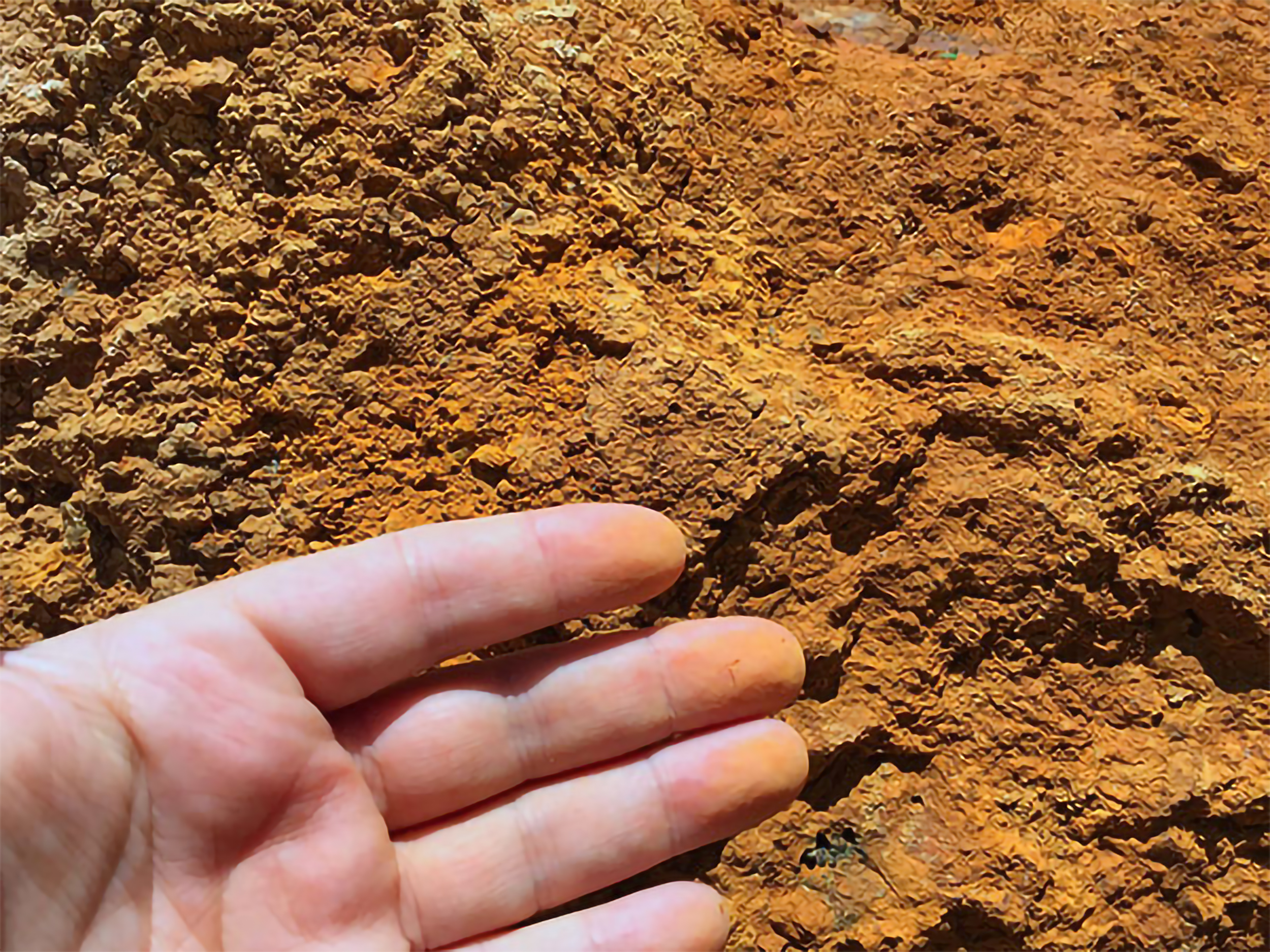
Fragments of oxidized residue were scanned with mobile devices to produce initial sound data; the same material was later pulverized, mixed with water and applied to paper staves, generating graphic scores. These sheets were subsequently re-scanned, producing unstable translations between mineral surface, optical code and acoustic output.
The meteorite — a 30,800-kilogram fragment from a prehistoric meteor shower that impacted the region approximately 4,000 years ago — functions here not as sculptural monument but as a remote origin: an absent mass whose dispersed material becomes an operative notation system.
The seven-hour composition unfolds across distributed listening points, while participants activate the work through headphones or by scanning the scores with their own phones, folding domestic technologies into a wider technical ecology.
Operating between field research, ethical restraint and algorithmic mediation, Himmelsfeld – Flatten approaches listening as a form of excavation — an attempt to register non-human temporalities within contemporary infrastructures.
Geological Context
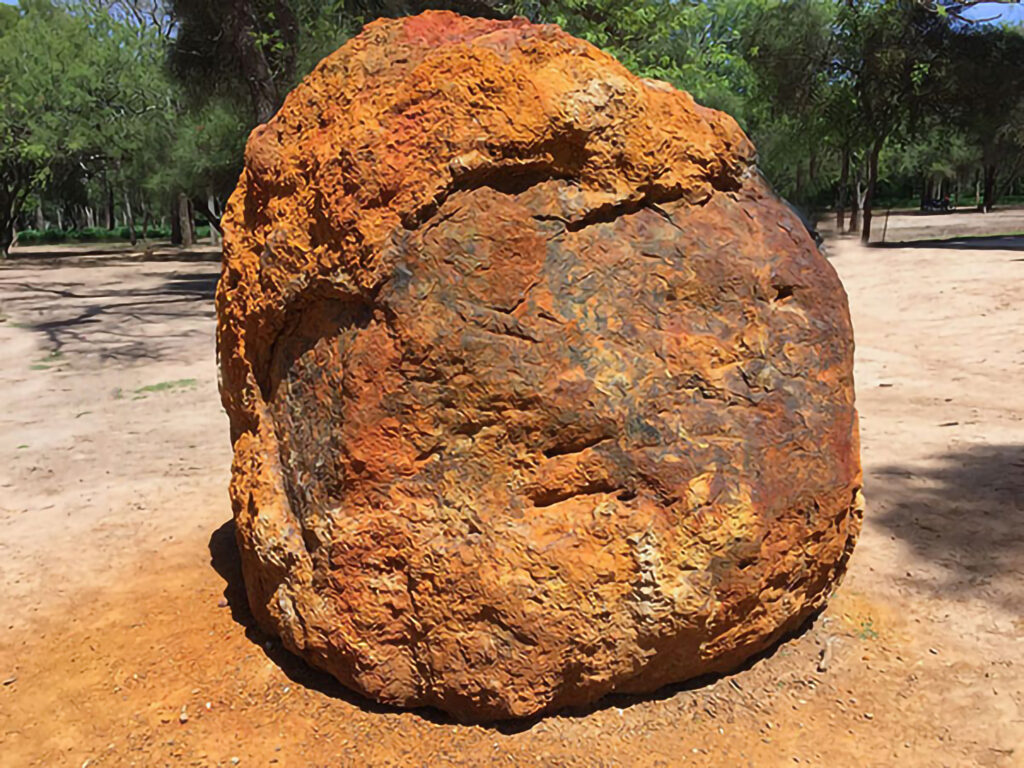
Gancedo Meteorite
Composition: 92.6% Iron, 6.7% Nickel, 0.6% Cobalt, 0.1% Phosphorus, Gallium, Indium, Germanium
Height: 2.00 m, Weight: 30,800 kg, Location: Campo del Cielo, Gancedo, Province of Chaco, Argentina
Estimated date of fall: c. 4,000 years ago
Date of discovery: September: 10, 2016
Graphic Scores / Meteorite Staves
Prior to any sonic output, the project produces a physical notation system. Pulverized meteorite residue was mixed with water and applied to paper staves, generating graphic scores whose granular irregularities encode mineral density, oxidation and dispersion patterns.
These sheets function simultaneously as drawing, object and data surface — an analogue interface through which extraterrestrial material becomes legible to optical scanning systems.
Rather than representing sound, the scores operate as transitional devices: a material archive designed to be re-read by machines.

Himmelsfeld – Flatten, 2017
Meteorite oxide detached from the floor, collected and mixed with water as a pigment.
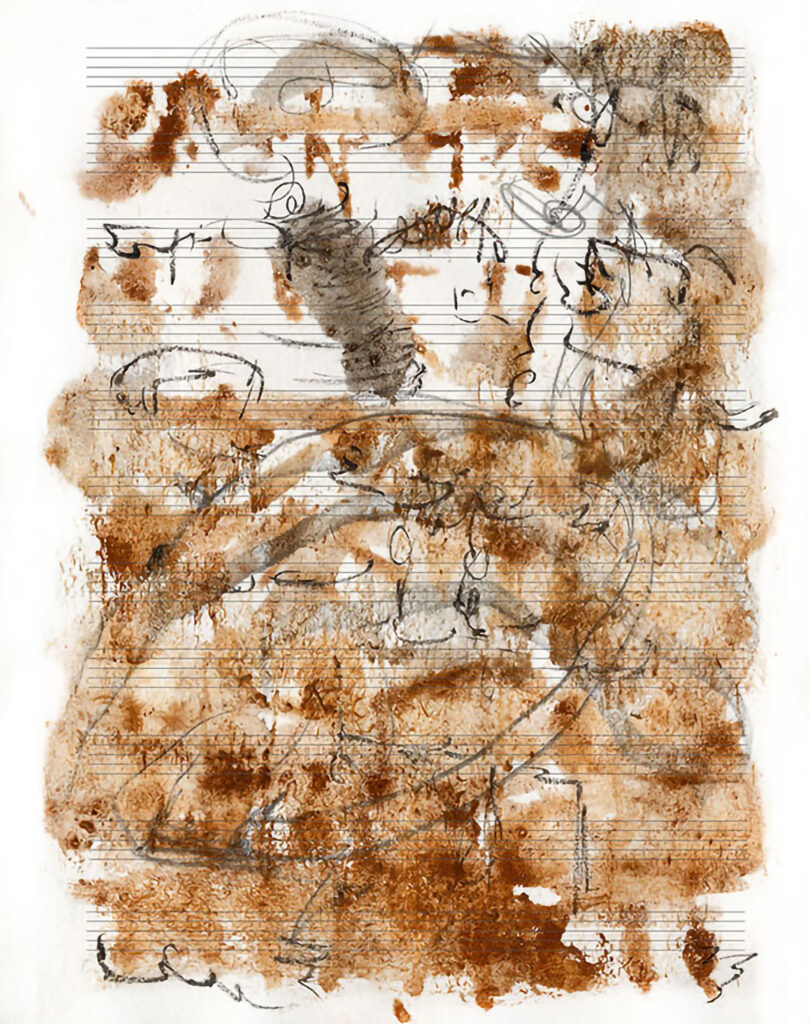
Himmelsfeld – Flatten, 2017
Graphic stave with meteorite residue on paper
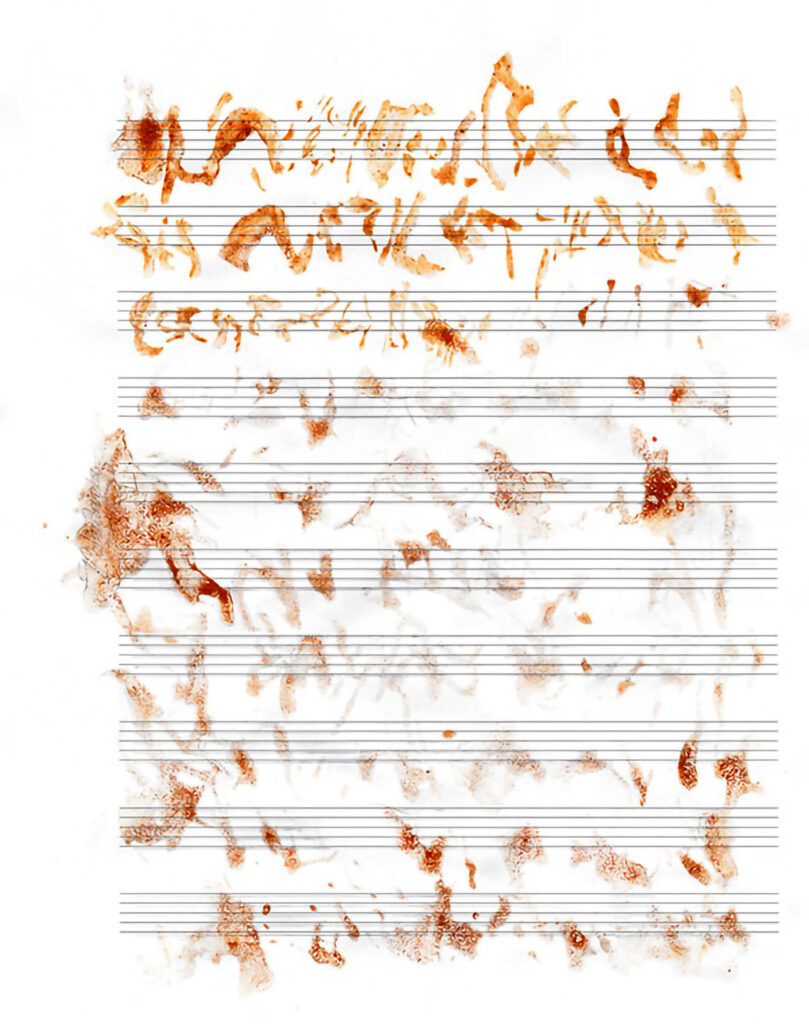
Himmelsfeld – Flatten, 2017
Graphic stave with meteorite residue on paper

Himmelsfeld – Flatten, 2017
Graphic stave with meteorite residue on paper
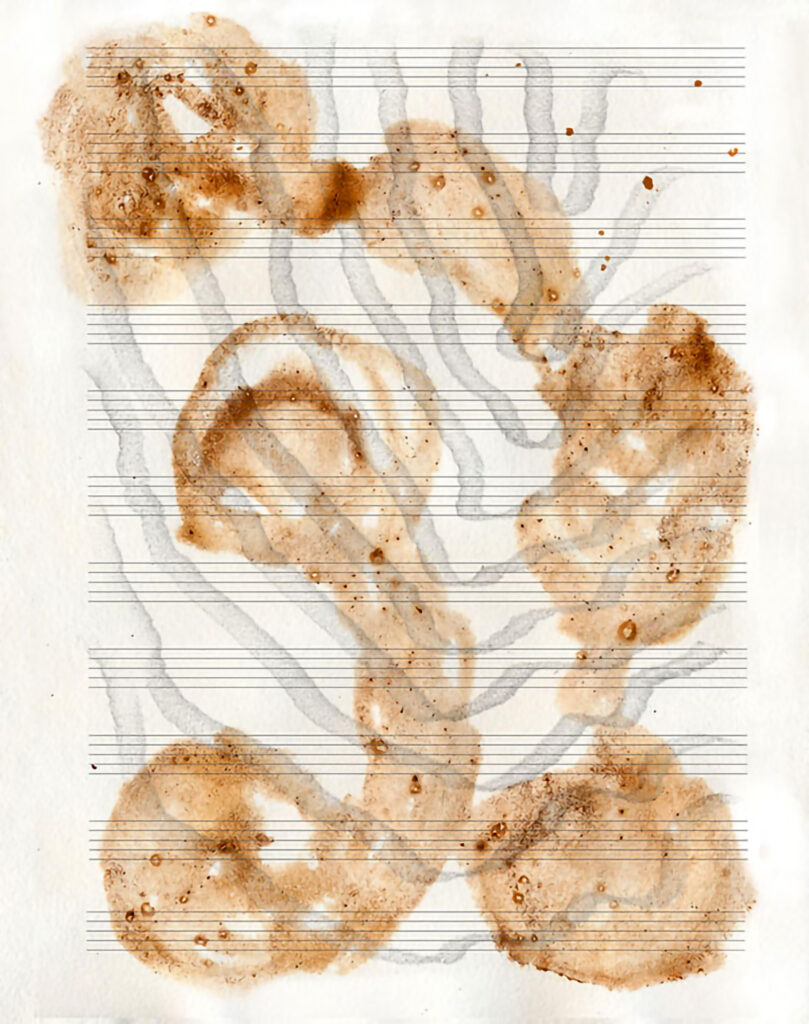
Himmelsfeld – Flatten, 2017
Graphic stave with meteorite residue on paper
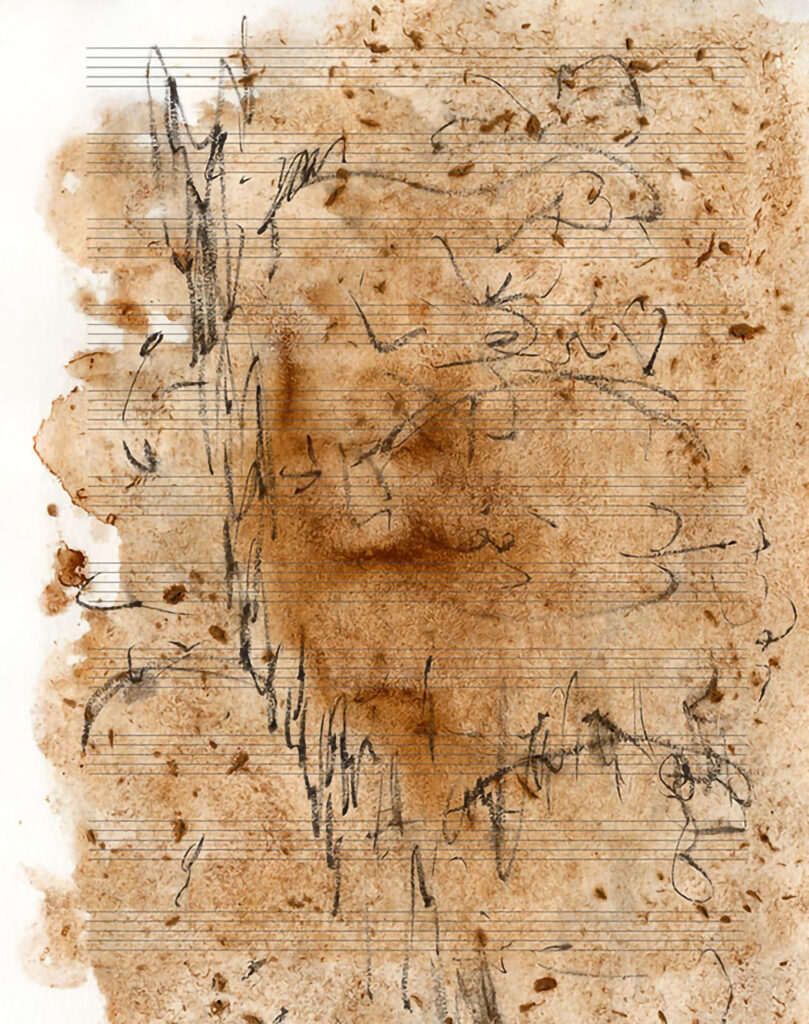
Himmelsfeld – Flatten, 2017
Graphic stave with meteorite residue on paper

Himmelsfeld – Flatten, 2017
Graphic stave with meteorite residue on paper
Mobile Scanning
The graphic staves functioned as optical interfaces.
Using consumer mobile devices, their surfaces were repeatedly scanned, allowing variations in exposure, distance and movement to modulate the conversion from image into sound.
Rather than stabilizing the process, these parameters were treated as compositional variables.
Grain density, oxidation patterns and paper irregularities produced fluctuations in frequency, rhythm and noise structure.
The scanning process did not aim to decode a fixed score but to generate a shifting acoustic field: each pass across the paper constituted a new reading, folding contingent gestures into the computational chain.
In this phase, the work relocates authorship to a distributed system in which mineral residue, drawing, camera sensor and software operate as a single transductive apparatus.
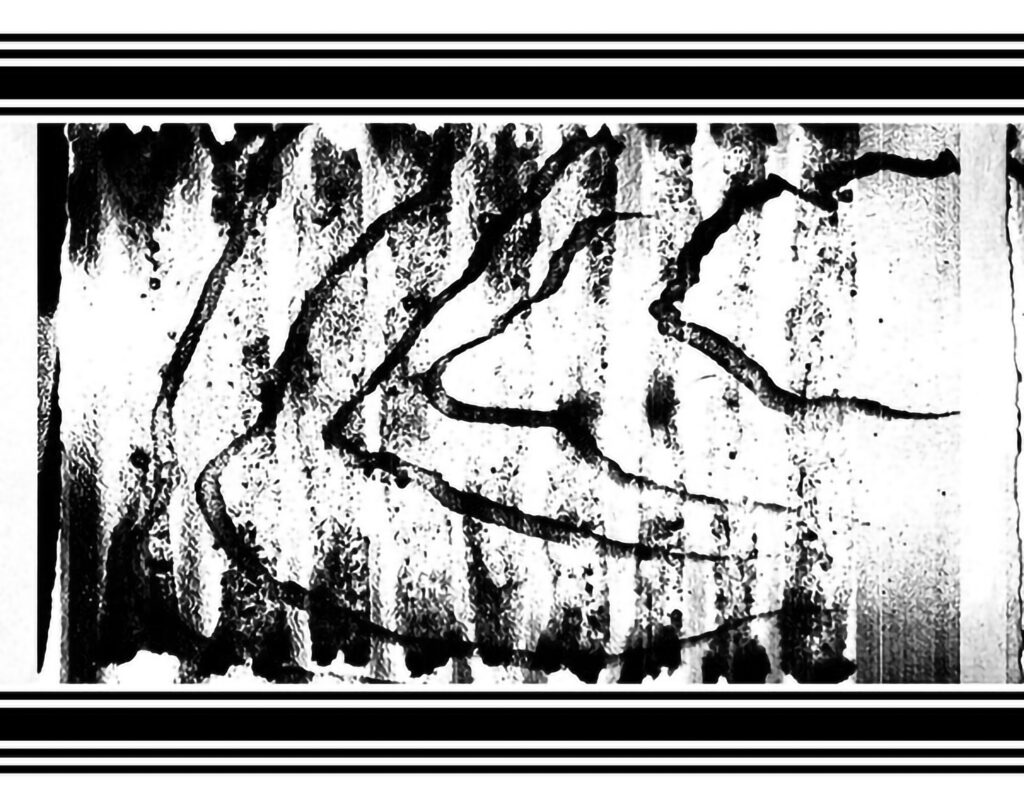
Himmelsfeld – Flatten, 2017
Mobile scanning of graphic stave
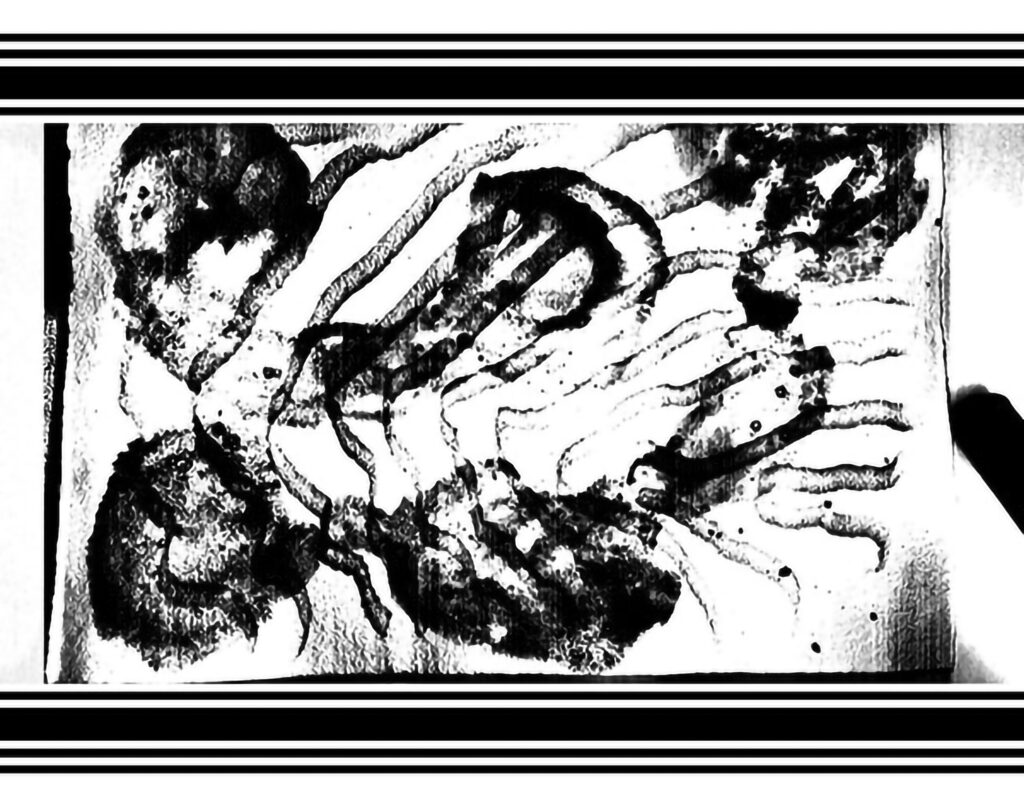
Himmelsfeld – Flatten, 2017
Mobile scanning of graphic stave
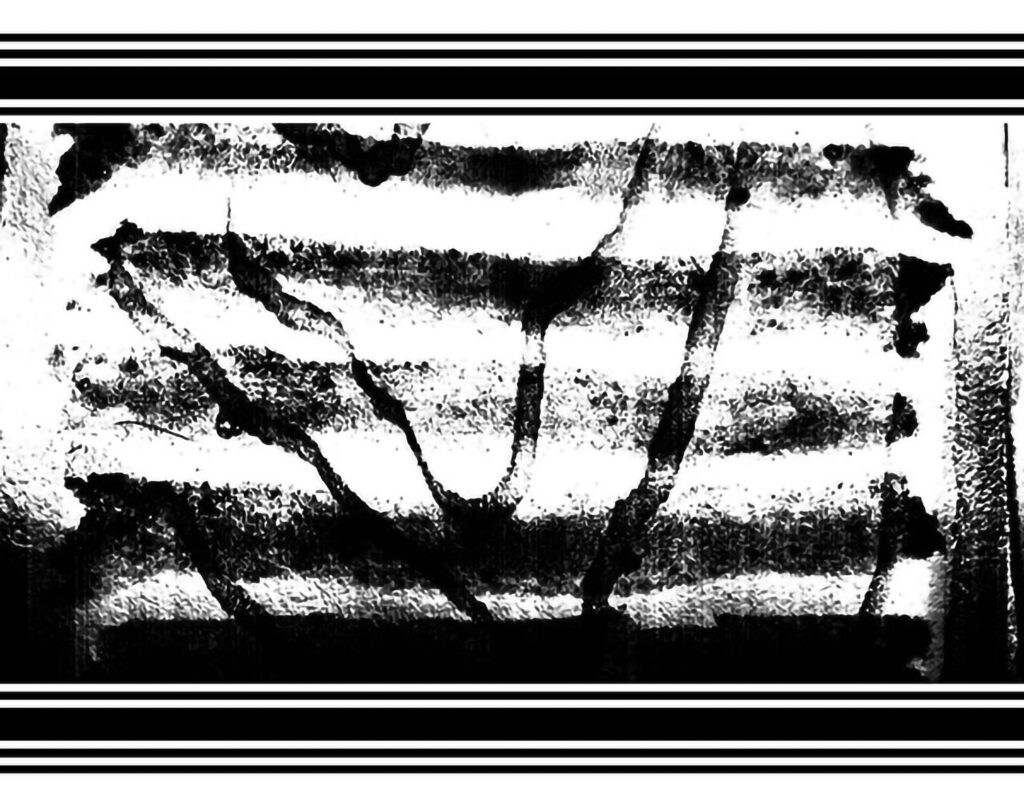
Himmelsfeld – Flatten, 2017
Mobile scanning of graphic stave

Himmelsfeld – Flatten, 2017
Mobile scanning of graphic stave
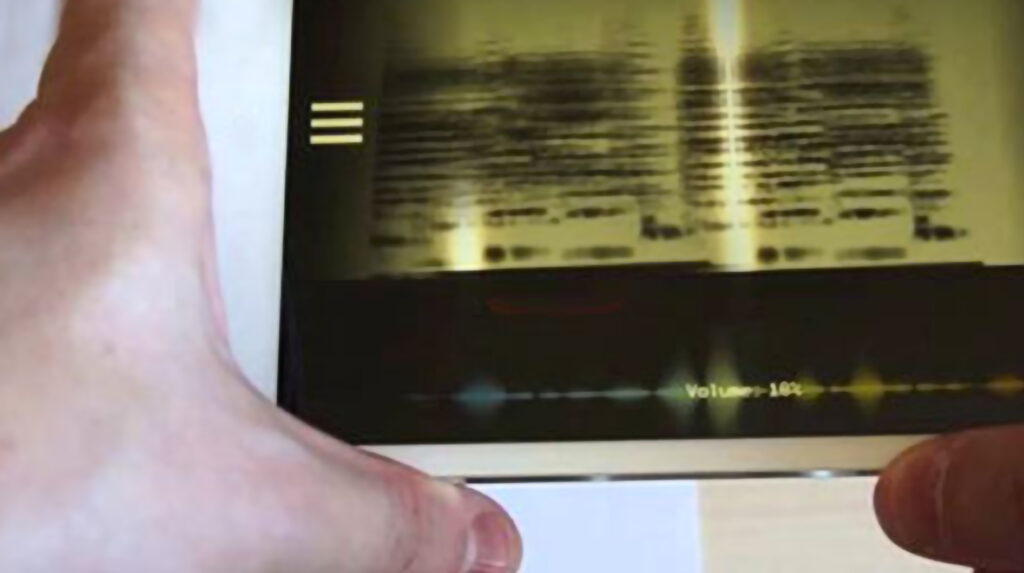
Himmelsfeld – Flatten, 2017
Mobile scanning of graphic stave
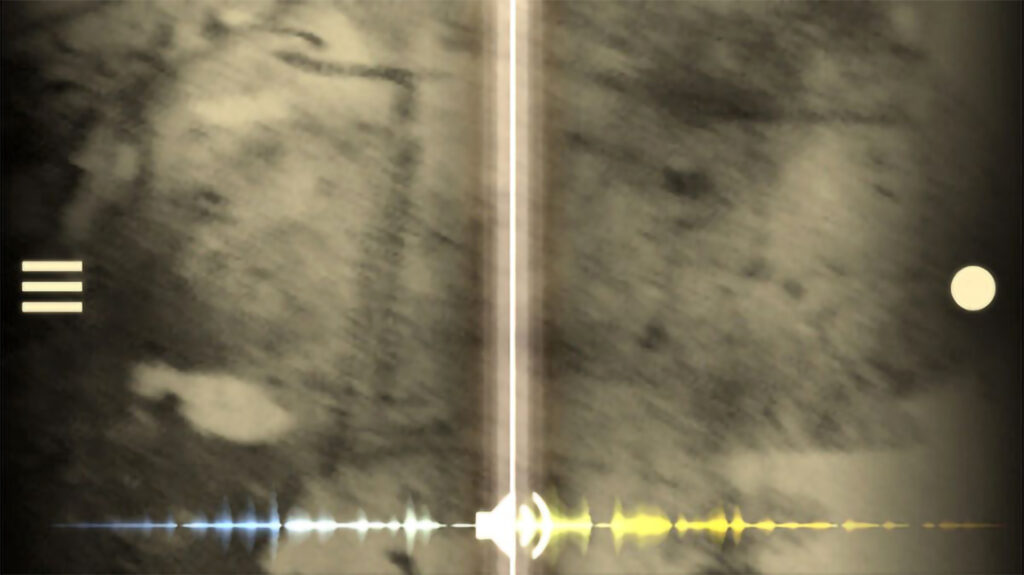
Himmelsfeld – Flatten, 2017
Mobile scanning of graphic stave
Sound Composition
Field of Heaven – Flatten, 2017
Keywords:
graphic score, sound sculpture, analogue–digital interface, meteorite residue, mobile scanning, field deployment, site-responsive installation
Running time: 7h 37’ 44’’
Format: AIFF, stereo, 16 bit, 44.1 kHz
CD 01: 1h 47’ 41’’ — 5 tracks
CD 02: 3h 35’ 14’’ — 5 tracks
CD 03: 2h 14’ 49’’ — 3 tracks
Total: 15 tracks
Listen full version on Bandcamp
Listen on SoundCloud
If the audio player does not load on mobile, please open this page in Safari or use the direct SoundCloud link above.
Sample:
Himmelsfeld – Flatten, CD01, Track 01 — excerpt
Himmelsfeld – Flatten, 2017
Audio output generated from scanned notation
Field Deployment
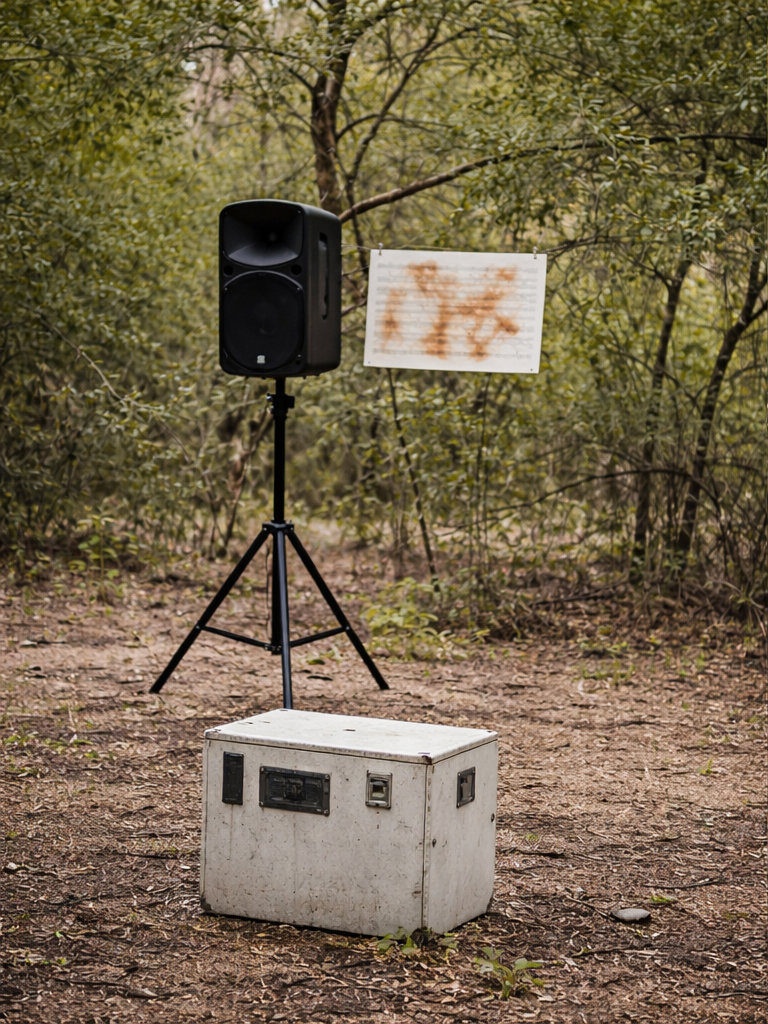
The installation unfolded in the Chaco landscape near Campo del Cielo rather than within an enclosed exhibition space.
Speakers powered by a portable generator were distributed among trees, while the graphic scores were placed on branches and provisional supports.
Environmental conditions — wind, insects, humidity, temperature shifts — were not mitigated but allowed to modulate the acoustic field.
Residue, notation and sound were thus reinserted into the territory of their origin, producing a temporary configuration between geology, infrastructure and listening.
Field Technical Setup
portable generator
outdoor loudspeakers
weather-resistant cabling
mobile playback devices
tree supports / provisional stands
printed graphic scores