
Marcello Mercado
Variations Van Gogh
2012 – 2014
Grant for Media Art 2013 of the Foundation of Lower Saxony
at the Edith-Russ-Haus for Media Art,
Oldenburg, Germany
ARCHIVE – INSTALLATION
Variations Van Gogh, 2014,
Objects + Books + 7-channel Video/ Sound installation, color
on seven LCD flat panels mounted on shelf, 8 minutes
or
projected on seven walls of a dark carpeted room;
projections unsynchronized; amplified stereo sound.
Continuously running
A. Concept
B. Videos
C. Description
D.Installation scheme
A. Concept
«I imagine the mass as a giant worm, information oozes into the body cavity through its maw, then on through to be excreted (undigested) out of the anus, so that excrement or trash may be recycled and reused as food. Having no memory, the worm does not realize it has already eaten it. The comparision is not so neat because the worm does digest something, whereas the mass remains intact.»
― Vilém Flusser
Keywords: Database, Transduction, Transformation, media-enzyme, Digital-organic, Organic-Digital, Digital-3D, Data gathering with drones, Image as enzyme, recontextualisation, invention, user culture, decontextualisation, performance, software application/program, human-human (artist interaction), human-computer, human-human, mediate, process, store, exchange information, activate, explore, monitor/screen, projection, sound acoustic, speakers, microphone, mass media, data processing, media
The Van Gogh variations are related to different strategies to archive and preserve his seven sunflower paintings.
The artistic perspective uses unlike technologies like Data gathering with drones, topological-mappings and ortho-photography; DNA extraction; DNA performances; Google Earth interface-performance; Code language; 3D-Sound; 3D printing and music notations written by robots on pentagram paper.
B. Videos
Preview version: Screens 01, 02, 03, 04, 05, 06 and 07
Screen 01
Screen 02
Screen 03
Screen 04
Screen 05
Screen 06
Screen 07
C. Description
1.
Archive Variation: Hexadecimal Compost
All the yellow tones of Van Gogh’s sunflowers paintings were taken with a Photoshop´s pipette, and collected as hexadecimal numbers (RGB values).
The approximately 280 yellow tones were printed out on paper, shredded and composted with worms.
In these humus, sunflower seeds were planted.


fig.02. Hexadecimal compost, Photoshop´s Pipette and Colour Palette

fig.03. Hexadecimal Numbers (RGB-Values)

fig.04. The approximately 280 yellow tones were printed out on paper, shredded and composted with worms.

fig.05. Hexadecimal compost


fig.06. Sunflowers seeds, Hexadecimal compost and Hexadecimal sunflowers

fig.07. Final Installation: Object 1: Copper Box 01 with DNA in test tubes and wraped sunflowers

fig.08. Final Installation: Object 2: Copper Box 02 with 6 “Hexadecimal compost» packets
2.
Archive Variation: Extraction of DNA (Deoxyribonucleic acid)
The DNA from the reared sunflowers was extracted through various enzymes and collected in test tubes.

fig.09. Extraction of sunflowers´DNA
3.
Archive Variation: Van Gogh-Bio-curation (DNA-Performance)
A clandestine performance -that intended to curate Van Gogh- was presented during the Documenta (13) Kassel, in 2012.
The extracted DNA from the «Hexadecimal reared sunflowers» was dropped on different floors inside and outside the Fridericianum Museum.

fig.10. Biocuration: DNA-Performance, Kassel, 2012 (Basement, First floor, Second floor)
4.
Archive Variation: Satellite
The seven sunflowers images were converted to text, and sent by a satellite into the space.
WIRED : Nasa is going to send your drawings and videos to an asteroid 23.03.2016
LUNCH 2016


5.
Archive Variation: Searching the yellow colour: Data gathering with drones, topological-mappings and ortho-photography
This phase of the project was carried out in collaboration with Skyvision Unmanned Aviation (responsible for planning and logistics) and Azimuth Geodetic (data post-processing).

Site: Soest, The Netherlands
Coordinates: 52° 9’14.63″N, 5°17’47.07″E
Technical framework:
-
Hardware: Two drones (one hexacopter and one octocopter)
-
Software: GPS navigation systems; GIS software; Azimuth proprietary processing software; Autodesk 3ds Max for 3D modeling and visualization.
This part of the project was realized in cooperation with Skyvision unmanned Aviation (planning and logistics), Azimuth Geodetic (data post-processing)

fig.11.Soest, The Netherlands: Work zone
The objective of this variation was the conservation and storage—for future generations of artists—of the Dutch yellow tonalities as they might have been perceived by Van Gogh himself.
Two drones conducted aerial surveys over an area of approximately 20 hectares near Soest, The Netherlands, collecting nearly one terabyte of ortho-photographic data to construct a comprehensive 3D mapping project.
This endeavor was not solely concerned with capturing yellow hues; it encompassed a broader attention to color saturation, luminosity values, vibrational qualities, and chromatic contrasts within the total environment—trees, soil, water, reflective surfaces—situating Van Gogh’s palette in an ecological and atmospheric context.
The drones were programmed to associate specific altitudes with precise hexadecimal values corresponding to Van Gogh’s sunflower palette, effectively scanning and filtering the yellow tones vertically:
Example correlation:
-
10 cm → #8B8B00
-
20 cm → #EEEE00
-
30 cm → #FFD700
-
etc.
The fusion of ortho-photography and topographical mapping yielded a 3D archival model—a digital topography of yellow tonalities—serving as both an artistic artifact and a speculative repository.
The accompanying soundscape consisted of a synthetic voice systematically reciting the 280 hexadecimal codes derived from Van Gogh’s sunflowers, transforming numerical color data into an acoustic register.
Example: “Number sign eight B eight B zero zero” (where “number sign” denotes the symbol #, also known in German as Doppelkreuz or Raute).
The resulting digital model was preserved as a “Van Gogh Perceptive File”, an archival construct designed to be retrievable in scenarios of environmental degradation, climate change, planetary catastrophe, or profound alterations in the qualities of light itself—a poetic gesture toward future conditions of perception.
About orthophotography:
An orthophoto (orthophotograph or orthoimage) is an aerial photograph that has been geometrically corrected (“orthorectified”) to ensure uniform scale across the entire image. Unlike an uncorrected aerial photograph, an orthophoto can serve as an accurate cartographic reference, allowing for precise measurement of true distances as it compensates for topographic relief, lens distortion, and camera tilt. Orthophotographs are commonly integrated into Geographic Information Systems (GIS), where they enable operators to digitize linework, annotations, or geospatial symbols. Some software platforms can even automate this process, extracting structural and geographic features directly from orthophotographic data.
(Source: http://en.wikipedia.org/wiki/Orthophotography)

fig.12.Soest, The Netherlands: Work zone: Drones view

fig.13.Drones and control equipment

fig.14.Drones parameters

fig.15.Ortho-photographic 3D Model and mapping

fig.16.Ortho-photographic 3D Model and mapping

fig.17.Ortho-photographic 3D Model and mapping
6.
Archive Variation: Virtual Tour of the Cemetery of Auvers-sur-Oise, France (Google Earth Interface-Performance)
This variation centers on a virtual visit to Van Gogh’s grave, enacted through the Google Earth interface as a form of performative exploration.
Notably, cemeteries are typically excluded from Google’s photographic documentation, and a virtual wall rendered the cemetery’s interior inaccessible. Van Gogh’s grave, positioned adjacent to this barrier, became the focal point of the interface-performance, whose objective was to symbolically “break through” this digital obstruction.
Throughout the navigation, algorithmic irregularities—Google Street View glitches—emerged, accompanied by curious machine-generated notifications such as “The user (Van Gogh) has not updated his profile.”
The virtual traversal of Auvers-sur-Oise revealed a landscape saturated with the artist’s name: parks, a public swimming pool, and bakeries, all named “Van Gogh,” evidencing a layered convergence of memorialization and commercial branding within the algorithmic cityscape.
The soundscape for this variation was composed through an algorithmic process that converted the sunflower paintings into textual data, performed as an audio track by a synthetic voice—an echo of the transformation from image to code, from pigment to digital utterance.
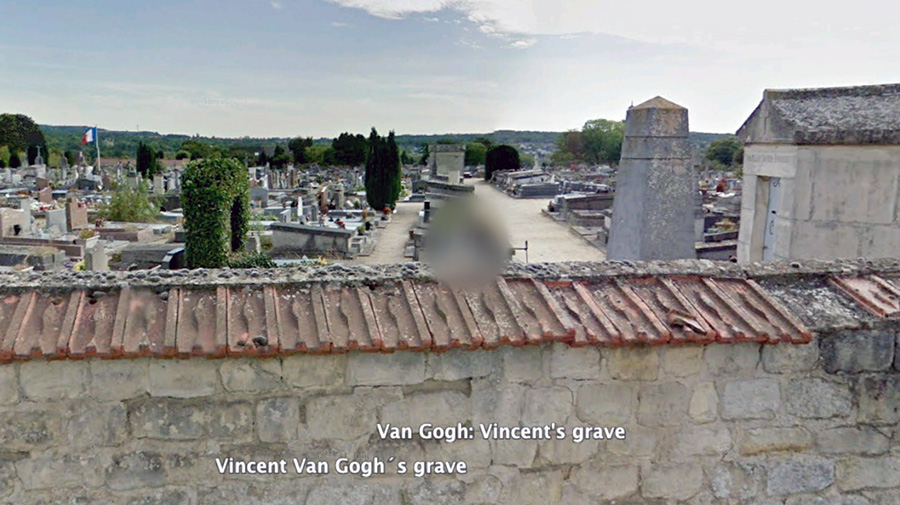
fig.18.Van Gogh’s grave. Auvers-sur-Oise, France

fig.19.Van Gogh’s grave. Auvers-sur-Oise, France

fig.20.Google street glitches
7.
Archival Variation: Conversion to Sound and 3D Print
A.
The seven images of Van Gogh’s sunflowers were analyzed using sonogram software, resulting in their conversion into seven distinct sound archives.

fig.21.Software: Virtual ANS: A Software simulator of Synthesizer ANS

fig.22.The sound archives. Schema
B.
The seven sound archives were integrated and transformed into a three-dimensional object in real time using OpenFrameworks software.
C.
The created 3D object was printed in plastic by a 3D printer

fig.23. 3D sound object generated in real time

fig.24. 3D sound object printed in plastic

fig.25.3D sound object printed in plastic

fig.26.3D sound object printed in plastic

fig.27.Sunflowers images transformed into sound and then transformed back into images

fig.28.Final installation: Object 3 — Copper Box 03 containing a 3D sound object and three sound-glitch photographs
8.
Archive Variation: Notations
In this variation, musical notations were generated and inscribed by robots onto pentagram paper, collectively titled The Variations Van Gogh Opera.
Van Gogh Variations: Compositions for Small Motors and Robots (2014) is the resulting publication: an 82-page volume measuring 20.5 × 25.5 cm, weighing 500 grams—a score composed algorithmically, where the mechanical gesture of inscription becomes an extension of the artwork itself.

fig.29. “Van Gogh Variations: Compositions for small Motors and Robots”,
82 pages, 20,5 cm x 25,5 cm, 500g, 2014
01.Das Gelb in der Ferne. Larghissimo
(01. The yellow in the distance)
02.Ich sehe Zeichnungen. Andante
(02. I see drawings)
03.Charles Bargue und Jean-Léon Gérôme Duett. Appassionato
(03. Charles Bargue and Jean-Léon Gérôme Duet)
04.Arie der Besucher. Agitato
(04. Aria of the visitor)
05.Vincent Monolog. Pesante
(05. Vincent monologue)
06.Abschied von Arles. Lacrimoso
(06.Farewell to Arles)
07.Todesmotiv. Lento
(07.Death motif)
08.Finalterzett. Trionfante
(08.Final trio)
9.
Archive Variation: Language – Code
In this variation, the seven sunflower paintings were algorithmically transformed into textual data and subsequently translated into my own invented language.
I have devised a language intended to erase the alphabetic convention, to dismantle operating systems, and to target algorithmic residues impervious to physical destruction.

fig.29.“Seven sunflowers deleted”, 60 pages, 25,5 cm x 20,5 cm, 500g, 2014

fig.30.“Seven sunflowers deleted”, 60 pages, 25,5 cm x 20,5 cm, 500g, 2014
10.
Archive Variation: Van Gogh’s Sunflowers: 115 Variations
This variation consists of a book comprising 115 hand-painted interpretations—executed in acrylic, ink, and oil—derived from Van Gogh’s seven original sunflower paintings.
Archival method: Scriptorium—a manual, meditative process of reproduction and variation, invoking premodern modes of copying while articulating a contemporary gesture of painterly iteration as archival practice.

fig.31.Van Gogh’s Sunflowers: 115 Variations, hand-painted artist’s book, 115 pages, 54 × 39 × 3 cm (1.08 m when open), 900 g, unique piece.
Acrylic, oil, ink, pigment, and paint on paper, Signed and dated on the verso, 2014.

fig.32.Van Gogh’s Sunflowers: 115 Variations, hand-painted artist’s book, 115 pages, 54 × 39 × 3 cm (1.08 m when open), 900 g, unique piece.
Acrylic, oil, ink, pigment, and paint on paper, Signed and dated on the verso, 2014.

fig.33.Van Gogh’s Sunflowers: 115 Variations, hand-painted artist’s book, 115 pages, 54 × 39 × 3 cm (1.08 m when open), 900 g, unique piece.
Acrylic, oil, ink, pigment, and paint on paper, Signed and dated on the verso, 2014.

fig.34.Van Gogh’s Sunflowers: 115 Variations, hand-painted artist’s book, 115 pages, 54 × 39 × 3 cm (1.08 m when open), 900 g, unique piece.
Acrylic, oil, ink, pigment, and paint on paper, Signed and dated on the verso, 2014.

fig.35.Van Gogh’s Sunflowers: 115 Variations, hand-painted artist’s book, 115 pages, 54 × 39 × 3 cm (1.08 m when open), 900 g, unique piece. Acrylic,
oil, ink, pigment, and paint on paper, Signed and dated on the verso, 2014.
11.
Archive Variation: Drawings
In this variation, three sunflowers were drawn by six robots and small motors.
Archival method: Semi-autonomous robotic execution.

fig.36.Sunflower 01
behind glass with 2 cm wide wooden frame, 75 cm x 65.5 cm x 4 cm, pencil on paper,
unique item, signed and dated on the front, 2014

fig.37.Sunflower 02
behind glass with 2 cm wide wooden frame, 75 cm x 65.5 cm x 4 cm, pencil on paper,
unique item, signed and dated on the front, 2014

fig.38.Sunflower 03
behind glass with 2 cm wide wooden frame, 75 cm x 65.5 cm x 4 cm, pencil on paper,
unique item, signed and dated on the front, 2014

fig.39. Final Installation: 3 Sunflowers: Drawings
12. Archive Variation: Diary
A book documenting the process and development of the project.

fig.40.“Variations Van Gogh : Diary”, 34 pages, 12 cm x 16 cm x 0,8 cm (20 cm open), 150g, unique item, On the reverse signed and dated , 2014
D. Installation Scheme
Variations Van Gogh, 2014,
7-channel Video/ Sound installation, color
on seven LCD flat panels mounted on shelf, 8 minutes
or
projected on seven walls of a dark carpeted room;
projections unsynchronized; amplified stereo sound.
Continuously running
A. Scheme of the installation:
Version.01
Videoinstallation x 7 channels (screens or TV monitors):
1. 7 TV monitors:
7 TV monitors LED, Full HD, 16:9, 46″
7 Headphones
7 DVD players or similar
white walls

fig.41. Monitores de TV versión 01A (Paralelo)

fig.42. Monitores de TV versión 01B (Circular)
2. 7 pantallas:
7 pantallas
Altavoces
7 reproductores de DVD o
paredes negras similares

fig.43. Versión de 7 pantallas
B. Schema der Installation (Objetos + video):
Version.02
4 Vitrinen:
Buch 01: “Van Goghs Sonnenblumen: 115 Variationen”, 54cm x 39cm x 3cm (1,08m geoffnet), 880g, Unikat, Auf der Rückseite signiert und datiert, 2014
Libro 02: “Das Gelb in der Ferne (Orig.)”, 22 cm x 30,5 cm, 0,3 cm (geoffnet de 44 cm), 200 g, Unikat, Auf der Rückseite signiert und datiert, 2014
Buch 03: “Blick über Arles”, 16cm x 21cm (geoffnet de 32cm), 200g, Unikat, Auf der Rückseite signiert und datiert, 2014
Buch 04: «Variaciones Van Gogh: Tagesbuch», 12 cm x 16 cm (geoffnet de 20 cm), 150 g, Unikat, Auf der Rückseite signiert und datiert, 2014
Buch 05: «Variationen Van Gogh: kompositionen für kleine Motoren und Roboter», 20,5cm x 25,5cm (40cm geoffnet), 500g, Massenware, Auf der Rückseite signiert und datiert, 2014
Buch 06: “Sonnenblumen: Löschen”, 25,5cm x 20,5cm (51cm geoffnet), 500g, Massenware, Auf der Rückseite signiert und datiert, 2014
Videoinstalación:
12 minutos: Aumento: 5 Kopien (+ 3 Künstlerexemplaren)
3 Objekte:
Objeto 1: Kupferkiste 01 mit DNA en Reagenzglas und Sonnenblumen : Unikat
Objeto 2: Kupferkiste 02 mit 6 «Hexadezimal» Kompostpäkchen : Unikat
Objeto 3: Kupferkiste 03 con 3D Objeto : Unikat
3 Zeichnungen:
Zeichnung 1: Sonnenblume01 hinter Glas con 2cm breiten Holzrahmen, 75cm x 65,5cm x 4cm, Bleistift auf Papier, Unikat, Auf der Vorderseite signiert und datiert, 2014
Zeichnung 2: Sonnenblume02 hinter Glas con 2cm breiten Holzrahmen, 75cm x 65,5cm x 4cm, Bleistift auf Papier, Unikat, Auf der Vorderseite signiert und datiert, 2014
Zeichnung 3: Sonnenblume03 hinter Glas con 2cm breiten Holzrahmen, 75cm x 65,5cm x 4cm, Bleistift auf Papier, Unikat, Auf der Vorderseite signiert und datiert,

fig.44. Schema der Installation mit Projektoren

fig.45. Schema der Installation mit Projektoren

fig.46. Schema der Installation mit Projektoren

fig.47. Schema der Installation

fig.48. Schema der Installation

fig.49. Schema der Installation